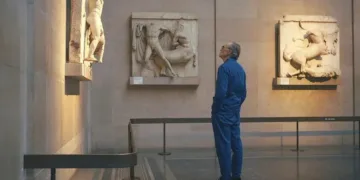

























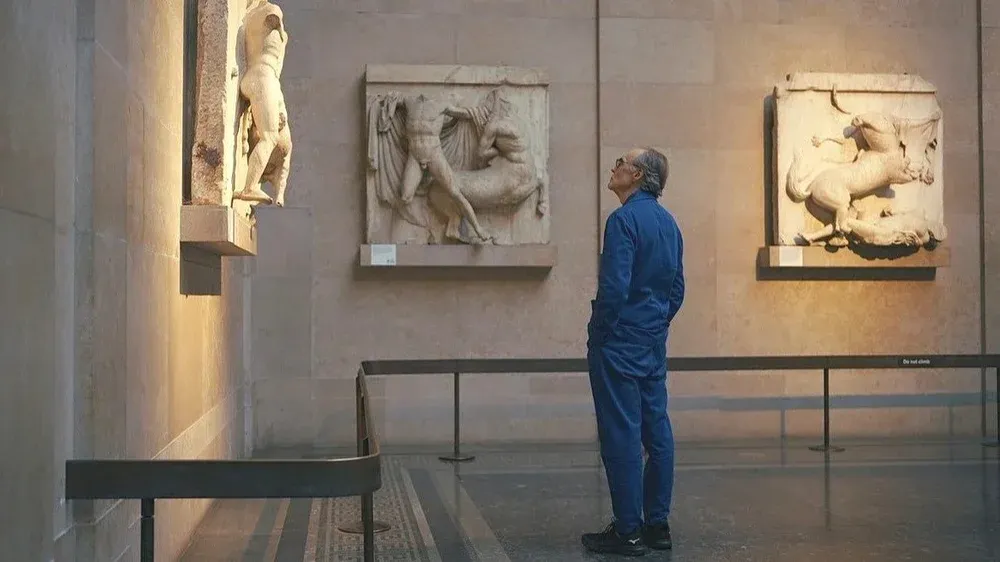

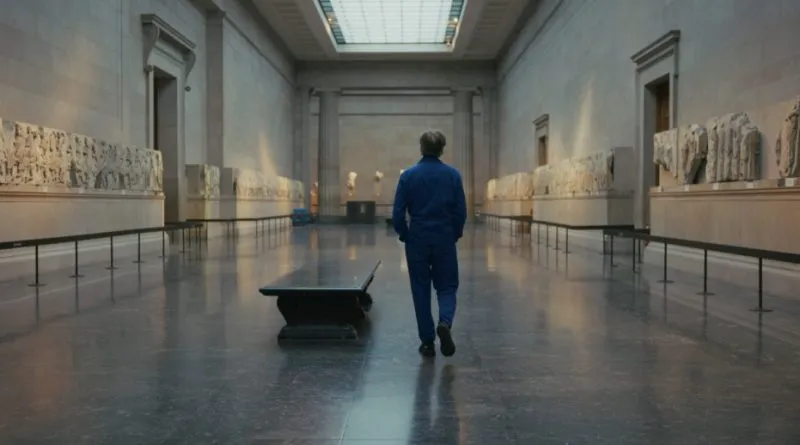
The camera fixes on a slab of the Parthenon Frieze in a bright, clinically quiet gallery. A limestone battle panel, lifted from its sunlit origin, sits behind glass like an acquired specimen. That image of prized stone turned display case property frames David Wilkinson’s The Marbles, an enquiring and intimate documentary on the Parthenon Sculptures.
Wilkinson follows the long dispute over the marbles, held in the British Museum for more than two centuries. The film recounts their removal from the Acropolis in Athens by Lord Elgin in the early 1800s, during the period of Ottoman rule in Greece. It tracks the sustained campaign to reunite the sculptures with Greece, a movement that has gathered clear energy in recent years. The director pursues the subject with a method that feels careful and ardent, engaging a cultural and political question that refuses to settle.
The Weight of the Historical Wound
The film lays out the legal and ethical foundations of the quarrel from the start. It explains how Lord Elgin, serving as a British ambassador, directed the extraction of pediments, metopes, and friezes from the ancient temple. The case against British possession rests on the suspect nature of that acquisition.
Early interviews with lawyers and historians turn to the missing original Ottoman firman, the permission document Elgin cited. They argue that the deal functioned as a bribe without clear legal authority. Elgin’s claim to ownership faced intense scrutiny in London at the time.
To sharpen the ethical stakes, the documentary aligns Elgin’s conduct with other patterns of art seizure, placing the issue beside claims involving Nazi-looted works. By gathering testimony from these experts, the film supplies essential groundwork so viewers grasp how the present stalemate took shape.
Restitution as a Moral Tide
The Marbles widens from the Greek case to the global movement for cultural restitution. The Parthenon Sculptures appear as a flagship example inside a broader reckoning over the holdings of Western museums.
Wilkinson points to concrete returns that mark this shift, including the University of Aberdeen’s restitution of a Benin Bronze and the repatriation of a ceremonial shirt taken from a Sioux warrior that had been kept in a Glasgow museum. Scotland appears as a leader in the creation of ethical frameworks for the return of ancestral items and the property of indigenous cultures. The film sets that evolving posture against the firm position of the British Museum.
The inquiry preserves space for arguments that favor retention. Contributors describe a “universal museum” concept that would keep the marbles in London and label repatriation as regressive or rooted in narrow nationalism. The documentary gives strong room to the reply as well. Actor Brian Cox and campaigner Janet Suzman state that institutional conduct must answer to moral standards, which supersede long-held claims of possession and the museum’s educational mission.
The Director’s Personal Lens
Wilkinson frequently appears on screen as narrator and interviewer, speaking directly with participants. The approach builds a sense of immediate exchange. The structure, however, slips at times. A four-year production timeline brings breaks in chronology that leave the narrative uneven. The choice to have actors voice statements by politicians reads as a wrong turn.
The most testing stylistic element is the varying presence of the director within his own frame. In one passage he holds the posture of a neutral moderator; in another he asserts a firm thesis. That shift affects the finale, which contains a polarizing personal disclosure about the filmmaker.
The moment feels abrupt because the film has not steadily prepared the personal stakes across the preceding hours. The documentary still functions as a thorough primer on the dispute. It communicates a gathering sense that the return of the Parthenon Sculptures draws near.
The Marbles is a 2025 documentary film by David Nicholas Wilkinson that explores the long-standing and controversial debate surrounding the ownership of the Parthenon Sculptures (often called the Elgin Marbles), currently held at the British Museum. The film argues for the restitution of the marbles to Greece, examining the legal and ethical circumstances of their removal by Lord Elgin in the early 19th century and the wider international movement for cultural repatriation. The documentary had its World Premiere at the Central Scotland Documentary Festival on October 30, 2025, and was released in UK and Irish cinemas starting November 7, 2025. It is distributed by Guerilla Distribution Limited.
Credits
Title: The Marbles
Distributor: Guerilla Distribution Limited
Release date: October 30, 2025 (World Premiere at Central Scotland Documentary Festival), November 7, 2025 (UK and Irish Cinemas)
Rating: 12A
Running time: 113 or 114 minutes
Director: David Nicholas Wilkinson
Writers: David Nicholas Wilkinson
Producers and Executive Producers: David Nicholas Wilkinson, Paul McGann (Executive Producer), Miriam Margolyes (Executive Producer), Simon Callow (Executive Producer), Stockard Channing (Executive Producer), Bill Nighy (Executive Producer)
Cast: David Nicholas Wilkinson, Janet Suzman, Brian Cox, Patricia Allan, Tristram Besterman, Neil Curtis, Alexander Herman, Paul Cartledge, Melina Antoniadis, Mark Stephens, Shian Denovan, Clare Clifford, Simon Callow, Bill Nighy, Stockard Channing, Paul McGann, Miriam Margolyes, Anna Savva
Director of Photography (Cinematographer): Don McVey
The Review
The Marbles
David Wilkinson's film is a passionate, essential primer on the Parthenon Sculptures debate. It establishes the dubious history of Lord Elgin's acquisition through sharp legal testimony and expands the scope to the international movement for cultural restitution. The documentary's value rests on its ethical clarity and the compelling case made by its expert advocates. While the director's presence often feels uneven, creating structural inconsistencies, the film successfully captures the growing momentum toward the marbles' return.
PROS
- Provides strong historical and legal context.
- Effectively links the Parthenon issue to the global repatriation movement.
- Features compelling testimony from experts and advocates.
- Delivers ethical clarity regarding the moral claims for restitution.
- Successfully conveys the growing public support for the return.
CONS
- Inconsistent filmmaking style and directorial presence.
- Structural flaws, including confusing chronology and excessive establishing shots.
- Use of actors to voice politicians' statements feels awkward.
- The final personal revelation feels jarring and underdeveloped.