









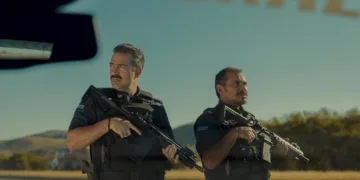
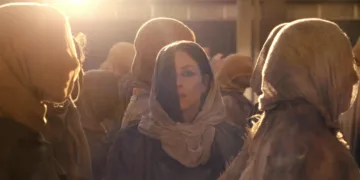
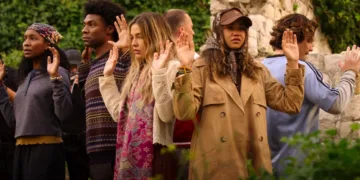











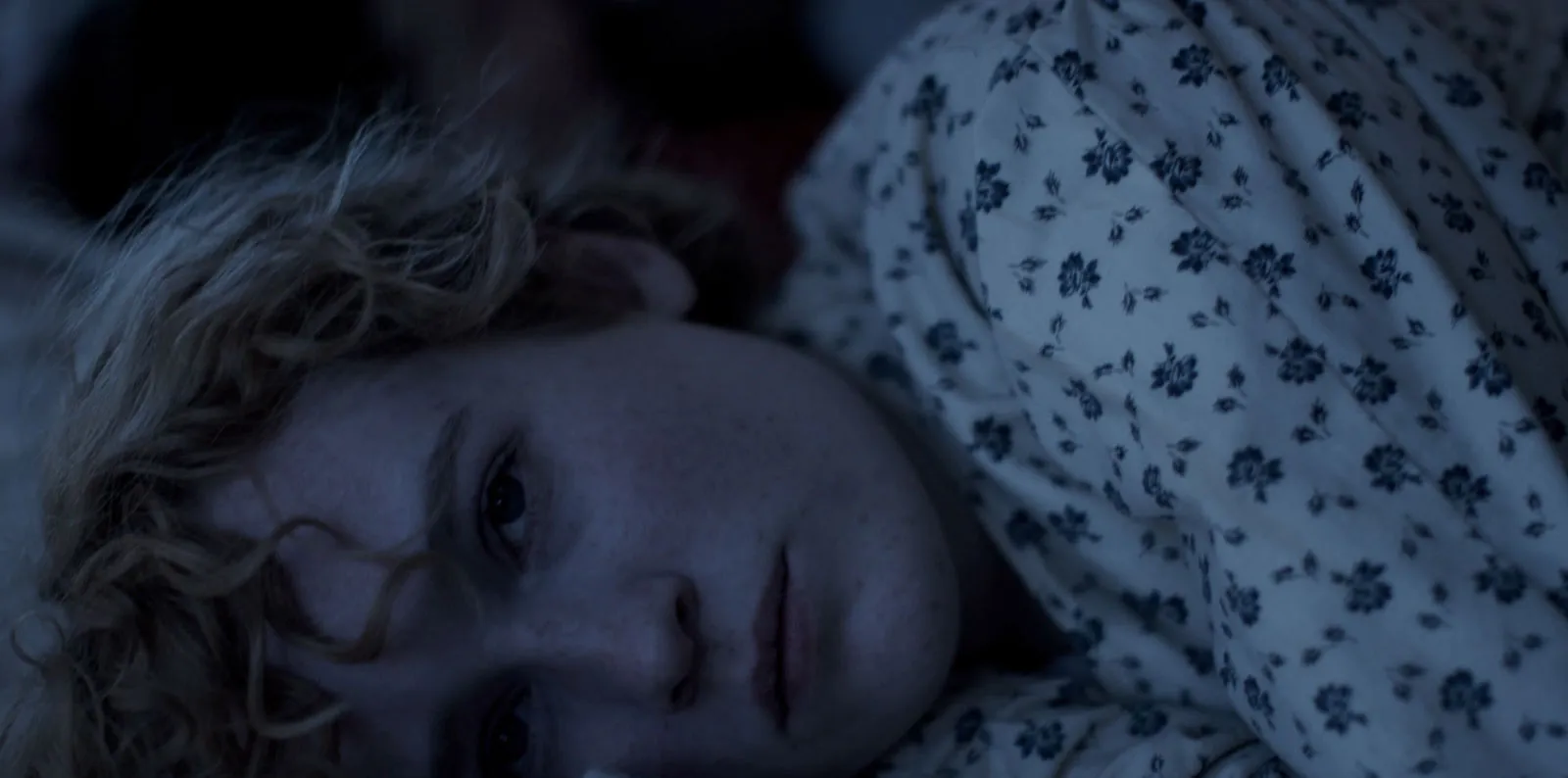

Director Craig Packard returns to the Western with This Bloody Country, shaping a film that privileges psychological strain over straightforward gunplay. The plot follows a Mormon preacher, his large family, and their escort, a hardened gunfighter named Ned, as they cross an arid, unforgiving landscape to found a new church in Arizona. The story sets its gears moving quickly.
Within the first twenty minutes the travelers kill two of three ruthless cutthroats while one escapes to bring reinforcements. That turn of events converts the expedition of faith into a death march. The film’s dramatic weight comes from a single pressing question: how does a devout, pacifist family ready itself for a brutal, unavoidable clash? Packard places the inward struggle for survival above the genre’s usual action beats.
A Setting Defined by Scale and Silence
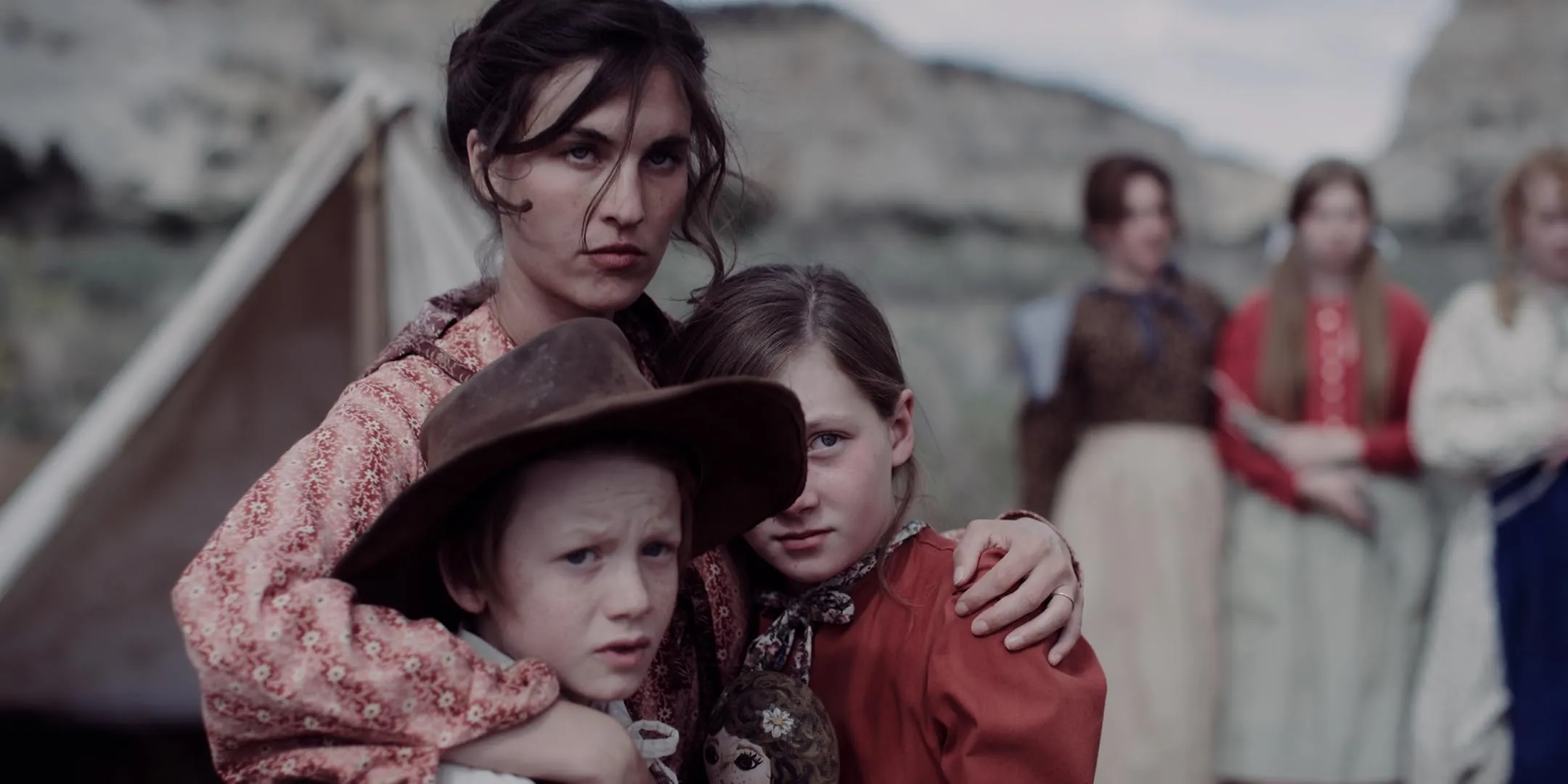
Visually the film is striking. Location work near the Arizona border in Utah gives the production a sense of the ‘true West.’ Cinematographer Ryan Purcell frames the land as a constant, formidable presence that shapes every scene. Broad natural vistas draw the viewer into the territory’s stark beauty and threat, surrounding the characters with vast, often intimidating views.
The environment functions as the primary element of the Western setting, shifting emphasis away from costume and arms. Composition often echoes early cinematic practice, with characters centered and dwarfed by the frame in a way that lends the images a classic, timeless quality. The production value reads well above its budget. The film looks and sounds excellent and consistently allows the scale of the land to dominate the screen.
Dissecting the Genre’s Narrative Ore
Packard turns common Western tropes inward, mining character and conflict for suspense rather than relying on surface conventions. The ensemble carries weight and specificity. Martin Dingle Wall makes Ned convincingly tough and capable. Larry Cedar gives Josiah, the patriarch, a self-righteous stubbornness that later opens toward redemption. Maggie Gwin handles Lilith, one of Josiah’s wives, and her charged relationship with Ned complicates the group’s social order.
Also Read






Cameron Meyer brings unexpected toughness and a dry streak of humor to the role of Martha. Jacob Ward’s Nathaniel begins as vulnerable and grows into strength once a central character affirms his ability, which in turn positions Nathaniel as the film’s emotional center. Dialogue fits the period and keeps scenes honest, though occasional moments of overreaching philosophizing briefly crack the immersion. The storyline moves with enough originality that its unpredictable arc leads to a finale that registers as both earned and believable.
The Slow Burn of Suspense
Packard’s direction makes clear that the film values extended psychological tension over quick-draw showdowns. That choice deepens immersion; the audience travels with the characters and feels their mounting fear and fatigue. The film’s deliberate pacing allows emotional stakes and character shifts to accumulate naturally, which builds authentic suspense.
The main conflict centers on the extended emotional process of watching a pious, untrained family transform into a unit capable of violence. Much of the runtime after the inciting incident is devoted to this preparation. The emphasis on character anxiety and the steady build of pressure creates tension that pays off when the narrative follows through on its bleak course, matching the film’s stark title.
This Bloody Country is a Western drama set in 1869, focusing on a Mormon family’s grueling overland journey from Salt Lake City to establish a new church outpost in Arizona. The film premiered on Digital and On Demand platforms starting October 17, 2025. This historical fiction explores themes of faith, violence, and survival as the family, accompanied by a rugged guide, is forced to prepare for an inevitable, brutal conflict after a deadly encounter with outlaws in the wild country.
Full Credits
Title: This Bloody Country
Distributor: Quiver Entertainment
Release date: October 17, 2025 (On Digital and On Demand)
Rating: TV-MA
Running time: 1 hour 42 minutes (102 minutes)
Director: Craig Packard
Writers: Craig Packard
Producers and Executive Producers: Anne Weiler, Amy Brotherton, Brad Brotherton, Denis Guz, Polina Mokshina, Andy Macdonough
Cast: Martin Dingle Wall, Rainey Qualley, Larry Cedar, Jacob Ward, Maggie Gwin, Adam Hightower, Cameron Myer, Andrew Key, Zipporah Cardozo, Charlie Stover
Director of Photography (Cinematographer): Ryan Purcell
Editors: Ken Guertin
Composer: Jeff Tolbert
The Review
This Bloody Country
This Bloody Country succeeds by trading the typical action of the Western genre for high-stakes psychological drama. Director Craig Packard uses the unforgiving Utah landscape, captured brilliantly by Ryan Purcell, as a formidable character, forcing the ensemble family to reckon with impending violence. The film features complex, layered performances, especially from Jacob Ward and Martin Dingle Wall, which anchor the slow-burn suspense. While a few moments of dialogue feel slightly anachronistic, this is a masterful, highly engaging piece of filmmaking that finds genuine depth within a familiar framework.
PROS
- Stunning and immersive cinematography by Ryan Purcell.
- Effective use of the natural landscape as a powerful dramatic element.
- High-stakes, character-driven drama that takes precedence over simple action.
- Complex, deep characterizations across the entire ensemble cast.
- Strong lead performances, notably from Jacob Ward and Martin Dingle Wall.
- Successful subversion of predictable Western genre cliches.
- Suspenseful, well-paced, and unpredictable storyline with a satisfying finale.
CONS
- Minor issues with anachronistic philosophical dialogue in a few scenes.
- The deliberate pacing may challenge viewers accustomed to faster-paced Westerns.