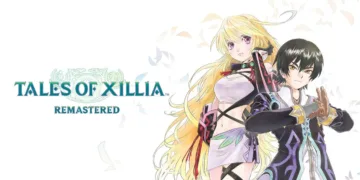























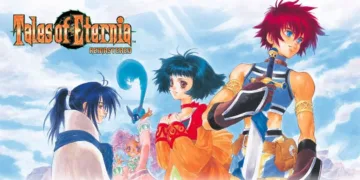



Tales of Xillia Remastered revives a landmark JRPG that first arrived for the series’ 15th anniversary. For many players in the West, that original launch marked a key return, and the game has lived on the PlayStation 3 until now. This edition presents a polished path back into a consistently enjoyable adventure.
Rieze Maxia sets the tone: a striking world where humanity depends on a reciprocal bond with Spirits, and that balance falters when a covert group develops Spyrix, a device that drains life force and mana. The story begins as Milla Maxwell, Lord of Spirits, descends to investigate and is weakened by a trap. She joins with Jude Mathis, a medical student pulled into events, and their mission to dismantle Spyrix and face the source of the threat drives a long, satisfying RPG.
Characters and the Architecture of Narrative
Tales of Xillia builds its momentum through a cohesive plot and a cast that clicks together. Rieze Maxia’s premise creates constant friction: a technologically advanced society fueled by Spirit-driven artes drawn from the Mana Lobe in human brains. That synthesis of mystic and scientific logic frames an adventure with steady twists and a party whose chemistry carries scene after scene.
The game adopts a dual protagonist structure and asks players to choose Milla or Jude at the outset. Both routes traverse the same main plot, while that choice shifts certain cutscenes and conversations. Jude’s route runs longer, with an extended prologue and internal monologues that map his growth. For newcomers, that path serves as the most complete dramatic arc.
The design leaves a visible seam, since the two perspectives can read as a single story where some exchanges drop out rather than two viewpoints that fully interlock. The main events still land, and the character work retains weight.
Skit conversations anchor the party’s emotional shape. Frequent, optional mini-chats track the team’s journey from strangers to a functioning group. These brief exchanges comment on current objectives and even small pieces of play, and they give characters presence beyond the major cinematics. Short, interactive beats become a storytelling tool, tying player input to tone and relationship building.
The Dual Raid Battle System
Combat runs on the Dual Raid Linear Motion Battle System, a real-time action framework built around immediacy. Standard attacks funnel into Artes, and two resources manage the pace: AC governs combo length and TP funds techniques. The loop rewards quick reads, clean execution, and an eye for timing.

Linking defines the system’s identity. You attach to an ally who contributes passive bonuses and Link Skills tuned for different enemy behaviors, such as breaking guards or resisting spells. Landing attacks charges the Link Gauge, which unlocks Linked Artes, joint techniques that hit hard and suit coordinated openers or finishers.
Fill that gauge further to trigger Over Limit, a state that allows chained Linked Artes for heavy damage sequences. Control can swap between your current character and your partner mid-string, which extends stun windows and opens a tag-team rhythm that supports deeper routes through encounters.
Progression moves through the Lilium Orb, a lattice of nodes where Growth Points unlock stats and skills. The grid gives a clear visual of development and a sense of authorship over each build. Skill Points layer on top, letting you equip abilities, and many of those skills share across linked partners. That sharing reinforces cooperation as a core strategy. The world layout favors forward movement through large, connected 3D regions rather than a traditional world map, while combat keeps variety high and the tempo sharp.
Modernizing a Classic: Remastered Features
The remaster lands with careful polish. Visuals hold up, with the PS3-era cel shading aging well. Refined color and shading give models extra presence. The music and voice work sound excellent, and improved audio clarity supports performances and battle feedback alike.

Quality-of-life changes define this release. Autosave reduces risk during long sessions, and a retry option after standard defeats trims downtime. Exploration benefits from faster dash speed and clear map icons for chests and side quests. A Quest Log tracks side events so players can return to them without guesswork. The Grade Shop is available from the start, so returning players can toggle modifiers such as boosted experience to tune difficulty and pacing from minute one. Taken together, these updates remove friction and make this version the most comfortable way to play for long-time fans and newcomers.
Tales of Xillia Remastered thrives on the interplay between story and systems. Dual protagonists set expectations for perspective and character focus. Skits translate small inputs into relationship beats. Links, Linked Artes, and Over Limit transform party composition into an expressive combat language. The Lilium Orb and shared skills align growth with cooperation. Those choices make progression feel like narrative motion, not just numerical gain.
Pacing supports that cohesion. The longer Jude route charts his interior voice and aligns player time with character development. The structure stays mostly linear across broad zones, and combat injects tactical choices through AC, TP, and linking priorities. QoL features clean up the edges that once slowed repeat runs, which invites deeper exploration of builds and team pairings.
For players who missed the PS3 version, this release functions as the straightforward entry point. For those returning, early access to the Grade Shop turns self-directed challenges and comfort settings into switches you can set from the opening hours. The result respects the original’s look and feel while smoothing the act of play, highlighting what made the adventure click in the first place: a focused premise, a party worth following, and a battle system that rewards attention to timing, synergy, and growth.
The Review
Tales of Xillia Remastered
Tales of Xillia Remastered successfully revives a cherished JRPG. Its core strength lies in the fast, flexible Dual Raid Battle System and the compelling character dynamics fostered by the Skit System. The narrative is cohesive, though the dual protagonist structure is imperfectly implemented. With numerous Quality-of-Life additions, including vastly improved movement speed and immediate Grade Shop access, this release is undeniably the ideal way to experience Rieze Maxia. It stands as a powerful and enjoyable entry in the franchise.
PROS
- Excellent, fast-paced Link System combat.
- Memorable cast with great chemistry.
- Skit System adds crucial character depth.
- Vast QoL additions (Autosave, speed dash).
- Visuals are faithful and aged well.
CONS
- Dual protagonist system feels disjointed.
- Linear world design lacks complex dungeons.