




















Buffalo sits there like a mausoleum for dreams that never mastered lift. The city plays like a VHS cassette left too close to heat: warped at the edges, a little fuzzy, scented with a time that refuses to come back. Doug McCallister moves through this freeze-frame as a wedding videographer, filming other people’s clean, edited romance while his own creative spark congeals beside a stack of horror scripts.
Ronald “Griff” Griffen Jr. reappears beside him, fresh from a Los Angeles run that produced four episodes of a procedural drama and a suitcase full of quiet humiliation. Griff insists he has secured the rights to remake the 1997 film Anaconda, which lands with the same confidence as the career it’s attached to.
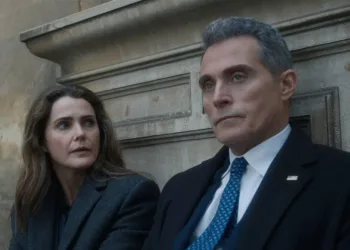
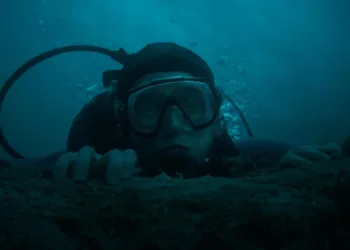
They reach for adolescence again by heading to the Amazon with a small crew of childhood friends: Kenny, a cameraman with a taste for light spirits, and Claire, a divorced lawyer who once carried their middle-school home movies as the lead. Once in Brazil, they hire Ana as a captain and Santiago as a snake handler. The plan is to shoot a low-budget horror picture. Nature submits a script note. A massive serpent starts hunting them, forcing a pack of stalled-out artists to face a predator that treats artistic longing and midlife panic as equally edible. Survival meets artistic self-deception, and neither behaves politely.
The Ouroboros of Modern Intellectual Property
Tom Gormican builds a self-reflexive story that treats the 1997 film like scripture inside the new film’s own universe. That choice mirrors a cultural habit of reprocessing the past because the present feels like an empty room with bad acoustics. Call it Cinematic Regurgitation Syndrome: the industry swallowing its own history, then serving the half-chewed remains with a fresh garnish.
The script runs on movie-within-a-movie logic, taking aim at the nostalgia appetite that runs so much contemporary media. Hollywood leans on brand recognition to reduce risk, and this film turns that instinct into a joke by handing the prized name to a crew of hopeful incompetents.
These characters speak about a schlocky B-movie like it belongs in a museum. The delusion doubles as a jab at the way audiences assign graduate-seminar gravity to mass-market leftovers. There’s also persistent confusion about what they’re even making.
They can’t settle on remake, reboot, or spiritual successor, and that uncertainty leaks outward so the audience shares the same wobble. The running gag comes from marketing language doing acrobatics to justify itself. A culture that demands categories for every artwork shows up here as a kind of bureaucratic hunger. Gormican catches the desperation of creators who think proximity to a famous name will confer legitimacy by osmosis.
The film argues that our memories of movies can carry more weight than the movies ever did. That’s Retrospective Validation: the impulse to locate meaning inside the disposable pop culture of childhood because adulthood feels thin.
The irony is that Sony releases a satire about IP-mining while mining its own IP. Picture an ouroboros in a conference room, tail in mouth, PowerPoint on the wall. The meta-frame works like armor, a pre-emptive flinch. By ridiculing the act of remaking Anaconda, the filmmakers try to blunt the accusation that they are remaking Anaconda. It’s clever. It also feels a little cold, like a magic trick performed with the lights too bright.
The Dramaturgy of the Disenchanted
Jack Black plays Doug as the film’s steady ballast, a man with a bruised creative soul that still registers pain. He sells the quiet grief of someone who chose stability and now wants one last shot at relevance before the door seals shut.

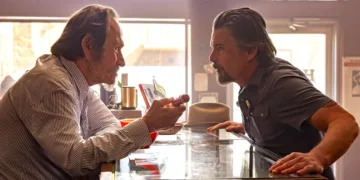
Paul Rudd answers him as Griff, an actor who wears pretension like protective gear. Rudd gives Griff odd physical tics and a toothpick habit, searching for character through affectation, and the performance needles the self-importance that clings to certain “serious” acting methods. Black and Rudd together feel like a found object from a long friendship. They talk in shared history, inside jokes, and that sad, stubborn optimism that keeps people moving after the dream has started to rot.
Steve Zahn turns Kenny into a specific strain of earnest stupidity, loyal past the point of self-respect. He supplies the physical comedy that keeps the mood from sinking into full despair. Kenny reads like a man who traded aspiration for a dependable stream of “light liquors,” and the film tags the habit with a neat sociological label: “Buffalo Sober.” Thandiwe Newton plays Claire, a divorced lawyer stepping back into her childhood role in the group. Newton is solid, present, capable. The script strands her anyway, leaving her in the orbit of the men’s crises. Claire becomes a witness to their implosions more often than an engine of her own story.
Selton Mello makes Santiago memorable by staying dead serious, letting his snake obsession land as both ridiculous and genuinely menacing. Daniela Melchior plays Ana with quiet competence, and her steadiness throws the Buffalo crew’s amateur fumbling into sharper relief.
The casting lands partly because it trades on pre-existing affection. Viewers want these performers to win because they’ve watched them win in stronger films. The movie uses that collective charisma to cover for thin character writing, a familiar move in ensemble comedy. The actors slide into versions of their public personas, and that familiarity adds comfort to a story haunted by one fear: being forgotten.
The Digital Serpent and the Death of Craft
The giant anaconda arrives through digital effects, and the CGI lacks the tactile, oily presence of the practical animatronics tied to the 1997 original. The shift tracks a larger drift in cinema, where the physical monster gives way to weightless code. A key plot beat involves a professional “actor” snake named Heitor; once Heitor dies, the crew goes looking for a real monster. The film sprinkles in physical gag work to keep the energy loose, including Jack Black charging through brush with a rotting boar carcass strapped to his back.

The imagery leans into the grotesque for laughs. The Amazon setting sells isolation, even though the film was shot in Australia. The movie favors chases and slapstick over sustained horror dread. The serpent is staged as a fast-moving, enormous predator, a creature with the vibe of a theme-park attraction built for maximum throughput. That design choice thins out the sense of organic threat. The anaconda registers as digital artifice, and the danger can feel as flimsy as the cheap film stock Doug and Griff dream of shooting.
This becomes a pixel spectacle that underlines what gets lost when mechanical monsters exit the stage. The 1997 snake carried heft; you could feel gravity in the way it occupied space beside actors. There’s a distinct terror in watching a physical object press against a human body. Digital snakes, even at high resolution, seem to operate on a parallel plane. The film tries to compensate with speed and scale. Make it huge. Make it fast. Let motion blur and frantic cutting do the persuasion. That’s the central lie of a lot of modern action cinema, and the movie knows it’s selling the lie while selling it anyway.
The Delusion of Meaningful Themes
A major comic thread comes from the characters trying to invent profound meaning for their monster movie. They pitch the snake as climate change, or family trauma, grasping for significance they can present to an imaginary academy. Doug sees himself as a future award-winning director, a “White Jordan Peele” who expects applause for his vision.

The self-image sits miles away from the reality of a low-budget production run by people improvising competence. The film keeps circling back to the pleasure of making something with friends, even if the end product lands in the bargain bin of history.
The trip plays like an escape hatch from the monotony waiting back home. They locate identity in the act of creating even while the jungle turns into a bloodbath. Artistic pursuit starts resembling madness, a mental shelter that blocks out the noise of real life. The snake shifts into metaphor, standing in for the monsters attached to unrealized dreams. The “Themes!” gag is where the script lands its cleanest punch. It skewers the modern expectation that every piece of entertainment must carry a heavy sociological payload to earn respect.
A movie about a big snake can function perfectly well as a movie about a big snake. The characters’ failure to land a theme becomes an argument against the vanity of the auteur myth. Doug and Griff read as ordinary men who want to feel special. Their fixation on “stakes” and “arcs” serves as a coping mechanism, a way to avoid staring at the blank space where a career should be. The observation is genuinely sad, dressed up in jokes about spider venom and public urination. The film understands that the most dangerous monsters can be self-made, invented to fill the silence of a “B-plus” life.
The Fraying Narrative Cord
The writing contains logic gaps the film asks the audience to wave through. Griff’s claim about securing rights to a major studio property goes unexplained, and the question of how a wedding videographer finances an expedition to Brazil floats away. The movie brushes these away with brisk impatience, as if the setup bored the people building it.

The story starts sharp as comedy, then slips into a more standard action shape in the final act. That shift lands like a breach of the early satire. Pacing problems follow: jokes stretch past their natural life, and the real predator shows up late enough to feel like it arrived after the party moved to another room.
Claire and Ana receive thin motivation, a familiar flaw in stories built around male bonding. The film also includes appearances from original cast members, moments that play like forced fan service drills. The amateur movie shoot keeps rolling even as death crowds in, which frames their obsession as both funny and genuinely dangerous. These are men who choose a snake’s jaws over another dreary return to Buffalo. It’s bleak, delivered in a glossy studio wrapper.
The ending plays like a hollow win, a reminder that people act out roles assigned by scripts they never wrote. The film loses nerve and turns into the target of its own jokes. The satirical bite gives way to the blunt impact of a standard blockbuster chase.
Watching a meta-comedy slide into generic pursuit cinema stings, partly because the early material promises sharper trouble. Self-awareness still has gravity, and genre still pulls hard. The credits roll, and the last aftertaste is the image the movie keeps returning to: a snake eating itself, then looking around for seconds.
Anaconda is a 2025 American meta-action comedy horror film that serves as a reimagining of the 1997 cult classic. Scheduled for a wide theatrical release in the United States tomorrow, December 25, 2025, by Sony Pictures Releasing, the film follows a group of lifelong friends who venture into the Amazon to film a low-budget remake of their favorite childhood movie, only to encounter a real, prehistoric serpent. Audiences can catch this holiday release exclusively in theaters starting tomorrow, with subsequent streaming expected on platforms like Netflix in 2026.
Full Credits
Title: Anaconda
Distributor: Sony Pictures Releasing, Columbia Pictures
Release date: December 25, 2025
Rating: PG-13
Running time: 100 Minutes
Director: Tom Gormican
Writers: Tom Gormican, Kevin Etten
Producers and Executive Producers: Brad Fuller, Andrew Form, Kevin Etten, Tom Gormican, Samson Mücke
Cast: Jack Black, Paul Rudd, Steve Zahn, Thandiwe Newton, Daniela Melchior, Selton Mello, Ione Skye
Director of Photography (Cinematographer): Nigel Bluck
Editors: Craig Alpert, Gregory Plotkin
Composer: David Fleming
The Review
Anaconda
This iteration of Anaconda exists as a hall of mirrors, reflecting the industry's obsession with its own corpse. While the meta-satire regarding "themes" and IP mining is razor-sharp, the film eventually loses its nerve, trading its intellectual teeth for generic CGI spectacle. The chemistry between Black and Rudd provides a necessary pulse, yet the narrative unevenness leaves one feeling that the satire was safer than the survival. It is a clever, albeit cynical, examination of artistic desperation that ultimately settles for being the very blockbuster it mocks.
PROS
- Sharp, self-aware satire of Hollywood’s reliance on nostalgia and branding.
- Genuine comedic chemistry between Jack Black and Paul Rudd.
- Steve Zahn delivers a standout performance as the earnest, bumbling Kenny.
- Relatable exploration of mid-life crises and the pursuit of "unrealized dreams."
CONS
- Digital effects lack the visceral impact of the original practical animatronics.
- Female characters remain largely underdeveloped and sidelined.
- Sudden tonal shift from clever comedy to generic action in the final act.
- Several narrative logic gaps regarding the acquisition of film rights and funding.