









![Kingdom Hearts Collection [I-III] Review](https://gazettely.com/wp-content/uploads/2026/10/Kingdom-Hearts-Collection-I-III-1-360x180.webp "Kingdom Hearts Collection [I-III] Review: KHII Holds Steady as Newer Entries Fluctuate 37")



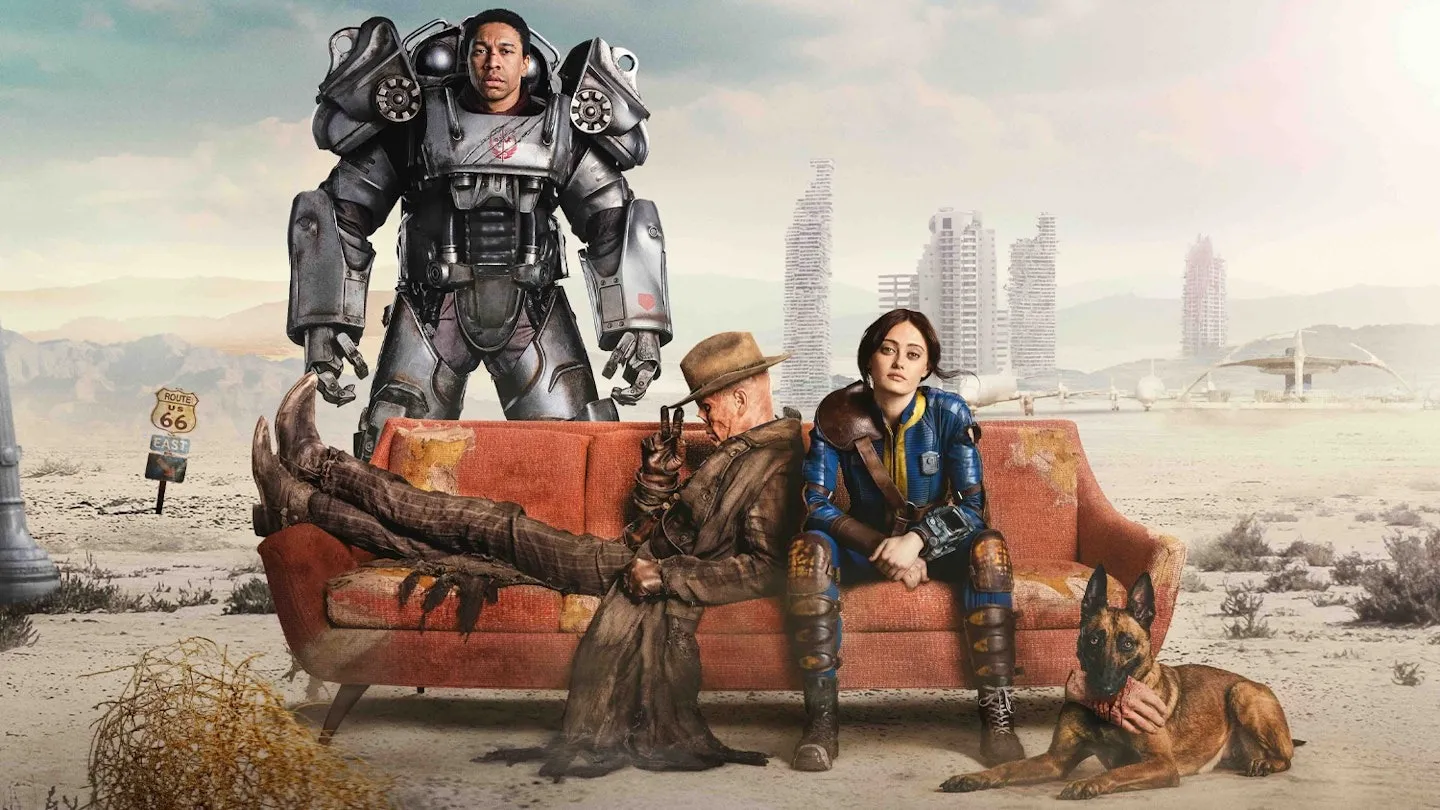

The video game adaptation has secured a firm place in today’s streaming lineup. Prime Video’s move to bring the Fallout universe to television carried a clear mandate: capture a sprawling, lore-heavy setting while preserving its satirical bite. Season 1 proved the series could chart a dramatic route that respects the franchise’s retro-futuristic identity and still land its sudden, often brutal violence with purpose. The result plays like an acid-laced critique of American exceptionalism, wrapped in glossy post-nuclear imagery that keeps smiling while it pulls the rug out from under you.
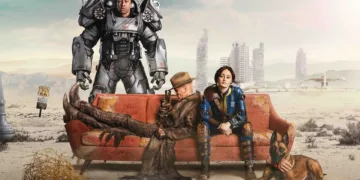
Season 2 opens with a heavier air and a clearer road map, paired with central characters whose moral bearings look increasingly splintered. The story resumes right after the explosive finale and quickly underlines the scale of the setting by bringing separated leads into the same orbit again. Lucy MacLean (Ella Purnell) travels west with The Ghoul (Walton Goggins), chasing the duplicitous Hank MacLean (Kyle MacLachlan).
Maximus (Aaron Moten) returns to the Brotherhood of Steel with the cold fusion relic, stepping back into an organization that keeps tightening its grip. The season shifts its main stage to the legendary, highly irradiated New Vegas, and that relocation reframes the show’s interests toward governance, systemic breakdown, and the human cost of power maps drawn by people who never plan to live under them.
Characters in Collision: Morality and Shifting Roles
Season 2 spends real time on its three leads, treating their evolution as the clearest lens for how the wasteland pressures morality, identity, and accountability. The character work carries the show’s social commentary, because each shift in loyalty or survival logic points back to larger systems that reward cruelty, brand opportunism as order, and sell nostalgia as a substitute for ethics.
Lucy and The Ghoul remain the series’ primary dramatic engine. Their road trip gives the show its best structure for moving through the brutal beauty of the post-apocalyptic landscape while letting each stop function like a test of values. For Lucy, the experience accelerates her education in survival and strips away the last remnants of vault naiveté. She adapts into a harsher mode of living where her old social training offers little protection.
Purnell keeps Lucy anchored in an unsettling, near-militant politeness even as her choices grow darker, and that tension plays as pointed satire. The show treats etiquette as a cultural artifact that persists long after its usefulness, a stubborn performance of “civilization” staged in front of atrocity.
Goggins continues to make The Ghoul magnetic, built from cynicism and exhausted longevity. This season gives him more dimensionality through rare flashes of vulnerability tied to the person he used to be, Cooper Howard. Those glimpses stop him from becoming a single-note monster and redirect attention to origin stories shaped by choices, incentives, and the stories people tell themselves to keep moving. The chemistry and dark humor between him and Lucy keep landing, providing sharp levity that fits the franchise’s tonal DNA. Their dynamic reads like a strained family unit formed under duress, with influence passing between them in rough, reluctant ways.
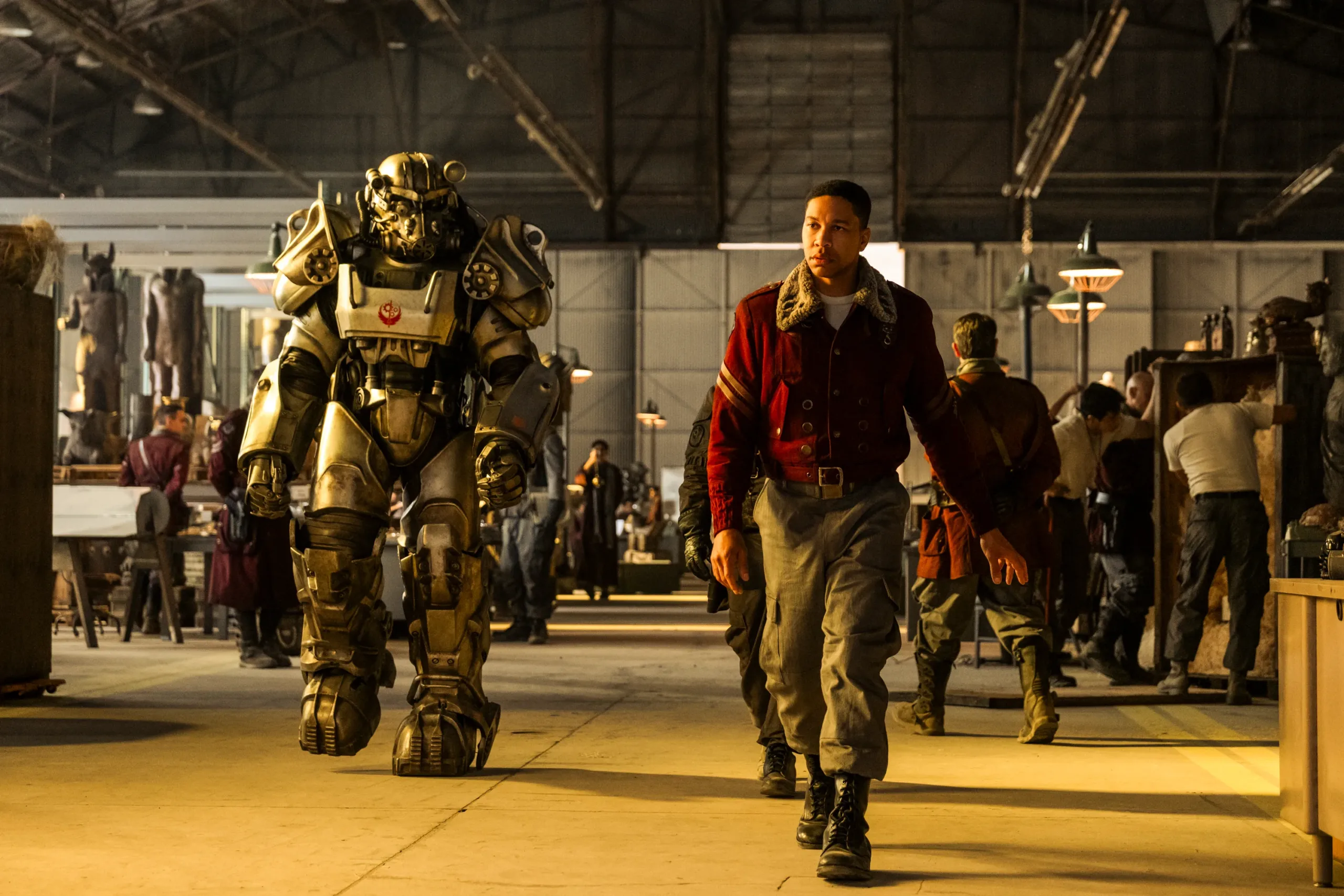
Maximus offers the season’s most direct look at institutional pressure. He re-enters the Brotherhood with a higher, thornier position, and his earnest desire to do genuine good keeps colliding with bureaucratic procedures and morally slippery priorities. The series frames him as a person caught inside a machine built for control, and his conflict becomes a study in how organizations reduce people into roles, then punish them for showing a conscience.
Moten plays that constraint through controlled physicality and internalized emotion, emphasizing how little agency Maximus holds inside the military-cult structure. His separation from Lucy gives his storyline space to deepen, especially through his relationship to Brotherhood authority and the pull of new alliances. He becomes the season’s clearest figure in an argument about redemption and systemic complicity, with the show asking what “good” can even mean once power structures define the vocabulary.
The pre-war flashbacks continue building context through Cooper Howard’s life before the bombs. Justin Theroux enters the past timeline as Robert House, delivering what amounts to slimy perfection, a portrait of the toxic overlap between Hollywood vanity and early tech-oligarch power. House’s motivations remain opaque, even to viewers with deeper franchise familiarity, and the show uses that uncertainty to keep the past storyline feeling like a cautionary tale with missing pages.
The crosscutting between Cooper and The Ghoul draws thematic parallels across timelines and strengthens the sense of transformation as a chain of human decisions. Kyle MacLachlan’s Hank MacLean returns with a larger, quirkier presence, and his secretive actions in the Mojave Wasteland and buried history create links that pull the leads together. His expanded role also gives the series room to examine rot inside the original Vault-Tec hierarchy, with the show treating institutional decay as a legacy problem that survives apocalypse with ease.
Mapping Modern Fractures in the Wasteland
Fallout keeps widening its map and uses world-building to mirror social fragmentation and the pursuit of power. The move into the Mojave Wasteland and New Vegas carries political meaning, especially for longtime fans who recognize the terrain as a region shaped by ideology, scarcity, and competing claims to legitimacy.
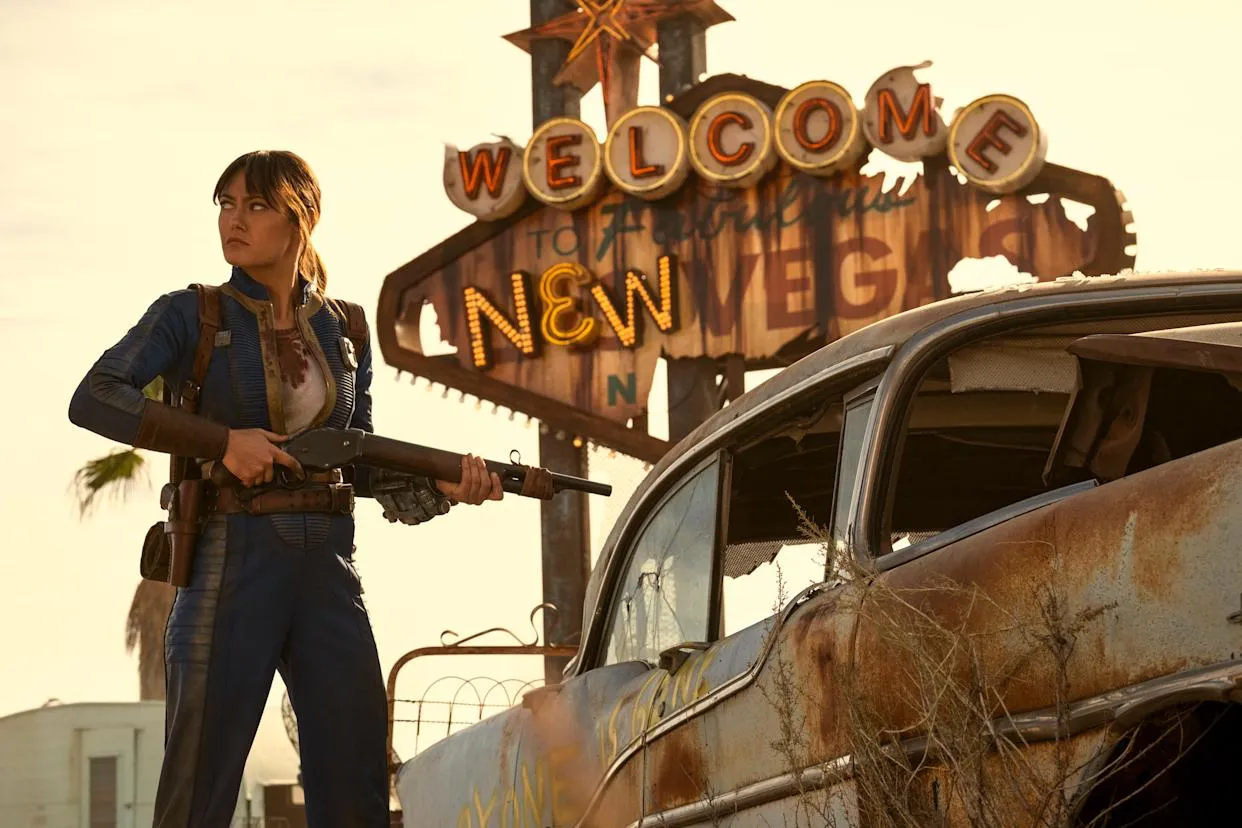
Visually, the execution remains a standout. Howard Cummings’ production design and the cinematography give spaces like the Lucky 38 casino and the Dino Dee-lite Motel a lived-in tangibility. The wasteland feels like an active force, shaping behavior and compressing morality through environment, deprivation, and opportunity.
That commitment to physical detail extends to new creatures and key technology. Radscorpions and the bullish Deathclaws expand the show’s zooography, while familiar armor and machines like T-45 power armor and the television-faced Securitrons reinforce the franchise’s retro-futuristic logic. The show’s aesthetic choices also carry cultural weight: it treats nostalgia as a weapon, a shiny wrapper around systems that stayed violent long before the bombs made it obvious.
Faction conflicts come forward with more clarity, and they add political density that supports the season’s thematic aims. The New California Republic (NCR) enters the picture and enriches The Ghoul’s path. Caesar’s Legion arrives as a Roman-inspired cult rendered with strong visual clarity, landing as a funny-terrifying illustration of destructive tribalism dressed up as tradition.
The region becomes crowded with organizations that claim order while feeding on fear and control. The Brotherhood of Steel shifts status as possession of the cold fusion relic elevates them into a dominant player, and their ruthlessly ambitious drive for control fuels much of the season’s tension. The structure tracks a streaming-era storytelling trend where a season can feel built like an open-world game, with viewers watching competing ideologies collide across a shared landscape rather than following a single linear track.
The series also keeps a self-aware relationship with its video game roots. It nods directly to mechanics through moments like Lucy running through choice options (A, B, C), and it layers in weapon and item references that read as deliberate signals to the audience. That fan service is used with strategy, tied to high production values and a commitment to dark satire that stays coherent even when the show leans into ridiculous detours. Fallout treats life in the ruins as a sequence of interruptions, side paths, and abrupt violence, and it frames that instability as part of the point. Straight lines feel like a fantasy here, a comforting story the wasteland refuses to honor.
Narrative Structure, Pacing, and Thematic Density
Season 2’s structure expands in a way that echoes the source games’ sprawl. The season organizes itself around competing factions and figureheads, and it sustains multiple plotlines at once. The story reads like a record of the wasteland’s political ecology, with personal journeys functioning inside a much larger system. That density increases the season’s ambition, while also softening some of the momentum that defined the first season’s drive.
The opening stretch moves slower, taking time to establish weighty thematic ideas tied to corporate corruption and cynical self-interest. The series spends early episodes laying track for the season’s conflicts, and that groundwork can stall forward motion. Once the three quests are firmly in place, the show regains propulsion and becomes more engrossing. The adaptation challenge remains visible: the franchise’s non-linear, choice-driven identity needs translation into a coherent seasonal arc, and Season 2 aims for organic complexity even when pacing tightness slips.
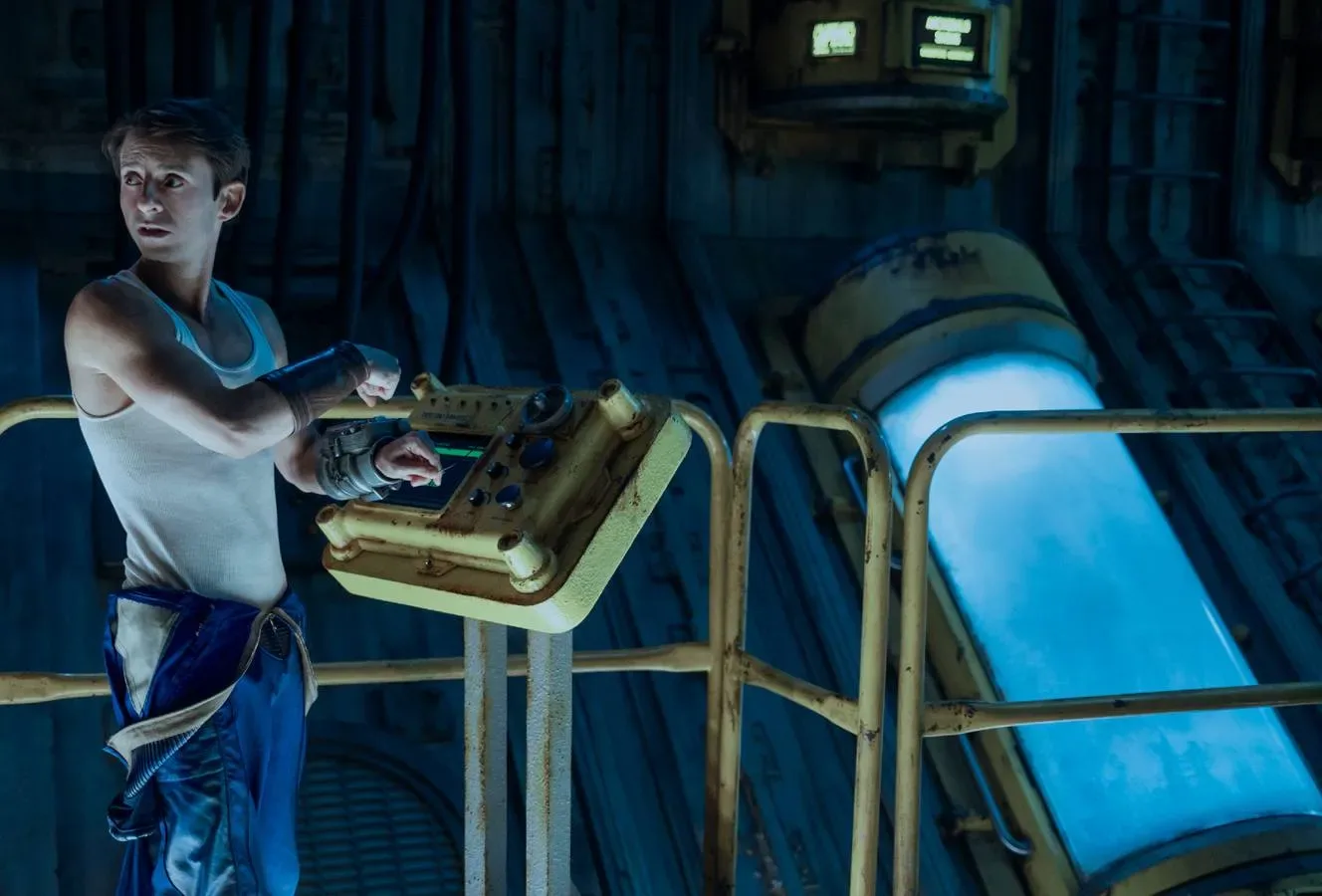
The concurrent Vault storylines create uneven flow. Norm MacLean’s Vault plot, built around his investigation into Vault 31’s frozen managers, stands out as the strongest parallel thread. It plays as a claustrophobic political thriller that operates on different rhythms than the surface action, and it becomes a structural high point. Stories in Vaults 32 and 33 feel less urgent and can interrupt the main trek, even as they deliver black comedy through the sheltered dwellers’ cluelessness. The show’s structure reveals a tension between scope and focus, since some corners of this world simply carry more narrative voltage than others.
The season’s thematic spine asks bleak questions about ethical change in a fractured society strapped for resources. Tribalism becomes the recurring force that blocks collective progress, appearing in small personal conflicts like Lucy and The Ghoul’s friction and in entrenched faction warfare like the Brotherhood’s conflict with the Legion. Fallout frames self-interest and infighting as default settings that keep reasserting themselves under pressure, and that cynicism reads as timely when placed against political stasis and the recurring failure of unified action.
Technical Excellence and Industry Influence
Fallout maintains high production quality and keeps setting a benchmark for genre television, reinforcing the durability of its initial creative success. The series holds tight to the franchise’s “atompunk” sensibility and retro-futuristic styling, and the set work, practical effects, and creature execution show sustained investment in consistency. The Deathclaw work in particular signals commitment to making the world feel coherent across seasons, even as the map grows.
The show continues its signature approach to violence, using visceral shootouts and action beats that often end in comedic, splattered gore. That tone remains aligned with the franchise’s B-movie sensibility, and the ongoing use of ’50s hits on the soundtrack deepens the unsettling humor by pairing cheerful nostalgia with brutality.
Season 2 also reinforces a streaming-era blueprint for adapting vast, faction-driven source material without getting buried under lore. The series leans into a complex world that values character depth and political texture, and it treats sophisticated world-building as a mainstream proposition. In an industry that keeps chasing big intellectual properties, Fallout makes a strong case for adaptations that trust viewers to track competing ideologies, fractured moral arcs, and storytelling shaped by systems rather than neat resolutions.
Fallout Season 2, the popular television adaptation of the classic video game franchise, is set to continue the story of a post-nuclear apocalypse world. The eight-episode season premiered its first episode on December 16, 2025, on Prime Video, one day earlier than originally announced. New episodes will be released weekly every Wednesday until the season finale on February 4, 2026. The second season shifts its primary setting to the iconic Mojave Wasteland and the post-apocalyptic city of New Vegas, following Lucy MacLean and The Ghoul as they pursue her father, Hank MacLean. The series is available to stream exclusively on Prime Video.
Full Credits
Title: Fallout
Distributor: Prime Video / Amazon MGM Studios
Release date: December 16, 2025
Rating: TV-MA
Running time: ~60 minutes per episode (8 episodes total)
Director: Jonathan Nolan, Frederick E.O. Toye, Liz Friedlander
Writers: Geneva Robertson-Dworet, Graham Wagner
Producers and Executive Producers: Jonathan Nolan, Lisa Joy, Geneva Robertson-Dworet, Graham Wagner, Athena Wickham, Todd Howard, James Altman, Margot Lulick
Cast: Ella Purnell, Aaron Moten, Walton Goggins, Kyle MacLachlan, Moisés Arias, Justin Theroux, Leslie Uggams, Frances Turner, Xelia Mendes-Jones, Michael Cristofer, Michael Emerson, Zach Cherry
Composer: Ramin Djawadi
The Review
Fallout Season 2
Fallout Season 2 successfully expands its world while deepening the moral complexity of its central figures. The strength of the character dynamics, particularly the partnership between Lucy and The Ghoul, anchors the narrative through its political expansion into New Vegas. While the season faces initial struggles with pacing and managing its numerous plot threads, its commitment to high production quality and sharp societal satire confirms its status. It is a compelling, gruesome, and frequently hilarious continuation that raises the bar for video game adaptations.
PROS
- Significant, effective development for The Ghoul and Maximus.
- The pairing of Lucy and The Ghoul remains the core strength and source of dark humor.
- Successful, high-quality translation of the Mojave Wasteland and New Vegas.
- Effective use of factions to comment on modern political tribalism and systemic failure.
- Consistent excellence in visual aesthetic, practical effects, and creature design.
CONS
- The beginning is notably slower than the first season's conclusion.
- The broad scope occasionally makes the story feel overly complex or scattered.
- Vault storylines outside of Norm's arc often feel less urgent or interrupt the main action.