


























![Kingdom Hearts Collection [I-III] Review](https://gazettely.com/wp-content/uploads/2026/10/Kingdom-Hearts-Collection-I-III-1-360x180.webp "Kingdom Hearts Collection [I-III] Review: KHII Holds Steady as Newer Entries Fluctuate 40")


The Christmas movie often builds itself around a single guardian of seasonal cheer, a child, a reluctant savior, or Santa. Michael Showalter’s Oh. What. Fun. proposes a different anchor and hands the story to Claire Clauster, played by Michelle Pfeiffer. Claire is a Houston matriarch who spends months assembling an immaculate, expansive celebration for her scattered adult children.
Her work turns an affluent house into a winter display that reflects both pride and a slow-burning, buried resentment. She asks for one concrete gesture of thanks: a nomination for the “Holiday Mom of the Year” contest on The Zazzy Tims Show. When her self-absorbed family heads out for Christmas Eve plans and casually leaves her behind, that small request and years of unacknowledged labor collide.
The abandonment breaks her composure and sends her on an impulsive, cross-country flight to Hollywood, a desperate and illogical attempt to secure the public validation that her family withholds. The film frames itself as a Christmas dramedy about the unseen work required to keep the seasonal illusion intact.
The Gravitas of Performance Versus Script Limitations
Oh. What. Fun. takes most of its power from Pfeiffer’s commitment. Her career already shows a knack for giving outlandish setups emotional weight, and that skill shapes Claire Clauster from a stock disgruntled housewife into a figure with wounded dignity. Her work functions as the structural glue that keeps the story from collapsing under the later shifts into absurdity.
Pfeiffer focuses on quiet exchanges and avoids big speeches. She plays Claire’s disappointment, deep affection, and final flash of rage through small adjustments, a tightened jaw, a measured swallow after a cutting remark, or the sudden flare of anger when she confronts rude children at the start of the film. These details sketch a woman who has poured everything into her family and now feels scraped bare. Her performance gives viewers a point of emotional reference even after the plot drifts into unbelievable territory.
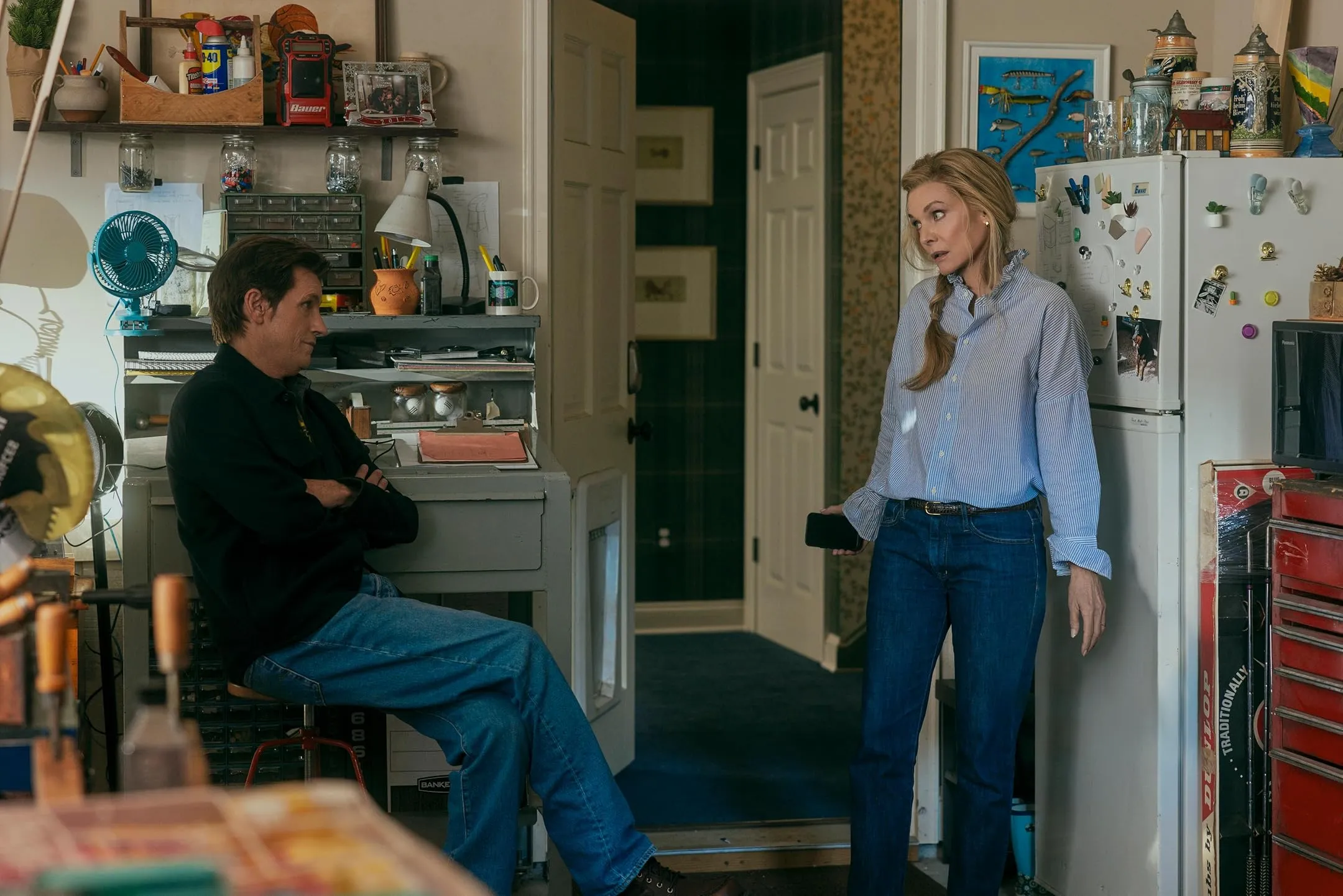
The script does not provide the same level of detail for the people around Claire. The ensemble gathers several strong performers: Denis Leary as Nick, Claire’s amiably oblivious husband; Felicity Jones as Channing, the stressed, responsible eldest daughter; Chloë Grace Moretz as Taylor, the habitually flighty middle child; and Dominic Sessa as Sammy, the youngest son pining over romance. Jason Schwartzman appears as Doug, the dorky son-in-law, and Joan Chen appears as Jean, the competitive neighbor. Their presence gives the movie a sleek, polished surface.
The writing, however, keeps these characters on the level of type. Nick sits in the role of the clueless sitcom father. Channing’s identity rests on her stress. Taylor repeats the “girlfriend of the month” pattern. This narrow definition of personality weakens any sense of lived-in family chemistry. Their scenes lack the specific shorthand, private grudges, and affectionate irritations that usually grow within a long-standing household.
When the clan finally recognizes its mistake and emotions surge, the big feelings arrive without enough groundwork. The script rarely pauses to supply interiority for anyone except Claire, which turns the rest of the family into pieces that move her story forward and never quite become distinct figures who respond to her disappearance.
Showalter attempts to add texture with smaller roles. Eva Longoria gives Zazzy Tims a clear, effective presence as the television host, and a brief turn from Danielle Brooks signs the kind of odd, specific detail that has marked Showalter’s prior work. These grace notes highlight what the film can do in short bursts. They do not repair the flat writing around the main Clauster clan. The cast has the skill to play varied, layered people, yet the material confines them to broad concepts.
Narrative Contrivance and the Search for Meaning
Showalter and co-writer Chandler Baker start from a premise rich in potential: a spotlight on the enormous, often unacknowledged labor that women invest in building a flawless Christmas fantasy. The film sharply captures the social pressure on mothers to produce a seamless holiday and the private strain that follows.
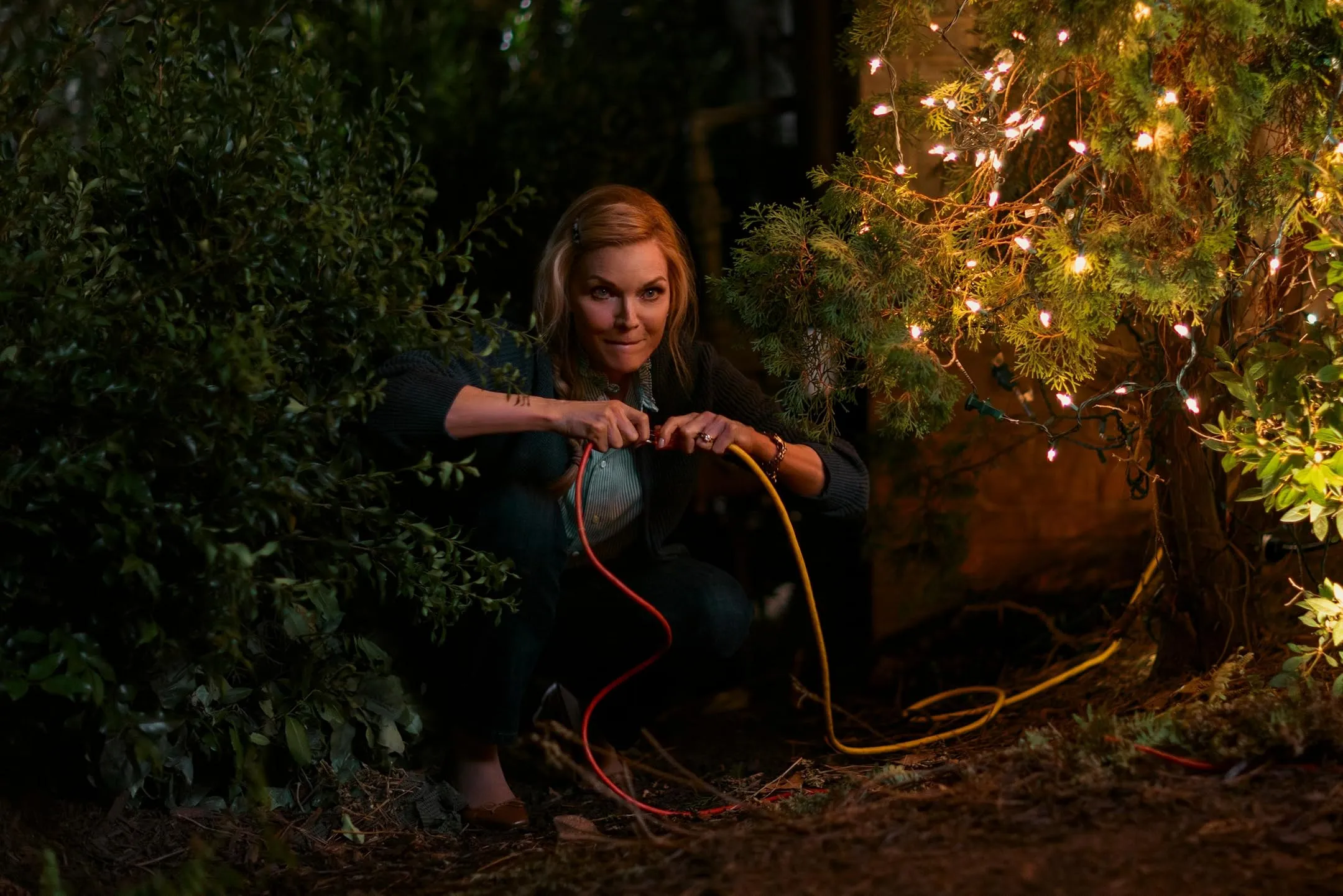
Claire’s fatigue and her family’s unthinking consumption of her work feel sharply observed. The script suggests that the family’s indifference grows from a recurring pattern of behavior that feels different from isolated carelessness. Early scenes frame a grounded domestic drama with recognizable power dynamics.
The shape of the story falters once Claire boards the plane. The film pivots from closely observed family tension to exaggerated screwball material as her cross-country odyssey begins. The attempt to pair realistic anxieties about domestic labor with frantic road-trip antics creates a disjointed viewing experience. The second act embraces a level of implausible chaos that undercuts the precise character foundation built for Claire.
Her drive to win a talk-show contest feels thin and dated next to the quiet intelligence in Pfeiffer’s performance. Plot beats such as the speed of her Texas-to-Hollywood trip, the contrived towing of her car, and her easy entry into the television studio play less like consequences of character choices and more like arbitrary obstacles designed for cheap gags. The film demands a sustained willingness to accept nonsense, which erodes the credibility established earlier.
Holiday-movie references add another layer of strain. The script frequently cites and even shows clips from more established Christmas titles. These gestures feel like a plea for association with the holiday canon. The film spends time announcing its lineage and neglects the patient work that might earn a distinct place alongside those favorites.
Within this uneven structure, the script raises questions that carry real weight. The Clauster dynamic invites the viewer to see Claire either as a saintly, overlooked mother or as a perfectionist whose demanding ritual feeds the obliviousness she condemns. The story briefly touches on the problem of rude children and also on the crushing expectations that surround the nuclear family during the season.
The film steps back from these possibilities. When the family reunites and faces its failings, the repair arrives quickly. Apologies and expressions of gratitude resolve the crisis in a sweet, predictable finale. The closing stretch sidesteps the deeper emotional and structural problems that sent Claire fleeing in the first place and settles for a neat, cheerful finish and avoids a harder, more honest outcome.
Technical Aesthetics and Pacing Failures
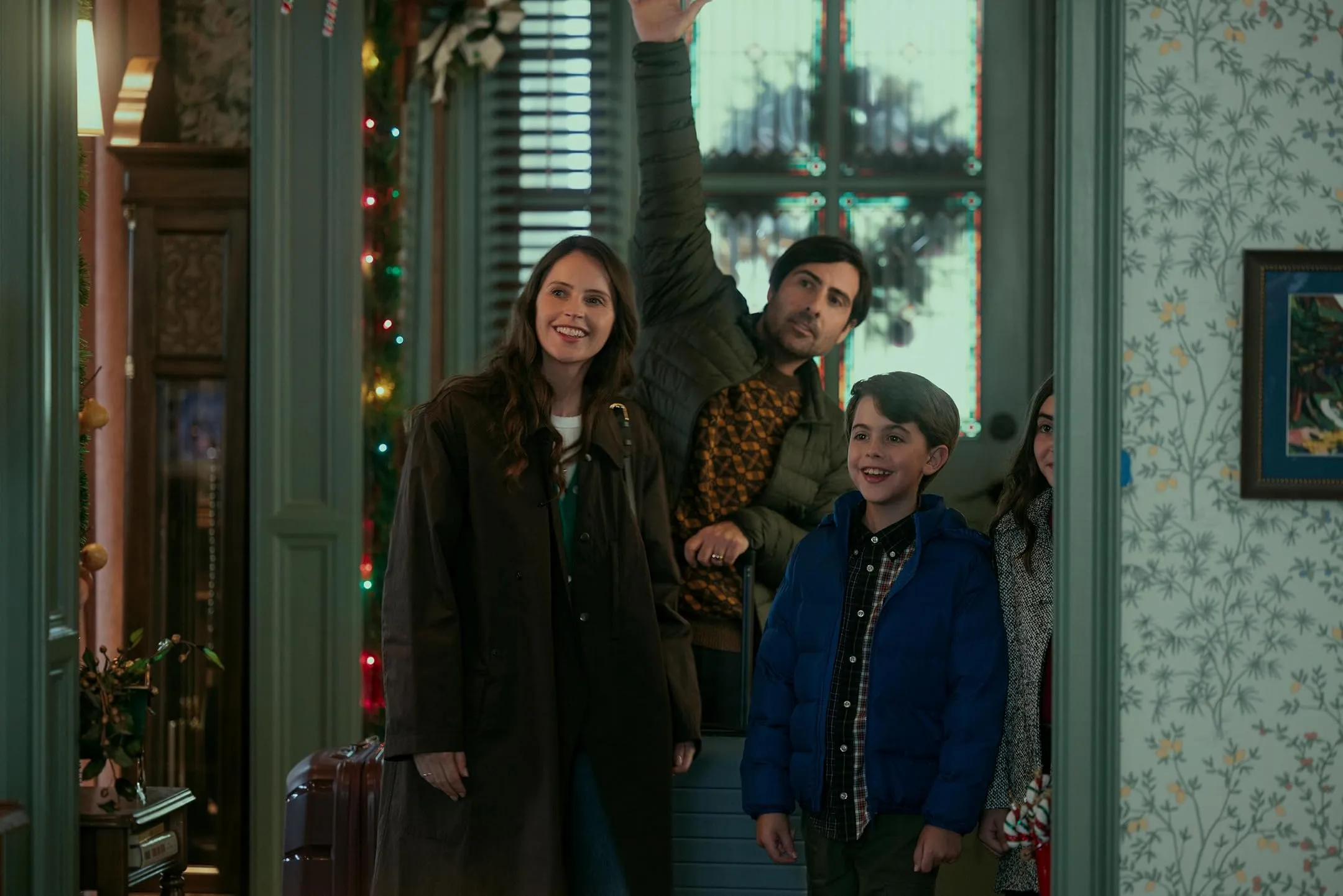
Michael Showalter’s visual approach appears from the first scenes. The film leans into a glossy surface, with warm, careful lighting, polished production design, and lavish holiday décor in the Clauster home. Oh. What. Fun. looks distinctly cinematic and easily surpasses the flat, anonymous visuals that crowd many streaming holiday titles. The technical craft is strong and points to a sizable budget and an experienced creative team.
Pacing and structure create larger problems. The narrative takes a striking amount of time to reach the inciting incident. Claire’s abandonment, which sets the main plot in motion, lands close to the halfway mark. A slow, meticulous setup gives way to a frantic, loosely defined series of road episodes.
This uneven rhythm exposes a script that lingers on early domestic conflict and then rushes through the story that the premise promises. The compressed travel section invites logistical doubts. The Houston-to-Hollywood timeline and the conveniently timed mishaps read as mechanical and lack the feeling of natural outgrowths of Claire’s choices.
Specific details strain the film’s sense of realism. The Houston setting sits at odds with the snow-covered, postcard-style Christmas imagery that the movie favors, which leads to a gap between geography and mood. Accents add another point of disconnection. Pfeiffer adopts a mild Texas inflection, while the rest of the family speaks with a more neutral American sound, reinforcing the sense of a story that unfolds in a generic movie-space version of a city.
The handling of domestic labor draws attention for similar reasons. The sprawling, immaculate Clauster residence appears to rest on Claire’s solo effort, with no hint of household help, which throws the story back toward a fantasy of the all-capable matriarch and away from the grounded critique of invisible work that the premise suggests.
A Polished, Predictable Holiday Offering
Oh. What. Fun. arrives with a clear and valuable idea, the recognition of the invisible emotional and physical effort that mothers invest in holiday rituals. Michelle Pfeiffer provides a strong, deeply felt center and conveys real vulnerability even as the script grows clumsy. The movie carries an attractive, high-end visual sheen that makes it easy viewing.
The film’s storytelling remains its weakest element. The ensemble of capable performers receives thin, simplified roles that never quite form a believable family unit. The screenplay struggles with tone and trades the grounded domestic truth of its first act for noisy, implausible screwball antics in the middle stretch. The ending favors tidy reassurance over a fuller examination of the pain and habits that send Claire running to Hollywood.
The result is a handsome, well-meaning Christmas feature that promises sharp insight into holiday labor yet settles into a familiar, mild viewing experience. Viewers who want soothing seasonal background entertainment may find it perfectly serviceable, while those looking for a richer portrait of family tension and recognition will likely sense the gap between the premise and the story that actually unfolds.
Oh. What. Fun. is a Christmas comedy film that premiered globally on December 3, 2025, available exclusively to stream on Amazon Prime Video. The movie stars Michelle Pfeiffer as Claire Clauster, a mother who, after being accidentally left behind by her ungrateful family on Christmas Eve, embarks on a spontaneous road trip to Hollywood to seek the appreciation she feels she deserves. Directed by Michael Showalter, the film is based on a short story by Chandler Baker and aims to shine a spotlight on the often-overlooked labor mothers perform to make the holidays happen.
Full Credits
Title: Oh. What. Fun.
Distributor: Amazon MGM Studios, Amazon Prime Video
Release date: December 3, 2025
Rating: PG-13
Running time: 108 minutes
Director: Michael Showalter
Writers: Chandler Baker, Michael Showalter
Producers and Executive Producers: Kate Churchill, Jordana Mollick, Jane Rosenthal, Michael Showalter, Berry Welsh
Cast: Michelle Pfeiffer, Felicity Jones, Chloë Grace Moretz, Denis Leary, Dominic Sessa, Jason Schwartzman, Eva Longoria, Joan Chen, Danielle Brooks, Devery Jacobs, Havana Rose Liu, Maude Apatow
Director of Photography (Cinematographer): Jim Frohna
Editors: Alisa Lepselter, Nick Moore
Composer: Siddhartha Khosla
The Review
Oh. What. Fun
The film boasts a powerful performance from Michelle Pfeiffer, who grounds the worthwhile premise of a mother's overlooked labor during the holidays. However, the narrative is structurally flawed, sacrificing emotional truth for broad, unbelievable screwball comedy in its central act. The resulting tonal imbalance and predictable resolution prevent the movie from achieving the insight its premise suggests. It is a polished, star-studded attempt that ultimately feels more like a missed opportunity than a genuine addition to the Christmas canon.
PROS
- Michelle Pfeiffer’s commanding, nuanced central performance.
- Successfully highlights the necessary, often unacknowledged labor of mothers.
- High-gloss visual style and production quality.
- An excellent ensemble cast, even if the script underserves them.
CONS
- Severe tonal imbalance, shifting awkwardly from drama to absurd comedy.
- Contrived, unbelievable plotting in the road-trip sequences.
- Simplistic characterization of the supporting family members.
- Predictable, quickly earned resolution that avoids complex emotional exploration.