



























A new setting puts Metroid Prime 4: Beyond under a microscope. The game reaches for a major step forward for the first person exploration series, stretching its familiar structure of isolated atmospheric horror toward a larger architectural plan. The story opens with Samus Aran pulled without warning to the distant planet Viewros after a fierce clash that involves an ancient relic and the series’ returning figure, Sylux. Stranded there, the bounty hunter quickly accepts a mission rooted in the planet’s past: she must uncover the lost legacy of the Lamorn race and gather five specific keys that unlock a teleportation device.
The Lamorn grant Samus potent psychic abilities to support this task. These powers enable telekinesis, manipulation of platforms, and control of charged shots that can arc toward multiple targets. Structurally, the game leans on a vast Sol Valley desert hub that links several carefully built, distinct biomes. The layout combines classic solitary exploration, a large scale overworld space, and the presence of temporary Galactic Federation companions. The project feels daring, with technical and mechanical excellence in many focused sequences, yet the large scale structure often strains under its own weight.
Dissecting First Person Progression
Moment to moment play inside Beyond’s primary exploration zones demonstrates how confident the mechanical design has become. Core ideas from the Prime formula are expressed with precision here.
Combat systems feel fluid and responsive, a clear refinement of the classic first person lock on shooting. Samus’ handling shows marked improvement. She gains a quick forward and backward dodge that gives firefights a sharp rhythm, and her shifts between Morph Ball and suit now feel snappier. Visor modes receive a refresh that keeps aiming and target acquisition stable even when encounters grow hectic. The familiar Charge Beam and Morph Ball bombs return beside specialized elemental beams. These elemental variants alter the look of Samus’ arm cannon and serve dual roles in both enemy encounters and environmental puzzle solving.
New Psychic Powers bring a tactical layer to exploration and combat puzzles. These abilities give Samus telekinetic control over objects in the environment. The control beam can slow time and let the player steer a blast that threads across several targets.
The system functions similarly to certain projectile steering tools seen in the Zelda adventure framework and leads to satisfying puzzle solutions. In faster fights, however, the same mechanic can cut into the pace established by the standard shooting model. Activating the psychic power requires visor swapping and a charged shot sequence, a stack of inputs that some players may find cumbersome next to the direct rhythm of Samus’ regular weapon fire.
The Exploration Loop and Puzzles follow a clear, gratifying pattern. Samus moves through regions by securing a crucial upgrade, applying it to push past the environmental resistance tied to that area, and then facing a guardian boss. Many upgrades, including the Psychic Boost Ball, play like smart variations on familiar series abilities.
Regional structure often echoes classic adventure game dungeons, mirroring the patterns long associated with that style of design. Modern conveniences support this loop. The map lets players place markers to track power ups that remain unreachable on the first visit, which treats the player’s time with respect and smooths out the often labor heavy search for endgame collectibles. Boss battles stand out, with intense set pieces that ask for a pre fight scan to reveal a specific weakness and mix reflex tests with problem solving.
The Hub’s Dissonance and Pacing Failures
The most pronounced issues appear at the scale of the total campaign, where the new open world framing and its effect on pacing create friction. Building the entire adventure around the Sol Valley desert hub sets up immediate pressure points. This desert functions as a central route that links five large, distinct biome dungeons, a wide, mostly empty map meant to support fast travel through Samus’ new Vi-O-La motorcycle.
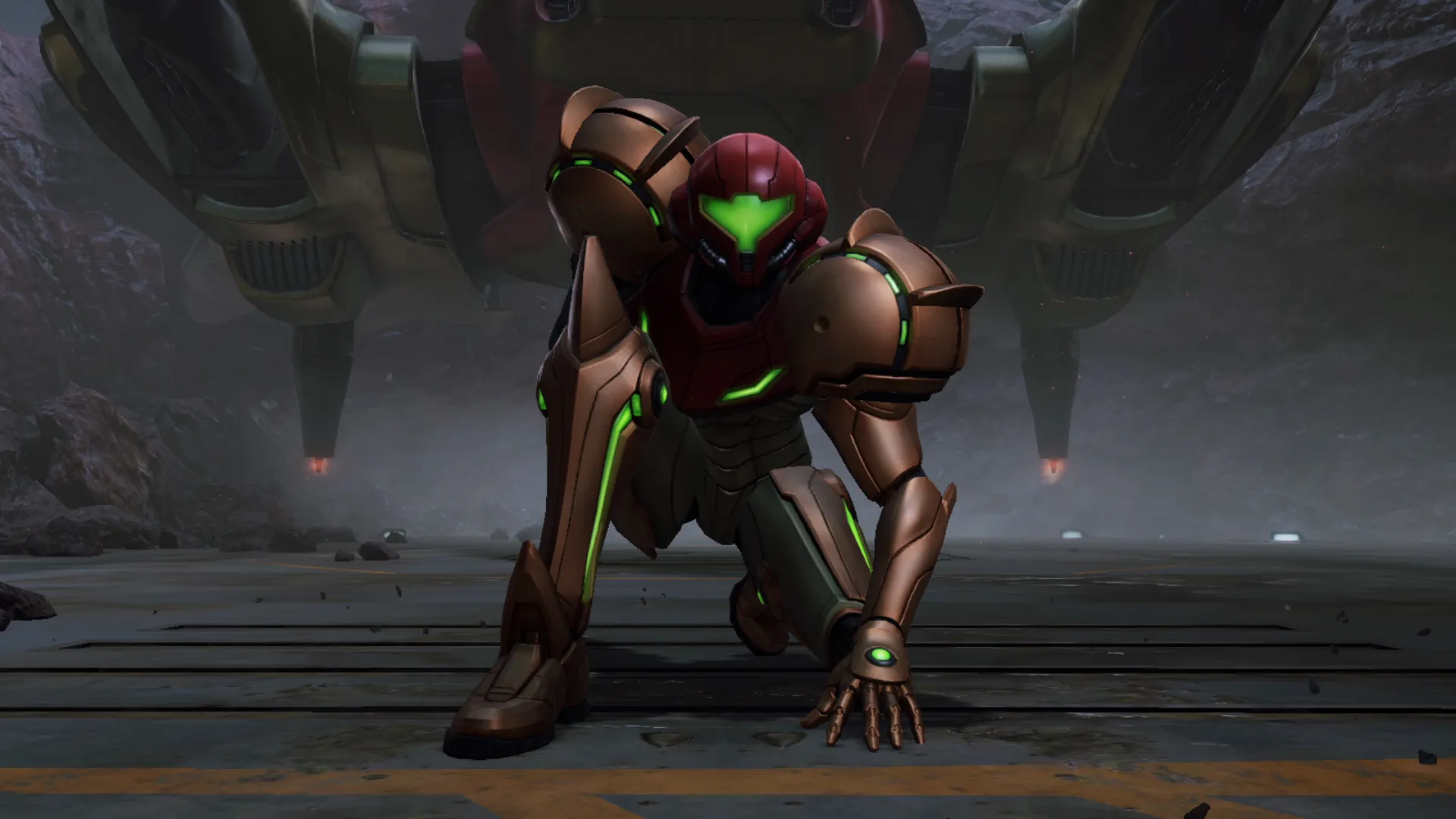
The Motorcycle and Desert Critique feels well earned. The Vi-O-La bike itself controls cleanly, yet the desert attracts frequent criticism as a drab, mostly empty field. Activity density rarely matches the size of the space. A handful of repeated enemy encounters do little to relieve the monotony of its scenery.
This huge, sparse hub feeds directly into issues of pacing and padding. The main plot assigns an objective rooted in this desert: Samus must ride the Vi-O-La to smash green energy crystals. This midgame or late game requirement operates as mandatory busywork that stretches the playtime. The routine grows repetitive and undercuts the momentum that builds inside the core biome dungeons, which makes the task feel like an artificial obstacle that stands between the player and the finale.
Navigation Pain Points deepen these structural problems. Entering and exiting the major biomes often feels convoluted. The need to return to the central home base for new hardware installations from engineer companions creates a constant chore. Each round trip layers in multiple loading screens and long, frequently uneventful bike rides across Sol Valley. This type of travel loop discourages players from revisiting earlier spaces to explore thoroughly or chase completionist targets and compares poorly to the smoother flow associated with the series.
Atmosphere, Character, and Thematic Impact
Beyond achieves its strongest results in presentation and mood inside the self contained biome regions. Atmosphere and world design reach impressive heights, with environments that stand among the series highlights. These distinct, lavish locations shift their tonal weight between the tense sci fi horror isolation that defines earlier entries and the more scripted, action thriller energy of later sequels.
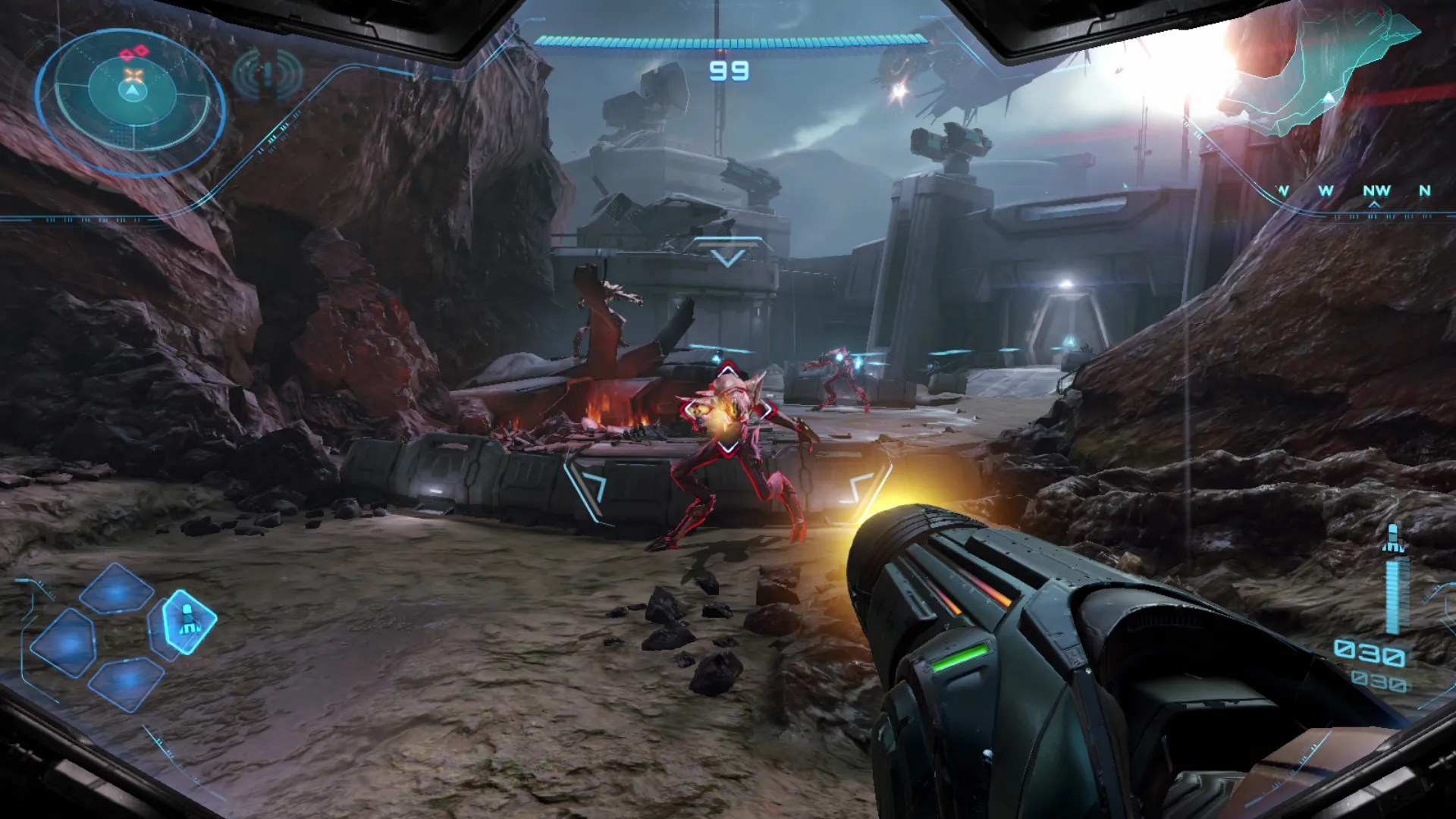
The Scan Visor plays a central role in the storytelling approach. Scanning objects allows players to piece together the history of the lost Lamorn civilization and places rich detail directly into the environments. This worldbuilding gives locations such as the industrial Volt Forge factory a sense of purpose and careful planning.
Visuals and performance mark a showcase moment for the publisher. On Switch 2, the game presents striking art direction with strong lighting and holds a flawless 4K 60 fps output. A 120 fps mode appears for players who prefer extra responsiveness, while the 60 fps setting gives the highest visual clarity. Image quality and small touches like rain or fog beading across Samus’ visor deepen immersion. Technical delivery on original Switch 1 hardware also deserves praise, with a steady 60 fps maintained in spite of a visible resolution cut.
Galactic Federation companions introduce a sharp shift in narrative style. Characters such as the nerdy engineer come across as likable, yet their constant banter and hints chip away at the quiet and tension that long defined Metroid. Their lines lean on familiar cliches at times, and the game carves out long stretches where Samus moves alone and the old ambience returns.
The choice to keep Samus completely silent while talkative allies fill the audio space creates an odd dramatic effect. The primary antagonist, Sylux, feels thinly sketched, without the force or clear motivation expected from a central villain. Focus on Lamorn history pays off in many individual scenes, yet the limited payoff for Sylux and the resulting anticlimax of the closing chapters leave a strong sense that the narrative setup never receives a full resolution.
The Review
Metroid Prime 4: Beyond
The game achieves brilliance within its isolated, beautifully rendered exploration zones, delivering classic Prime gunplay, atmosphere, and environmental puzzle-solving. Its core systems are expertly tuned. However, the ambitious, sprawling structure fails the moment-to-moment experience, as the empty desert hub and forced crystal collecting create frustrating, tedious pacing issues. The game remains a visually stunning, technically polished, and generally excellent adventure. It is held back from true greatness by these structural missteps.
PROS
- Incredibly strong ambiance in main zones.
- Stunning graphics, locked 60 fps (Switch 2).
- Highly responsive, refined lock-on shooting.
- Excellent environmental worldbuilding via Scan Visor.
- Complex, puzzle-based boss encounters.
CONS
- Empty, dull desert hub (Sol Valley).
- Mandatory crystal collecting feels like padding.
- Backtracking is tedious due to the hub's design.
- Sometimes clunky in combat, lack novelty.
- Antagonist Sylux is underdeveloped; ending is anticlimactic.