





![Kingdom Hearts Collection [I-III] Review](https://gazettely.com/wp-content/uploads/2026/10/Kingdom-Hearts-Collection-I-III-1-360x180.webp "Kingdom Hearts Collection [I-III] Review: KHII Holds Steady as Newer Entries Fluctuate 37")



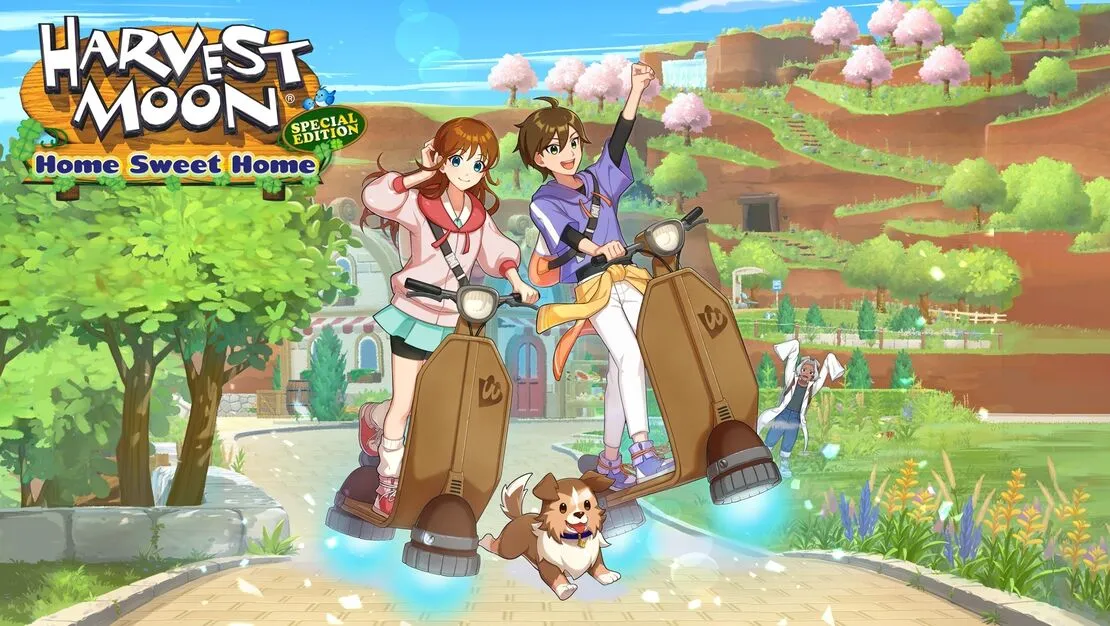

Harvest Moon carries decades of goodwill in the farming sim space. The name alone conjures memories of quiet mornings spent watering crops, befriending neighbors, and building something meaningful from nothing. Home Sweet Home Special Edition attempts to tap into that legacy while positioning itself as an accessible entry point for newcomers. Originally released on mobile devices, this expanded version arrives on consoles and PC with a few quality-of-life additions and a familiar premise: return to your childhood village of Alba after ten years away and breathe life back into a fading community.
The setup feels comforting. Alba has fallen on hard times, with residents moving away and businesses shuttering. Your childhood friend (Justin or Christina, depending on your chosen gender) helps you develop a plan to restore the village’s vitality. You’ll farm, complete quests, and fill a Happiness meter that represents the town’s gradual revival. Doc Jr. provides inventions like the Hoverbike 5000 for faster travel and the Cleanmeister Autovac to automate barn maintenance.
Returning characters from The Winds of Anthos, Ella and Nikolai, appear alongside new faces you can befriend or marry. The game markets itself as beginner-friendly, stripping away complexity in favor of straightforward systems. That design philosophy permeates every aspect of the experience, for better and worse.
Mechanics That Fight Against You
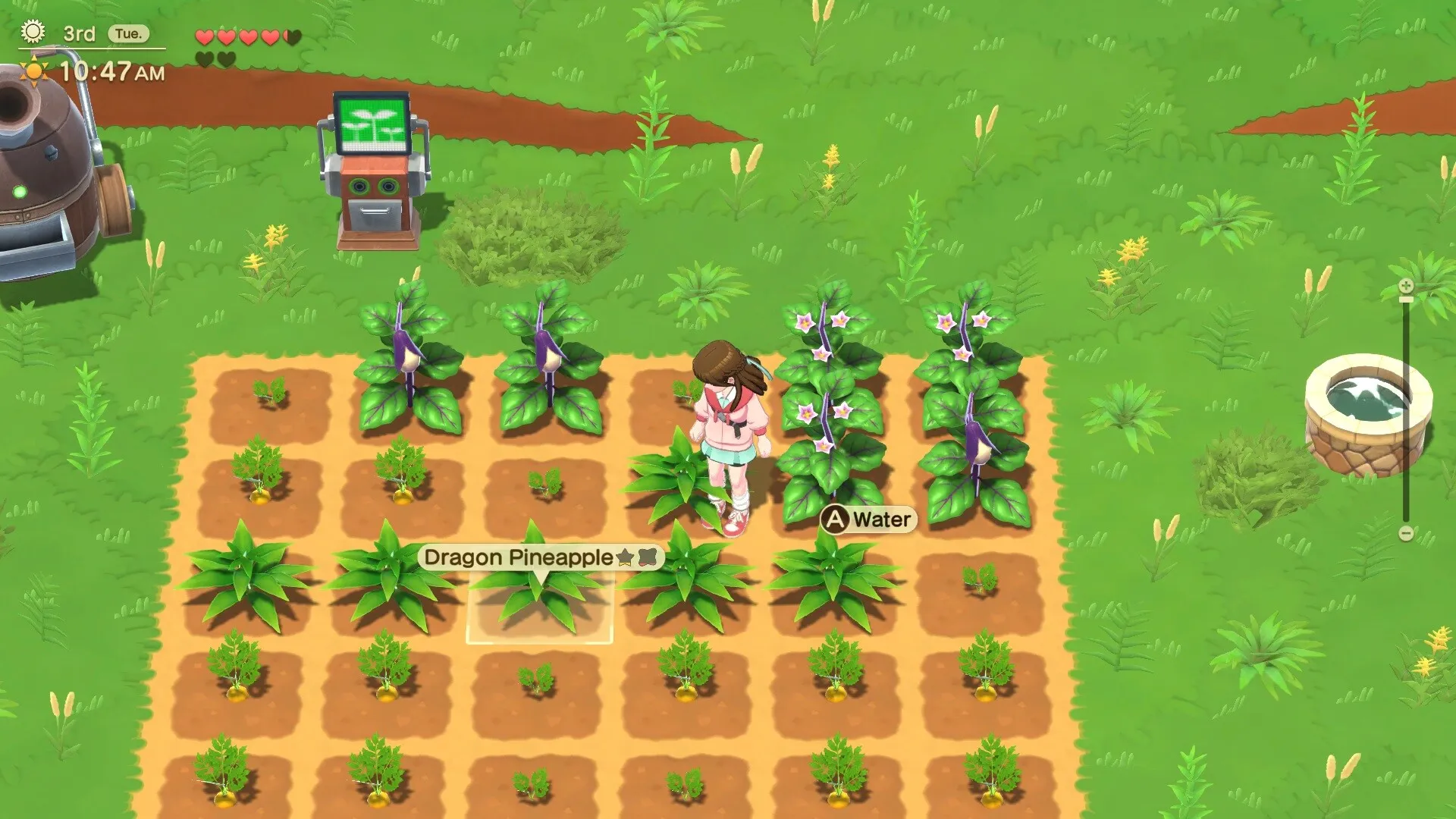
The farming cycle follows established patterns: till soil, plant seeds, water daily, apply fertilizer if desired. Crops grow predictably, and a mutation system introduces variations. Broccoli might transform into evergreen during summer or cauliflower in winter, adding slight unpredictability to your harvests. This mechanic could inject welcome surprise into the routine, except the controls undermine any enjoyment you might extract from it.
Movement lacks precision. Without strafing, your character awkwardly pivots to face tiles, and the targeting system seems to guess which plot you’re aiming for. Misclicks happen constantly. You’ll till, water, or fertilize the wrong square repeatedly, wasting precious stamina on mistakes the game’s rigid control scheme practically forces upon you. Equipment upgrades eventually let you work multiple tiles simultaneously, which lessens the frustration without actually solving it. By the midpoint, I found myself avoiding farming entirely unless a story beat demanded it. That’s a critical failure for a game centered on agriculture.
The stamina system compounds these problems. You begin with five hearts that drain alarmingly fast, often depleting before you finish morning chores. Stamina expands as you complete chapters, but early hours restrict you so severely that you’ll stumble into bed before afternoon arrives. Sprinting consumes energy rapidly, transforming every trip between farm and village into a resource management puzzle. Do you dash to the store and sacrifice crop-watering time? The limitation creates strategic decisions, sure, but they feel tedious rather than engaging.
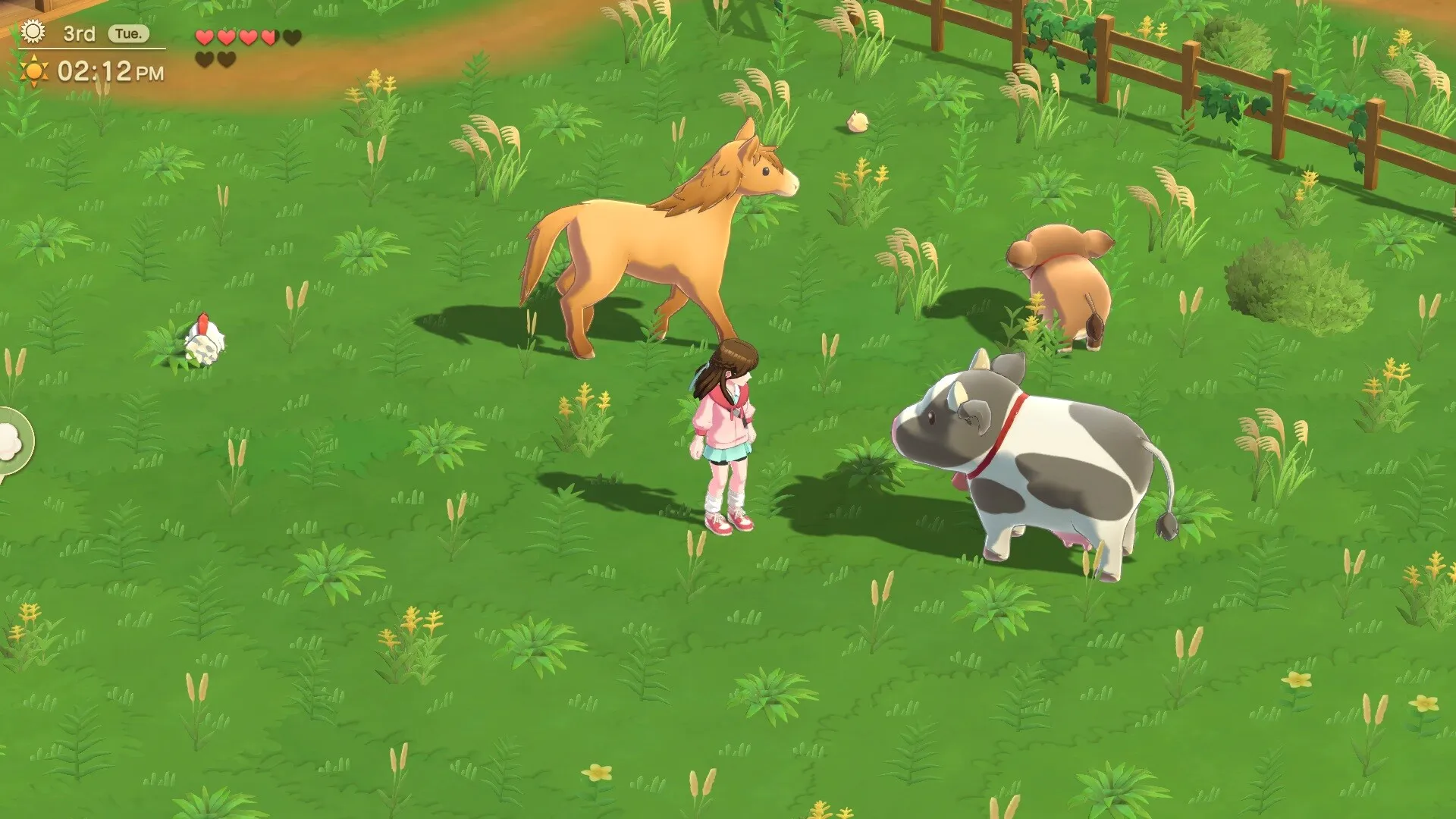
Animal care presents a rare bright spot. Raising cows, chickens, and sheep follows simple loops: feed them, keep them happy, collect milk, eggs, and wool. The streamlined interaction system deserves praise. One button press cycles through every available action (brushing, milking, talking) without forcing you to swap tools. It’s efficient and reduces the micromanagement that drags down other aspects of the game. Animals do get stuck occasionally, spending in-game hours trapped while trying to reach their food troughs, but they eventually free themselves. Affection levels exist but offer minimal impact beyond small production bonuses. You’re going through motions rather than forming bonds.
The Happiness system drives story advancement. Completing quests, buying and selling items, and chatting with villagers fills a star-shaped bottle. Once full, and after finishing that chapter’s main quest, you move forward. The problem? It’s too easy. Early chapters require minimal effort to max out Happiness, and later chapters only ask slightly more. The entire campaign can be completed in 15 to 20 hours, and you’ll rarely feel challenged by its progression demands.
New mechanics trickle in as you advance. A restaurant opens, an orchard becomes available, and an unmanned store lets you place specific items for automatic sale at inflated prices. That last system reveals how little thought went into balancing these features. The store requests items that are frequently out of season, rendering it nearly useless. It’s window dressing that adds nothing substantive.
Mining stays locked behind a story gate for a significant chunk of playtime. Once accessible, it becomes the most efficient money generator, which creates a strange imbalance. Why farm when you can mine rocks for better returns? Fishing offers a moderately engaging timing mechanic where you hold the button only when the fish isn’t pulling. Release at the wrong moment and the tension meter accelerates, increasing your chances of losing the catch. It’s more involved than simple button presses in comparable games, though it never evolves beyond that basic interaction.
Foraging disappoints because collectibles barely change between seasons. You’d expect seasonal shifts to refresh available items, creating natural variety throughout the year. Instead, many forageables remain constant, and those that do rotate feel like minor variations. Seasonal transitions lose their excitement, which matters in a genre built around cyclical rhythms.
The collection system stands out positively for completionists. You can track every forageable, fish, ore chunk, animal breed, and crop mutation through clean menu layouts. The interface even highlights which items are needed for active quests, preventing accidental sales. It’s a thoughtful touch that respects your time.
There’s no adventuring here. You’re confined to your farm, the village center, a mountain path, and a beach. The world feels small and constrained, with limited environmental diversity to discover.
A World That Never Wakes Up
The art style leans into bright colors and soft edges. Lush fields stretch under pastel skies, and warm lighting bathes Alba in a gentle glow. Character models adopt cartoonish proportions with expressive faces and vibrant clothing. Initially, it reads as inviting. The problem emerges when you realize the aesthetic is lifted wholesale from The Winds of Anthos. Assets, animations, and visual design lack distinct identity. Home Sweet Home doesn’t establish its own personality; it borrows someone else’s wardrobe and hopes you won’t notice.
The world itself feels lifeless. NPCs follow simple routines with stiff walking animations. Buildings repeat across the village layout. Few new areas unlock as you progress, and the ones that do (additional mine levels) consist of randomly generated rooms filled with rocks. Day and night lighting shifts look pleasant, and shadow work adds subtle depth, but these technical competencies can’t overcome the static nature of the environment. Everything functions, yet nothing breathes. Visual fatigue sets in quickly as locations blend together and lose definition.
Performance runs smoothly on Switch. Frame rates stay consistent, load times are brief, and only occasional stutters occur when sprinting through mine corridors. The technical execution is solid. It just supports a world that never feels inhabited.
Music stands as the game’s strongest element. Soft acoustic tracks and cheerful melodies accompany your daily routines, shifting subtly based on time of day and weather conditions. The soundtrack won’t win awards for originality, but it perfectly captures the relaxed, contemplative mood the game aims for. Ambient sounds layer nicely too. Rustling leaves, distant animal calls, and gentle water flows create immersive background texture. I often found myself humming along while tending crops, which speaks to how well the audio complements the pacing.
The cast lacks development. Conversations are brief and relationships progress mechanically rather than emotionally. Many villagers start off hostile, offering rude dismissals until you grind their friendship meters higher. That initial coldness makes it harder to care about restoring the community. If the people you’re helping treat you poorly, why invest the effort?
Dialogue recycles throughout each chapter. You’ll read the same lines repeatedly, which drains any sense of discovery from social interactions. Side quests rarely connect to character motivations or personal arcs. Instead, they’re basic fetch errands: “Justin wants a Margarita, so gather ingredients and cook one.” These could have been opportunities to deepen relationships and explore individual stories. Instead, they’re chores that highlight missed potential.
The central narrative carries a heartwarming theme about coming home and rebuilding through kindness. Execution remains linear and low-stakes, though, never achieving the emotional weight needed to make Alba’s revival feel meaningful. You’re checking boxes rather than forging connections.
Customization options are severely limited. You can craft a handful of home decorations and a few outfits. That’s it. Farming sims thrive when they let you personalize your space and express yourself through aesthetic choices. Home Sweet Home strips away one of the genre’s most satisfying aspects. You’re left with a generic farm and a character who looks mostly identical to how they started.
What the Special Edition Adds (and What It Doesn’t)
The Hoverbike 5000 is the primary addition. This futuristic scooter enables fast travel without consuming stamina, making it invaluable once obtained. Here’s the catch: acquiring it requires talking to a specific character to trigger a side quest. You could theoretically complete the entire game without ever unlocking it, which seems like a baffling design oversight for a feature marketed as a centerpiece improvement.
Two new marriage candidates, Ella and Nikolai, return from The Winds of Anthos. That’s the extent of fresh content. For a release labeled “Special Edition,” the additions feel minimal.
There are moments when Home Sweet Home captures the calm, meditative quality that makes farming sims appealing. Watching sunrise light spill across freshly planted rows can briefly evoke nostalgia for simpler games played years ago. Those flashes fade quickly as repetition reasserts itself. The game has a heartfelt intent behind it. You can sense developers who genuinely wanted to create something cozy and welcoming. The execution doesn’t match that ambition.
Many issues trace back to the mobile origins, but not all of them. Control problems could have been addressed with additional development time. The Happiness system’s lack of challenge stems from design choices, not platform limitations. The barren world and underdeveloped characters reflect priorities that favored simplicity over depth.
Everything works on a functional level. Systems operate as intended, performance stays stable, and you can farm your way through to credits without major technical hiccups. Little feels alive, though. You’re moving through routines that provide temporary distraction rather than sustained engagement. The game lacks meaningful progression, environmental variety, and tangible impact on the world you’re supposedly revitalizing.
Positioning itself as beginner-friendly isn’t inherently problematic. Accessible entry points benefit any genre. Home Sweet Home needed to be bolder and more substantial to justify its existence in a crowded field. Story of Seasons continues the original Harvest Moon legacy with confidence. Stardew Valley redefined what indie farming sims could achieve. Even The Winds of Anthos, from the same publisher, offers a more compelling experience. Home Sweet Home struggles to articulate why someone should choose it over those alternatives.
The Review
Harvest Moon: Home Sweet Home Special Edition
Home Sweet Home Special Edition means well but stumbles where it matters most. Clunky controls sabotage the core farming loop, while limited stamina and repetitive tasks drain enthusiasm quickly. The world feels hollow, characters lack depth, and progression offers little challenge. Moments of cozy nostalgia surface occasionally, but they can't sustain interest across the 15-hour runtime. With superior alternatives readily available, this entry struggles to justify itself. It functions adequately but never comes alive, making it difficult to recommend except to the most devoted Harvest Moon completists seeking a low-stakes distraction.
PROS
- Streamlined animal care system reduces micromanagement
- Pleasant music and ambient audio design
- Comprehensive collection tracking for completionists
- Solid technical performance on Switch
- Fishing mechanic offers mild engagement
CONS
- Frustrating controls with frequent misclicks
- Severely limited stamina restricts early gameplay
- Barren world with minimal exploration
- Underdeveloped characters and repetitive dialogue
- Lack of customization options
- Happiness system offers no meaningful challenge
- Minimal Special Edition content additions
- Assets recycled from The Winds of Anthos