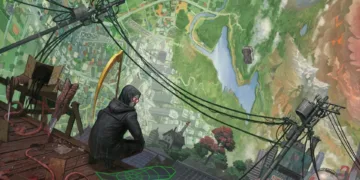































Let It Die: Inferno grabs attention first through spectacle. Hell Gate presents a collision of high fashion and corroded concrete, a place where the remains of Tokyo sink into a living, pulsating underworld. The screen fills with fleshy growths, twisted structures, and enemy designs that lean into B-grade horror and kitsch. Raiders stomp through this mess in industrial punk gear that looks ripped from a boutique and a scrapyard at the same time. The game leans hard into this look and never backs away from it, so every step into the depths feels loud, grimy, and deliberately overstimulating.
As a piece of interactive design, Inferno grafts together three demanding lineages: the permanent risk of a roguelite, the slow, punishing rhythm of a soulslike, and the high-stakes extraction loop. Under the watch of the iconic Uncle Death, players descend in search of the Eye of the Reaper, and each descent hinges on one condition: finish the objective before the timer expires and reach extraction with your gear. Failure wipes out hard-earned equipment, so every raid carries the emotional weight of a bet you might lose with a single mistake. The structure promises a run-based experience where survival drives every choice and experimentation feels risky.
The Pacing of Frustration and Loss
In practice, Inferno locks its own systems in a tug of war. Roguelites thrive on steady gains across many failed runs, each death feeding a sense of long-term progression. Extraction shooters lean on careful preparation and the rush of escaping with loot. Inferno ties those expectations to strict permadeath, so a single mistake can erase everything you brought and everything you earned. The grind that should feel like incremental growth turns into repetition that rarely pays off, and the emotional arc of a run often collapses into a hollow reset that kills any sense of momentum.
Every dive through Hell Gate passes through distinct biomes or depths, and mission progress depends on clearing specific tethered enemies. A strict time limit wraps around each attempt. The clock instantly adds tension, but it also cuts against one of the strongest parts of the game: wandering through this strange architecture and soaking in environmental detail.
The game punishes pauses to read thin slices of lore or to compare equipment stats, since the timer keeps ticking even in menus. The systems constantly urge you forward, yet they offer little emotional payoff for that urgency, so exploration feels like a luxury you can rarely afford.
The escape phase should function as the release valve, the moment where tension flips into relief. Instead, it leans on a shaky bit of design. After finishing the objective, you still need to track down an escape pod before the timer runs out. The only tool that points toward the exit is the SP radar you trigger by crouching. It points in a loose cardinal direction, with no sense of distance or height.
Many runs end with panicked sprints that slam into dead ends or blocked paths, sending you back through the same corridors because the radar cannot convey the shape of the space. A run that builds toward catharsis often breaks apart in irritation. Uncle Death does offer permanent upgrades that should take the edge off the difficulty curve, yet they demand such a heavy resource investment that early progression feels locked away behind hours of repetition.
The Depth of Unlocked Combat
Combat in Inferno demands attention in a different way. Fights hinge on a clean rock-paper-scissors structure that applies to both PvE monsters and PvP shadows. A Normal Attack loses to a well-timed defensive move. Guard and Counter are designed to shut down that basic pressure, but they open a window for a heavy Guard Break Attack. Guard Break hits hard and cracks defense, yet it starts slowly enough that a quick Normal Attack can cut it off. Survival depends on reading animations, predicting intent, and committing to the right answer at the right moment, rather than memorizing simple patterns.

The decision to strip out a lock-on system, a familiar safety net in many soulslike designs, raises the skill floor on purpose. Targeting shifts entirely to the player. You have to line up every swing by eye, judge distance on the fly, and accept that a single sidestep can send your attack into empty space. A simple roll from an enemy forces you to rebuild your sense of range from scratch. That focus on spacing creates a sharp gap between players who read the screen precisely and those who struggle to track position under pressure.
Dual-wielding bizarre tools pushes this layer of strategy even further. The arsenal ranges from haunted portraits to spinning propellers and specialized arm busters, each with particular reach, speed, and hitbox quirks. Loadout choices start to feel like a form of character building. Putting a different weapon in each hand unlocks distinct techniques and combos, so you piece together a personal style from the tools you trust. To make that work, you need to know how every weapon behaves, where it connects, and where it leaves you exposed.
Yet the combat experience often tips from demanding into exasperating. Past the second zone, enemy density and power jump sharply, and many encounters feel crowded with high-level threats. Player hitboxes on weapons read cleanly, while enemy swings land with blunt, awkward shapes that are harder to read and sidestep. Small creatures that hug the ground become strangely dangerous because many attack arcs sail over them and fail to connect. Almost every enemy strike stops player actions cold, yet players rarely gain tools that interrupt enemy wind-ups in return, so group fights frequently turn into long strings of knockback and helpless recovery.
The Cost of Technical Compromise
On a visual level, Inferno often looks striking, and the grotesque beauty promised by the premise does come through. At the same time, technical choices keep chipping away at that impact. The shift away from the earlier cel-shaded style leaves this sequel with a flatter, occasionally muddy presentation.

The opening cinematic stutters with aggressive model and texture pop-ins that break immersion right as the game tries to set tone. Moment-to-moment play tends to stabilize, yet those early stumbles hint at rough edges. Even Uncle Death feels slightly drained of personality, trading the distinct voice from before for a looser surfer-bro delivery that softens his presence.
The confirmed reliance on generative AI for key assets adds a different kind of weight. The series once highlighted visible human craft, so this shift lands hard. The eclectic set of licensed indie tracks from the original game gives way to a single repetitive techno loop in the base, identified as AI-generated. Reports around legendary composer Akira Yamaoka describe his role here as arranging AI-created stems.
Voice work follows the same pattern. The Mom healbot and the eerie InfoCast puppets now speak with AI voices. The puppets in particular sound less like characters and more like a string of copied, random phrases, which turns their intended mystery into noise and exposes how weak these assets feel.
The business model wraps that unease in a harsh structure. Inferno does not run as a free-to-play experiment; it asks for an upfront purchase, offers multiple paid tiers, and layers microtransactions on top. Seasonal resets promise full wipes of content, which means that items bought with real money, including early purchase bonuses, are built to disappear on a regular schedule. That design choice, combined with visible shortcuts through AI asset use, creates a sharp feeling of mistrust. The game asks for long-term commitment while signaling that hard-earned purchases and time investments can be erased on command.
The Review
Let It Die: Inferno
Let It Die: Inferno offers an intellectually compelling rock-paper-scissors combat core and an exceptional aesthetic vision. However, its genre mashup is undone by frustrating systems: the punitive progression grind, the flawed extraction radar, and an unearned difficulty curve. Compounding these issues is the disappointment of using AI assets and the questionable monetization reset. It is a work of potential greatness that severely stumbles in execution.
PROS
- B-grade kitsch and punk aesthetic
- Deep, layered rock-paper-scissors combat
- Intriguing, dual-wielding weapon variety
- Intentional lack of Lock-On raises the skill ceiling
CONS
- Unrewarding progression and permadeath loop
- Flawed extraction system (poor radar feedback)
- AI-generated music and voice assets
- Excessive, arbitrary difficulty spike
- Seasonal resets on paid items