

























![Kingdom Hearts Collection [I-III] Review](https://gazettely.com/wp-content/uploads/2026/10/Kingdom-Hearts-Collection-I-III-1-360x180.webp "Kingdom Hearts Collection [I-III] Review: KHII Holds Steady as Newer Entries Fluctuate 37")



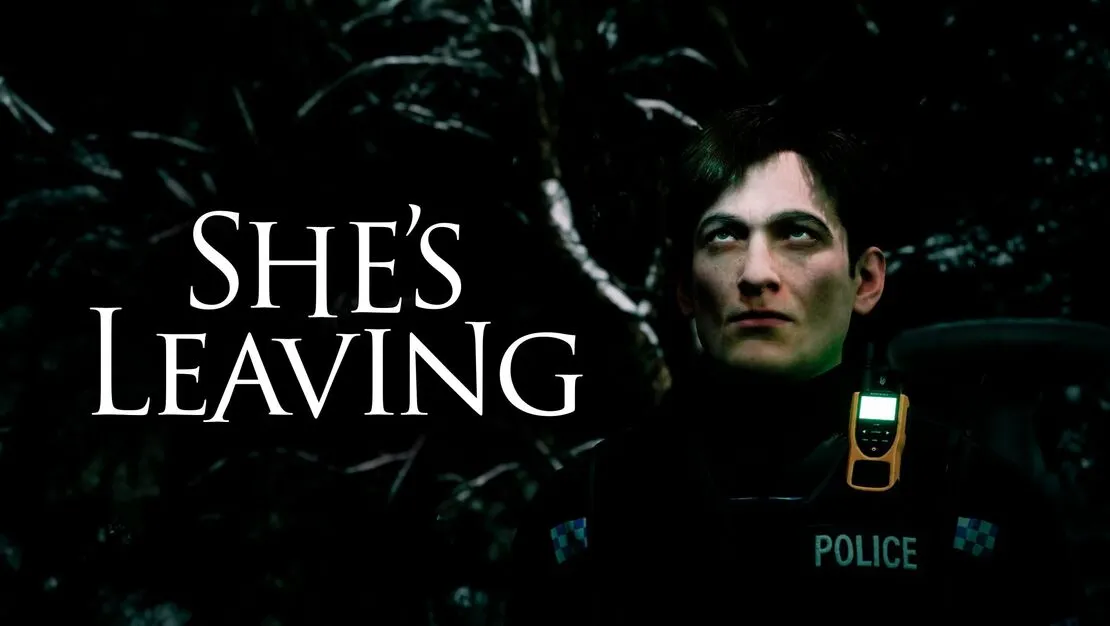

She’s Leaving, the debut title from Blue Hat Studios, trades the usual monster closets and loud jump scares for a slow, professional kind of dread. The game drops the player into the damp, isolated cold of the English countryside, right at the gate of House Haywood. This historical estate, now presented as a quaint tourist attraction, holds the site of multiple recent disappearances.
The player does not step into the role of a shotgun-wielding survivor. Instead, you play as Charles Dalton, a police forensic investigator. Dalton specializes in blood spatter analysis, a meticulous discipline he uses to reconstruct the events of a crime. From the first steps through the grounds, the design signals a clear goal: an old-school survival horror experience. The protagonist’s fragility and his limited equipment, a taser and a UV flashlight, shift the entire experience toward stealth, avoidance, and methodical investigation rather than direct confrontation.
The Science of Survival and Repetitive Procedure
The game’s moment-to-moment play depends on Dalton’s narrow set of tools and how they interact with both the environment and the threat that stalks him. His essential gear consists of the taser and the UV flashlight. The taser carries a dual purpose. It can briefly stun the pursuing killer, but its limited charges press players to treat every discharge as a significant decision. The same device also gates progress, since it is needed to overcharge power breakers that open paths deeper into the house. The UV flashlight fills the opposite role, highlighting hidden evidence and tying the act of investigation directly to forward motion through the manor.
The standout system in She’s Leaving lies in its forensic mechanic. Dalton must track down bloodstains across House Haywood and correctly identify their type and origin. The design aims to fuse horror with intellectual puzzle solving, in a way that recalls the environmental examination seen in the Condemned series. Stains emerge under UV light, but the player often receives extra hints from visible cracks or marks on the walls. Once a stain is found, the game asks the player to categorize the blood spatter as Cast Off, Flow, Contact, or similar classifications.
The concept behind this system is strong, yet the actual interaction settles into a shallow pattern. The analysis step often reduces to choosing from a short menu of options. The game introduces the language and basic ideas of blood spatter science, but the mechanic never grows into a process that requires deeper application of those ideas. As a result, the player’s decision making within this system feels limited, and the satisfaction of correctly reading a scene weakens.
The way the game handles failure within this mechanic further narrows its impact. If the player misidentifies a stain, the consequence arrives as a temporary movement speed reduction, framed as brain fog or professional guilt. For a feature presented as central to the narrative, this small penalty feels light. It does not reflect the serious implications of mishandling evidence at a crime scene. The forensic mechanic, with its modest complexity and mild consequences, begins to feel like a simple checkpoint system that must be cleared to move forward rather than a rich investigative tool. The design idea behind it remains strong, but the execution allows the mechanic to slide into repetitive routine.
Dread, Detail, and the Loss of Menace
House Haywood itself delivers the game’s most successful work. Blue Hat Studios builds an environment that feels genuinely isolated and oppressive. The manor’s gloomy exterior and tense interior spaces lock in the intended mood. Small environmental touches, including flickering lights and the shifting shadows cast by mannequins, create a quiet but persistent unease. The building often feels like an abandoned museum gallery after hours, cold and indifferent to the player’s presence.

Sound design does much of the heavy lifting for horror. The game includes full voice acting, which immediately grounds the experience. The killer’s audio presence sets the tone for each patrol. Players learn to depend on sound cues such as footsteps, low muttering, and a distinctive humming pattern to track the threat and plan evasion. This reliance on listening creates pockets of intense stress, where standing still and reading the soundscape becomes a survival tactic. The antagonist’s low, unsettling Welsh-accented ramblings sharpen this tension, framing the pursuer as someone engaged in a methodical and deeply disturbing task.
The killer appears as a tall, masked figure in a trenchcoat. The horror stems from sustained menace and the ever-present risk of instant failure, without an emphasis on cheap jump scares. Encounters feel alarming because the figure simply steps into view and starts advancing toward Dalton. The design frames contact with the killer as something to avoid at all costs, which turns every close call into a high-pressure moment.
Over time, however, the structure of these encounters starts to drain their power. The turning point lies in how a chase ends. If the killer reaches Charles Dalton, there is no animated struggle or visual escalation. The killer walks straight into the player model, and the screen cuts immediately to the message “You are dead.” This abrupt resolution initially feels startling and unnerving, but repetition erodes its effect. With no visual or physical payoff for failure, the pursuer shifts from terrifying figure to expected obstacle. The stalker becomes less a source of raw fear and more a familiar hazard that interrupts the forensic routine.
Structure, Pacing, and Technical Assessment
She’s Leaving builds its structure around exploration and evasion. Progress ties to the search for keys and specific collectibles scattered around the manor. This approach often produces unclear direction and leaves players combing through every corner of each room. That required level of inspection leads to heavy backtracking and stretches of frustration as locked doors accumulate. The save system increases tension by tying progress to rare “green rooms,” which function as safe restrooms and the only places where the player can save. Each trek between these rooms carries significant risk, since losing progress means replaying extended segments.

The pacing of the game shifts between spikes of stress and long, flat stretches. The four-hour runtime provides some space for narrative movement, but the story beats can feel compressed. High points of intensity, such as a sequence that demands a quick dash for a key while the killer roams nearby, stand out as sharp mechanical tests. These peaks often give way to drawn-out sequences of low-stakes searching, where the main challenge is locating the next required object in an already familiar environment.
On the technical side, the game holds together well. Performance remains stable, and serious bugs appear rare. Reported issues mostly consist of occasional minor audio loading delays when entering certain areas. One area where the technical design falls short involves accessibility and visual clarity. The game omits any gamma or brightness calibration prompt at startup.
Players are left to guess at the intended brightness level and frequently need to adjust display settings manually to prevent dark spaces from becoming unreadable. Another detail concerns controller feedback. Vibration can feel excessively strong when the UV light or taser is active, which may distract from the careful, investigative pacing that the game tries to encourage.
She’s Leaving functions as a highly atmospheric and promising first project for Blue Hat Studios. The team shows strong control over setting and tone, and the concept of pairing procedural forensic work with survival horror has real power. The finished game points toward a design that could grow into something richer. With deeper, more demanding mechanics around investigation and consequence, the systems at play here could support a more memorable and fully developed experience.
The Review
She's Leaving
She's Leaving succeeds in crafting a dense, palpable atmosphere supported by excellent sound design and a truly unnerving antagonist. The forensic investigation mechanic introduces a fresh procedural element to survival horror. However, its potential is limited by simplistic implementation and a progression structure that becomes repetitive. The horror elements lose their impact when the mechanical limitations of the stalker are revealed. It is a solid, focused debut that provides a tense, short experience, but it struggles to maintain its high ambition.
PROS
- Highly effective, palpable dread and immersion in the manor.
- Crucial, high-quality sound cues for tension and navigation.
- Unique blend of procedural forensics and classic survival horror.
- Effective menace achieved without relying on cheap jump scares.
CONS
- Forensic puzzles are too simple and quickly repetitive.
- Penalties for error are too minor, reducing player investment.
- Uneven structure leads to tedious searching and backtracking.
- Horror tension drops due to the unceremonious death sequence.







