






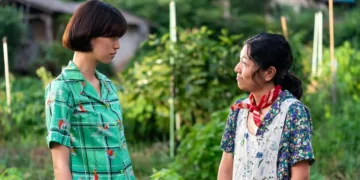













Layal sits in her parked car, fingers stained yellow from peeling clementines while a meditation app murmurs in the background. The sharp scent of citrus displaces the smoke she wants, and that small domestic ritual opens Ramzi Bashour’s film. Layal teaches Arabic at an Indiana university. Her life tilts when her teenage son, Daniel, is expelled after a violent outburst at a hockey match.
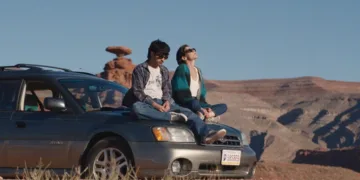
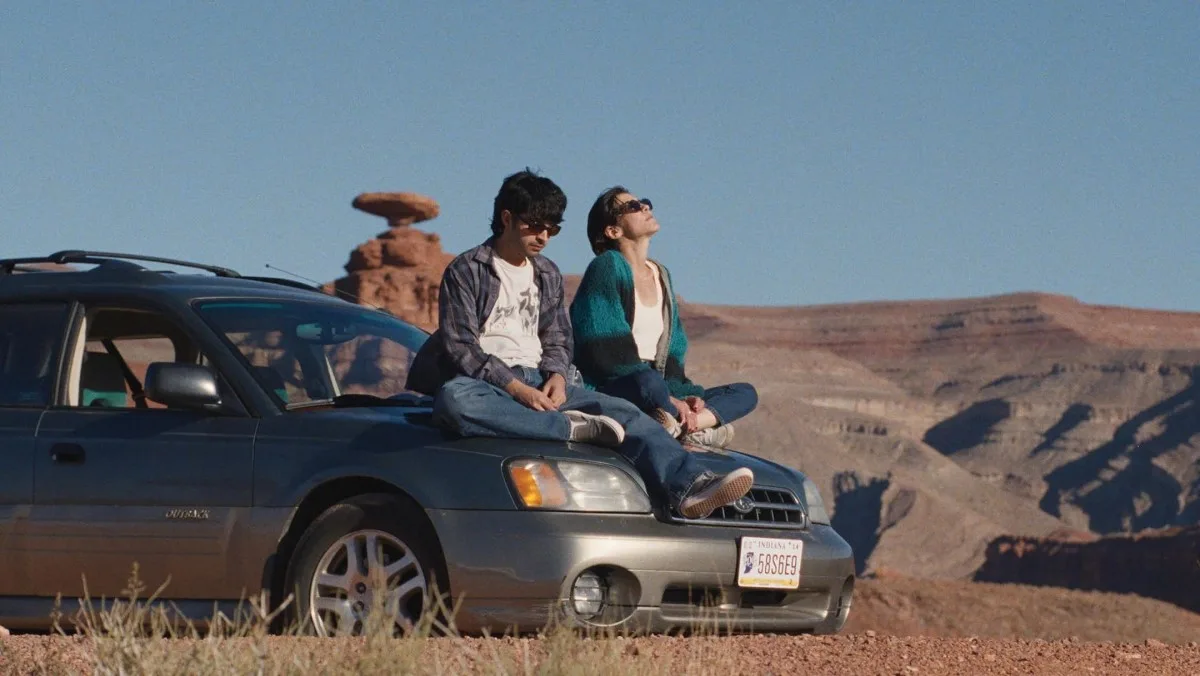
They must travel to Santa Cruz so Daniel can live with his father. A medical condition bars him from flying, so they set out on a cross-country drive through the American interior. The camera records static motels and roadside diners. Layal manages the logistics while news of her mother’s failing health in Beirut follows her like a tide on speakerphone.
Daniel sits apart as a distant passenger. The narrative avoids loud confrontations and prefers the friction of two people confined to a small Subaru. Their movement across states becomes a patient attempt to find common ground.
The Friction of Shared Blood
The film depends on the chemistry between Lubna Azabal and Daniel Zolghadri. Azabal gives Layal a weary, simmering anger and a habit of eating fruit to displace cigarettes that reads as a tense, controlled refusal. Her humor is dry and precise, visible when she dismisses Las Vegas as a desert mirror of Dubai. Zolghadri answers with a deadpan that masks a sensitive center.
A pivotal moment arrives when Layal stops the car and tosses Daniel’s heavy hockey gear into the weeds; that single physical gesture captures her mounting frustration with a son she cannot reach. When she cries “Oh, Daniel!” the line lands with equal parts irritation and affection. Both actors sidestep easy stereotypes of the overbearing mother or the ungrateful child.
They sketch a history that predates the camera’s presence. Each look and sigh accumulates into a portrait of a family that is imperfect and strongly linked. Their differing energies propel the story. Layal moves with kinetic anxiety. Daniel embodies stagnant indifference. Together they produce a believable unit.
Modesty and the Quiet Frame
Bashour treats the material with a deliberate modesty, resisting the histrionics that often flood independent dramas. The film gains its power from small moments: tongue twisters recited in the car, the odd novelty of temporary tattoos. These details construct character without heavy exposition. The supporting cast adds texture to the journey.
A stoic motel clerk and a foul-smelling hitchhiker mark the oddities of the American road. Dale Dickey appears as Sasha, offering a moment of stillness and inviting them into the springs that name the film. Alfonso Herrera Salcedo composes these encounters with an affection for straightforward two-shots, keeping the pair visible together instead of isolating them in individual closeups.
The pacing is languid. The story assembles itself by observation and trusts the viewer to apprehend the silences between lines. That restraint prevents sentimentality and lets emotion arrive organically.
Displaced Roots on Open Roads
An immigrant layer lies beneath the trip. Layal’s frequent calls to her sister in Beirut create a sense of longing and a home that feels further away with each mile. A clear divide separates mother and son. Daniel moves through privilege as a nonchalant American youth while Layal carries the constant strain of a transplant.
Cultural bewilderment appears in moments like her encounter with chicken-fried steak and in her dealings with American students. The landscape amplifies their isolation: empty roads, sunbaked plains, and the red rock of the West make the small car feel like a private universe. Pensive silence performs as much work as dialogue, allowing internal changes to surface.
The trip does not resolve in a grand catharsis. It arrives at a quieter understanding between two people who have learned to see each other and to coexist in the space between their worlds. The film closes on that careful, uncertain growth.
Hot Water is a quiet, independent road-trip dramedy that premiered at the Sundance Film Festival on January 22, 2024. The film follows Layal, a Lebanese-American professor living in Indiana, who must drive her troubled teenage son, Daniel, across the country to live with his father in California after he is expelled from school. As of today, January 31, 2026, the film is primarily available through independent film circuits and select digital platforms following its successful festival run. It is a deeply personal project for director Ramzi Bashour, who also served as the writer, and composer for the film.
Full Credits
Title: Hot Water
Release date: January 22, 2024
Rating: Not Rated
Running time: 94 minutes
Director: Ramzi Bashour
Writers: Ramzi Bashour
Producers and Executive Producers: Ramzi Bashour, Max Walker-Silverman, Lubna Azabal, Daniel Zolghadri, Jesse Hope
Cast: Lubna Azabal, Daniel Zolghadri, Gabe Fazio, Dale Dickey, Kareem Rahma, John Reynolds
Director of Photography (Cinematographer): Alfonso Herrera Salcedo
Editors: Mollie Goldstein
Composer: Ramzi Bashour, James Elkington
The Review
Hot Water
"Hot Water" succeeds through its quiet observation of a fractured family. It captures the specific weight of immigrant displacement and the messy reality of parenting. The lead performances provide the necessary gravity. The narrative follows a familiar path. The specific textures of Layal and Daniel’s lives provide a rewarding experience. It remains a grounded study of connection.
PROS
- Authentic chemistry between the lead actors.
- Vivid and atmospheric cinematography of the American West.
- Sharp dialogue that captures cultural displacement.
- Restrained approach to emotional conflict.
CONS
- Conventional narrative structure.
- Languid pacing that slows the momentum.
- Shallow development of secondary characters.