

























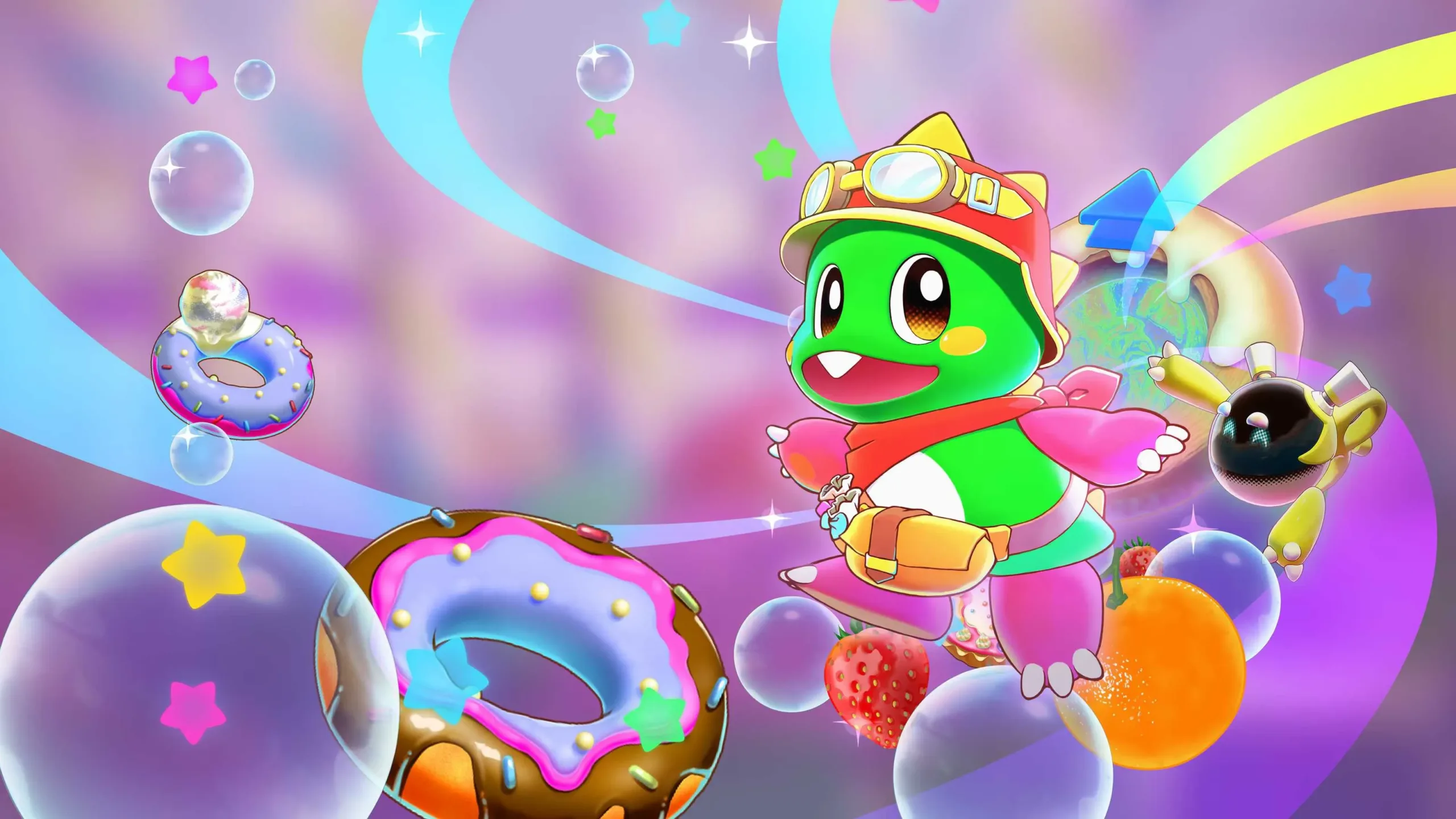

Bub steps into this chapter looking different, swapping his usual style for a specialized adventurer hat that frames him as a true explorer. The opening lands fast: he wakes up beside Don Dolcen, a curious, lively figure that looks like a sentient glam-rock ice cream cone. The meeting sets the tone immediately, with Dolcen enlisting the green dragon for a run through the Sugar Dungeons. That means dungeons and sprawling castles built from sweets, with jelly underfoot and hard candy lining the walls.
The story keeps things intentionally light, acting as a cheerful delivery system for the action. It creates a sense of wonder and keeps the emotional asks modest, steering attention toward the candy-coated setting and the simple push to help a new sugary friend chase treasure. Traps and monsters still raise the danger, yet the presentation sticks to a playful storybook vibe. The straightforward setup gives the environmental ideas room to shine, welcoming long-time fans and newcomers into a world that feels familiar and freshly sugared.
The Art of Bubble Combat and Level Navigation
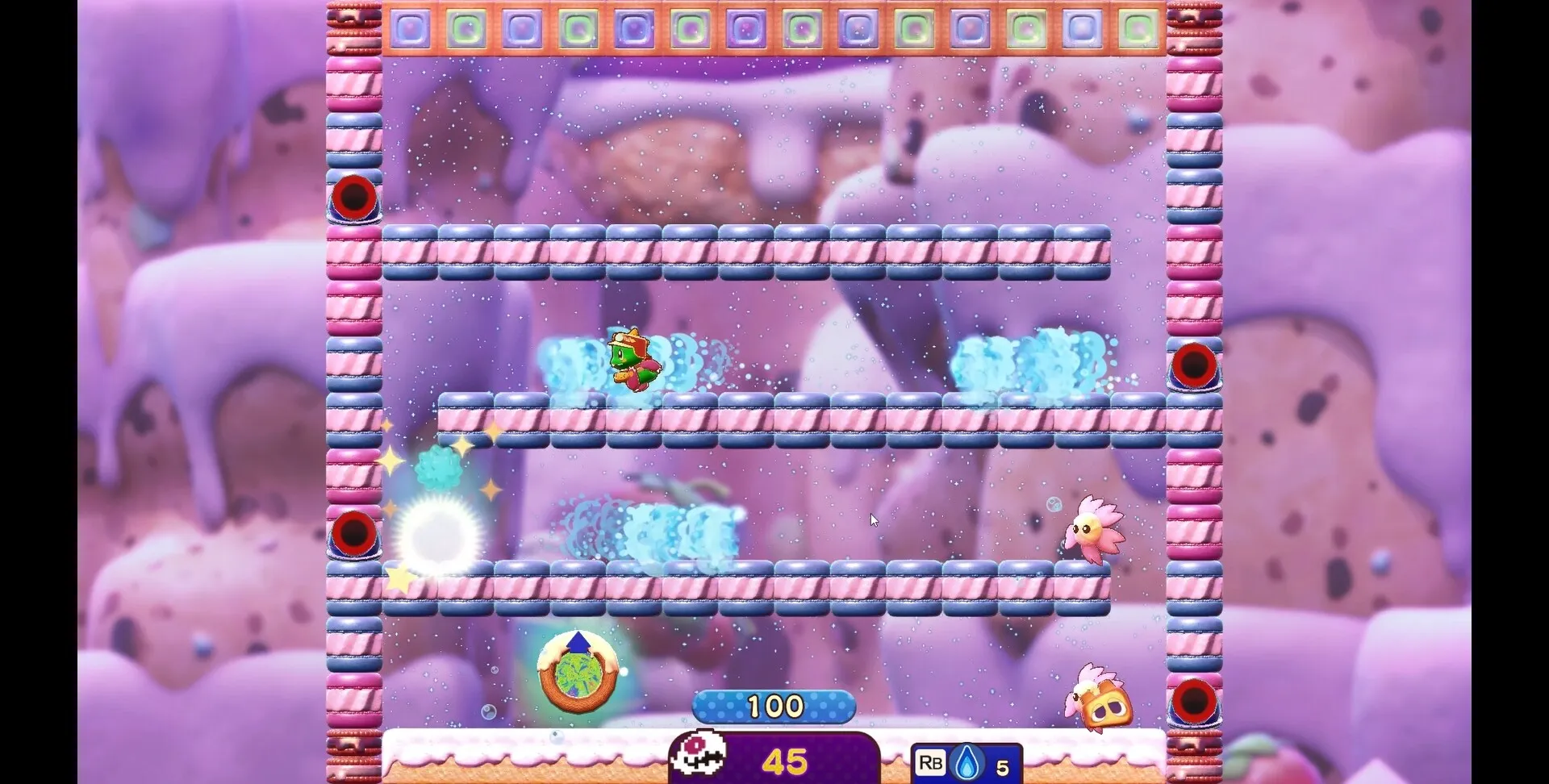
At its foundation, the game holds tight to the series’ core loop: trap enemies in bubbles, then pop them to move forward. Movement, though, feels updated and smoother, giving you more command over Bub’s momentum than older arcade entries. The big mechanical twist comes from the wind current system, which governs every bubble you shoot. Background particles drift to show the route your bubbles will take once they leave Bub’s mouth. Learning to read that path matters, since it lets you predict where a captured enemy will float and where a bubble can sit long enough to serve as a temporary platform on the way to a high ledge.
The structure splits into two formats with very different pacing pressures. The Dungeons play as randomized gauntlets where each floor brings a fresh layout and a new enemy mix. They run on a strict one-hit death rule, so every decision carries weight. Time also becomes a mechanic you can feel in your hands. Take too long hunting for the exit and Baron Von Blubba shows up. This ghost-like threat chases you across the screen, and this time he stays on you until you clear the area. That design turns dungeon pacing into a constant negotiation: chase points by popping everything, or prioritize survival by pushing for the exit before the chase begins.
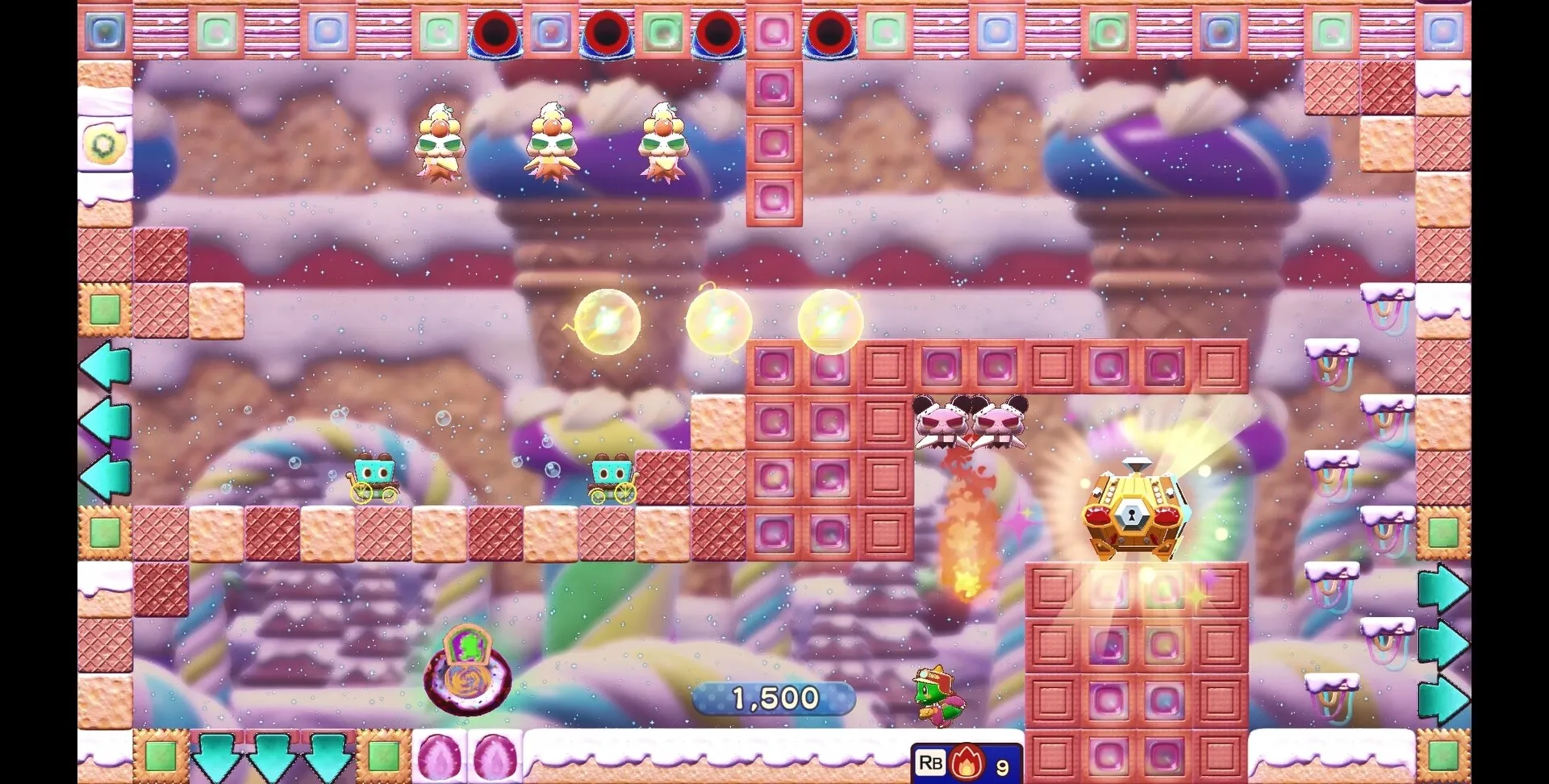
The Castles run on a fixed, interconnected layout that leans into exploration. Because the maps stay consistent, you can learn routes and treat certain rooms like practice spaces for specific platforming problems. Progress can hinge on consumable tools, like fire or lightning bubbles, and some rooms stay effectively blocked until you bring the right items.
Dungeons become the place to stock up on these resources, and Castles become the place where execution gets tested through careful jumps and environmental movement. Dungeons also hide special gates that shift the tempo of a run. Some open into safe treasure rooms. Others drop you into arena-style boss fights against massive versions of common enemies. Loot security ties directly to your performance: you bank your haul by reaching an exit gate, and one mistake beforehand wipes out the chests you collected during that run.
Harvesting Resources in Liber’s Library
Doing well in this candy world depends on resource handling and a layered upgrade path. Treasure chests supply raw materials used for crafting and permanent boosts, and Liber’s Library acts as the hub that turns that haul into power. Liber helps Bub strengthen up, and the menu of upgrades speaks to how the game wants you to think long-term. You can spend materials to extend bubble shot distance, open extra inventory slots for power-ups, and buy extra lives to soften the sting of future runs. There are even skills that stretch the timer before the Baron arrives, giving you breathing room on tougher dungeon floors.
Progress ties tightly to a mission structure that controls access to new spaces. Routes to a new castle or deeper dungeon often stay blocked until you complete specific tasks. One example is crafting a particular set of power-ups multiple times before the game opens the next major area. That gating creates a heavy reliance on repeating dungeon runs to chase specific drops. Since chests can be scarce, you can end up clearing several ten-floor runs just to walk away with one or two materials you actually need. That shapes the early hours into a slower rhythm, where exploration energy gives way to the requirements of the hunt.
The menus add another friction point through unclear communication. High-level upgrades sit there in view, locked behind a message that simply reads “no clicking.” The game does not spell out the milestones required or the bosses you need to beat to open those paths. That opacity can leave you sitting on piles of resources with no clear idea where to funnel them for Bub’s growth. Turning Bub from a simple arcade dragon into a fully upgraded adventurer asks for patience, and the payoff is real once he starts firing long-range shots and carrying multiple lives. The cost is time spent in menu management and repeated gathering, which can wear on players used to the immediate loop of arcade gratification.
Bright Aesthetics and the Symphony Bonus
Visually, the game runs on a cheerful palette of soft colors and candy-shop motifs. Each environment feels like stepping into a high-end confectionery display, with lively jellies and sugary decorations crowding the screen. Bub’s animation sells the physicality of the platforming, staying fluid as he bounces off bubbles or ducks under incoming shots. The soundtrack matches the sugar rush, and it starts off pleasant. Long farming sessions expose its limits, since the loops come around often and melodic variety becomes harder to ignore when you replay the same dungeon floors for materials.
This entry also shifts the campaign toward solo play. The Sugar Dungeons drop cooperative play, a notable change for a franchise associated with two-player arcade fun. That choice makes the experience feel more solitary, with the focus landing on personal execution and resource planning.
The package answers that gap by including Bubble Symphony as a standalone bonus. It emulates the 1997 Sega Saturn version, a rarer entry that delivers the classic arcade tempo many fans look for. It includes four different dragons with distinct attributes, plus branching paths that lead to multiple endings and boss encounters.
The two halves of the package land with sharply different energy. Sugar Dungeons asks for patience, careful resource use, and a tolerance for repetition. Bubble Symphony delivers immediate action and supports playing with a friend. That makes Symphony a great pressure valve, since you can jump over for a quick, high-energy run whenever dungeon grinding starts to feel heavy. Its presence also highlights the series’ range across eras, showing a classic format alongside a newer, more complex direction that leans into long-term progression and planning.
The Review
Bubble Bobble Sugar Dungeons
Bubble Bobble Sugar Dungeons is a curious experiment that tries to change the series' DNA. The classic bubble action remains fun, and the new wind system adds great tactical depth. However, the heavy reliance on grinding for materials and the repetitive nature of the missions slow the excitement. The lack of co-op in the main mode is disappointing, but the inclusion of the excellent Bubble Symphony saves the day. It is a package for patient fans who enjoy a steady climb toward power.
PROS
- Fluid and responsive bubble mechanics.
- Interesting wind current system for strategic play.
- Large, maze-like castle maps offer good exploration.
- Includes the rare and excellent Bubble Symphony.
CONS
- Repetitive mission structure and heavy resource grind.
- Lack of co-op in the main campaign mode.
- Confusing upgrade menus with poor communication.
- Visuals and music become samey after several hours.