






















Yoshitoshi Shinomiya steps into feature directing with A New Dawn, moving away from the high-gloss sheen associated with earlier collaborations on projects like Your Name. The story is set in Niura City, a coastal pocket in Kanagawa caught in an industrial shift that reshapes both landscape and livelihood.
This pressure concentrates on the Obinata Fireworks factory, a 330-year-old workshop of accumulated craft scheduled for state-mandated demolition so a road project can move forward. Keitaro Obinata stays inside the family workplace, holding his ground against eviction notices and training himself toward “Shuhari,” a mythical, cosmic firework imagined by his vanished father.
The solitude fractures with the arrival of his brother Chicchi and their childhood friend Kaoru, both returning to the site of their youth as bulldozers, paperwork, and deadlines close in. The film frames civic planning as a force that reorders private life, turning obsession into a kind of last shelter.
A Museum of Pastel and Light
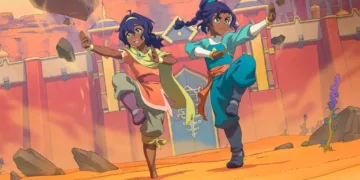
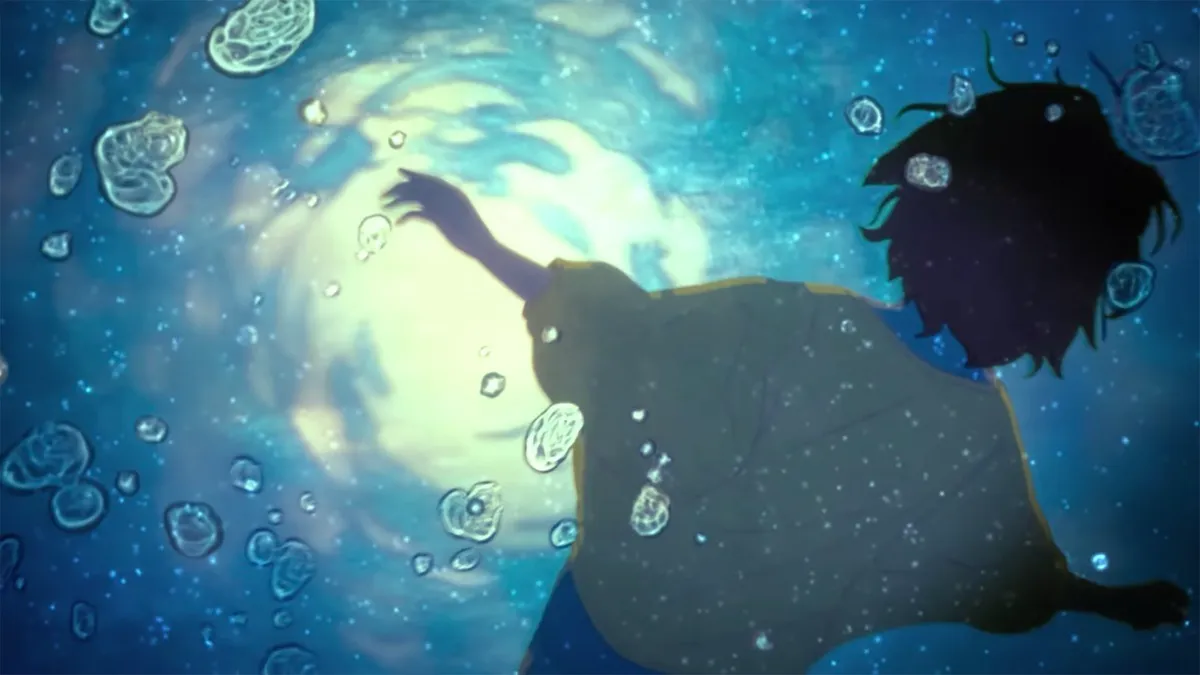
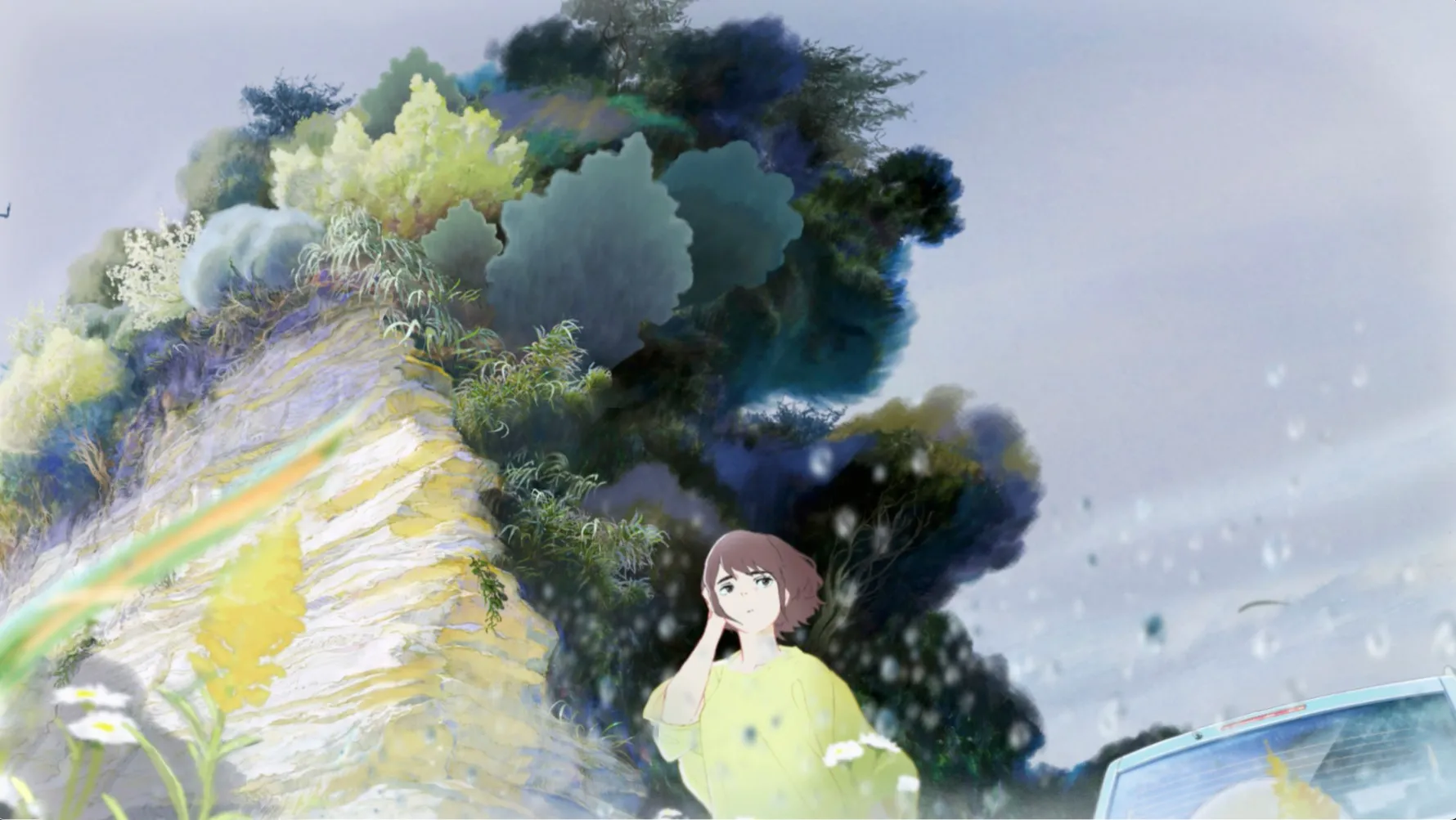
Shinomiya draws on his painterly background to shape a visual identity that resists the sharp, hyper-kinetic register common across contemporary anime. The film plays like watercolor held in suspension, with pastel 2D animation creating an atmosphere that feels preserved and carefully curated.
This approach lingers on small natural movements: insects shifting through air, rain clouds gathering weight over distant mountains, light settling across water and concrete. The environment becomes an active presence, offering a quiet reply to the film’s industrial anxieties through attention and stillness.
The technique widens through experimental gestures, including live-action stop motion used to render a character’s drunken haze. These detours, joined by rippling hand-drawn effects, open a conversation with older animation practices and tactile image-making.
Shuta Hasunuma’s synth-heavy, eighties-inspired score adds a fragile electronic pulse, carrying melancholy through the factory’s rooms and corridors. The music ties the ancient craft of pyrotechnics to the colder modern world pressing against the walls, giving the film a steady hum of loss and insistence.
The Weight of Shuhari and the Price of Progress
The film’s ideas circle the friction between inherited legacy and the sterile demands of urban development. That tension is articulated through Shuhari, a term mapped onto stages of mastery: protect, break, separate. For Keitaro, the firework becomes a vessel for a pirate-like rebellious spirit handed down through generations, and it also becomes a weight that keeps his attention fixed on what came before.
The film registers the environmental cost of transition with sharp clarity, tracking lush green spaces as they turn into barren fields sealed under glass and steel solar panels. Gentrification appears through “Administrative Subrogation Orders,” language that treats bureaucracy like weather, sweeping through the town with the inevitability of a typhoon.
Tradition here faces an active dismantling carried out in the name of infrastructure. Shuhari shifts from technical ambition to personal demand, turning mastery into a lesson about separation, and separation into the price attached to any future that arrives on schedule.
Fractured Bonds and the Economy of Time
The central trio carries a shared history that feels worn-in and specific, as if the town has kept a ledger of their earlier selves. Keitaro’s refusal to leave the workshop sets him against Chicchi, whose work as a civil servant places him inside the machinery displacing his own family and drives a crisis of conscience.
Kaoru stands between them, returning as a successful professional who must reconcile an urban present with the decaying memories of her hometown. Within a brief 76-minute runtime, the film works in a tight three-act shape, using carefully placed flashbacks to secure the emotional stakes of a friendship that has splintered over time.
The storytelling leans toward an arthouse sensibility, giving room to atmospheric silence and philosophical dialogue in place of conventional plot escalation. Vocal performances rise to intense emotional registers, and the narrative stays grounded in the quiet tension of an ending that cannot be postponed. The brevity keeps attention on psychological detail, tracking the final hours of shared heritage as time narrows and the town’s future becomes a matter of paperwork, dust, and choice.
Set against the backdrop of the coastal town of Niura City, A New Dawn is a visually arresting anime feature that explores the tension between tradition and industrial progress. Directed by Yoshitoshi Shinomiya, who gained acclaim for his painterly contributions to hits like Your Name, the film follows a young man’s obsession with completing a legendary, cosmic firework as his family’s 330-year-old legacy faces imminent demolition. After celebrating its world premiere at the 76th Berlin International Film Festival yesterday, February 18, 2026, the movie is slated for a theatrical release in Japan on March 6, 2026. Following its festival run, the film is expected to be available on specialized international streaming platforms and in select theaters worldwide.
Full Credits
Title: A New Dawn (Hanarokusho ga Akeru Hi ni)
Distributor: Asmik Ace, Miyu Productions, ADN
Release date: February 18, 2026
Running time: 76 minutes
Director: Yoshitoshi Shinomiya
Writers: Yoshitoshi Shinomiya
Producers and Executive Producers: Fumie Takeuchi, Pierre Baussaron, Emmanuel-Alain Raynal
Cast: Riku Hagiwara, Kotone Furukawa, Miyu Irino, Takashi Okabe
Director of Photography (Cinematographer): Anna Tomizaki
Editors: Megumi Uchida
Composer: Shuta Hasunuma
The Review
A New Dawn
A New Dawn functions as a visual meditation on the inevitable friction between heritage and progress. The film succeeds as a painterly exploration of environmental decay and the weight of family expectations. While the narrative occasionally feels obscured by its own atmospheric ambitions, the technical craft remains undeniable. It offers a quiet, melancholic look at a world in transition, demanding patience from its audience to appreciate the subtle textures of its story.
PROS
- Exquisite watercolor aesthetic that distinguishes itself from mainstream styles.
- Evocative score that perfectly captures the film’s melancholic tone.
- Nuanced exploration of gentrification and the loss of traditional craftsmanship.
CONS
- Narrative progression can feel secondary to the visual atmosphere.
- Emotional arcs occasionally remain implicit rather than fully realized.
- Short runtime may leave some thematic threads feeling underdeveloped.