




























Suresh Triveni and Amrit Raj Gupta frame their grim look at the Mumbai police force as a psychological thriller. Adapted from Vish Dhamija’s novel, the series tracks DCP Rita Ferreira as she heads an investigation into a serial killer defined by a grotesque calling card: victims’ wrists are slit, and their mouths are packed with raw chicken or chocolate.
The show lays its cards on the table early, naming the culprit within the seven-episode run and moving the story’s tension away from identity and toward motive. That choice aligns the series with the global “whydunnit” mode often associated with Nordic noir and contemporary psychological dramas, where the question shifts from “who” to “why,” and the answers sit inside institutions that keep failing the people they claim to protect.
Rita carries the case while wrestling with substance reliance and the pressure of a difficult childhood. The investigation unfolds alongside child trafficking and structural breakdowns that keep repeating across the city. Mumbai registers as weighty and airless, a place that presses down on anyone living inside its machinery. By linking the investigator and the criminal through shared pain, the series studies how people keep functioning inside a system already cracked, and what that damage does to judgment, empathy, and restraint.
Friction and Fragility in the Force
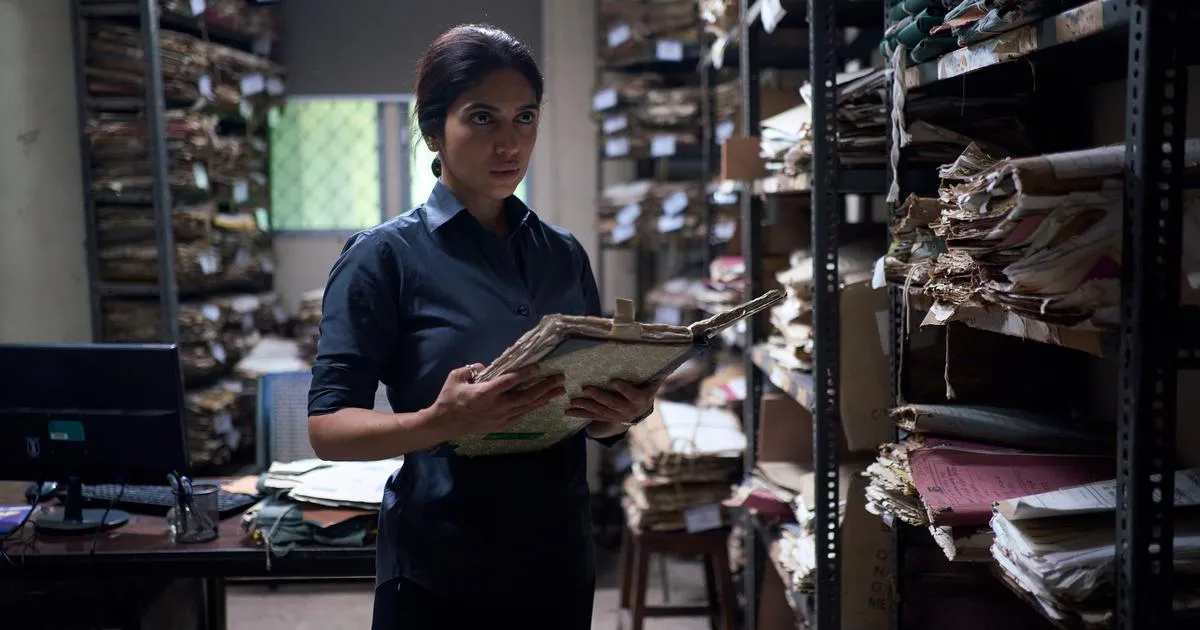
Bhumi Pednekar plays Rita Ferreira as an officer sealed off from her own emotions, quick to turn violent once she feels cornered. Her stoicism reads less like calm professionalism and more like a locked door, with eruptions that leave her loud, erratic, and difficult to like. She leans on a drug peddler to blunt stress, a character detail that undercuts the polished myth of the flawless Indian police officer and replaces it with something messier and more human, the kind of portrait a psychological thriller depends on.
Samara Tijori portrays Anita Acharya, an androgynous journalist powered by a contained, simmering rage. Anita positions herself as a punisher, targeting people she believes have harmed the vulnerable. Tijori builds that slide through restraint: measured delivery, hard stillness, and eye contact that turns into its own form of pressure. The performance treats “madness” as an accumulation, a steady tightening rather than a sudden snap.
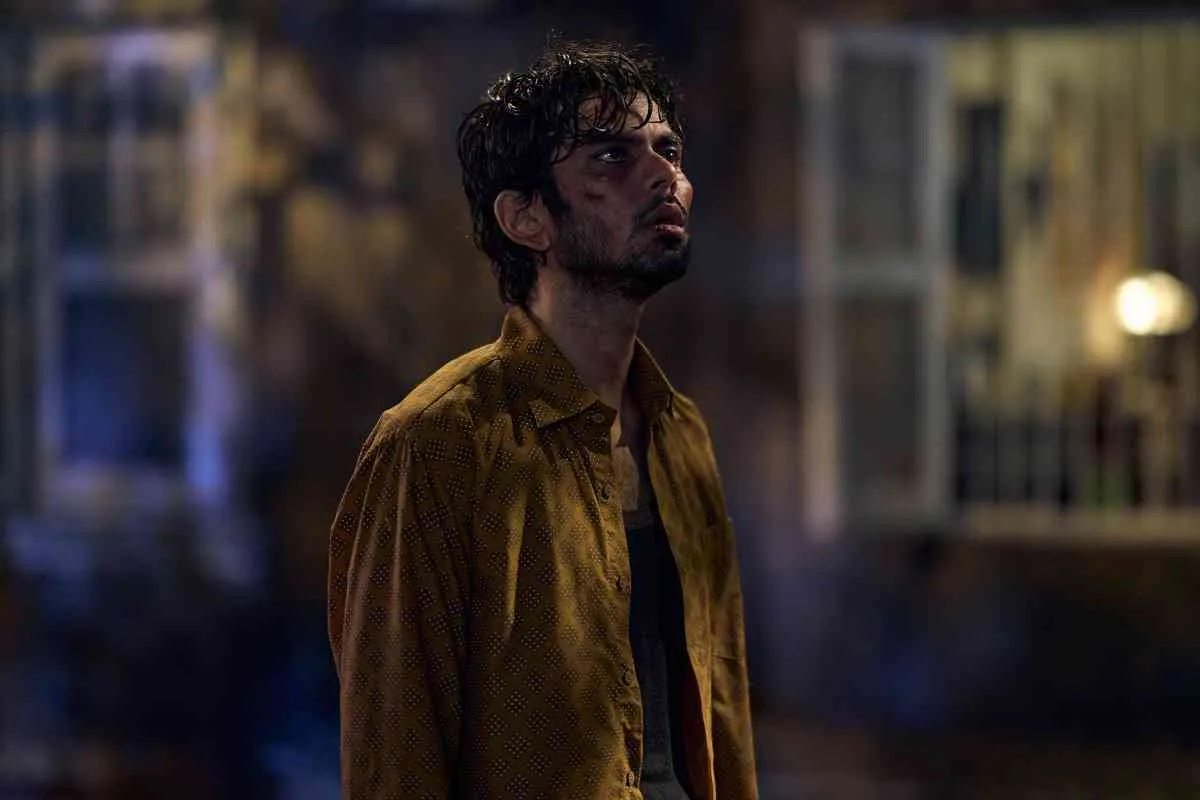
Aditya Rawal adds texture as Sajid, an aimless addict pulled into complicity. His work gives the accomplice a palpable ache, using visible pain to make the killer’s world feel disturbingly legible. Geeta Agrawal Sharma, playing Sub-Inspector Indu Mhatre, steadies the ensemble with a grounded presence and the sense of a capable subordinate who reads as fully formed. That same friction runs through the office itself. ACP Vikram Sathe becomes a professional rival, and his resentment over Rita’s promotion points to the department’s internal politics and the way hierarchy shapes cooperation.
Rita’s difficulty with intimacy surfaces in her scenes with her ex-boyfriend, Adi. She responds with minimal outward reaction, and the camera leaves the audience searching her face for clues, forced to infer her internal weather from small shifts and pauses.
The Weight of Inherited Trauma
The title operates as metaphor, suggesting a swamp where people remain trapped by circumstance and by memory. The idea lands most sharply in Rita’s relationship with her mother, Isabel. Isabel, also a cop, treated Rita with frightening severity, and the series treats that history as the root of the fragility Rita brings into her work. Trauma here is not a backstory footnote. It becomes a daily condition that reshapes how authority is performed and how violence is rationalized.
The show widens that pattern into the city’s cycles of abuse. Shelter homes and orphanages meant to protect children become sites of exploitation, and the narrative places that corruption in full view. The presence of the leader Dada and the victims from the red light area reinforces the sense of social rot, with institutions serving as cover for harm.
Rita and Anita are written as two sides of the same coin, joined by traumatic pasts and separated by how their relationships with their mothers carved their adult selves. The script draws a sharp line between love on one side and hate on the other, then watches how that difference bends each woman toward her chosen role: cop, journalist, avenger, witness.
Their pain exists inside a larger pattern of institutional failure. Rita’s promotion is treated by the department as an inclusivity gesture rather than recognition of merit, exposing a male-dominated workplace and the mental toll of a system that reads as unreliable for the underprivileged.
Atmospheric Choices and Narrative Shifts
Amrit Raj Gupta directs with a visual approach steeped in darkness, gloom, and unease. The series leans into gore and pointed images to lock in a haunted mood, letting brutality sit in the frame long enough to become part of the atmosphere. Structurally, the writing moves across multiple timelines that eventually intersect, using that braid to reveal the source of the killer’s compulsion. A radio becomes a conduit for backstory, an offbeat choice for modern streaming storytelling that turns exposition into a recurring texture rather than a clean information dump.
The series also repeats scenes from new angles and viewpoints, allowing motives to sharpen through recontextualization. That method fits a psychological thriller interested in interior logic, and it reinforces the show’s interest in cause and effect. Midway through the seven episodes, the pace grows heavy. The central investigation loses urgency as the story lingers on repeated flashbacks and PTSD episodes, and the procedural engine begins to idle.
The background score can push too hard, especially when a foreign-language track surfaces and clashes with the setting. The investigative work itself stays thin across the season. The police miss patterns and signatures that feel obvious, and that gap undercuts tension that should come from competence under strain. The final episode works to gather the timelines and character threads into a single resolution, aiming to close the emotional accounts the series opened, even as the mechanics of the case have already slipped into the background.
Daldal premiered on Amazon Prime Video on January 30, 2026, following its high-profile first look at the 56th International Film Festival of India. An adaptation of Vish Dhamija’s novel Bhendi Bazaar, the series is a psychological crime thriller that centers on DCP Rita Ferreira, a Mumbai police officer grappling with severe personal trauma and substance reliance while hunting a sadistic serial killer. The show has been noted for its “whydunnit” structure and its dark, unflinching portrayal of Mumbai’s underbelly, marks a significant shift for lead actress Bhumi Pednekar into more morose, restrained territory.
Full Credits
Title: Daldal
Distributor: Amazon Prime Video
Release date: January 30, 2026
Rating: TV-MA (18+)
Running time: 40 minutes per episode
Director: Amrit Raj Gupta
Writers: Suresh Triveni, Sreekanth Agneeaswaran, Rohan D’Souza, Priya Saggi, Hussain Haidry
Producers and Executive Producers: Vikram Malhotra, Suresh Triveni
Cast: Bhumi Pednekar, Samara Tijori, Aditya Rawal, Geeta Agrawal Sharma, Chinmay Mandlekar, Sandeep Kulkarni, Ananth Mahadevan, Saurabh Goyal, Prateek Pachauri, Keya Ingle, Vanita Kharat, Sandesh Kulkarni, Vibhawari Deshpande, Rahul Bhat
Director of Photography (Cinematographer): Not publicly credited
Editors: Shivkumar V. Panicker
Composer: Subhajit Mukherjee
The Review
Daldal
Daldal is a gritty exploration of trauma that succeeds more as a character study than a police procedural. Its strength lies in the psychological parallels between the hunter and the hunted, grounded by intense performances from the lead cast. However, the thin investigative logic and uneven pacing prevent it from reaching the heights of top-tier crime dramas. It is a bold, bleak entry into the Indian streaming landscape that prioritizes mood over momentum.
PROS
- Strong, nuanced performances by Samara Tijori and Aditya Rawal.
- Gritty, atmospheric cinematography that captures a bleak Mumbai.
- Subversive "whydunnit" structure focusing on psychological motives.
- Honest depiction of systemic sexism and inherited trauma.
CONS
- Ponderous pacing that slows significantly mid-season.
- Lack of investigative rigor and thin police procedure.
- Repetitive flashbacks that disrupt the narrative flow.
- Intrusive background score and disjointed editing.