


























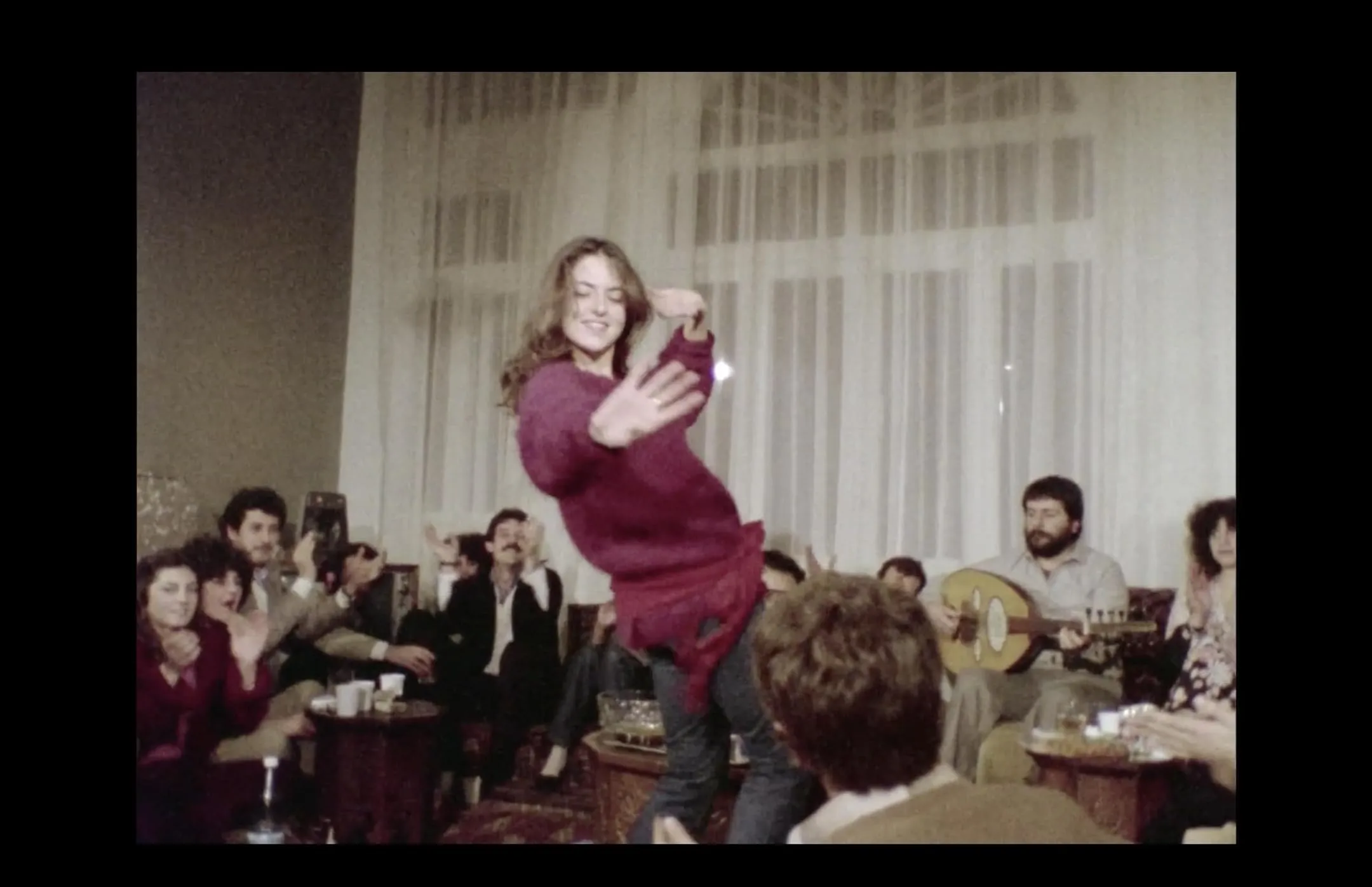

Lana Daher approaches Beirut as an archaeological site made of images, a city marked by repeated disappearance and return. The project grows out of a personal need to reclaim a history that often gets erased or brushed aside, and the film reads like layered national memory. She steps away from a familiar documentary template and builds the work as a collage composed entirely of archival material.
The labor behind it is immense. Daher draws from more than 20,000 pieces of source media, moving between grainy 16mm reels, magnetic VHS tapes, newsreels, private home videos, and still photographs. The archive stretches across 70 years, and the film declines the usual biographical arc built around a single person.
It treats Beirut itself as the subject, with the city presented as a constant presence that has been constructed, broken, and rebuilt across generations. The tone holds two truths at once: the ache of national trauma and the ongoing energy of cultural life. For viewers outside Lebanon, the film offers access to a reality where beauty and catastrophe stay closely linked, shaping how a place is remembered and how it keeps going.
Memory as an Act of Defiance
The archival practice here carries social weight. Lebanon has no centralized national archive, and political fragmentation leaves large parts of contemporary history missing from school curricula. Under those conditions, locating and preserving images turns into resistance against collective forgetting.
Daher shapes the film to match that instability. She avoids a linear timeline and moves through time in abrupt turns, cutting between footage of the 1975 civil war and scenes tied to events in 2024. The structure makes repetition visible. Electricity crises, bombings, and revolutions appear across decades with a familiarity that feels like recurrence, not resolution.
That design also defines the film’s physical texture. Weathered newspaper clippings and warped analog tapes sit next to sharper contemporary media, and the shift in image quality becomes a tactile sign of accumulated damage.
The editing builds a pulse that can swing from disorder into brief calm without warning. The viewer receives something closer to an emotional geography than a classroom lecture, guided by fragments that keep their rough edges, like the fragile strips of celluloid the film is trying to protect.
The Rhythmic Pulse of Resistance
Music operates as a sustaining force, giving the archival stream a rhythmic frame. The soundtrack draws from Lebanese memory through jazz-funk, pop, and folk selections, including tracks by Ziad Rahbani and the Bendaly family. These songs push scenes forward and sharpen the film’s emotional swings.
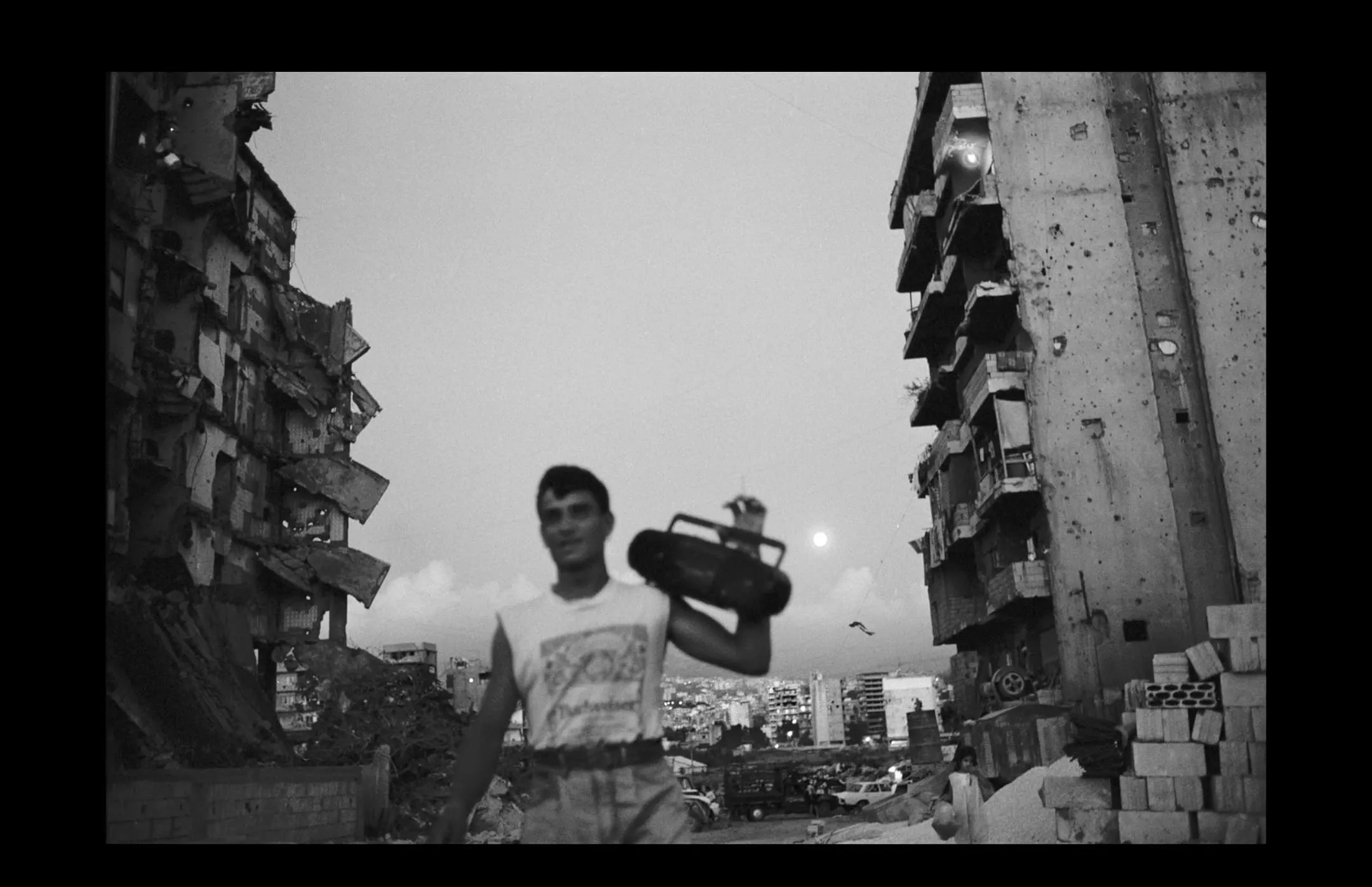
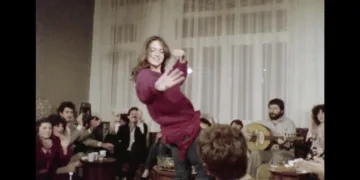
A disco sequence set to Dalida plays over dancing bodies, then the film cuts straight into images of a garbage dump or a bombed-out building. The transition lands as a statement about daily life in Beirut: celebration remains present even as ruin reappears.
The film also enters a conversation with Lebanese cinema by inserting excerpts from the country’s film history. Figures such as Nadine Labaki and Catherine Deneuve appear through clips lifted from earlier works and repositioned here, altering how those screen images speak across seven decades.
This reframing treats creative expression as a form of record-keeping. Artists and ordinary citizens become guardians of memory in a place where official narratives falter. Their presence points to a cultural ferment that continues in the shadow of political failure and the violence associated with soldiers.
A Fragile Geography of the Heart
The title arrives as a question that hangs in the air without an easy response. It mirrors the director’s conflicted bond with a homeland that repeatedly offers beauty and then delivers disappointment. The film tracks psychological wounds passed through generations, naming post-traumatic stress and the quiet uncertainty that shapes any talk about the future.
It favors lived experience over explanatory voiceover, grounding politics in what ordinary citizens see and endure. Wedding celebrations and family outings appear alongside the wreckage of war, turning “history” into intimate human scenes.
That intimacy gives the film access to feelings that resist plain language. It reads as a love letter and a map of displacement, describing the specific pain of loving a place that stays precarious. The emphasis on mental endurance pushes the film beyond a single region, since the question it keeps returning to has global weight: how identity persists when stability never fully arrives, and when the ground under daily life keeps shifting.
Lana Daher’s directorial debut is a 76-minute archival journey that serves as a profound love letter to Beirut and the Lebanese spirit. Composed from over 20,000 archival sources, the film explores seventy years of history through film, television, and private home videos. It premiered at the 2025 Venice Film Festival and saw its UK theatrical release in February 2026 at the Institute of Contemporary Arts (ICA). Viewers can experience this sensory map of memory through limited theatrical engagements and selected festival screenings across Europe and North America.
Full Credits
Title: Do You Love Me
Distributor: Icarus Films, Lightdox, Rapid Eye Movies, Films de Force Majeure
Release date: February 5, 2026 (UK Premiere), September 2025 (Venice Film Festival Premiere)
Running time: 76 minutes
Director: Lana Daher
Writers: Lana Daher, Qutaiba Barhamji
Producers and Executive Producers: Jean-Laurent Csinidis, Lana Daher, Jasper Mielke, Karoline Henkel, Arto Sebastian
Cast: Catherine Deneuve, Nadine Labaki, Ziad Rahbani (all through archival footage)
Director of Photography (Cinematographer): Various (Archival Footage), Denis Liakhov (Colorist)
Editors: Qutaiba Barhamji
Composer: Ziad Rahbani, Pierre Armand (Sound Design)
The Review
Do You Love Me
Do You Love Me is a masterful achievement in archival storytelling, transforming seven decades of scattered fragments into a cohesive emotional pulse. By eschewing a traditional history lesson in favor of a non-linear, sensory journey, Lana Daher captures the paradox of Beirut: a city of both infinite trauma and defiant joy. It is a vital act of cultural preservation that communicates the "ache" of national identity with profound grace. This film is essential viewing for anyone seeking to understand how memory survives when the physical world is in constant flux.
PROS
- The use of over 20,000 archival sources creates a rich, textured visual experience.
- The integration of Lebanese jazz-funk and pop music serves as a powerful emotional engine.
- Successfully captures the complex, ambivalent love citizens feel for a volatile homeland.
- The non-linear structure perfectly mirrors the repetitive cycles of history.
CONS
- The lack of chronological order or explanatory text might challenge viewers unfamiliar with Lebanese history.
- The dense "collage" style can occasionally feel overwhelming due to the rapid-fire succession of disparate images.