





















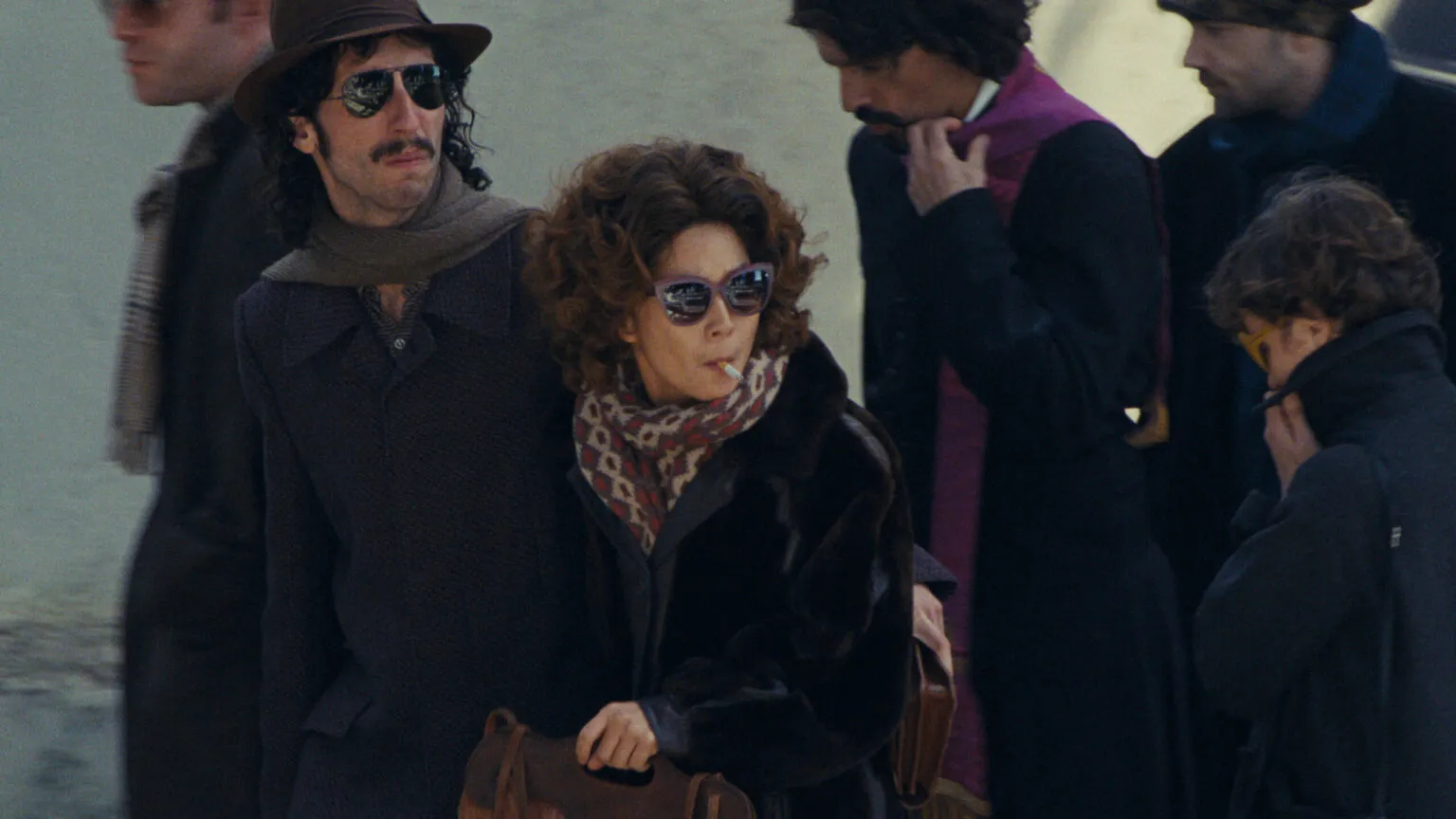

Portugal’s 1974 Carnation Revolution opened a brief window for socialist change. By 1980, many working-class people carried a raw sense of betrayal, watching liberal reforms and economic shifts undo what the revolution promised. Ivo M. Ferreira plants his film inside that pressure point and tracks the rise of the FP-25, an armed far-left organization responsible for bank robberies, bombings, and killings, carried out in the name of resisting what they saw as fascism’s return.
The story stays close to a small militant cell, tying private routines to political hardening. They move from poster runs to acts of violence, and the film turns that escalation into a portrait of a country arguing with itself. Idealism curdles into repetition and blood, and the democratic order reads as an empty answer for people who feel shut out of its protections. Ferreira avoids tidy judgment. He lets the group’s reasoning play out on screen, showing how activism can narrow into clandestine crime, and how history can feel like a physical weight leaning on the present.
The Catalyst of Despair
The shift from street-level organizing to underground violence carries a grim momentum, and the film pins that momentum to a factory scene that lands like a punch. A worker hangs himself and leaves a note saying he would rather die than watch his children starve. That single act becomes the spark that pushes Jaime over a line he has been approaching for a while. His work changes shape fast, from putting up posters to committing himself to armed struggle.
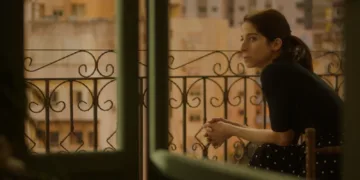
Rosa holds the film’s emotional charge. She is an actress who grows into a passionaria figure for the cause, and she holds two responsibilities at once: her fierce loyalty to the movement and her care for her young son. The film builds stakes through that constant split in her attention, with scenes that keep returning to the cost of staying committed while parenting in hiding.
From there, the cell launches the Global Project, a plan built around targeted executions of businessmen and police officers. In their minds, violence becomes a defensible instrument, a form of protection that follows its own logic once it starts. The story then stretches into a long night of unraveling. Trust fractures inside the group. Arguments spread between members who want to keep escalating and those who push for negotiation.
The political branch collides with the executive branch, and the police pressure tightens until every conversation feels risky. Each character has to face what their choices have set in motion, and the film makes that reckoning domestic as much as ideological. Homes, relationships, and ordinary habits erode while clandestine life swallows everything around it.
Loyalties Strained by Duty and Desire
A love triangle drives much of the tension, and the film treats it as a political problem as much as a romantic one. Rosa and Jaime share a bond formed inside revolutionary fervor, and that bond comes under threat from Marlow, a police officer tasked with hunting the group Rosa leads.
Marlow wobbles between his duty to dismantle the FP-25 and a possessive attachment to Rosa that twists his decisions. The result is a collision of professional mandate and personal fixation, staged in scenes where desire turns into leverage and fear turns into strategy.
Betrayal hangs over the cell as a constant possibility. A secret conclave, filled with hooded delegates shouting accusations about collaborators, turns paranoia into ritual. Suspicion eats away at solidarity, and Rosa and Jaime drift into isolation as arrests and deaths cut through their circle. The film leans into fatalism as their aims grind against the world they are trying to change. They are caught inside a machine that keeps moving, with or without their consent.
Marlow’s contradictions stay sharp. He tries to shield Rosa from his superiors while keeping his determination to destroy her organization intact. That split gives him shape beyond the role of pursuer, and it also reflects the film’s larger collapse of certainty.
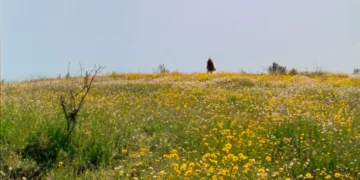
The romantic stakes track alongside the political fallout, and the characters keep getting defined by what they do under pressure: hiding in forests, stranded in nature, cornered by their own loyalties. Their emotional intensity becomes fuel for commitment, and the same intensity helps drive them toward ruin.
The Analog Grime of Underground Life
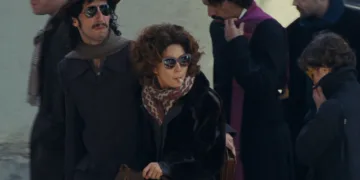
The film’s look and sound create a tight, disciplined atmosphere, tuned to the pulse of 1970s political thrillers. Smoke hangs in thick layers. Rotary phones ring in cramped rooms. People squeeze into small cars, carrying the claustrophobia of the underground into every frame. This analog texture feels heavy and inhabited, like a world where every object has been handled too many times.
Vasco Viana’s photography captures the paranoia of clandestine life with images that keep suggesting surveillance, waiting, and sudden movement. The camera can turn balletic in certain passages, then snap into something harsher when action arrives. A bank robbery plays as choreography built from grit: the staging highlights chaos, hesitation, and human weakness inside the operation, and it refuses the clean competence that modern action cinema often sells.
Production work from Lucha D’Orey and Nuno Mello supports that sense of lived-in authenticity, rebuilding a grey, post-revolutionary Lisbon that matches the story’s exhaustion. The pacing follows the rhythm of militant life: long stretches of oppressive waiting, followed by abrupt, messy bursts of tension that leave no time to recover. Music choices reinforce the period through revolutionary songs and percussion clusters, keeping the film locked inside an era that holds both hope and disillusionment in the same breath. The direction stays sober and grounded, committed to friction and consequence.
Haunted by an Imperial Past
The film ties its political present to Portugal’s colonial history through the people who inhabit both sides of the conflict. Characters carry experience from Mozambique or Angola, and that shared past binds militants and police through trauma that does not respect ideology. The story treats antagonists with ambiguity rather than moral simplicity. A police chief even admits he might have joined the rebels before 1975, a confession that reframes authority as another role shaped by timing and circumstance.
Rosa’s presence adds another strain of meaning. As an Asian woman in 1980s Lisbon, she moves through spaces with a visibility that the film turns into both risk and tool. A carwash sequence gives her a moment of tactical control: she uses a headscarf as part of a bait-and-switch, and the scene plays as a quick, smart demonstration of her wit under pressure.
Revolutionary history, in this film, reads as a zone of friction where slogans meet scars and strategy meets panic. Violence keeps returning as part of a longer continuum, passed from one era to the next. The film leaves the viewer staring at hard questions about resistance and what it costs to keep faith with a cause that is slipping away.
Projecto Global premiered at the International Film Festival Rotterdam on February 2, 2026, as part of the Big Screen Competition. This political thriller dives into the turbulent years following Portugal’s Carnation Revolution, focusing on the real-life far-left group FP-25 and their transition from activism to armed resistance. Set against the backdrop of 1980s Lisbon, the film captures the heavy atmosphere of a nation grappling with its identity through a blend of noir aesthetics and docudrama rawness. It is currently making its way through the international festival circuit and is handled globally by The Match Factory.
Full Credits
Title: Projecto Global
Distributor: The Match Factory, O Som e a Fúria, Tarantula Luxembourg
Release date: February 2, 2026
Running time: 141 minutes
Director: Ivo M. Ferreira
Writers: Ivo M. Ferreira, Hélder Beja
Producers and Executive Producers: Luís Urbano, Sandro Aguilar, Donato Rotunno
Cast: Jani Zhao, Rodrigo Tomás, José Pimentão, Isac Graça, Gonçalo Waddington, Ivo Canelas, João Catarré, Alyne Fernandes
Director of Photography (Cinematographer): Vasco Viana
Editors: Sandro Aguilar
Composer: Nik Bohnenberger, Eva Aguilar
The Review
Projecto Global
Projecto Global presents a heavy, atmospheric look at political disillusionment. It prioritizes mood and historical texture over character depth, creating a world that feels haunting and inevitable. While the narrative occasionally meanders, the gritty aesthetic and strong lead performance keep the experience grounded. It serves as a stark reminder of the cost of radicalism.
PROS
- Striking 1970s aesthetic and authentic production design.
- Jani Zhao's intense and grounded performance as Rosa.
- Masterful use of pacing to capture the tension of clandestine life.
CONS
- Narrative dispersion and a crowded cast of secondary characters.
- Thinly drawn motivations for some of the lead male figures.