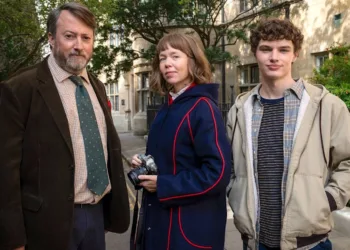








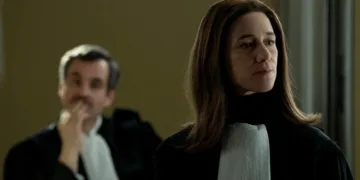
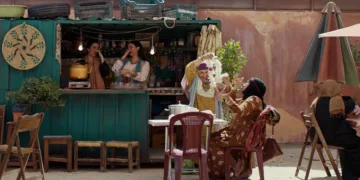


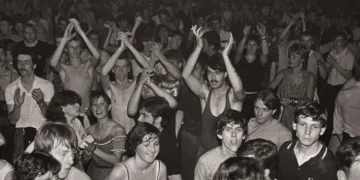












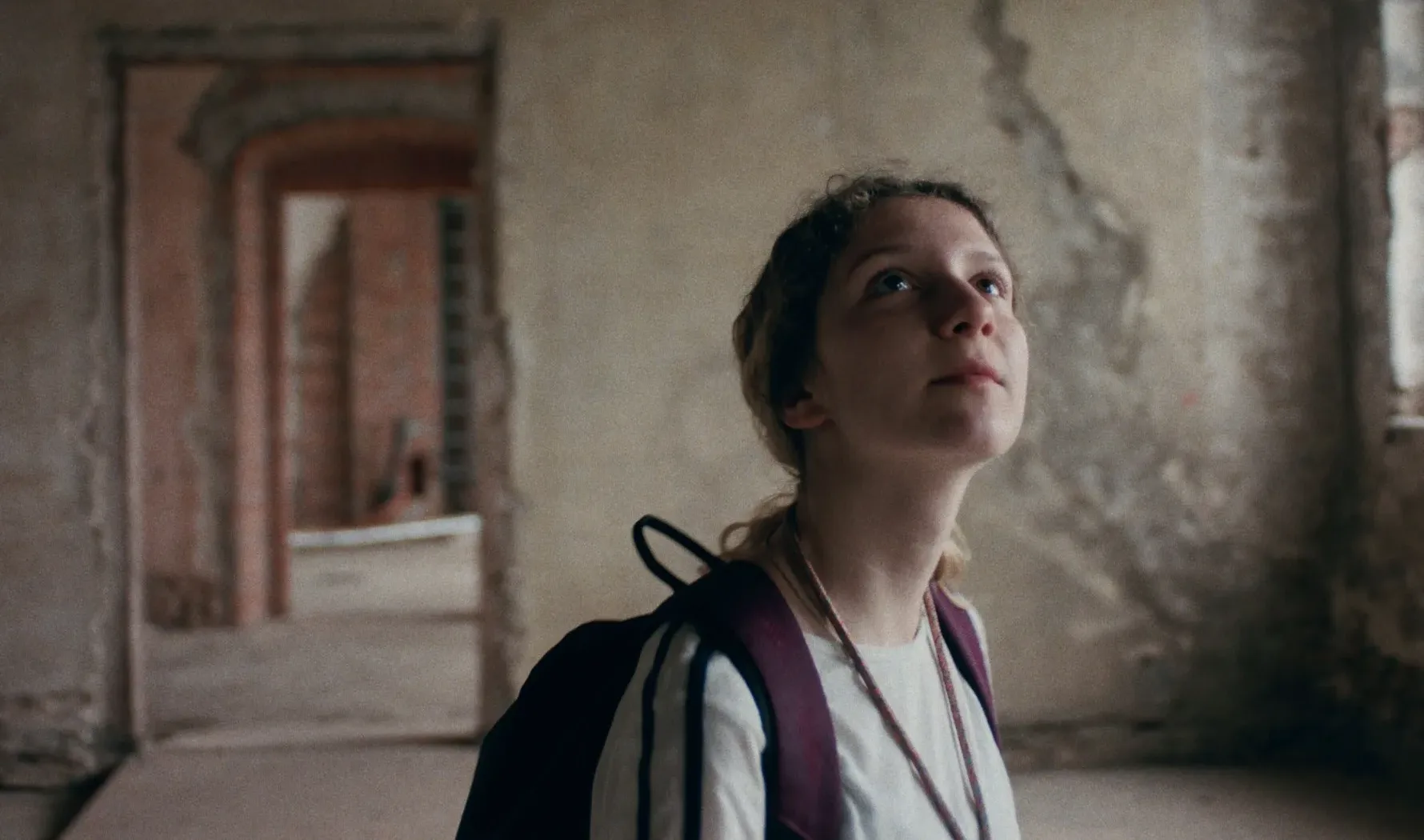

In the gray light of Greiz, a small town in Thuringia, sixteen-year-old Lea faces a camera. She wants access to a national talent show, a machine that turns personality into something edible for strangers. The question lands with the force of a verdict: what makes you special. Lea gives the room silence. Without a rehearsed identity to hand over, something in her loosens. The certainties around her begin to slip.
Greiz carries the feel of a place left behind. The history of East Germany stays in the buildings and in the town’s slowed economic heartbeat. Lea lives suspended between two addresses and two kinds of absence. At her mother Rieke’s home, the future arrives through a pregnancy and a new partner’s child. At the fading hotel run by her father’s parents, time drags its feet.
Her father, Matze, remains near the edges of his former life, present and unreachable in the same breath. The film watches the pressure between the clean masks people wear in public and the messy, unformed truth they keep indoors. Eva Trobisch holds to stark realism, staying close as a family decays without the comfort of a script.
A House of Displaced Shadows
This family moves like a set of colliding orbits, each pull creating its own small violence. Matze walks through his old house with the quiet dread of someone visiting a past that has been repossessed. He takes a lamp. Another man sleeps in his bed. The displacement registers in the body before it reaches the mind.
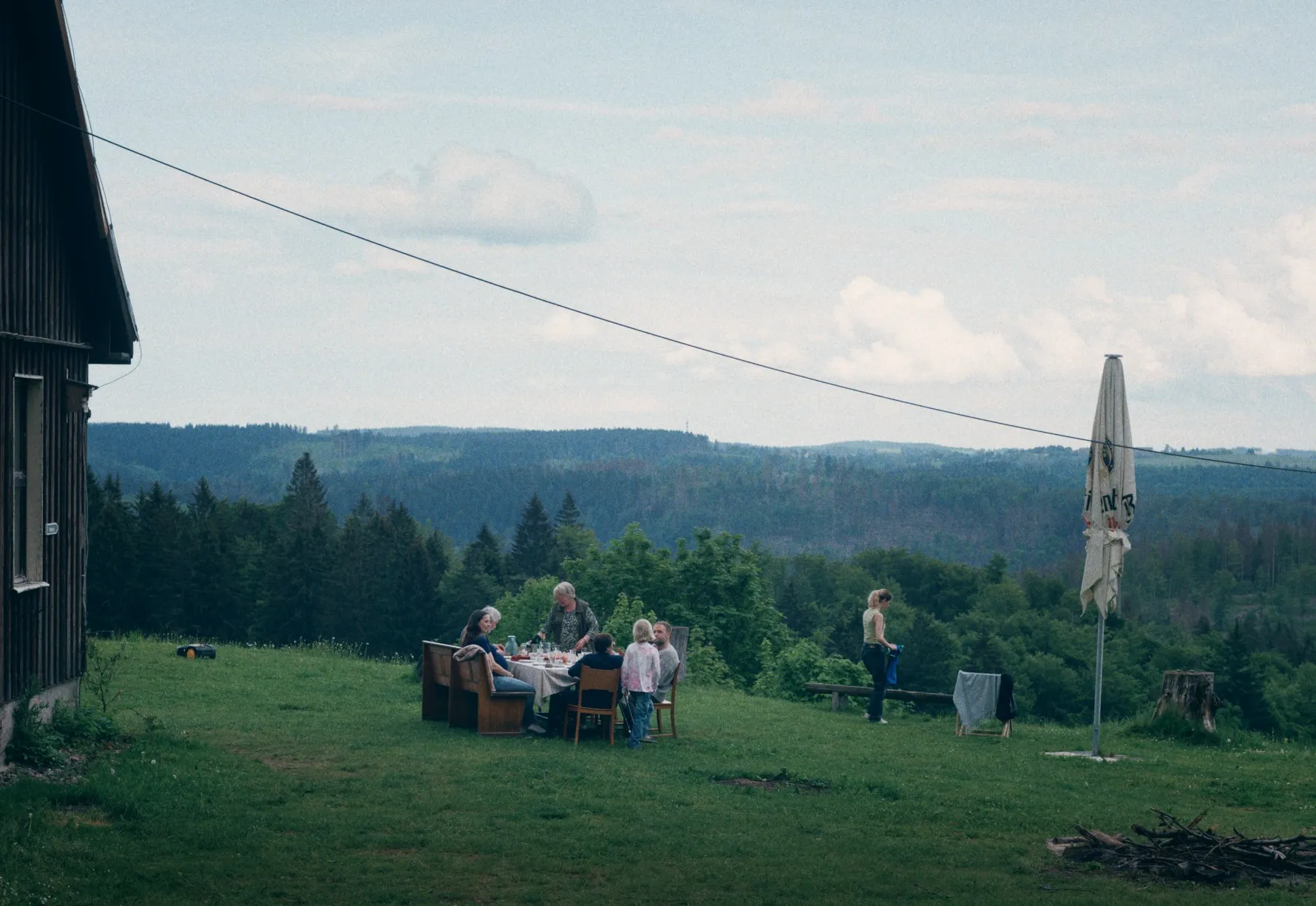
Early on, a sedated horse lies inside an MRI machine. The image carries clinical calm and a cruel clarity. A living creature reduced to weight, unconscious and compliant. The hotel owned by the grandparents, Christel and Friedrich, holds a similar heaviness. It stands as a failing mass that cannot be willed into health. Their business looks like an artifact from a different time, stripped of the polish expected by the present day. Debt hangs in the corridors like stale air.
Lea runs from her mother’s new household and seeks cover in this decaying shelter. The building offers space, and it offers no peace. Conversations cut. The smallest exchanges arrive sharp, then leave a bruise. Matze carries a quiet fury that keeps close to a stubborn loyalty toward his daughter.
The blended family arrangement keeps sounding in the background, a low hum of discomfort that never fades. A meeting in a maternity ward between Matze and Rieke’s new lover captures the exhaustion of politeness performed under strain. People share rooms and history and blood, and they still feel stranded. They live inside a reality without exits, bound by biology and memory, trapped in a house that stopped fitting them long ago.
The Weight of Historical Debt
Forces from outside the home press inward, turning private pain into something shaped by money and history. Aunt Kati marks a different route through the same town. She works as a curator and chases West German funds to restore a local palace. The promise of that investment lands with a sting for Christel, who watches her own small business wither without rescue. The palace stands tall, a monument with empty rooms, while the town’s daily poverty stays close to the ground.

Politics enters through necessity. The grandparents agree to host a far-right convention. The choice comes from debt, from the cold arithmetic of survival. That pragmatism tears at the family line. Edgar, Lea’s cousin, organizes a protest against his own relatives. He reads their decision as a betrayal with consequences that will outlive them.
The split between East and West sits like a scar that never closes. Matze once left for the West to earn higher wages. Rieke uses that absence like a blade, returning to it whenever the past needs to be made present. Money came back. Something else did not. His departure created an emotional deficit that resists repayment.
Here, personal lives function as small gears turning inside a vast, indifferent mechanism of economics and memory. Each character feels shaped by a specific geography, and that geography collects its price in ways they cannot afford.
The Frailty of the Packaged Image
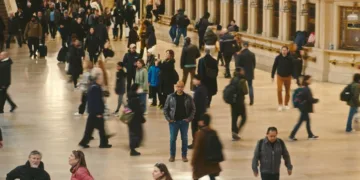
The film’s images carry a fracture that never fully heals. In Greiz, daily life arrives in grainy, low-lit frames, thick with dust and hesitation. The camera stays restless, handheld and anxious, as if stability itself has become suspicious. Then the talent show studio appears with a hard brightness that feels violent. High-definition lenses and glitter create a manufactured clarity, a kind of cleanliness that reads as untrue.
The show demands a story that can be consumed. It wants struggle, then triumph, packaged in a neat arc. Lea cannot produce that shape. Her life comes in fragments, and the fragments resist being forced into a single clean line. Music becomes the one bridge she can cross without lying.
Lea sings Coldplay’s “Fix You,” and the performance lands as a fragile lament. It carries rawness and exposure, an offering without protection. For a moment, the family gathers, and the silence around them takes on the feel of unity.
The film keeps its attention on what dissolves. Subplots thin out. Characters drift away into the fog of the everyday. The ending opens a door onto a room that stays empty. Life continues, and the absence of resolution becomes the point. The viewer is left holding the weight of what remains unresolved, with questions that refuse to close.
The film premiered at the Berlin International Film Festival in early 2025 and secured a theatrical release in Germany by September of the same year. In this current period of early 2026, the feature has become accessible for home viewing via the MUBI streaming service and VOD platforms including Amazon and Apple TV. It stands as a silent witness to the complexities of modern German life.
Full Credits
Title: Home Stories
Distributor: Pandora Film Verleih, Komplizen Film
Release date: February 14, 2025
Rating: FSK 12
Running time: 112 minutes
Director: Eva Trobisch
Writers: Eva Trobisch
Producers and Executive Producers: Janine Jackowski, Jonas Dornbach, Maren Ade
Cast: Frida Hornemann, Max Riemelt, Gina Henkel, Eva Löbau, Rahel Ohm, Peter René Lüdicke, Florian Geißelmann, Ida Fischer, Thomas Schubert
Director of Photography (Cinematographer): Adrian Campean
Editors: Laura Lauzemis
The Review
Home Stories
Home Stories is a meditation on the failure of the modern narrative to contain the mess of human history. It captures the quiet, existential exhaustion of a family caught between a disappearing past and a commodified future. While its refusal to provide closure may alienate those seeking traditional drama, its strength lies in its grainy, unflinching honesty. It is a film of echoes and absences, suggesting that what makes us special is often the very thing we cannot articulate.
PROS
- A raw, authentic performance by newcomer Frida Hornemann.
- Sharp, clinical metaphors for familial and economic decay.
- Striking visual contrast between realist textures and artificial media gloss.
- Avoids sentimental tropes in favor of complex, unresolved tensions.
CONS
- The lack of narrative closure may feel frustrating or aimless to some.
- Certain subplots dissipate without reaching a clear thematic payoff.
- The slow, elliptical pacing risks losing emotional momentum.