
























![Kingdom Hearts Collection [I-III] Review](https://gazettely.com/wp-content/uploads/2026/10/Kingdom-Hearts-Collection-I-III-1-360x180.webp "Kingdom Hearts Collection [I-III] Review: KHII Holds Steady as Newer Entries Fluctuate 40")
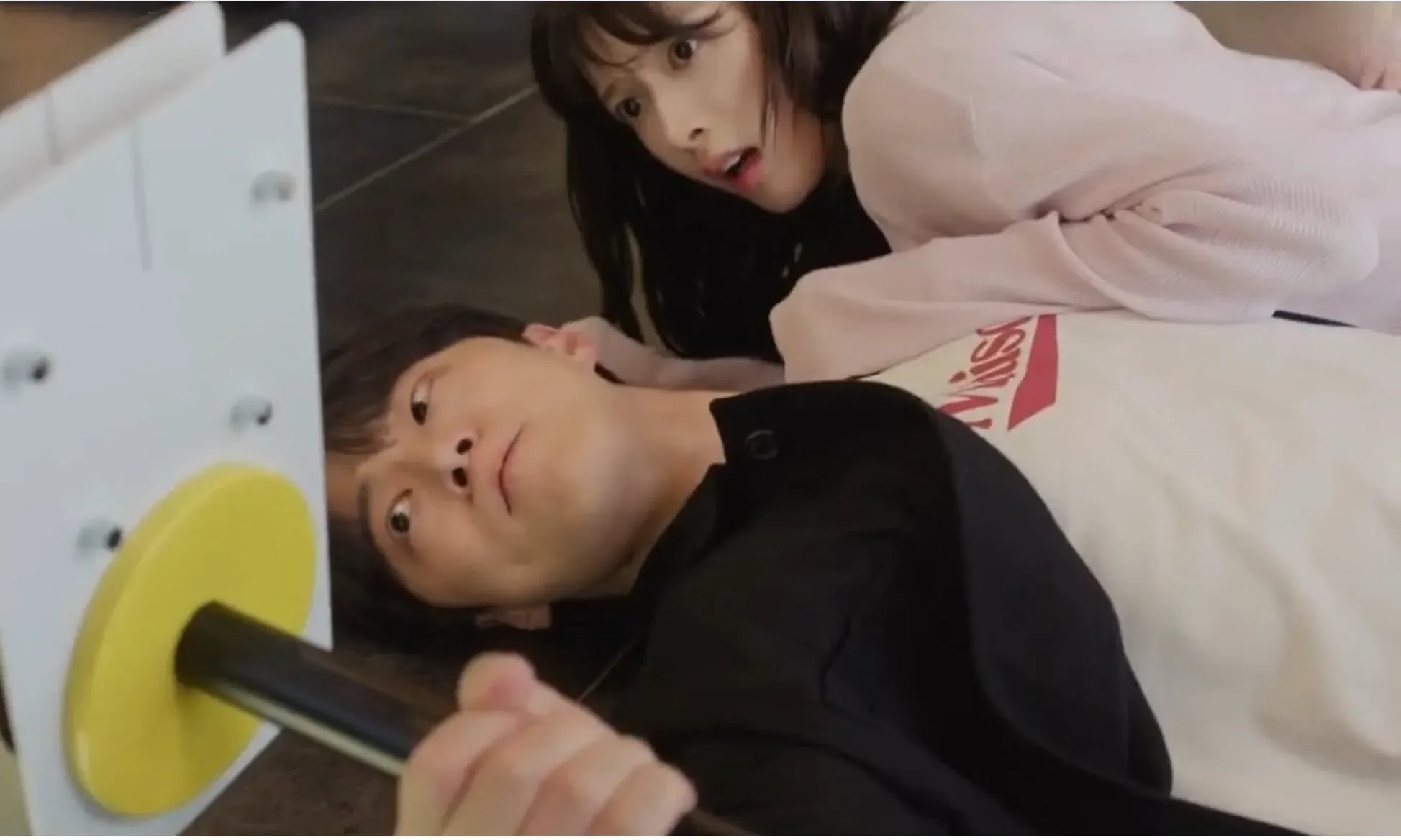

Our Universe moves through the aftermath of a family catastrophe and finds room for humor in a place that seems to reject it. The series opens with broken lines of connection, then pulls two strangers into one domestic space through loss. Sun Tae-hyung and Woo Hyun-jin first meet through their siblings’ planned marriage.
That relationship was supposed to bind them as relatives, yet it exposes how far apart they are in temperament and experience. Hyun-jin is tied closely to her sister through fierce loyalty. Tae-hyung carries the mark of a brother who left him behind. The plot then shifts violently with a car accident that kills the engaged couple and leaves behind a twenty-month-old child, Woo-joo.
That loss removes any chance for distance between the leads and places a child’s future in the hands of two people with no preparation for the task. The drama examines the failure of social support systems during private disaster, pushing people toward improvised care networks built from resentment, duty, and need. What emerges is a portrait of kinship formed through grief, conflict, and the daily pressure of raising a toddler.
The Weight of Inherited Responsibility
The central relationship works as a close study of the way old wounds shape behavior during crisis. Sun Tae-hyung, played by Bae In-hyuk, has built a life around corporate order as protection from the instability that defined his earlier years.
He once wanted to be a photographer, then exchanged that dream for steady pay and a highly controlled routine. His fixation on structure grows from his brother’s abandonment, and that history turns control into his main survival method. When guardianship falls on him, he approaches childcare like a system failure that can be managed through planning, logic, and apps.
Roh Jeong-eui gives Woo Hyun-jin a steady, grounded strength. Her work as a delivery worker has trained her body for nonstop strain, and she carries deep emotional pain from a final argument with her sister that was never resolved. She cares for her nephew with urgency and guilt, and that devotion shapes nearly every decision she makes. The friction between Hyun-jin and Tae-hyung reaches far past routine domestic disputes. Their clashes come from two different responses to trauma: one person trying to control disorder, the other living inside it and barely staying afloat.
Baby Woo-joo, played by Park Yu-ho, operates as the element that breaks open both adults. He functions as a source of disruption that exposes every weak point in their emotional defenses. Each mess and tantrum cuts through the roles they try to perform.
Tae-hyung’s decision to ask artificial intelligence for a toddler meal plan lands as pointed commentary on a contemporary habit of turning basic care into an intellectual exercise. Across the series, Tae-hyung changes slowly and painfully. His rigid defenses give way under shared exhaustion, repeated caregiving, and real affection. The pacing gives that shift time to hurt, which makes it feel earned.
This dynamic also speaks to larger cultural conversations about masculinity, labor, and caregiving. Tae-hyung’s early dependence on systems and optimization reflects a social environment that often treats emotional labor as something that can be outsourced or solved through technique.
Hyun-jin’s approach carries the opposite burden: she absorbs care work directly into her body and conscience. The series places those patterns in the same home and lets the conflict play out through daily routines, exposing how unevenly care is distributed and how little public language exists for grief-driven parenting outside conventional family structures.
The Architecture of Forced Cohabitation
The show builds its romantic and emotional progression through practical pressure, grounding the relationship in housing insecurity and financial strain. A flood destroys Tae-hyung’s new apartment and makes it unlivable, and the series taps into the fear attached to sudden urban displacement.
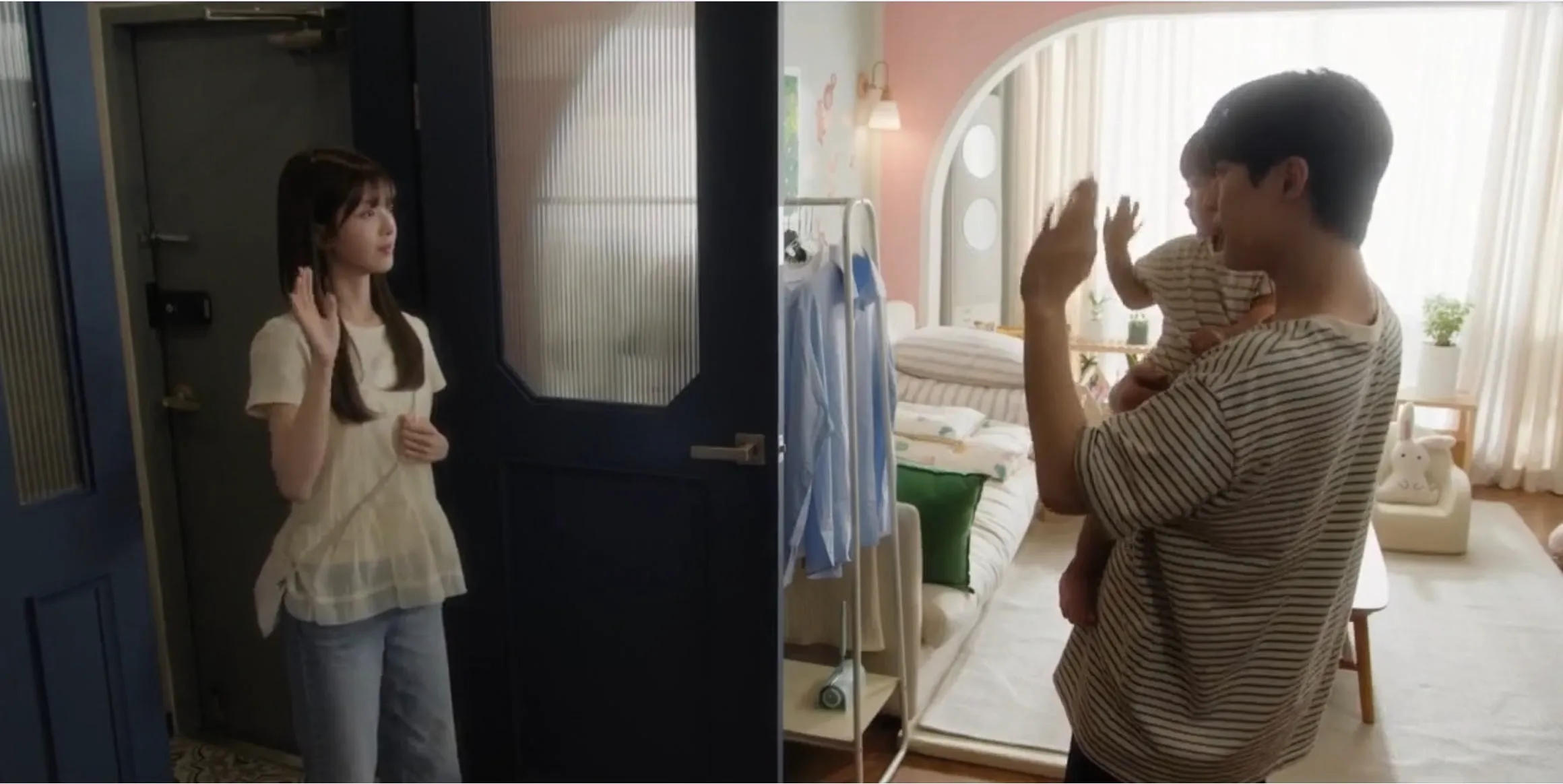
Faced with that reality, he accepts Hyun-jin’s offer to share her home. The choice comes from money problems and necessity, with no romantic framing attached to it. They then create a strict roommate contract that splits chores and childcare with measurable precision. The agreement tries to turn emotion into policy, and that effort reveals how deeply both characters want distance from the feelings growing around them.
Their home quickly becomes a site of conflict shaped by class habits, personal history, and different ideas of security. Tae-hyung reorganizes Hyun-jin’s cluttered living space into something neat and sterile, and she resents the intrusion even while benefiting from the order. Their first encounter, marked by a bitter argument over a designer lamp, lingers in later scenes and neatly captures their opposing values. For Tae-hyung, objects carry status and safety. For Hyun-jin, objects exist for use in a hard life that leaves little room for aesthetic performance.
The series uses this cohabitation setup to speak to a familiar streaming-era trend: romance built through systems, contracts, and logistical pressure rather than idealized courtship. That framework fits a moment in television where stories often begin with precarity, shared rent, unstable work, and fractured family units.
Our Universe treats domestic space as a social map. Who cleans, who fixes, who sleeps, who rests, and who absorbs the child’s chaos become key narrative beats. The pacing keeps returning to these routines, and that repetition gives the relationship texture.
As the bickering settles, the show turns toward quieter forms of care that carry greater emotional weight than polished romantic scenes. Hyun-jin gets sick from the pressure of a new job and the lack of hot water in the apartment, and Tae-hyung steps into a caregiving role that feels believable because the script builds it through labor. He takes on the boiler repair as part of their shared survival, not as a grand gesture.
This part of the story finds intimacy in chores, maintenance, and repetition. Progress appears in small domestic victories such as bath time going well or a kitchen finally staying clean. The series treats those moments as relationship milestones, which gives the romance a social realism that stands out.
That choice also affects representation. The drama presents family-making through work, exhaustion, and adaptation, with a child at the center and a conventional couple image arriving much later through circumstance and public perception. The show gives screen time to caregiving processes that many dramas compress or romanticize, and that emphasis shifts attention toward the lived mechanics of building a household after loss.
Professional Ambition and the Public Eye
Once the leads begin to stabilize at home, the outside world pushes in and complicates their fragile arrangement. Hyun-jin joins the corporate environment at BS Food and encounters Park Yoon-sung, someone from her past who reflects a life she might have lived under different conditions. As her team leader, he creates pressure at work and forces her to balance professional ambition with caregiving obligations at home.
This thread addresses a familiar workplace problem for caregivers: institutions demand performance while treating private grief as background noise. The show frames that tension through Hyun-jin’s schedule, physical fatigue, and emotional strain, making visible the cost of trying to remain employable during personal collapse.
Tae-hyung faces a parallel struggle through photography. He agrees to help Amy Choo for a day to pay for home repairs, and the job revives the artistic drive he had buried. During the shoot, he risks professional standing by offering advice without being asked. That moment shows a person returning to an abandoned skill and reclaiming a piece of identity. The series links this return to family need rather than fame or self-image. His creative labor becomes part of household care, and that shift marks real change in his priorities.
This pairing of storylines reflects a wider shift in television storytelling about work and adulthood. Careers in Our Universe are not framed as separate from the home plot. They feed into the same emotional and economic system. The show treats employment, housing, caregiving, and grief as connected pressures, which mirrors the lived reality many viewers recognize. Streaming dramas have increasingly moved toward these entangled life structures, and this series uses that pattern with clarity.
The drama also takes aim at digital spectatorship and the instability of privacy. A viral video of Woo-joo having a public meltdown at Hyun-jin’s office turns the family’s hardest moments into material for strangers’ judgment. Neighbors and community members read the image quickly and assume Tae-hyung and Hyun-jin are a conventional couple.
Public perception then shapes their behavior, pushing them into a united front that starts as performance. The irony lands sharply here: two people who created a written contract to control emotional risk end up managed by rumor, surveillance, and community assumptions.
That staged domestic image begins to alter their actual bond, and the series handles the shift through accumulated tension rather than sudden confession. A celebration leads to a night that ends with them waking up in the same bed.
The scene breaks the logic of their original agreement and exposes the limits of procedural control inside shared grief and shared care. The final beat leaves both characters, and the audience, in uneasy suspension. The question hanging over the story is no longer how they will split chores or childcare. It is how a partnership built from necessity will function once choice enters the room.
The South Korean television series Our Universe (also known as I’ll Give You the Universe) premiered on February 4, 2026, airing as a Wednesday-Thursday drama on tvN. The story follows two bickering in-laws who are thrust into an unexpected living arrangement to raise their orphaned 20-month-old nephew after a tragic car accident claims the lives of their siblings. Blending elements of heartfelt family drama with chaotic romantic comedy, the series has garnered significant attention for the chemistry between its leads and the scene-stealing performance of toddler actor Park Yu-ho. International viewers can stream the series on Netflix, Viki, or HBO Max, depending on regional availability.
Where to Watch Our Universe Online

Full Credits
Title: Our Universe
Distributor: tvN, Netflix, Viki, HBO Max
Release date: February 4, 2026
Rating: PG-13
Running time: 70 minutes
Director: Lee Hyun-seok, Jung Yeo-jin
Writers: Soo Jin, Jeon Yu-ri, Shin Yi-hyun
Producers and Executive Producers: Studio Dragon, Scene & Studio Co., Ltd., Park Sol-bin
Cast: Bae In-hyuk, Roh Jeong-eui, Park Seo-ham, Ha Jun, Park Ji-hyun, Park Yu-ho, Jin Seo-yeon, Kim In-kwon, Choi Gyu-ri, Oh Hyun-joong, Kang Ae-sim, Han Ji-hyo, Im Sung-jun, Oh Se-eun
Director of Photography (Cinematographer): Kim Sang-moo
Editors: Lee Ye-ji, Choi Min-young
Composer: Park Se-joon
The Review
Our Universe
Our Universe balances the sharp pain of loss with the messy reality of modern caregiving. By placing in-laws at the front of a domestic crisis, the show questions traditional family structures. The chemistry between the leads feels grounded in survival. The focus on economic precariousness gives the story weight. It is a thoughtful look at how adulthood is forced upon us through tragedy. This series succeeds because it treats parenthood as a labor of necessity.
PROS
- Genuine chemistry between the leads rooted in practical partnership.
- Honest depiction of the financial and emotional toll of unexpected caregiving.
- The child actor provides a natural, disruptive presence.
- Fast pacing that moves from tragedy to character growth.
CONS
- Secondary subplots involving corporate romance can feel less essential.
- Some comedic sequences rely on predictable tropes of parenting errors.
- The early move from mourning to comedy happens quickly.