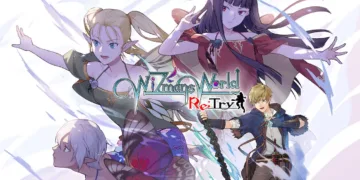

















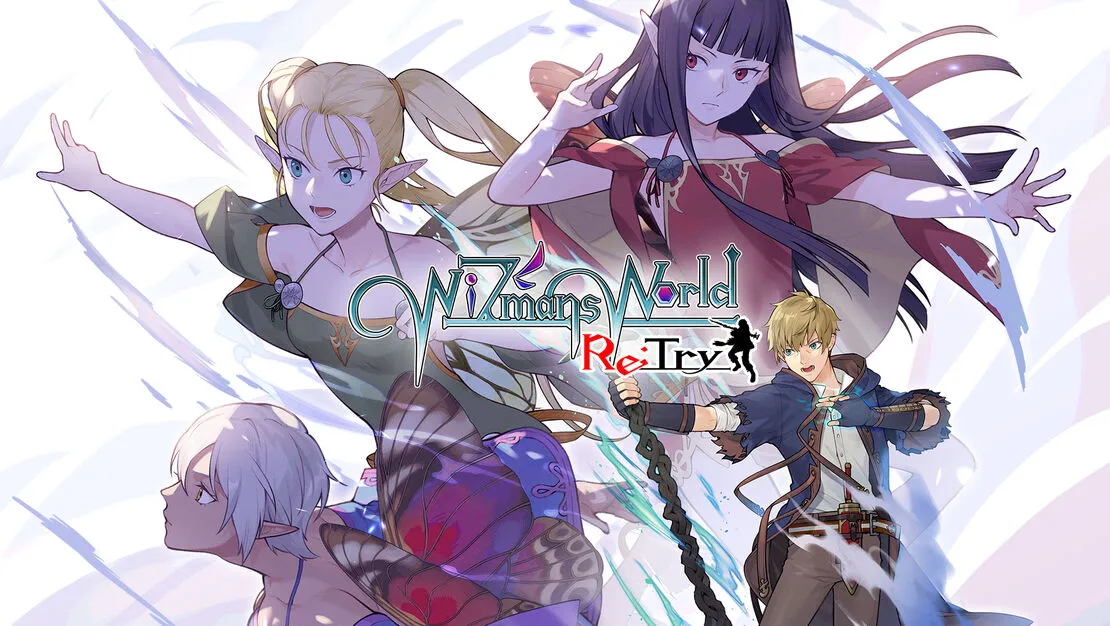

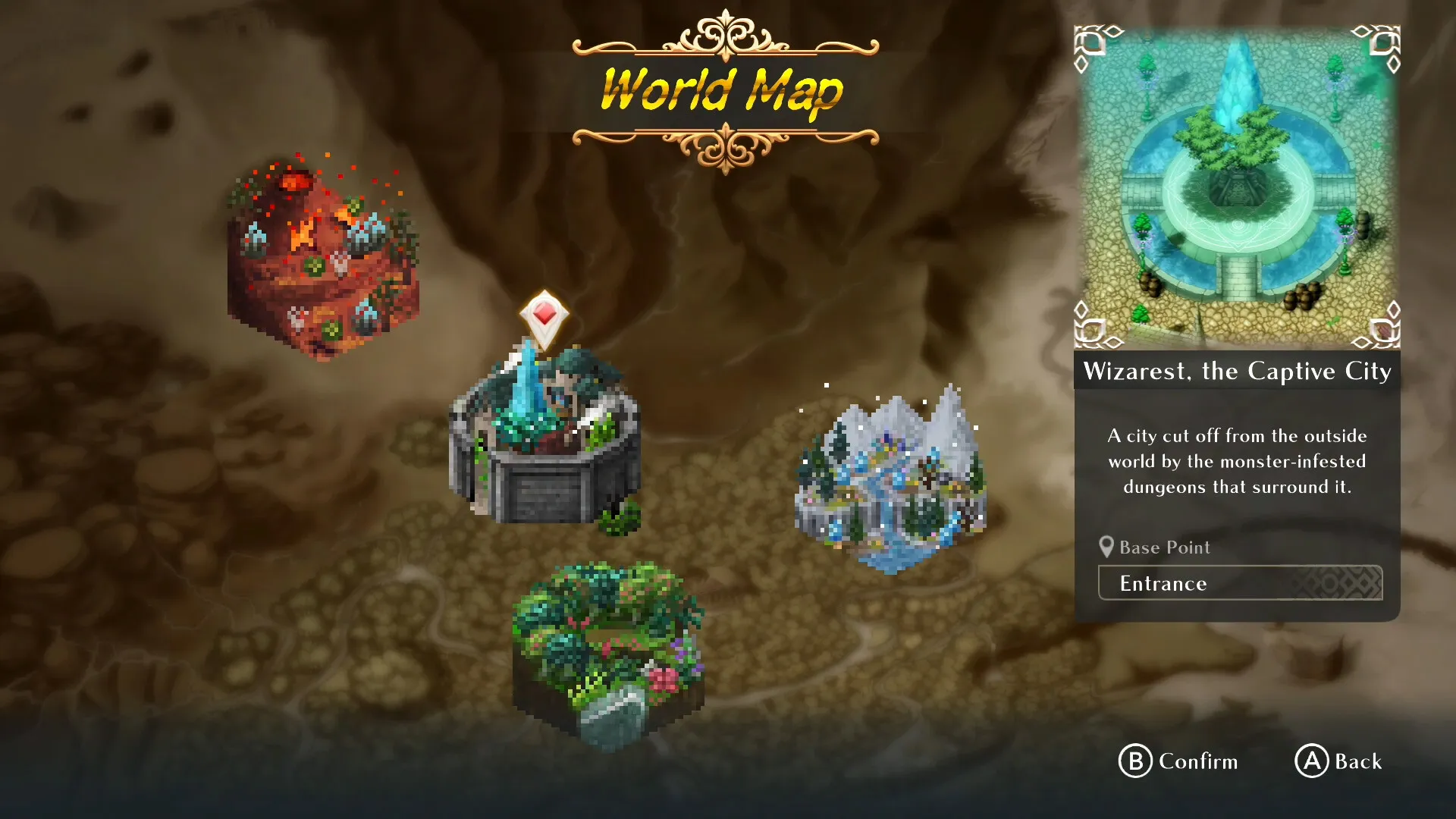
WiZmans World Re;Try returns as a recovered piece from an older handheld period. The game first appeared on Nintendo DS in 2010, yet it stayed confined to Japan for more than fifteen years. A localization and visual cleanup for current platforms now open the door to Wizarest, a city reduced to ruin.
Wizarest lives under a constant, unmoving fear, sealed away from everything else by a thick forest that shifts and closes around it. The woods function like a living prison. The people inside carry another wound on top of that isolation. Their memories are gone, and with them any sense that a world exists past the trees. You play as Claus, a young apprentice studying under the famous witch Giselle.
After Giselle disappears into the forest, the unstable calm of Wizarest breaks apart. Claus heads into the greenery with three fairy-like homunculi, searching for his mentor while trying to recover pieces of a buried past. The story holds a mournful mood and keeps its attention on a world slowly erasing itself.
The Alchemy of the Soul
The game’s strongest design idea sits in the Anima Fusion system, which links character growth to transformation. Claus develops through a familiar path, gaining levels and learning spells through experience. His three companions work very differently.
They begin as open frameworks that depend on repeated experimentation. These homunculi handle most of the fighting, and their growth comes directly from the monsters they defeat. After battles, players can collect the souls of fallen enemies. Fusing one of those souls into a homunculus rewrites her build at a fundamental level. Stats, attributes, and physical appearance all change through that process.
A homunculus fused with a beast soul takes on visual traits from that creature, while the game still keeps the trio within its stylized feminine look. That design choice gives combat farming a personal feel. The system runs on a four-part elemental wheel of fire, water, earth, and wind. Progress in the deeper forest areas depends on tuning the party around elemental weaknesses. Soul drops come through chance, so the game encourages focused hunts for specific enemies.
Battles serve character planning as much as level gain, since players are chasing particular traits and skills. Ability inheritance strengthens that planning. A homunculus can keep a strong spell from an earlier form while shifting into a new elemental function. By the middle stretch, party builds can differ sharply from one player to another, and that variability gives the system real identity.
Tactics Inside a Collapsing Forest
Travel through the forest asks for map awareness and tactical planning at the same time. Exploration uses a 2D map, and enemies move in real time across it. Seeing threats on the field changes the feel of random encounters from older RPG traditions. Positioning matters a great deal. If Claus hits an enemy from behind, the party gets a preemptive turn, and that opening can finish a battle before it has room to develop.
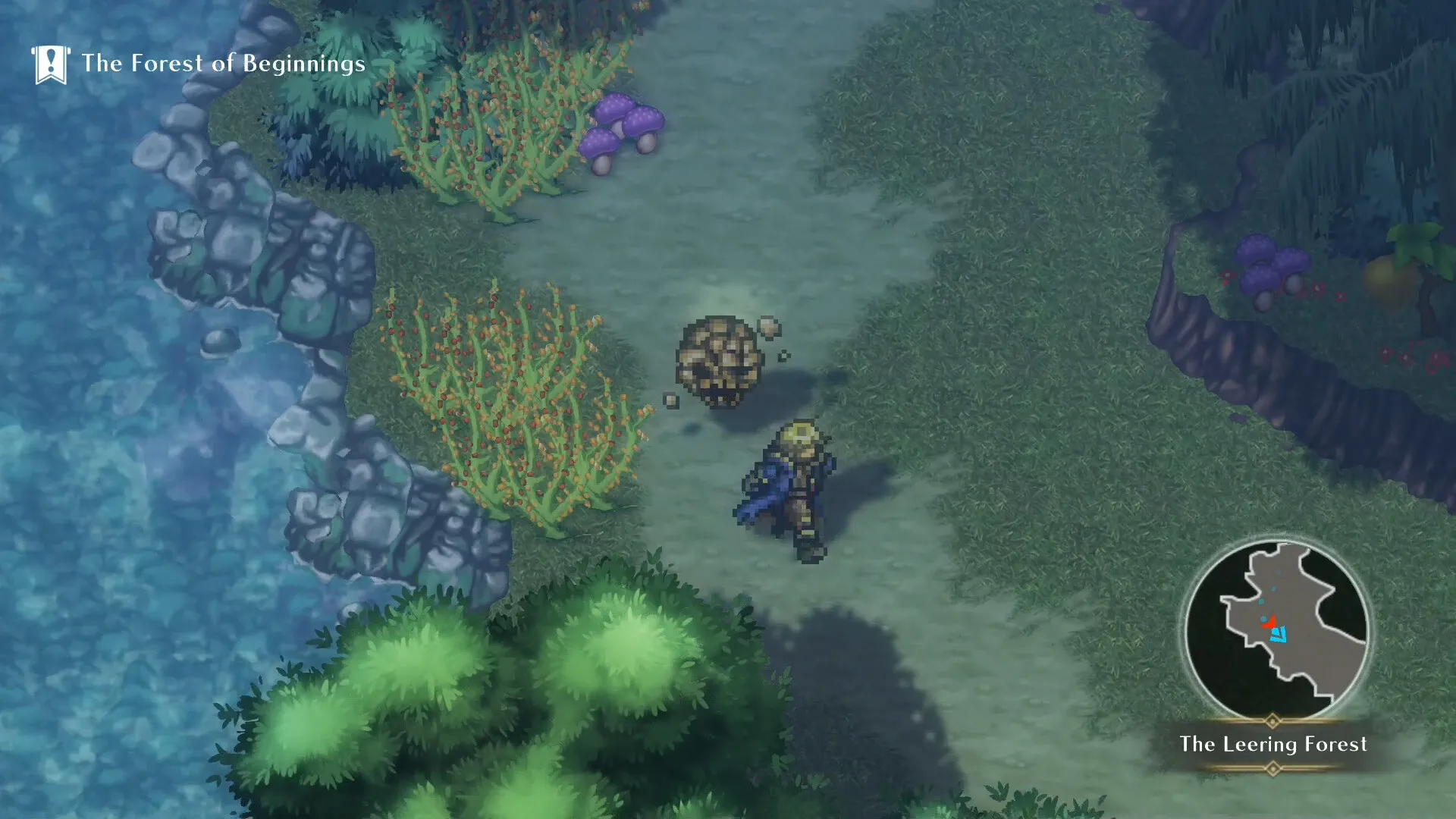
Getting struck from behind creates the opposite outcome and leaves the party in serious trouble. The dungeons carry a volatile rhythm as well. At intervals, the forest layout collapses and reforms. This mechanic is tied to the story, and it keeps exploration unstable in a good way. A route can vanish behind sudden growth, and a shifting grove can expose a shortcut.
Combat then moves into a detailed turn-based system. A turn order bar at the top of the screen gives a readable view of upcoming actions. That clarity supports chain attacks. Allies acting in an unbroken sequence build a damage multiplier that rises with each successful hit. Speed buffs become a key tool for controlling the order and stopping enemies from cutting into your chain. The forest also includes interactive hazards that affect exploration.
Some mushrooms reverse directional controls, and huge ice blocks conceal important treasure. Efficient movement depends on activating fast-travel pillars with mana crystals tied to each region. Resource pressure stays active through long runs. Claus restores his own health and magic after most fights, while the homunculi recover health only. That split pushes careful spell use and keeps long dungeon stretches tense.
Bridging the Gap Between Eras
As a remaster, this release tries to carry 2010 handheld style into the expectations of 2026 hardware. The biggest upgrade appears in the backgrounds and character portraits, which now display in high definition and give the art of Wizarest much sharper presence.
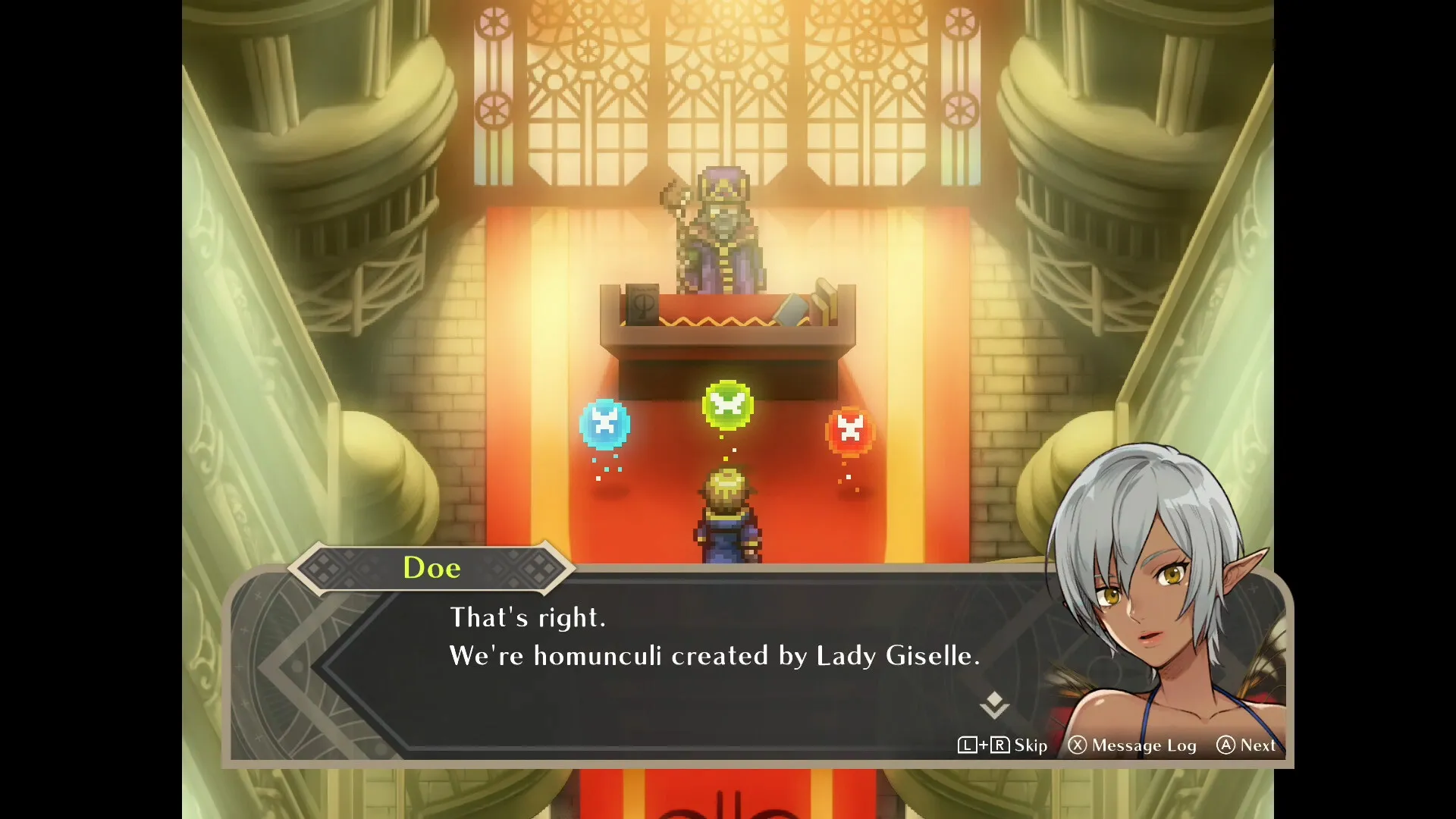
These cleaned-up assets sit beside the original character sprites, and the remaster keeps those sprites close to their DS form. Genre fans may appreciate the nostalgia in that choice. On a modern high-definition screen, the chunky sprite work stands out immediately. The result is a split visual identity. The still artwork looks current, while the moving sprites feel like a preserved signal from an earlier device.
The sound design receives an update through a remastered soundtrack that reinforces the stakes of Claus’s quest. Battle tracks stand out in particular, using a broad instrumental range to energize turn-based fights. The remaster also adds convenience options that smooth parts of the older design. Players get difficulty settings, New Game+, and dialogue skipping for faster progress.
Some interface choices still feel old-fashioned. The minimap covers a very small area and shows only nearby space. Checking a full dungeon map requires pausing and opening a separate menu, and that interruption cuts into the rhythm of exploration. The absence of voice acting keeps the game closely tied to its original period, yet the writing carries the story’s emotional weight on its own. The English localization is handled carefully, with a script that reads cleanly and preserves the dark fantasy tone.
The Review
WiZmans World Re;Try
WiZmans World Re;Try is a fascinating look at a lost piece of JRPG history, offering a dark narrative and a satisfyingly deep customization system. While the visual disparity between the HD assets and the original sprites is noticeable, and the map system remains clunky, the core Anima Fusion mechanic provides a rewarding loop for fans of tactical growth. It is a faithful, if sometimes rigid, restoration of a cult classic that prioritizes substance over modern flash.
PROS
- Deeply rewarding Anima Fusion customization.
- Engaging turn-based combat with tactical chain mechanics.
- Atmospheric and mature dark fantasy story.
- High-quality remastered soundtrack and character art.
CONS
- Dated pixel sprites can look blocky on large screens.
- Cumbersome map navigation and interface.
- Significant amount of grinding required.
- Lack of voice acting.