





















The game begins with the sharp clang of a cell door, a sound that signals the start of a desperate countdown. Back to the Dawn immediately places you in the worn-out shoes of a new inmate, burdened by a wrongful conviction and facing a ticking clock. Every choice from this point forward carries immense weight, shaping your path toward survival and, perhaps, vindication.
This is a prison-life RPG that weaves deep role-playing mechanics into a tense, story-driven adventure. Your objective is threefold: survive the hostile politics of Boulderton Prison, untangle a deep-seated conspiracy, and engineer an escape before your 21 days are up.
You make this attempt as one of two characters. Thomas is a quick-witted journalist framed by powerful enemies, forced to rely on his intellect to clear his name. Bob is a hardened undercover agent on a mission that requires a more direct and physical approach. Their stories offer distinct perspectives on the prison’s secrets and demand different playstyles to succeed. The experience is defined by a gritty, serious narrative that examines the harsh realities of incarceration, all presented through a distinctive and quite unexpected visual style.
A Tale of Two Inmates
The narrative framework of Back to the Dawn rests on the shoulders of its two very different protagonists, offering two distinct flavors of a prison drama. Playing as Thomas, the disgraced journalist, plunges you into a tense conspiracy thriller. His specific crime is a fabrication, a tool used by a corrupt mayor to silence his reporting on local pollution.
From the moment he enters Boulderton, Thomas is fighting a war on two fronts: the immediate, physical threat of prison life and the political machinations of the powerful people who put him there. His gameplay is therefore a careful dance of investigation and social maneuvering. You will spend your days trying to make contact with your lawyer on the outside, a task that requires earning a hefty sum of $100, or gathering information from inmates who might know something about the mayor’s fixer. His story feels particularly relevant, touching on modern anxieties about media censorship and the silencing of inconvenient truths.
Bob’s campaign, on the other hand, pivots from a story of personal vindication to one of national security. As an undercover agent, his objectives are more structured and his methods more direct. He is not trying to clear his name but to infiltrate the prison’s power structure to get to the bottom of a conspiracy that threatens the country.
This setup leads to a more action-oriented path, where direct confrontation and following a clear mission structure take precedence over the freeform investigation of Thomas’s route. While the two characters share the same physical space and interact with many of the same people, their access to certain plotlines is entirely separate. Thomas, for instance, can pursue romance subplots that are unavailable to Bob, giving his story a more personal, character-driven feel.
This entire drama unfolds under the relentless pressure of a 21-day time limit, a mechanic that feels heavily inspired by games like Dead Rising or Pathologic. Much like in those titles, the world does not wait for you. Key events will trigger on specific days at specific times, regardless of your readiness. For Thomas, the final day coincides with the mayoral election that will cement his enemy’s power and make his escape all but impossible. For Bob, it is the hard deadline for his mission.
This constant countdown is the game’s narrative engine, forcing you to make difficult, meaningful choices. Every day is precious. Do you spend the morning working in the laundry for a pittance, or do you use that time to build an alliance with a gang leader who could provide a crucial tool later?
You simply cannot do everything. Boulderton Prison itself is realized as more than a set of corridors and cells; it is a complex, breathing social ecosystem. The writing treats its subject with a mature gravity, examining the daily struggles for dignity, power, and survival without resorting to gratuitous violence for shock value. The result is a setting that feels oppressive and dangerous, a true urban jungle where you are never truly safe.
The Daily Grind
Life inside Boulderton is a masterclass in tension, built upon a foundation of strict routine and scarce resources. Your day is not your own; it is dictated by the prison’s rigid schedule. The bells signal mandatory wake-up calls, meal times in the cafeteria, access to the recreation yard, and finally, the nightly lockdown in your cell. Adherence is not optional.
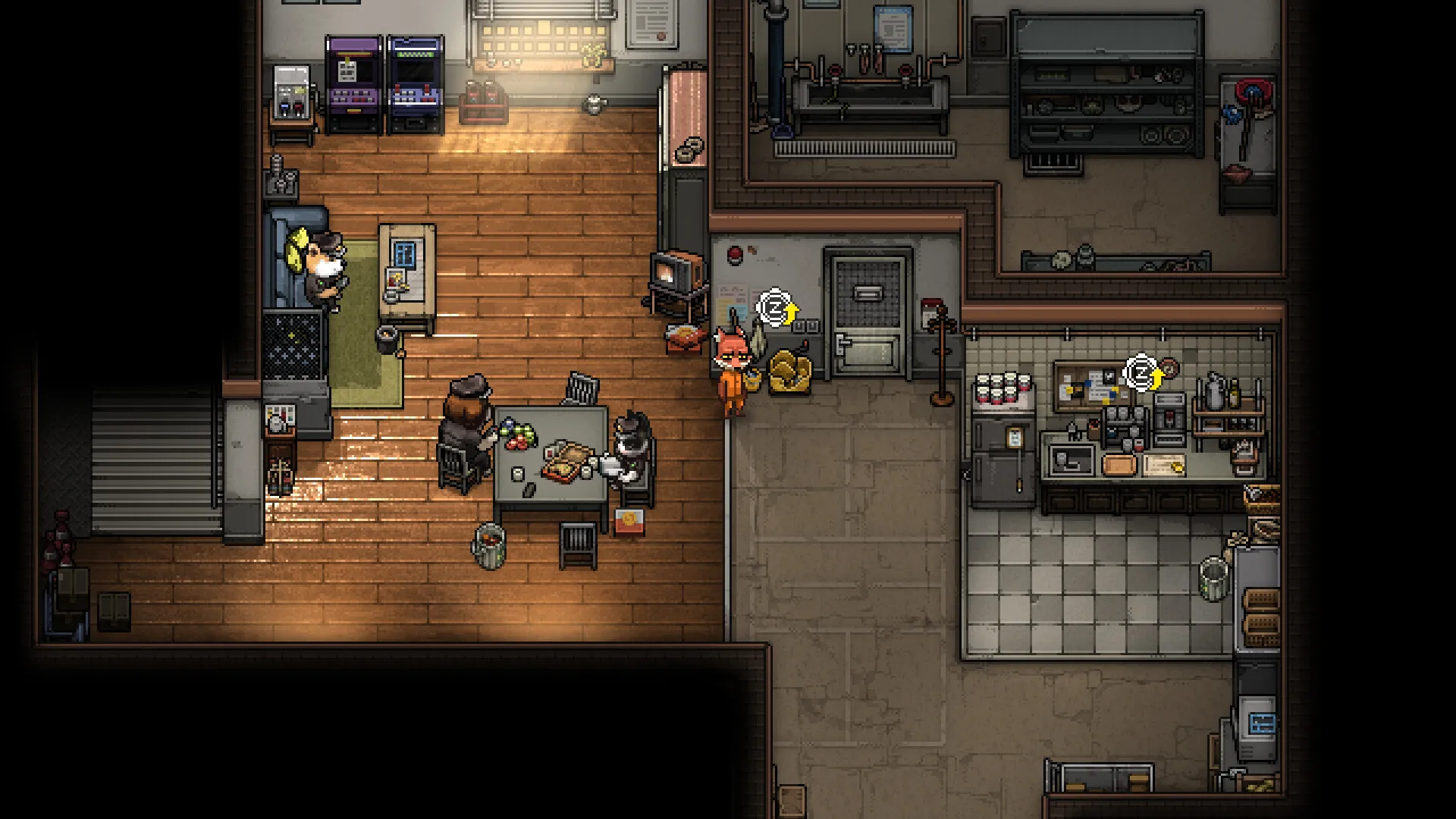
This structure forces you to plan your activities with tactical precision. Nearly every meaningful action you take—from reading a book to improve your intelligence, to exercising in the gym to build strength, to having a conversation with another inmate—consumes precious minutes from the clock. Efficient time management is not just a feature; it is the primary skill you must master.
You can, of course, attempt to subvert the schedule. Sneaking out of your cell after hours or trying to remain unnoticed during a headcount are high-risk, high-reward gambits. Success might grant you access to a forbidden area or an opportunity to plant contraband, but failure will likely land you in solitary confinement, a punishment that costs you days of valuable time.
This tight temporal loop is layered with an equally demanding resource management system. You are a walking spreadsheet of needs, constantly juggling stats for Hunger, Hygiene, Mental State, Health, and Money. Neglecting any one of these has immediate and cascading consequences. Let your hygiene drop, and other inmates will refuse to interact with you, cutting you off from vital information and quests. Allow your hunger to bottom out, and your physical abilities will plummet, making you an easy target. Maintaining your mental state is critical, as letting it fall can lead to negative stat effects and poor outcomes in skill checks.
This intricate ballet of needs is fueled by the prison’s stark economy. Money is power, but it is incredibly hard to come by. You can earn a pittance by working slow, legitimate prison jobs like laundry service. Or you can enter the far more lucrative and dangerous world of the prison’s gangs, doing favors that might involve smuggling contraband or acting as muscle. This creates a constant tension between playing it safe and making real progress. The game is designed around the expectation that you will fail, perhaps multiple times.
Your first full playthrough, which can take around 10 hours, is best seen as a learning experience. True progression comes from the knowledge you gain about the prison’s layout, the characters’ routines, and the most efficient ways to achieve your goals. To soften this punishing loop, the game includes a “Memory Recall” feature. This smart system functions as a limited quick-load, allowing you to rewind up to 24 in-game hours to correct a disastrous mistake. It respects the player’s significant time investment without removing the stakes of long-term planning.
Know When to Hold ‘Em
Underneath its narrative and survival layers, Back to the Dawn is a robust and traditional RPG. Your character’s capabilities are defined by four core stats: Strength, Agility, Intelligence, and Charisma. These attributes directly govern your effectiveness in various situations and, critically, determine how many specialized skills you can equip at once.
A higher Intelligence score, for instance, allows you to equip more intellect-based skills. This system is given an immediate jolt of replayability through the starting backgrounds you can choose. A “Broadcast Journalist” Thomas starts with a bonus to Charisma, making social interactions easier, but he comes with the “Squeamish” trait, requiring soap to shower and getting a penalty when rooting through garbage for items. In contrast, a “War Correspondent” Thomas is a much better fighter but suffers from a “Sleepless” debility that makes it harder to rest effectively. These backgrounds force you to adopt different strategies from the very beginning.
Most of the game’s challenges, from persuading a guard to look the other way to cracking a lock, are resolved through a skill check system based on a d20 dice roll. This mechanic, a clear homage to tabletop RPGs, introduces an element of chance to every action. Your success is not guaranteed. Your odds are modified by your base stats, your equipped skills, and crucially, any items you might have on hand.
Finding a sharp object makes it easier to cut through a sealed package; secreting away a coin allows you to use it as a makeshift screwdriver to open a vent. This encourages creative problem-solving and environmental awareness. To mitigate bad luck, you can spend a key resource called “Focus” to reroll the dice. Focus is also used for special abilities in social encounters and combat, making it another critical resource you must carefully manage.
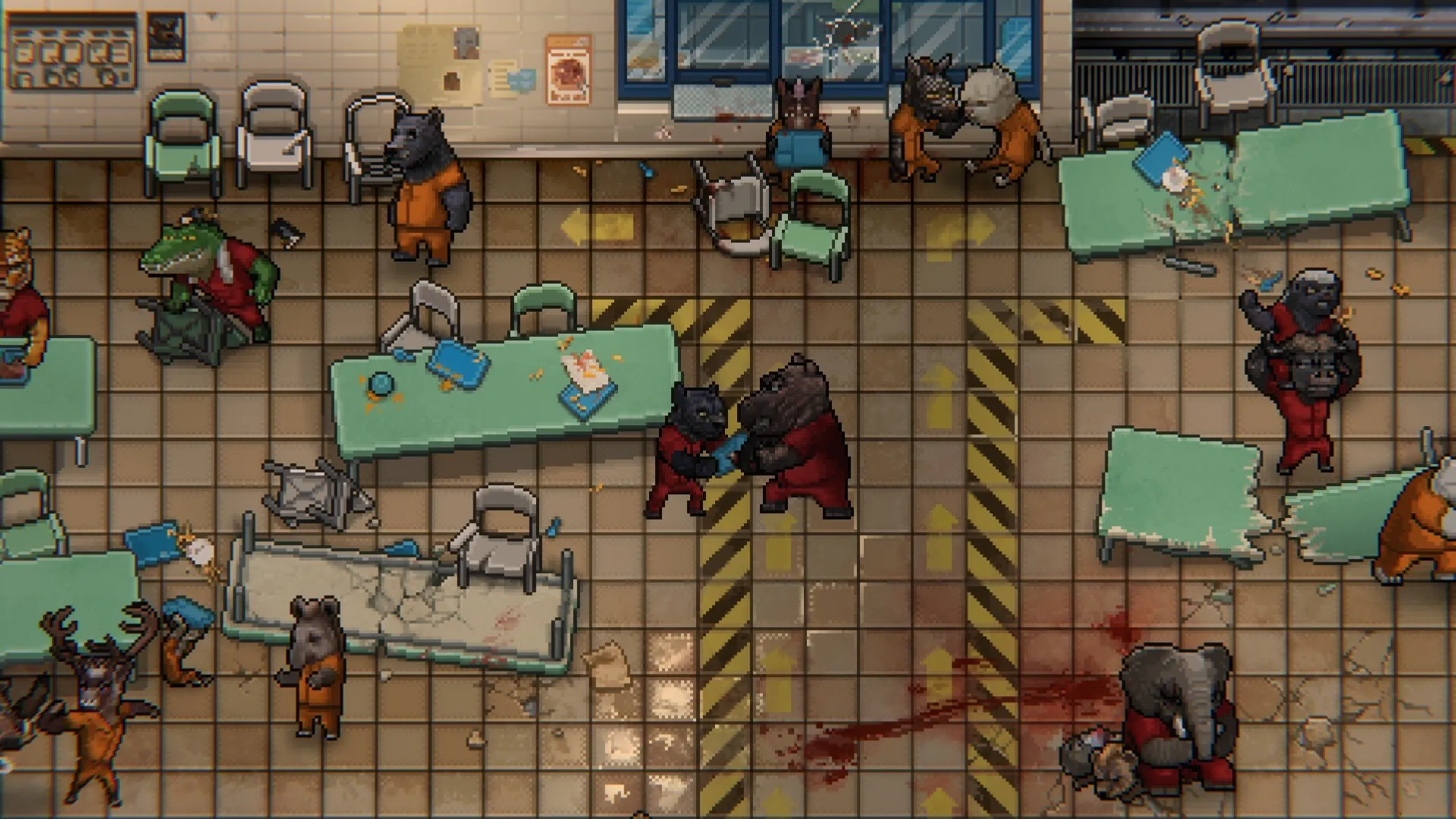
When diplomacy and cunning fail, combat is an available, though highly inadvisable, option. The system is a functional turn-based affair that will be familiar to any JRPG fan. However, the game wisely frames fighting as a significant risk and often a sign of failure. It is brutal and has consequences that extend far beyond a simple loss of health.
Winning a fight might still leave you with injuries that debuff your character for days. It will almost certainly damage your reputation with certain inmates or gangs and will definitely attract the unwanted attention of the guards. Non-violent solutions are almost always the superior and more interesting path.
The Politics of the Yard
Where Back to the Dawn truly excels is in its depiction of the prison’s social ecosystem. The halls and yards of Boulderton are populated by a large cast of 46 distinct inmates, and the game’s writers have put considerable effort into making each one feel like a real person. These are not the one-dimensional, antisocial thugs often seen in prison media.
They have their own motivations, fears, and personal histories. You will meet inmates who are simply trying to survive their sentence day by day, others who are orchestrating complex schemes, and some who might even become genuine friends. This dedication to character writing makes the process of getting to know them deeply rewarding.
Building relationships is a core gameplay mechanic, not just optional side content. The system functions much like a simplified version of the Confidant or Social Link system from the Persona series. By choosing to spend your limited time with specific characters—sharing a meal, playing a game in the yard, or helping them with a personal problem—you build trust.
This trust is then converted into tangible benefits. A character might teach you a new skill, unlock a unique side quest that reveals more about the prison’s lore, or provide you with critical information or an item needed for your main escape plan. Because your time is the most valuable resource, you are forced to choose your allies carefully, making each social interaction a meaningful strategic decision.
This complex social web is further complicated by the presence of three major gangs that vie for power and control within Boulderton. Each gang has its own territory, rackets, and philosophy. You must navigate this treacherous political landscape, deciding whether to align yourself with a faction for protection and access to their resources, or to risk staying independent and making yourself a target for everyone.
Your reputation with these gangs, and with every individual inmate, is a constantly shifting variable. One wrong move can turn a potential ally into a bitter enemy. This focus on social maneuvering makes the prison feel like a living, breathing community, where understanding people is just as important as understanding systems.
A Gritty Storybook
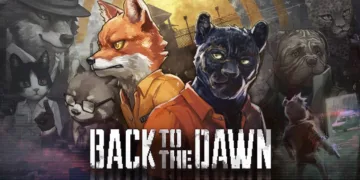
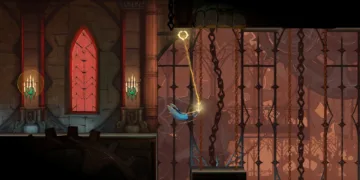
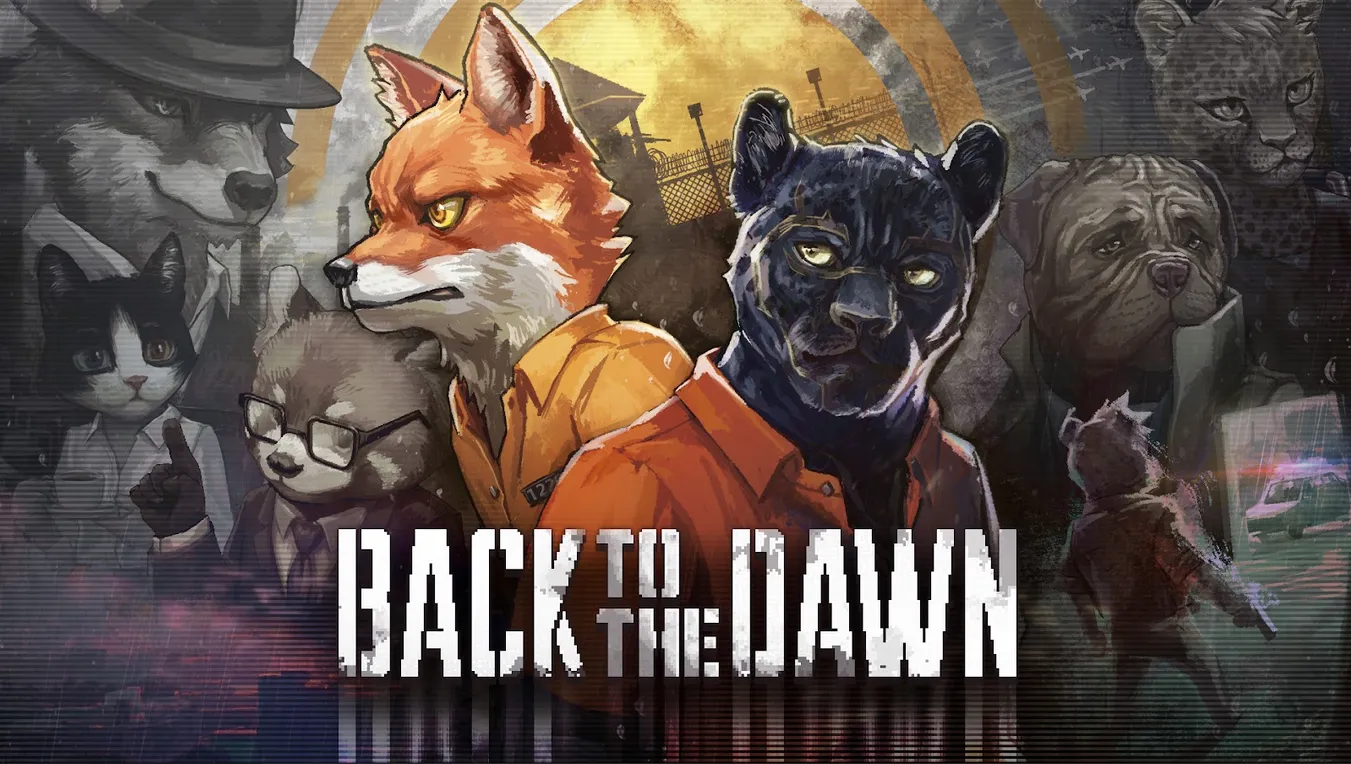
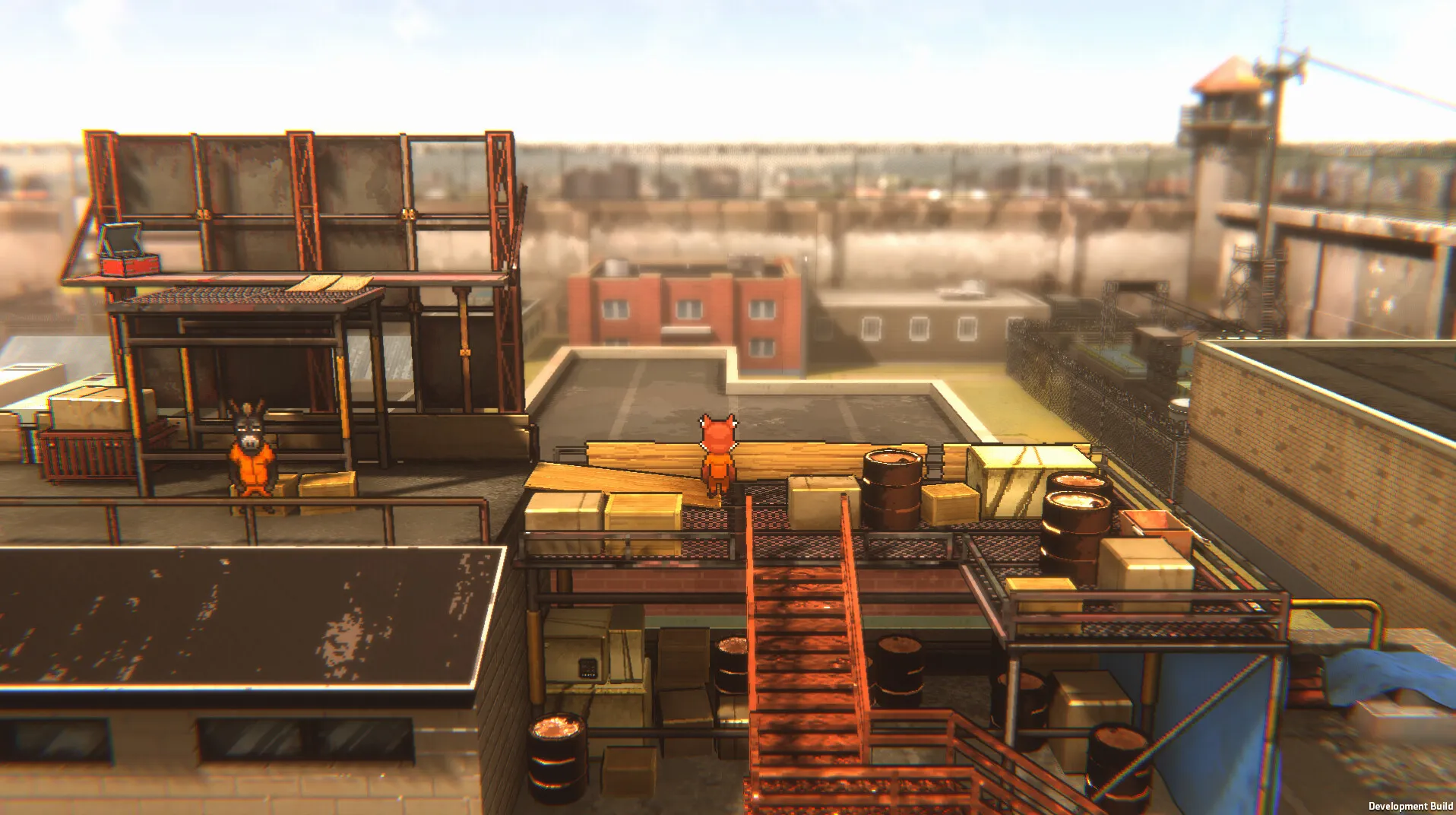
The game’s presentation is one of its most defining characteristics. It employs a beautiful 2D sprite-based art style, but with a significant twist: the entire cast is composed of expressive anthropomorphic animals. Your protagonist might be a resourceful fox, while the menacing gang boss is a hulking alligator and the prison doctor is a gentle bear.
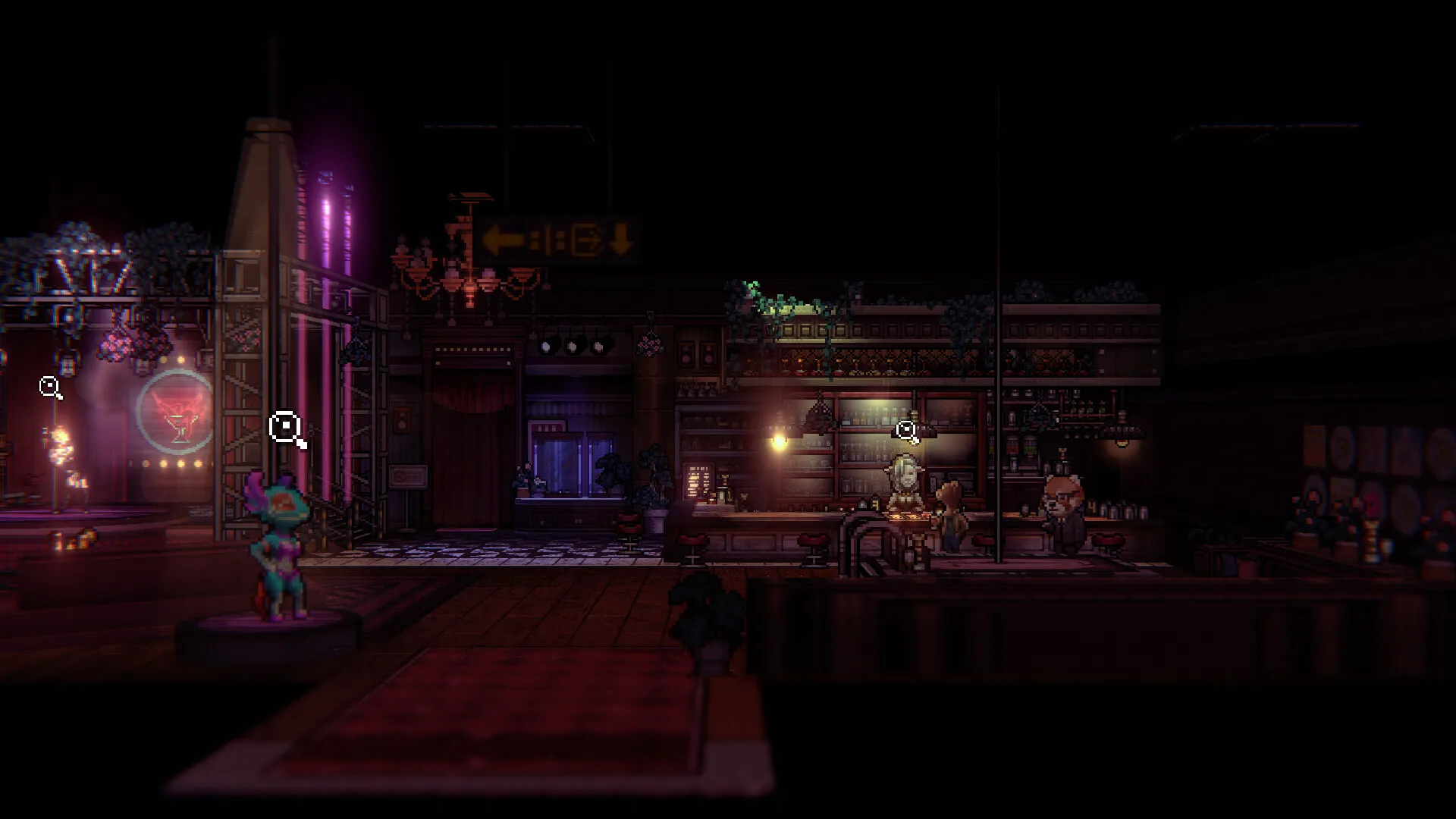
This aesthetic choice creates a striking and memorable contrast with the game’s relentlessly grim subject matter. On the surface, the visuals are charming, almost like something out of a mature storybook. Yet this charm stands in stark opposition to the narrative’s dark themes of corruption, violence, and the struggle to maintain one’s humanity.
This juxtaposition is surprisingly effective. Seeing a scene of intimidation or desperation play out between what look like cartoon animals adds a surreal quality that somehow heightens the emotional impact. The visual drama of a tiny mouse character being threatened by a massive gorilla inmate is immediate and powerful. The quality of the sprite work itself is excellent, with detailed environments and fluid character animations that bring the world of Boulderton to life.
The audio design is serviceable, with a soundtrack that effectively sets a tense, somber mood, but it is the game’s bold visual identity that leaves the strongest and most lasting impression. It is also important to acknowledge the quality of the English localization. In a text-heavy indie RPG like this, a poor translation can be a death sentence. Here, the writing is clear, natural, and well-edited, a crucial factor that makes the deep narrative and complex characters accessible.
Cracks in the Walls
For all its intricate design and compelling atmosphere, Back to the Dawn is not without its points of friction. The game can feel particularly opaque and directionless in its opening hours. Until you learn the rhythm of the prison and the full range of activities available, you might find yourself simply wandering the yard with nothing to do, waiting for time to pass until the next mandatory event.
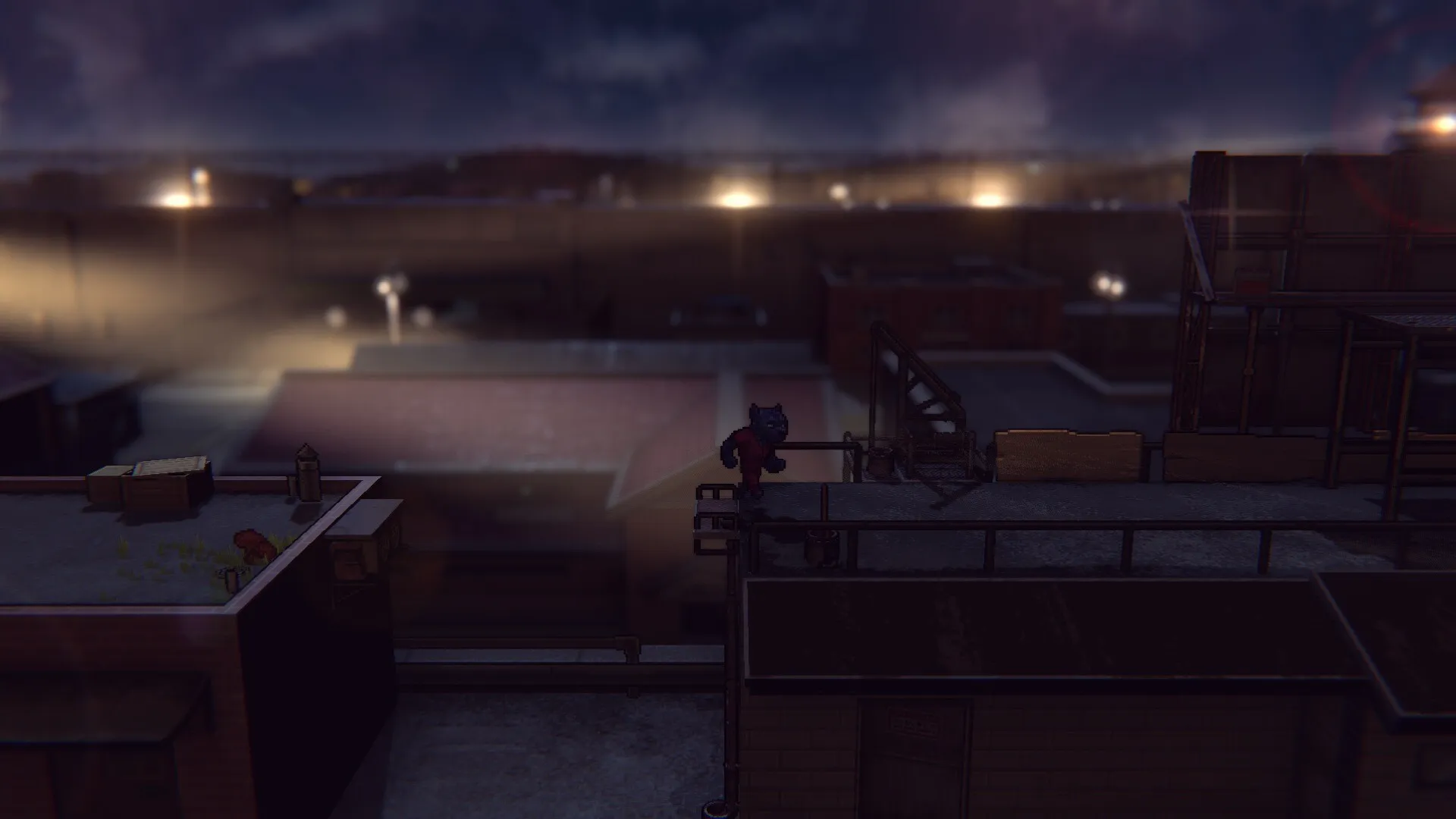
There is a steep learning curve to understanding how to be productive, and the game is not always forthcoming with guidance. Discovering a key feature like the ability to rest in your cell to pass time can feel like a revelation, but getting to that point can be a frustrating experience of aimlessness.
The demanding 21-day time limit, while effective at creating tension, will certainly not be for everyone. The game is explicitly designed around the idea of repeated playthroughs, where knowledge is the ultimate reward. However, investing upwards of ten hours in a single run only to be met with a “bad ending” on the final day can feel like a significant waste of time. This punishing structure will be a satisfying challenge for some players, but a major deterrent for others who prefer a less pressured and more forgiving experience.
Finally, while the character writing is a general strength, its quality is not applied evenly across the cast. The portrayal of the game’s female characters feels underdeveloped compared to their male counterparts. Key figures like Beth, the infirmary doctor, and Maggie, Thomas’s ex-girlfriend on the outside, often have their plotlines tied directly to their potential as romance options for the player.
When Thomas calls Maggie, the screen cuts to black as soon as the conversation starts, denying her a perspective. Their development can feel stalled unless you pursue them romantically, making them seem more like tools to provide player benefits than fully realized individuals. It is a noticeable gap in an otherwise thoughtfully written game and an area that offers clear room for improvement.
The Review
Back to the Dawn
Back to the Dawn is a remarkably deep and tense prison RPG that rewards careful planning and repeat playthroughs. Its intricate systems, compelling social dynamics, and unique art style create an engrossing and unforgettable experience. While a steep initial learning curve and some underdeveloped character arcs present minor issues, the sheer ambition and intelligent design make this a standout title for fans of complex, choice-driven adventures. It's a challenging but highly rewarding sentence.
PROS
- Deep and interconnected RPG systems that reward strategic thinking.
- The tense 21-day time limit makes every choice feel meaningful.
- High replayability with two distinct protagonists and multiple escape routes.
- Excellent world-building and a cast of memorable supporting characters.
- A unique and charming art style that contrasts effectively with the grim theme.
CONS
- A steep initial learning curve can make the first few hours feel aimless.
- The time limit and expectation of failure can be punishing for some players.
- The writing for female characters is less developed than for the male cast.
- Combat is functional but feels like the least interesting part of the game.