




















![Kingdom Hearts Collection [I-III] Review](https://gazettely.com/wp-content/uploads/2026/10/Kingdom-Hearts-Collection-I-III-1-360x180.webp "Kingdom Hearts Collection [I-III] Review: KHII Holds Steady as Newer Entries Fluctuate 40")
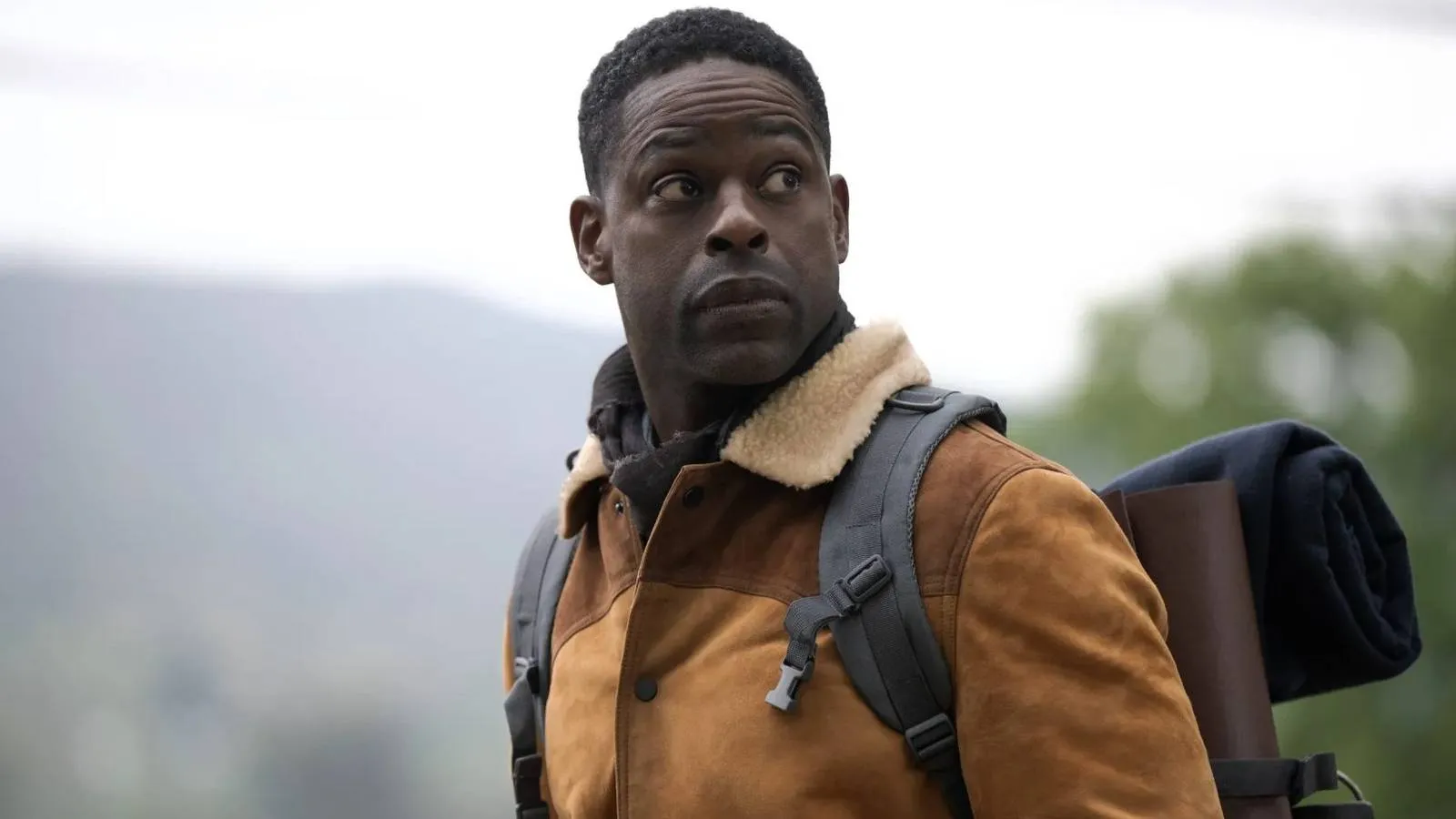

Last year, this series pulled off a narrative sleight of hand that could make a stage magician start taking notes. It opened like a political thriller, then flipped the table to reveal a subterranean city trying to outlast a global apocalypse. Season two pulls another big swing by sending the story beyond the bunker walls. After learning the world fell to a supervolcano and tsunami, not nuclear war, the plot tracks Secret Service agent Xavier Collins as he moves through what remains of America.
Xavier’s reason for leaving is personal, plain and urgent. A radio broadcast suggests his wife, Teri, may be alive in Atlanta. That single signal reshapes the series into a wide-roaming survival drama, trading the bunker’s tight murder investigation around President Cal Bradford’s death for the stress tests of the open road.
Season one explained why the bunker exists; these episodes spend their energy on the societies that formed above ground after everything stopped. Back in Colorado, a power vacuum threatens the fragile order of the people still underground. Factions collide under new leadership, and Xavier runs headfirst into a world he believed had vanished. The canvas gets bigger, yet the story keeps circling the same human question: what will someone risk to pull a broken family back together?
The Sun Drenched Ruins of Graceland
The move to the surface changes the show’s look immediately. The sterile gray corridors of the Colorado bunker give way to bright sun, clear air, and a quiet that feels almost impolite. Three years of neglect have left cities softened by overgrowth, with nature moving in like it found an unlocked door.
The season leans into a road-movie structure, with political maneuvering replaced by the grim arithmetic of distance, water, injuries, and bad luck. Visually, the series refuses the genre’s default gloom. The palette stays bright, and the camera lingers on a world that keeps growing, even after people stopped pretending they were in charge.
Memphis arrives as a genuine jolt of personality. Graceland becomes a sanctuary, and using Elvis Presley’s home as a survival hub is the sort of cultural flex this series does well. These landmarks do not read as set dressing. They function like keepsakes from a past that still shapes who the survivors think they are. Xavier’s trip takes a hard turn after the immediate fallout of a plane crash, pushing him off the convenience of wheels and onto the terrain with his own two feet. The show understands the narrative value of that downgrade. Every mile costs something.
The surface story also carries a sharper view of human behavior than the usual post-apocalyptic playbook. Many end-of-the-world stories treat every new face as a trap waiting to spring. Here, danger exists, yet many of the survivors Xavier meets lean toward cooperation. Their biggest enemies are isolation and paranoia, not a constant appetite for cruelty. The writing chooses hope as a guiding principle, and that choice gives the season its own identity in a crowded genre. People try to build. People try to keep rules. People try to stay human, even after the lights have been out for years.
A Sinking City of Secrets
As Xavier moves through the wreckage above ground, the Colorado bunker grows more unstable below. Former Vice President Henry Baines has taken the presidency, and he governs with an authoritarian grip. He brings in martial law to keep control, and the tension among the citizens turns physical. The bunker stops feeling like shelter and starts feeling like a sealed container left on a hot stove.
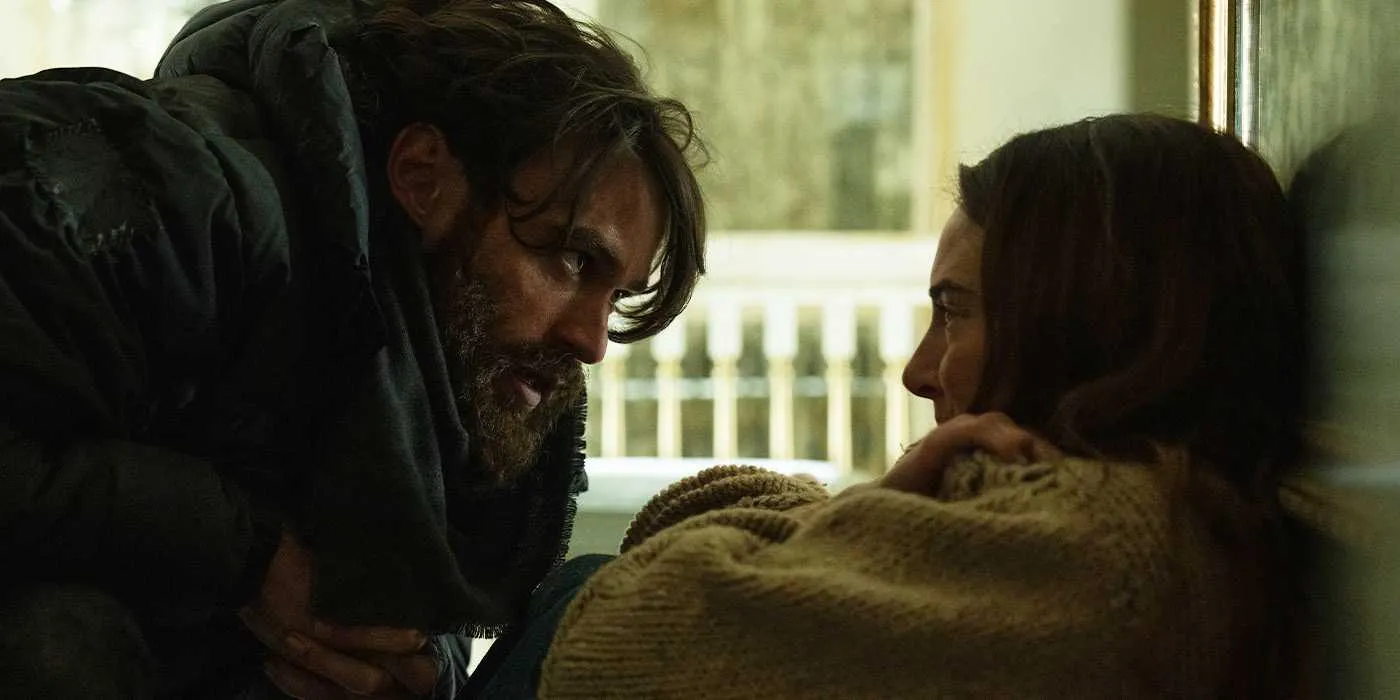
Samantha Sinatra Redmond still casts a long shadow over every hallway. She survives a near-fatal throat wound, and her influence stays intact. Sinatra remains a strategist with patience to spare, playing the long game with a calm that makes her feel even more dangerous. The plot deepens as she quietly siphons power away from the main structure for projects nobody can properly name yet. That secrecy hints at bunker functions the public was never supposed to grasp. Her recovery unfolds through measured moves and quiet commands, a steady drip of control returning to her hands.
Opposition rises in places that would have seemed unlikely before. Jeremy Bradford becomes a focal point for the younger generation, guiding a restrained rebellion against Baines and his security-first regime. They want answers, and their push for transparency becomes a main engine of the bunker’s internal conflict.
Nicole Robinson and Dr. Gabriela Torabi work to hold the line, trying to keep peace in a place where morality starts to feel like an optional luxury item. The bunker’s political terrain is now a minefield, and the series frames each decision with the awareness that a single mistake could set off social collapse.
Grief, Grit, and Graceland Residents
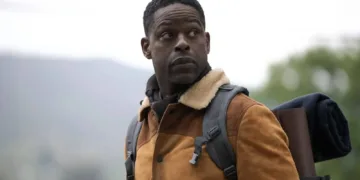
Sterling K. Brown remains the series’ emotional foundation, and season two gives him plenty to carry. He plays Xavier as a man whose stoic protector shell is wearing thin, one exhausted breath at a time. The difference between his present-day drive and his flashback vulnerability lands with force. Brown’s microexpressions do heavy work, selling Xavier’s fear that the road ends with nothing waiting for him. That performance keeps the high-concept sci-fi machinery tied to the human cost, so the show never drifts into cold puzzle-box mode.
Shailene Woodley enters as Annie, a medical student who becomes a tour guide, and she brings a sharp, practical energy that clicks with the season’s travel rhythm. Her childhood Elvis fixation plays like armor against a world that keeps asking her to break. Woodley gives Annie both steel and softness, and that combination makes her a strong counterweight to Xavier’s tunnel-vision mission. She plays with the camera like she knows exactly how much space she has, and she takes it.
The supporting players give weight to the shifting social order on the surface. Link carries leadership in a way that feels earned. Gary lands as quiet intensity personified, with an unsettling edge that keeps the group’s dynamic from settling into comfort. His choices follow his own internal logic, which is rarely a relaxing thing to watch in an apocalypse. Teri also gains real presence now, no longer a distant idea hovering behind Xavier’s decisions. Enuka Okuma brings warmth and resilience that make Xavier’s fixation feel understandable, and her chemistry with Brown turns their possible reunion into the season’s most charged emotional beat.
Melodies of a Hopeful End
The series keeps using flashbacks with clean precision. The “The Day” style episodes never play like padding. They supply context for why people make the decisions they make in the present, and they sketch the disaster’s origins while deepening the motives of characters who are gone now. Structurally, these sequences keep the world’s history alive, pressing the idea that every survivor carries grief like a second set of lungs.
Season two also shifts away from the first season’s murder-mystery engine. The show now leans into science-fiction conspiracy, with the central tension moving toward the bunker’s true purpose. That shift helps the pacing stay sharp. Each new piece of information about Sinatra’s plans, or about how this underground city came to be, drops like another part snapping into a larger, more dangerous picture.
The tone stays stubbornly optimistic, and the series keeps returning to Hope, the first baby born underground, as a living reminder of what can be built even in sealed concrete. The storytelling favors faith in human decency, and the craft backs it up. Sound design plays a key role, using slowed-down pop covers to add emotional gravity to pivotal moments, turning familiar songs into eerie survival hymns.
Direction stays consistent, pairing the surface’s open grandeur with the bunker’s tightening claustrophobia, like two worlds arguing through the same camera language. The show is clearly moving toward a reveal that could change the status of both spaces, and it leaves a question hanging in the air: can any society that runs on secrets learn to live in the light?
Created by Dan Fogelman, this high-stakes political thriller and post-apocalyptic drama premiered on Hulu on January 26, 2025. Set in a serene, high-tech community that serves as a bunker for the world’s elite after a global cataclysm, the story follows Secret Service agent Xavier Collins as he investigates the shocking murder of the President. The series has expanded its scope significantly in its second season, which premiered on February 23, 2026, exploring the world beyond the bunker’s walls. Viewers in the United States can stream the series exclusively on Hulu, while international audiences can find it on Disney+.
Where to Watch Paradise Season 2 Online

Full Credits
Title: Paradise
Distributor: Hulu, Disney+
Release date: January 26, 2025 (Series Premiere), February 23, 2026 (Season 2 Premiere)
Rating: TV-MA
Running time: 46–57 minutes
Director: Glenn Ficarra, John Requa, Gandja Monteiro, Hanelle Culpepper, Ken Olin, Liza Johnson
Writers: Dan Fogelman, Eric Wen, Jason Wilborn, Scott Weinger, Stephen Markley, Katie French, Nadra Widatalla, Melissa Glenn, John Hoberg, Seena Haddad
Producers and Executive Producers: Dan Fogelman, Jess Rosenthal, John Hoberg, Sterling K. Brown, Steve Beers, Glenn Ficarra, John Requa, Gina Lucita Monreal, Jason Wilborn, Scott Weinger, Chris Nguyen-Gia
Cast: Sterling K. Brown, Julianne Nicholson, James Marsden, Sarah Shahi, Nicole Brydon Bloom, Aliyah Mastin, Percy Daggs IV, Enuka Okuma, Matt Malloy, Shailene Woodley, Thomas Doherty, Cameron Britton, Krys Marshall, Charlie Evans, Cassidy Freeman, Gerald McRaney, Rafael Cabrera, Jon Beavers
Director of Photography (Cinematographer): Yasu Tanida
Editors: Julia Grove, Lai-San Ho, Howard Leder
Composer: Siddhartha Khosla
The Review
Paradise Season 2
This sophomore outing successfully trades the claustrophobic whodunit of the bunker for a sprawling, hopeful odyssey across the surface. By leaning into character-driven flashbacks and a refreshing belief in human cooperation, it avoids the typical nihilism of the genre. Sterling K. Brown and Shailene Woodley provide a powerhouse emotional core that elevates the occasionally soapy plot twists. While the split focus between the road and the bunker can occasionally stall the momentum, the ambitious world-building remains riveting. It is a rare middle chapter that actually raises the stakes.
PROS
- Sterling K. Brown and Shailene Woodley deliver deeply felt, grounded portrayals.
- A refreshing pivot toward optimism and human decency in a post-apocalyptic setting.
- Seamlessly integrated backstory that adds genuine weight to present-day stakes.
- Beautifully realized "overgrown" world that distinguishes itself from genre tropes.
CONS
- Alternating between the surface and the bunker can sideline certain characters for too long.
- Occasional melodramatic moments lean closer to network television tropes than prestige drama.