


















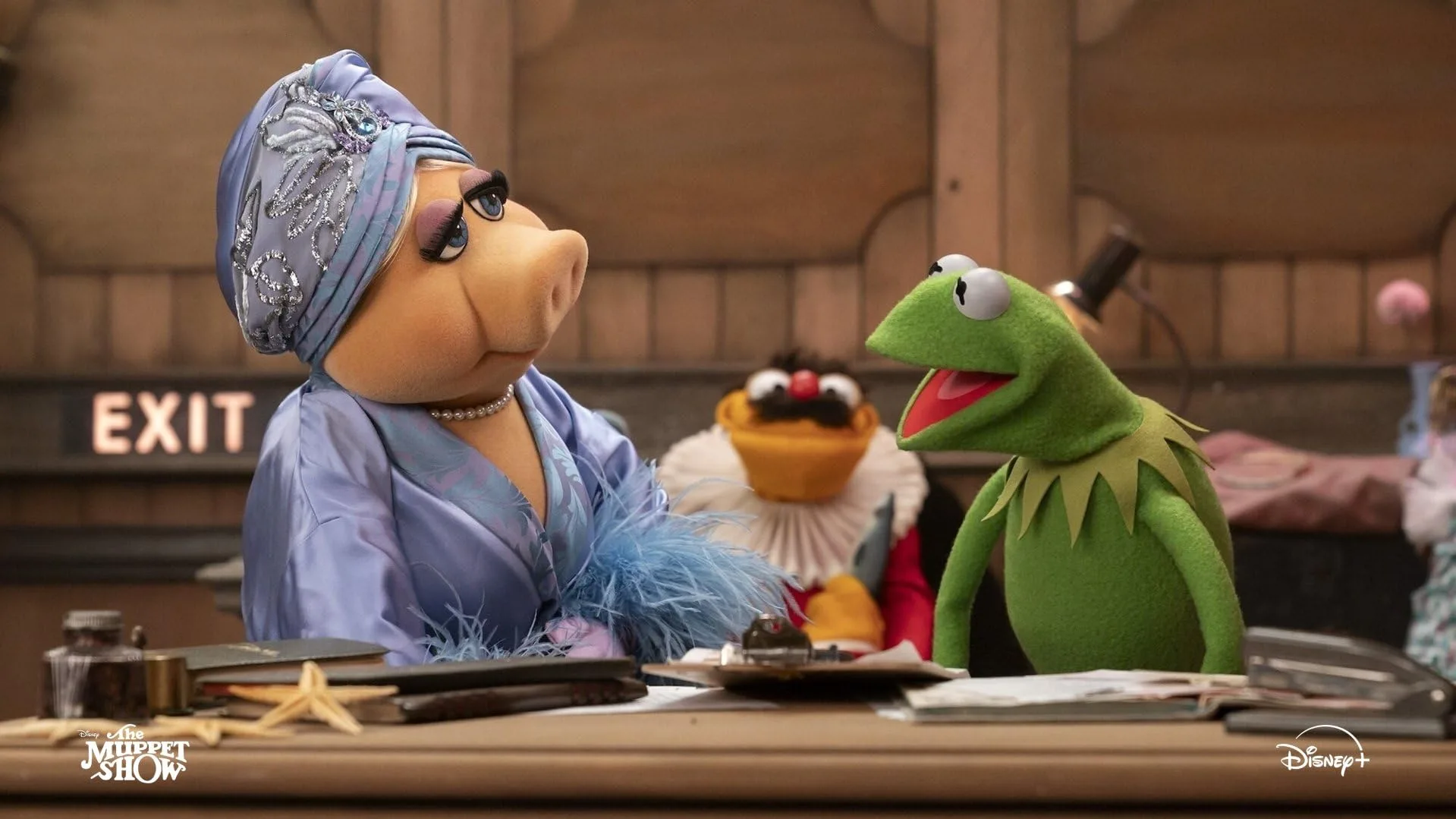
The Muppets return to their original milieu in a 2026 special produced by Seth Rogen and Evan Goldberg. This project appears exactly fifty years after the group first entered television, and it restores the variety format that anchored their early work. The action takes place inside a classic theater. Kermit the Frog confronts the near-impossible task of directing a show that thrums with unruly energy. The main narrative pressure comes from an overlong running time. Kermit must choose which acts survive and which are cut, a dilemma that echoes the commercial demands of reviving a legacy brand.
The special mixes frantic backstage disorder with polished onstage numbers. It aims to catch Jim Henson’s original creative spark for a contemporary audience. The production honors the history of these felt characters while presenting images in high definition for viewers on ABC and Disney+. This version suggests that some traditions remain durable after five decades.
The Architecture of Vaudeville Anarchy
The theater setting operates as the revival’s engine. Returning to a physical stage reintroduces the tension between professional ambition and backstage calamity. That tension is central to Muppet identity. The audience sees the footlights’ glitter and the panic behind the curtain. This frame permits a rapid succession of ideas. The overbooked schedule forms a functional conflict. It gives the writers a clear reason to cycle through classic segments. That choice allows the program to shift between contrasting tones without losing narrative shape.
Director Alex Timbers applies a distinct visual intelligence to the material. His background in stage direction informs camera movement through the house. The framing preserves the look of the 1970s series, while the lighting and resolution read as contemporary. Wooden set textures and velvet curtains possess a warm presence. That visual fidelity bridges memory and the present.
Sketch timing demonstrates a thorough grasp of the variety form. Modern sketch comedy often lingers on a single premise; this special moves with the speed of a revue. It balances musical passages with verbal wit. The flow feels organic. One moment presents the kinetic force of a chorus line, the next a quiet observational beat in a dressing room. This rhythmic variation keeps the half hour from becoming repetitive. The show trusts its format. It depends on the basic comedy of puppets trying to execute a sophisticated broadcast amid constant technical and personal failures.
The Weight of a Felt Legacy
Preserving the integrity of these characters calls for care. The core cast reads familiar in its drives and weaknesses. Miss Piggy continues to insist on center stage with her mix of vanity and vulnerability. Fozzie Bear remains devoted to questionable puns, and Scooter struggles to keep the production on course as a frazzled stage manager. Those archetypes supply the structural stability the program needs.
Matt Vogel’s vocal work as Kermit merits attention. Kermit carries perhaps the most recognizable voice in the medium. Vogel faces the challenge of honoring that sound while staking a claim to it. The voice differs from longtime viewers’ memory, yet the character’s essence is preserved. Vogel conveys Kermit’s sincerity and quiet desperation as he attempts to hold his world together.
Veteran Muppeteers add a continuing thread of expertise. Dave Goelz and Eric Jacobson bring decades of practice to their roles. Their performances feel lived in. That experience keeps movements and timing aligned with established personalities.
Statler and Waldorf sit in their customary box seats and provide a cynical foil to the show’s earnestness. Their presence acts as a pressure release for the production. By ridiculing sketch quality they preempt audience reaction. Their barbs land quickly. They function as the program’s internal critical voice. Their humor depends on the familiarity of their grumpy characters. This reliance on known dynamics helps the special read as a continuation rather than a wholesale restart.
Human Presence and Puppet Reality
Muppet projects often hinge on human guest stars. Sabrina Carpenter leads here and interacts with the puppets as if they are full collaborators. She treats them as actors rather than objects. That commitment keeps the illusion intact. During musical numbers she matches the theatrical energy of her costars.
The writers exploit physical resemblances between Carpenter and Miss Piggy. One gag stages the diva threatening legal action, accusing the pop star of appropriating her look. That exchange stands out. It underlines Miss Piggy’s competitive streak and acknowledges Carpenter’s role in contemporary culture. The dialogue is sprightly and toys with celebrity branding.
Seth Rogen and Maya Rudolph appear as versions of themselves and add texture to the backstage chaos without eclipsing the puppets. Their parts remain cameo sized yet contribute to the event quality. They function onstage with the ensemble rather than as interruptions.
A duet between Carpenter and Kermit serves as a musical highlight. The performance unfolds with plain elegance. It recalls the original series’ sincere moments shared by humans and puppets. The songs fit the variety flow. Carpenter’s expressiveness makes her a natural partner for the group. Her enthusiasm reads genuine and helps the audience accept a world in which frogs and pop stars sing together.
The Geometry of a Gag
Script choices show an ability to update traditional humor for the present year. A parody of Regency dramas populates pigs with ornate wigs and formal costume. That segment mines popular streaming tropes for puppet comedy. Wordplay leans on archaic diction for comic effect. It indicates that the Muppet method can still find cultural relevance.
Physical comedy remains foundational. A Bunsen Honeydew and Beaker sketch centers on an experiment that goes predictably wrong. Beaker’s ocular mishap represents a puppetry technical success. The gag’s timing is exact. It proves that simple slapstick produces a visceral laugh without elaborate explanation.
Not every sketch lands with equal force. A musical number in which Rizzo the Rat covers a modern pop track feels thin. The studio audience reaction is less vigorous in that moment. The joke lacks the layering present in stronger segments. That unevenness serves as a reminder that the variety format carries an inherent risk.
Writing addresses multiple age groups at once. Certain jokes target adults and will likely slip past younger viewers. Those lines often concern industry realities or subtle turns of phrase. Parents may enjoy backstage politics while children delight in dancing chickens and exploding laboratories. That range contributes to the brand’s endurance. The special avoids condescension toward children and resists cynicism aimed at adults. The outcome is a half hour that reads nostalgic and alive.
The 2026 iteration of The Muppet Show is a high-profile “event special” designed to celebrate the 50th anniversary of Jim Henson’s original variety masterpiece. Premiering on February 4, 2026, the special aired simultaneously on ABC and the Disney+ streaming platform, marking a grand return to the classic Muppet Theater. Produced by Point Grey Pictures and The Muppets Studio, the episode functions as both a nostalgic tribute and a potential backdoor pilot for a new series. It brings the core ensemble back to their vaudeville roots, featuring a blend of chaotic backstage sketches and star-studded musical performances, led by special guest star Sabrina Carpenter.
Full Credits
Title: The Muppet Show
Distributor: ABC, Disney+
Release date: February 4, 2026
Rating: TV-PG
Running time: 30 minutes
Director: Alex Timbers
Writers: Albertina Rizzo, Kelly Younger, Gabe Liedman, Andrew Williams
Producers and Executive Producers: Seth Rogen, Evan Goldberg, Sabrina Carpenter, Alex Timbers, Albertina Rizzo, James Weaver, Alex McAtee, David Lightbody, Leigh Slaughter, Michael Steinbach, Matt Vogel, Eric Jacobson, Ryan Janata
Cast: Sabrina Carpenter, Seth Rogen, Maya Rudolph, Matt Vogel, Eric Jacobson, Dave Goelz, Bill Barretta, David Rudman, Peter Linz, Stephanie D’Abruzzo, Tyler Bunch, Alice Dinnean, Bruce Lanoil, Colleen Smith, John Tartaglia
Director of Photography (Cinematographer): Rhet Bear
Editors: Melvin Blackwell, Will Spaulding
Composer: Bill Sherman
The Review
The Muppet Show
This revival succeeds by honoring vaudeville roots and embracing a sleek modern aesthetic. The production captures the chaotic spirit of the original cast. It balances nostalgic warmth with sharp writing. Some vocal changes require an adjustment period, yet the energy remains infectious. This special proves that the variety format still has a place in current culture. It offers a joyful return to form for a legendary troupe.
PROS
- Faithful restoration of the variety theater format.
- Strong chemistry between Sabrina Carpenter and the puppets.
- Clever parodies of current television trends.
- High production values that retain a classic feel.
CONS
- Inconsistent comedic depth across all segments.
- Noticeable shifts in certain character voices.