




























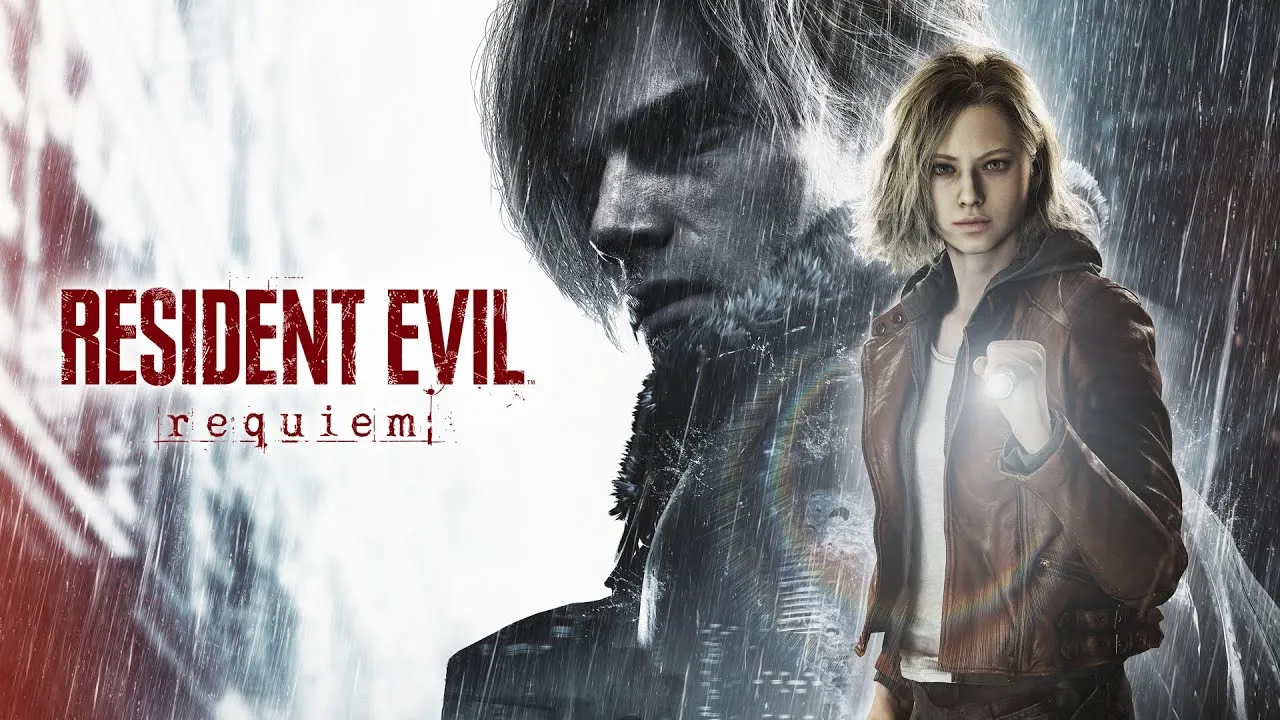

Resident Evil Requiem builds its story around a split perspective: the newcomer who learns survival one shaky step at a time, and the icon who carries decades of scars into the next crisis. Grace Ashcroft becomes the player’s emotional anchor. As an FBI analyst voiced by Angela Sant’Albano, she enters the plot with a kind of fear that reads as human, immediate, and unglamorous.
Her time inside the Rhodes Hill Chronic Care Center functions as the game’s main runway for character growth. She starts on the edge of a panic attack, then slowly becomes someone who can keep moving, keep thinking, and keep breathing under pressure. That change lands because it tracks with what the player is doing: learning the rules of an oppressive space, then learning how to bend those rules without breaking.
Leon S. Kennedy approaches the same crisis from the other end of the spectrum. Nick Apostolides voices a Leon who carries his history in the way he moves and speaks, with a fatigue that suggests experience has come at a price. Strange bruising on his skin hints at T-Virus complications, and his flashy Porsche reads like a choice made by someone trying to distract himself from a life that has never truly calmed down. Grace bears the brunt of the fear, while Leon’s chapters give the campaign room to exhale. He brings veteran certainty to the Raccoon City investigation, a steadier hand that keeps the story tied to familiar franchise stakes.
Victor Gideon arrives with the kind of theatrical menace the series loves to frame in shadows and metal. Voiced by Antony Byrne, he’s defined by disfigured features and a steampunk look that makes him difficult to forget once he’s on screen. He drives the mystery around Grace’s abduction, and the game feeds players pieces of his scheme through collectible memos that add detail to the Umbrella Corporation’s origins.
Those documents connect the protagonists’ personal stakes to series lore while keeping the plot readable moment to moment. The narrative structure works because it holds two scales in the same grip: a conspiracy large enough to carry a franchise name, and a character arc intimate enough to keep the tension personal. Grace’s movement from victim to combatant supplies the main emotional pull. Leon’s presence keeps the story linked to legacy characters while leaving room for Grace to take shape as her own lead.
Survival Through Subterfuge and Scarcity
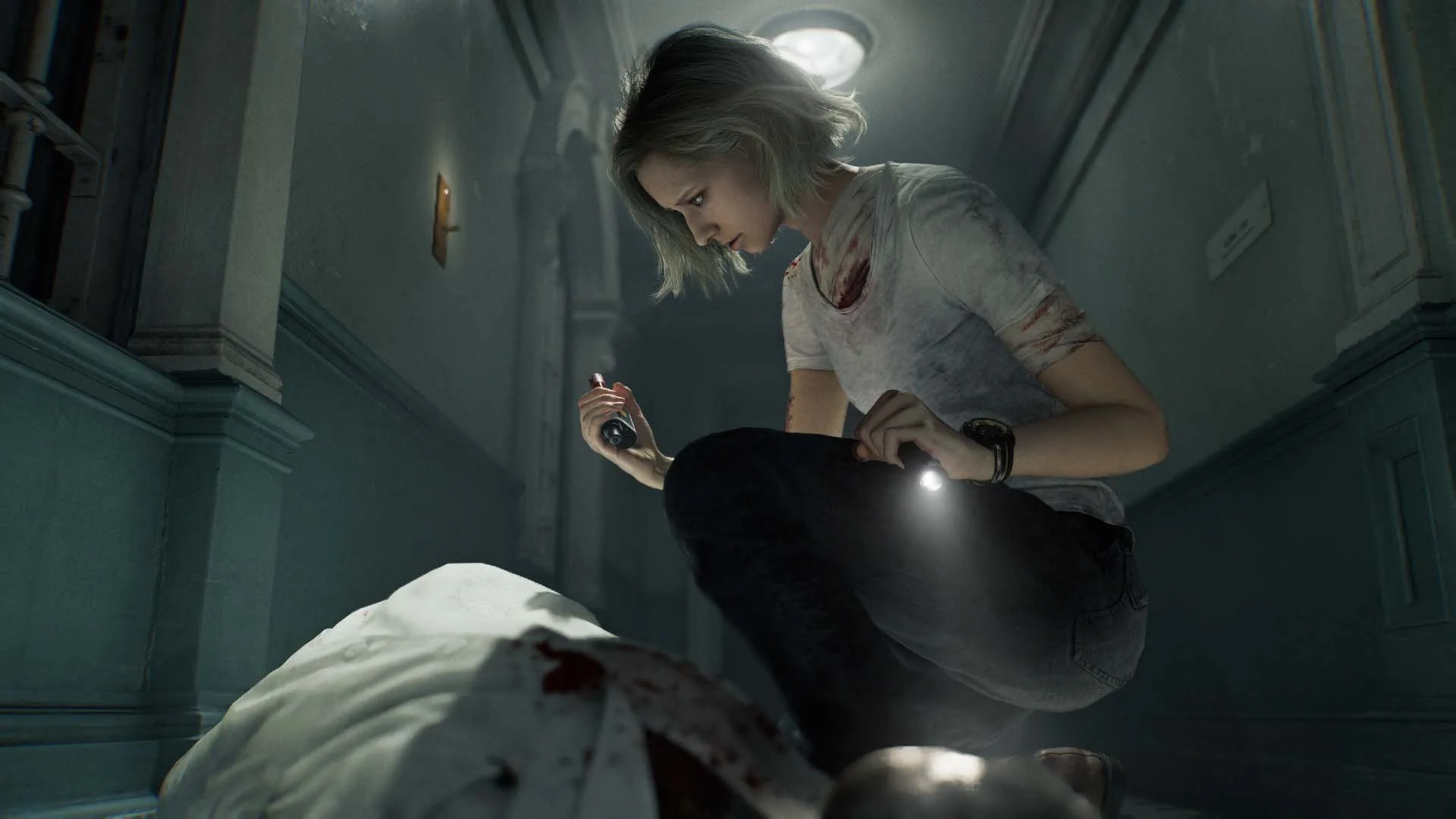
Grace Ashcroft’s sections define the game’s survival-horror identity. The first-person perspective turns Rhodes Hill into a cramped, hostile place where every corridor feels like it could punish a careless choice. That camera position intensifies the environmental gore and makes combat feel closer, messier, and harder to treat as routine. Progress depends on a stealth system built around patience and route planning.
Grace moves at a slower pace, which pushes players to listen, to watch sightlines, and to use distraction instead of rushing forward. Breakable bottles become a key tool, letting players pull ghouls away from critical paths and create small windows of safety.
Resource management sits at the center of this half of the campaign. Ammunition feels precious, and the limited inventory forces constant triage about what matters right now versus what might matter later. That pressure is what makes the blood-harvesting mechanic feel necessary rather than decorative. Grace uses a syringe to collect plasma from downed enemies, then combines that plasma with scrap to craft medkits or hemolytic injectors.
The injectors stand out because they support stealth play: they enable quiet kills by making monsters swell and explode, and they can permanently remove bodies so they cannot reanimate or mutate later. The system rewards players who think ahead, because a single choice about how to handle one enemy can ripple forward into the next room, the next hallway, the next puzzle.
Grace carries the “Requiem” revolver, a forearm-sized weapon defined by massive stopping power and severe restraint. With only one round in the chamber at first, every shot becomes a decision players feel in their hands. The loop leans into exploration and problem-solving more than head-on confrontation.
Puzzles hinge on morbid riddles and the hunt for quartz blocks that open locked doors, and those tasks often require slipping past “Screamers” and other ghouls lurking in the rafters. The mechanical tuning keeps threat levels high, even with a single zombie. Escapes feel tactical because survival depends on timing, noise control, and choosing when to spend a scarce resource.
The Art of the Action Hero
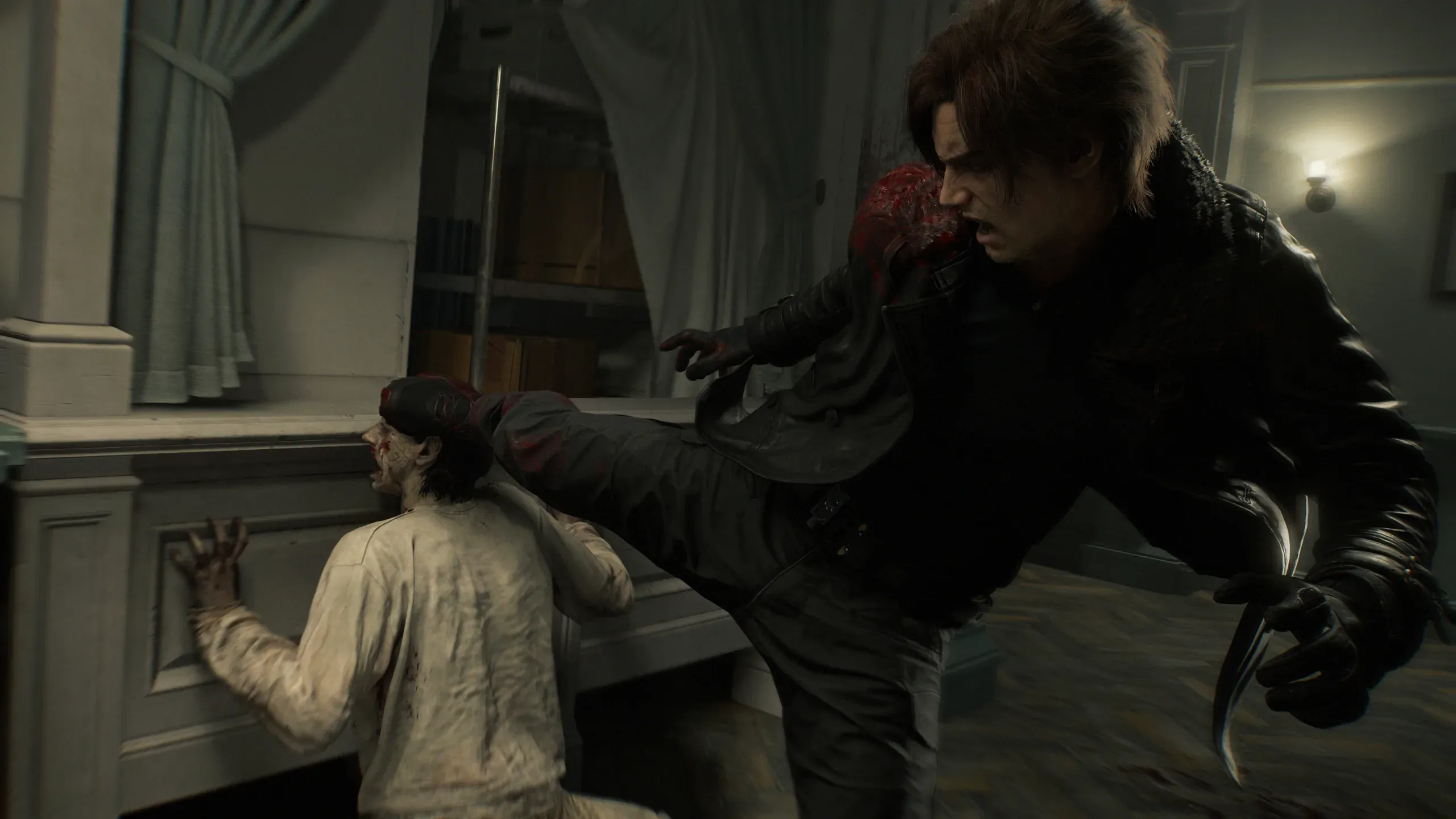
Leon S. Kennedy’s chapters push the game into action mode. The shift to a third-person perspective supports speed, visibility, and combat rhythm, and his kit is designed for constant forward motion. A precise parry system and finishing moves let him manage groups with confidence, turning fights into sequences players can control through timing and spacing.
His arsenal stretches from shotguns and sniper rifles to stranger tools like a chainsaw or a hatchet with an everlasting flint. He can also grab environmental weapons such as lead pipes or fire axes, keeping fights kinetic while reinforcing the idea that Leon’s world rewards momentum.
Leon’s economy reinforces aggression. Enemies drop currency, and players spend it at de facto ATMs that dispense ammunition, body armor, and weapon upgrades. Firearms can be tuned for more power, less knockback, or faster reload speeds, and that progression system invites experimentation across weapon combinations. As players invest, the tension shifts into a loop of empowerment and destruction, with upgrades functioning as a clear feedback line: fight well, earn more, hit harder.
Set pieces carry Leon through the ruins of Raccoon City, with spectacle used as punctuation between combat encounters. A motorcycle chase stands out, pitting Leon against Victor Gideon across a devastated landscape. Boss fights scale up in the same spirit, featuring massive monsters with glowing weak points and encounters that mix environmental hazards with brawling skill checks.
One sequence pushes crowd control into the foreground: piercing a monster’s blisters releases infection that mutates nearby zombies, forcing players to manage a growing mob while staying locked onto the primary threat. The combat design leans into the franchise’s louder, larger-than-life action energy, delivering payoff after the slower stealth pressure of earlier hours.
A Gothic Hospital and a City in Flames
World design uses environmental storytelling to build dread with intention. The Rhodes Hill Chronic Care Center plays like a gothic maze, packed with unsettling details that make each room feel occupied by a past life that never fully left. Hospital zombies show traces of their former selves in ways that sharpen the discomfort.
Orderlies fixate on light switches. Undead cooks chase players with kitchen utensils. A grand piano can hold a zombie tapping out a haunting tune. These touches give the horror a tragic edge, framing infection as a collapse of ordinary routine into grotesque repetition.
Stalker enemies increase the pressure on exploration. A massive creature in a tattered gown moves through the hallways with a slow, mournful pace, while another threat, the “Chunk,” is so huge it must squeeze through tight corridors to keep patrolling.
Encounters like these force players to learn Rhodes Hill’s layout in detail, because survival often depends on knowing the nearest route, the nearest room, the nearest door that buys a few seconds. The RE Engine’s visual fidelity supports this design work. Blood spatter stays on walls after players leave an area, turning past encounters into permanent scars on the environment.
The setting shifts hard once the story reaches the Raccoon City ruins. The tone becomes an urban war zone built from rooftops, mortar fire, and open sightlines that demand different tactical habits. Armored undead require more deliberate shooting, pushing players to think about target priority and positioning.
The change from the damp basement spaces of the hospital to fire-lit streets keeps the visuals varied, and each location feels carefully built, from the rain-soaked prologue through a final showdown staged at titan scale. Hazards and enemy placements keep testing the player’s command of both stealth movement and open combat.
Balancing Horror and Heroism
The pacing relies on a split campaign structure. Grace’s half centers on slow, methodical escape horror, then Leon’s half turns into rapid-fire action built around rescue momentum. That pivot hits as abrupt, because Rhodes Hill’s carefully sustained atmosphere drops away to make space for explosions and motorcycle stunts. The craftsmanship remains strong on both sides, yet the tonal handoff can feel like switching formats midstream, with less connective tissue than the setup seems to promise.

Players who want a tougher run get it through “Classic” mode, which requires typewriter ribbons for saves and adds weight to every risk. Replay value comes from unlockable costumes, specialized weapons, and challenge-based incentives that reward second and third playthroughs. The runtime lands around 10 to 20 hours, keeping the campaign focused rather than stretched.
Grace’s loop is built around blood harvesting and crafting, while Leon’s loop revolves around earning currency and upgrading for combat dominance. The split makes each character distinct in play feel. Grace pushes the player toward careful thinking and tight escapes; Leon pushes the player toward confidence and aggression.
The second-half shift may feel less fresh than the Rhodes Hill horror work, yet the combat remains genuinely fun. The absence of a separate mercenaries mode stings a little given how well Leon’s systems click. The main campaign still reads as a cohesive celebration of different franchise eras, using structure to spotlight two styles that the series has carried for years.
Technical Precision and Inclusivity
Capcom presents the game with a high level of technical polish. Loading times are close to invisible, controls respond quickly, and both Leon and Grace snap to player input with the speed their systems demand. That responsiveness matters for parry timing and stealth execution, where a fraction of a second changes outcomes.

Character models and environments look sharp, with lighting in the hospital’s darker wings doing heavy work to shape mood and readability. Sound design plays a major role through directional audio that helps players track stalkers through walls and read threat proximity without relying on UI signals.
Accessibility support is extensive. Motion-sickness presets help players who struggle with first-person movement. Subtitle options cover size, background color, and speaker names. Audio sliders allow fine-grained mixing across music and dialogue. Language support includes full voice acting across ten regions. That set of options broadens who can play comfortably, and the technical performance holds steady even during the most chaotic action moments in the Raccoon City ruins.
The Review
Resident Evil Requiem
Resident Evil Requiem is a confident, albeit split, celebration of the franchise. It successfully bridges the gap between suffocating survival horror and explosive action. While the shift in the second half feels jarring, the mechanical depth of both Grace’s stealth and Leon’s combat is undeniable. The RE Engine delivers a visually stunning, polished experience that respects the series' legacy while introducing a compelling new protagonist. It is an essential play for any fan of the genre.
PROS
- Masterful atmosphere and tension during the Rhodes Hill sequences.
- Grace Ashcroft is a relatable, well-developed new lead.
- Visceral and satisfying combat mechanics for Leon.
- Innovative blood-harvesting and crafting systems.
- Exceptional visual detail and environmental storytelling.
CONS
- Abrupt tonal shift at the midpoint can feel disconnected.
- Second half relies more on traditional action than innovation.
- Lack of a dedicated Mercenaries mode at launch.