






















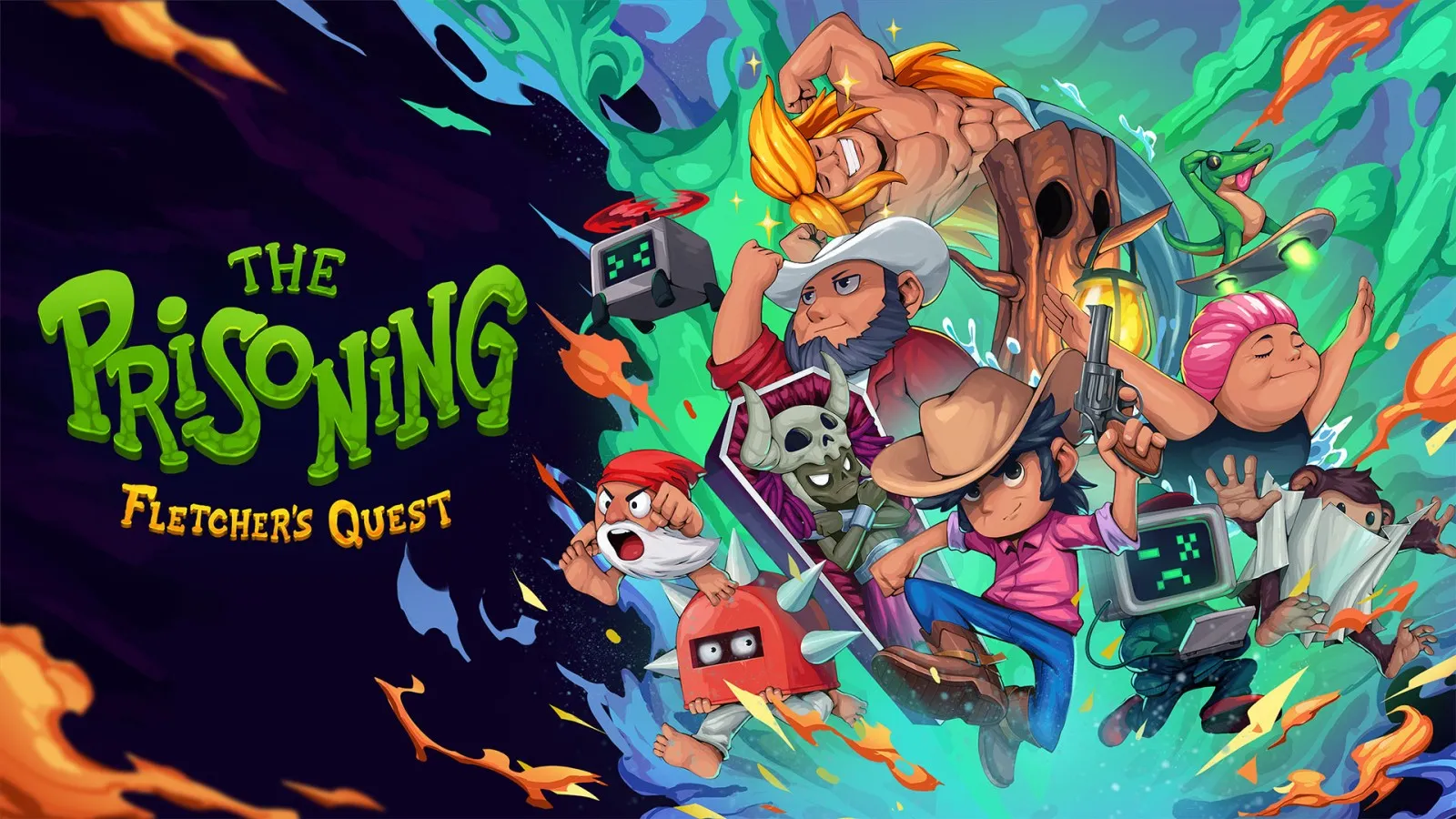

The Prisoning: Fletcher’s Quest drops you into Fletcher’s headspace, framing the whole game as a stress dream built from his day job. He’s a game developer buckling under work pressure, anxiety, and burnout, and he goes to a psychologist hoping for relief. The session derails. Fletcher slips into a trance, and his mental spiral becomes a literal dungeon he has to survive.
He wakes up naked and defenseless inside a world assembled from his own creative frustration. The setting reads like a digital projection of his subconscious: part confinement, part toy box for commentary about making games. Characters regularly break the fourth wall, calling out their existence as code and occasionally taking shots at the player for showing up and playing along.
Published by a revived Acclaim and developed by Elden Pixels, the game leans into that premise to support a surreal environment where internal problems show up as physical hazards. Many modern platformers lean on grounded exploration and clean world logic. This one puts its energy into a self-aware story that turns game development itself into a dangerous trek where survival is the point.
Rhythmic Combat and Shifting Corridors
Fletcher survives with a six-shooter that comes with a defining rule: only one bullet can be on screen at any time. That single limitation reshapes every fight. It pushes you toward deliberate timing that recalls the careful shooting rhythms of Mega Man.
If you fire from far away and miss, you pay for it while the shot travels off screen. If you commit to close range, you can chain quick, deadly bursts because the bullet clears faster. That push-and-pull sets the tempo for encounters and makes positioning feel like part of the trigger discipline.
The world also relies on procedural generation, reshuffling room layouts each time you start a new save file. You still work toward straightforward, linear goals, yet the route between them stays uncertain from run to run. That unpredictability keeps you alert, since familiarity with objectives does not guarantee a familiar path.
Movement tools come from a familiar upgrade set: double jump, slide, and a butt stomp. These skills function as classic keys that open access to previously blocked areas, though the structure stays tighter and more streamlined than a sprawling benchmark like Castlevania: Symphony of the Night.
Between stretches of danger, you can locate vending machines that act as fast-travel points and dispense protective hats. These spots also house extras like vinyl records, which you can play at a jukebox as a breather before pushing back into the dungeon.
Fragile Health and Pattern Recognition
The difficulty curve inside this psychological prison hits hard. Fletcher dies after two hits, then respawns at the last checkpoint. That makes hats a major resource, since each one adds a single point of armor that can keep a mistake from turning into an instant run reset.

Regular rooms can become an exercise in repetition once you learn their threats, yet bosses serve as the real tests. They demand strict pattern reading and disciplined reactions. One fight might throw you against a mannequin controlled by a man. Another might shift into a frantic chase sequence in a vehicle. These set pieces call to mind the pressure-cooker boss design in Cuphead, where every input needs to be intentional and wasted movement gets punished.
The game keeps things fair by making boss behavior consistent once you’ve seen it enough times. If the two-hit limit feels too harsh, Elden Pixels also provides an Assist Mode. With Assist Mode enabled, death sends you back to the start of the current room instead of a farther save point. That change makes practice less exhausting for newer players while preserving the tension that experienced players might be chasing.
A Crude Lens of 16-Bit Nostalgia
On the visual side, the game plays like a confident love letter to the 90s. The chunky pixel art has personality, and Fletcher’s animations sell the tone through little details, like the small bounce of his hat and his exaggerated death scenes. Dunderpatrullen’s chiptune soundtrack matches that presentation with music tuned to the frantic drive of 16-bit action staples.
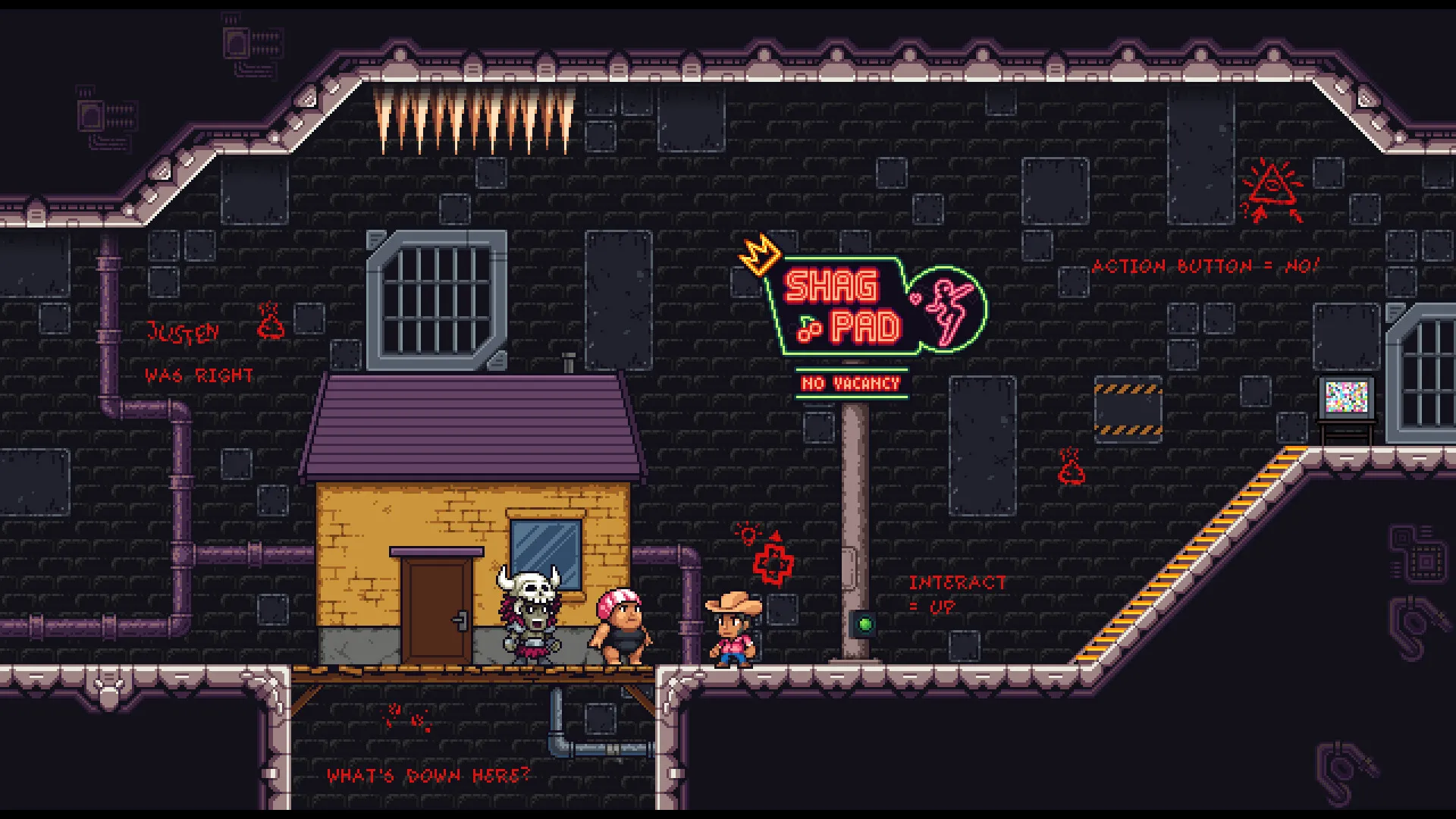
Under the bright surface sits a mature, frequently cynical script. The writing leans on crude jokes, drug references, and pointed satire aimed at the game industry. One standout metaphor turns “bugs” into literal creatures that crawl across the screen and expose fragments of negative user reviews. That gag lands as self-deprecation with teeth, and it doubles as a clue to Fletcher’s mental state during a creative collapse.
Some players will likely find the sexual jokes and juvenile humor heavy-handed, yet the bluntness fits the game’s chosen voice. The cheerful retro look paired with dark, introspective writing gives the project a distinct personality, using nostalgia as a vehicle for themes tied to mental health and professional exhaustion.