




















Bart Millard steps back into the spotlight in I Can Only Imagine 2, a sequel that arrives years after the first film became a breakout success. Bart is now living in the wake of that defining moment with MercyMe. The fame has settled into routine.
The career looks secure. Yet the calm he reached at the end of the earlier story no longer holds. He carries the pressure of writing another hit while his life at home turns more fragile. His teenage son Sam, played by Sammy Dell, is reeling from a recent Type 1 Diabetes diagnosis. Sophie Skelton takes over as Shannon, Bart’s steady, supportive wife. Life on the road tightens when Tim Timmons, portrayed by Milo Ventimiglia, joins the tour as the opening act and adds one more personality to an already packed bus.
The plot tracks the attempt to write “Even If,” a song that speaks straight to pain and what it costs to keep going. The film keeps returning to a single question: what happens to an artist after the miracle moment becomes history.
The Internal Echoes of a Creative Block
This chapter opens with Bart carrying his stress in plain sight. He sits at pianos. He stares at notebooks. The need to follow a chart-topping moment has jammed his creative instincts, and the film keeps that stuck feeling close to the surface. I still remember sitting in a studio years ago, staring at a blank page and feeling the same demand to conjure something electric on command. That memory clicked with the way the movie frames Bart’s problem as physical and mental at once: a man surrounded by music who cannot reach it.
John Michael Finley plays Bart with weight and restraint. He skips the usual image of a high-voltage frontman and leans into something heavier. His Bart reads as a person who feels diminished inside giant venues. The movie fills his days with irritability, long pauses, and a withdrawn quiet that turns every interaction into a potential spark. That quiet follows him home and onto the road, creating friction that never needs a dramatic speech to land.
The sharpest source of his distress sits right in front of him. Bart watches Sam ignore medical advice, skip insulin shots, and treat his diagnosis like something he can outrun. Bart reacts with a tightening need to manage everything, and it comes out ugly. He raises his voice when he wants tenderness. He watches himself do it, then flinches at what he hears.
He senses his own father’s shadow in those reactions, and the film frames it as behavior that repeats itself even when someone knows better. Bart worries Sam sees him as the same kind of barrier Bart once fought against. Finley communicates that fear with posture and facial tension more than dialogue. He looks worn out during moments that should feel celebratory, like the body is keeping score for the mind.
The script stays away from clinical terminology and keeps the focus on daily patterns. It shows a mind circling old wounds, replaying them, trying to outmuscle them. That choice matches the tone of the series, where the emotional work happens in rooms, on buses, and in the quiet time between the big public moments.
The High Energy of a Tour Bus Mentor
Tim Timmons changes the movie’s temperature the moment he arrives. Milo Ventimiglia plays him with bright, contagious momentum, and the bus scenes get a jolt of movement once he is onboard. Tim joins as the new opening act, and his presence creates a new rhythm on tour. He also becomes a mentor figure for Sam, using humor as a bridge and treating the kid like someone capable of handling hard truths.
 That connection stings Bart in a very specific way. He watches his son open up to someone he barely knows while shutting down around his own father. The film uses that dynamic to turn a familiar family argument into something sharper: Sam wants room to breathe, and Bart’s constant medical check-ins feel like surveillance to him. Sammy Dell plays that teenage push for independence with credibility. The conflict reads as an argument people would recognize from real kitchens and real car rides, amplified by the stakes of a diagnosis that never takes a day off.
Trace Adkins returns as Scott Brickell, the band manager, and his scenes bring a needed steadiness. Scott stays grounded, speaks in short blunt lines, and brings practical sense into rooms crowded with emotion. He feels like the adult who has watched musicians spin out before and knows how to pull them back toward the basics. His presence adds a professional edge to a story full of private mess.
Tim carries his own secret weight. The film reveals a serious health battle beneath the jokes, and he meets it with an odd lightness that can read as baffling to the people around him. He cracks wise about hospital visits. He turns frightening realities into punch lines. Those moments land as some of the film’s strangest scenes because the tone refuses to match the subject matter. That mismatch serves a purpose, though. It disrupts Bart’s habit of treating his own problems as the only ones in the room, and it forces him to look outward.
Generational Shifts and the Shadow of the Father
Directors Andrew Erwin and Brent McCorkle build the film around a structure that jumps through time. Flashbacks to the previous film appear throughout, and Dennis Quaid shows up in those scenes as Bart’s father. The flashbacks exist to keep the old trauma present, and they also underline the movie’s focus on inheritance: how childhood damage can shape the way someone parents years later.
The film draws a line from Bart’s past to his present through pattern and repetition. Arguments in the current timeline can snap into memories of Bart’s father, and the pacing moves quickly between those emotional states. The transitions can feel jagged, yet they also suggest something clear about Bart’s inner life. His mind stays busy comparing who he is now with who he used to be, and the editing mirrors that restless looping.
Bart also attends a men’s support group in a plain gymnasium. Those scenes sketch a particular cultural approach to pain and responsibility. Men sit in a circle. They speak simply. They talk about becoming better husbands and fathers without fancy language or abstract analysis. The film treats that space as communal repair work, a place built for honesty that fits the world these characters inhabit.
Medical realities connect the characters on multiple levels. Sam deals with diabetes. Tim deals with cancer. Bart carries the memory of his father’s death. The movie presents life as a sequence of physical and emotional hurdles, each one shaping decisions in quiet ways. The camera lingers on needles and pills, turning everyday objects into reminders of risk and routine. Those close-ups make the stakes tactile. They also echo the film’s focus on control: what people can manage, what they cannot, and what they pretend they can.
The Songwriting of Surrender and Strength
The final stretch tightens around the creation of “Even If.” The lyrics point toward a hard spiritual truth: faith can remain steady even when circumstances collapse. The film links that idea to the hymn “It Is Well with My Soul,” and it lays out how that older song emerged from tragedy. That historical reference gives the new song extra gravity inside the story, grounding Bart’s writing in a tradition of music born from loss.
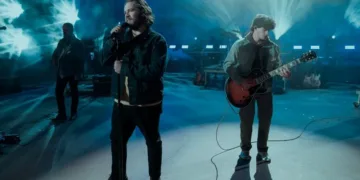
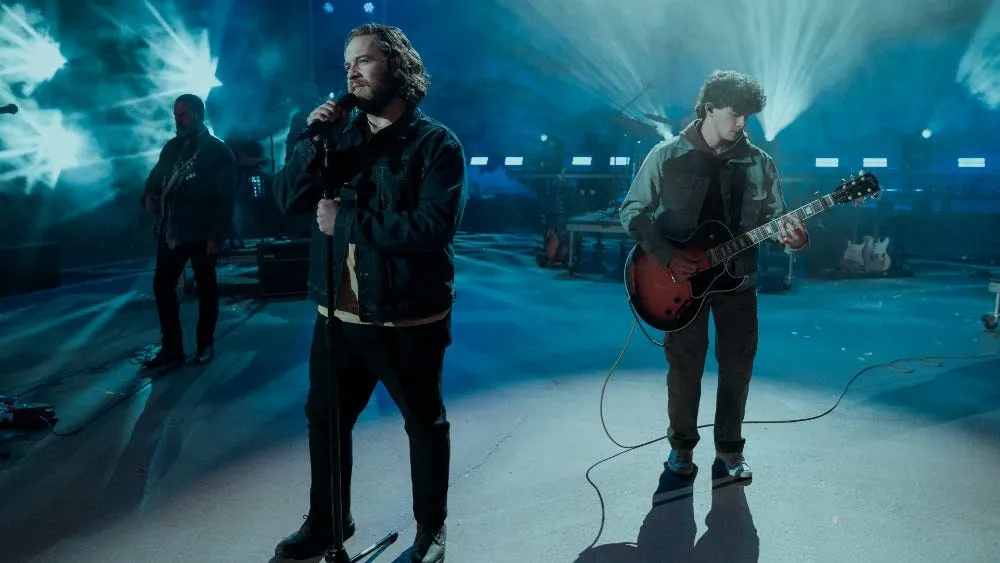
The performance sequences carry a high level of technical polish. Concert halls feel huge, present, and alive through the sound design, and the staging sells the scale of the band’s world. The film also spends time on the songwriting itself, including scenes of two writers working together in a hospital room, trading lines and melodies in a space shaped by illness and uncertainty. That setting matters. It turns composition into a form of survival, not a career move.
The movie builds toward a performance at Red Rocks Amphitheatre, and the cinematography makes the location feel monumental. Drone shots sweep across the rocks and sky and catch the audience gathered inside that natural backdrop. The imagery plays big, and it is designed for a theater screen.
Music becomes the clearest language the characters share. I have always believed the best songs tell the truth about how messy life can get, and the film leans into that kind of honesty during its final act. The spiritual message lands as quiet persistence rather than instant relief.
The story shifts away from quick solutions and asks the audience to sit with effort, endurance, and the slow work of showing up again. Gratitude becomes a chosen practice, something a person decides to hold onto. By the time the film closes, the hope feels earned through shared hardship, shaped by what each character has carried and what they have faced together.
The biographical drama I Can Only Imagine 2 is set to premiere in theaters nationwide on February 20, 2026. Following the massive success of the 2018 original, this sequel continues the true-life story of MercyMe frontman Bart Millard, shifting the focus to his journey as a father and the creation of the hit song “Even If.” Distributed by Lionsgate, the film arrives at a time when faith-based cinema is seeing a surge in professional production quality and mainstream appeal. Audiences can catch the film on the big screen upon its wide release, with early access worship screenings held in select locations starting February 14, 2026.
Full Credits
Title: I Can Only Imagine 2
Distributor: Lionsgate
Release date: February 20, 2026
Rating: PG
Running time: 110 minutes
Director: Andrew Erwin, Brent McCorkle
Writers: Brent McCorkle
Producers and Executive Producers: Kevin Downes, Andrew Erwin, Cindy Bond, Bart Millard, Daryl Lefever, Joshua Walsh, Tony Young, Bernie Stern, Scott Brickell, Dylan Bond
Cast: John Michael Finley, Milo Ventimiglia, Sophie Skelton, Arielle Kebbel, Sammy Dell, Trace Adkins, Dennis Quaid, Joshua Bassett
Director of Photography (Cinematographer): Johnny Derango
Editors: John Puckett, Andrew Erwin
Composer: Brent McCorkle
The Review
I Can Only Imagine 2
I Can Only Imagine 2 offers a polished look at the heavy reality of living beyond a breakthrough. While the narrative occasionally feels repetitive with its reliance on past trauma, the addition of Milo Ventimiglia provides a necessary spark of life. The film successfully shifts the focus from achieving success to the daily choice of maintaining faith during chronic struggle. It is a technically sound, earnest exploration of fatherhood and resilience that will resonate deeply with those who value stories of quiet, persistent hope over easy answers.
PROS
- Milo Ventimiglia delivers a charismatic and high-energy performance that balances the film’s heavier themes.
- The cinematography at Red Rocks Amphitheatre is visually stunning and captures the grand scale of the musical finale.
- The central message provides a mature perspective on faith by focusing on perseverance rather than instant miracles.
- Trace Adkins offers a grounded, no-nonsense presence that keeps the dialogue feeling authentic.
CONS
- The frequent use of flashbacks and clips from the first movie can feel like an unnecessary crutch for the plot.
- The narrative pacing occasionally suffers from a repetitive cycle of conflict and quick resolution.
- John Michael Finley’s portrayal of Bart remains quite somber throughout, which may feel one-note to some viewers.