

























![Kingdom Hearts Collection [I-III] Review](https://gazettely.com/wp-content/uploads/2026/10/Kingdom-Hearts-Collection-I-III-1-360x180.webp "Kingdom Hearts Collection [I-III] Review: KHII Holds Steady as Newer Entries Fluctuate 37")



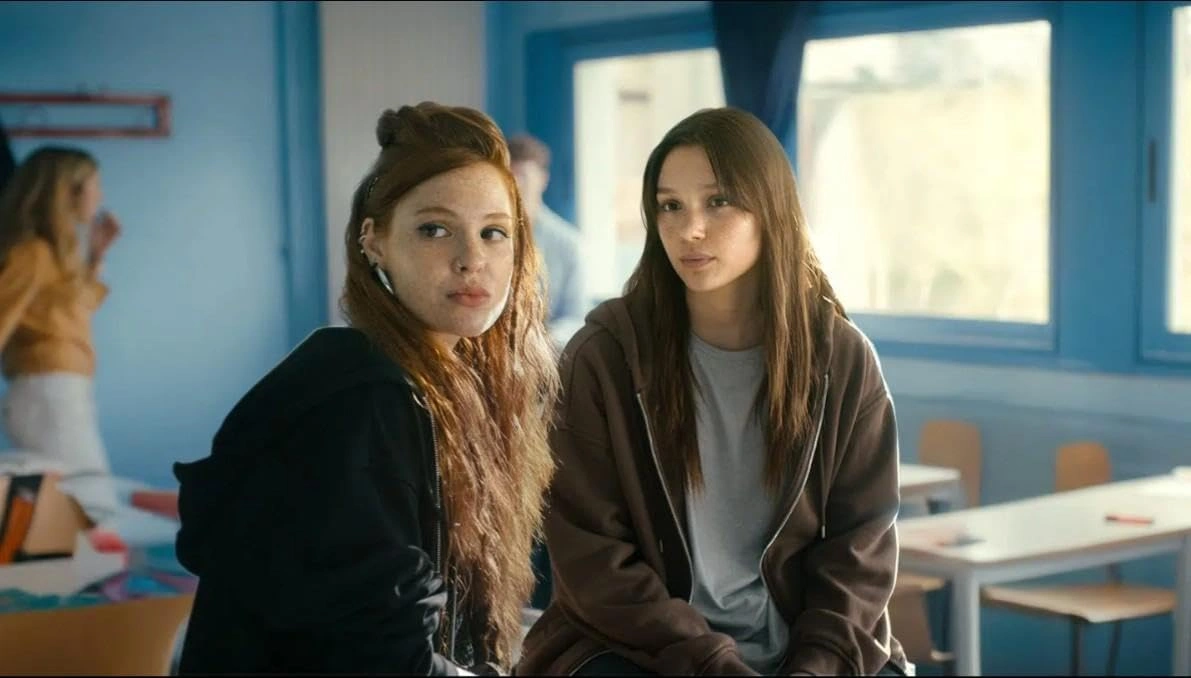

In the rural village of Camagna, sixteen-year-old Eletta Musso lives according to the needs of everyone around her. Each morning begins in the barn, where her family raises donkeys. Her parents, Alessandro and Caterina, and her brother, Francesco, move through life in silence.
Eletta is the only hearing person in the house. She connects the family to the village, interprets for the business, and absorbs the strain of dealing with a hearing society that shows little patience.
Once she joins a school choir, she finds an unexpected gift for singing, and that gift opens a possible exit from her provincial life. From that point, duty and self-expression pull against each other. The film tracks her effort to claim an identity while carrying a family that leans on her at every turn.
The Labor of Interpretation
Director Luca Ribuoli sets the emotional stakes in an opening scene built around a donkey in labor. The animal suffers. Eletta hears its cries, while her father and brother receive only the visual fact of distress. In one sequence, the film defines Eletta as an extension of her family’s senses. Without her intervention, the animal may die. That emergency becomes a pattern for the rest of her life. She functions as the ears of the farm.
That labor continues at the village market. Eletta handles the sale of milk and cheese, standing between her secluded family and the commercial life of Camagna. Her presence smooths over the impatience that hearing residents direct at deafness.
The burden grows heavier once Alessandro decides to run for mayor. He stands against a local politician whose treatment of the deaf community amounts to empty performance. Alessandro’s campaign carries a sincere purpose, yet it rests on Eletta’s fatigue. She must translate his message and carry the fine shades of public presentation.
The film gives that constant mediation real weight. Eletta shoulders the mental work of three adults. She deals with household taps and farm finances. She interprets medical appointments and legal conflicts. The role strips away any ordinary version of adolescence. She keeps other people steady while slipping under the pressure herself. Ribuoli frames this as a quiet crisis of identity.
Her voice serves everyone except its owner. She is a bridge made of language, and the people crossing it never stop to ask what holds it up. Her exhaustion comes from a family structure that looks independent from the outside yet survives through her unseen work. Love and necessity close around her like a cell.
Domestic Friction and Physical Reality
The casting of Emilio Insolera and Carola Insolera gives the Musso household a strong sense of physical truth. Deaf actors in these roles keep the family dynamic rooted in experience, and the performances avoid any trace of caricature. Their gestures, rhythms, and use of space feel fully inhabited.
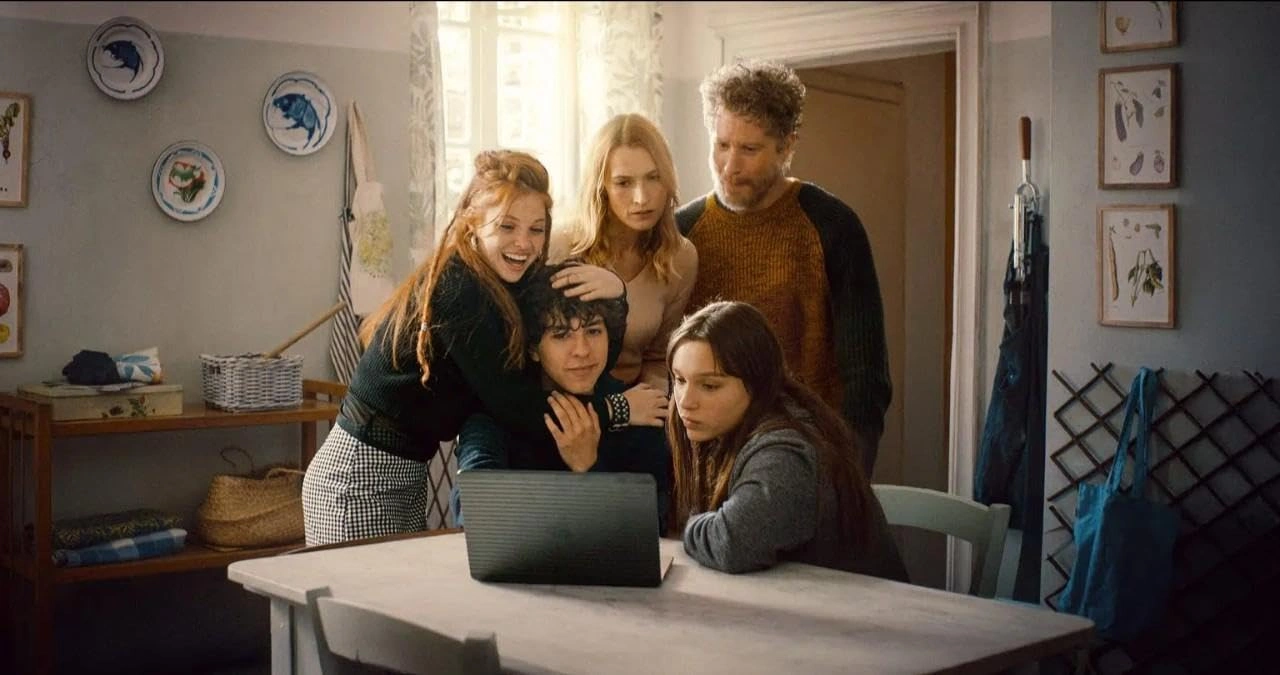
Caterina emerges as a mother shaped by protectiveness and attachment. She looks at the hearing world with suspicion, and her dependence on Eletta works as a form of shelter against a society she reads as alien. That dependence fills the home with claustrophobia.
Francesco carries a separate kind of frustration. He wants to modernize the farm and brings ideas about efficiency, yet his parents wave those ideas away. They treat his deafness as a limit, while granting themselves a different measure. His position mirrors Eletta’s in a striking way. Both children live under rigid parental expectations. Each is trapped, though the shape of the trap differs.
Ribuoli uses the soundscape inside the house to sharpen the divide. The family makes loud, unconscious noises. Soup is slurped. Snoring fills the space. These sounds create awkward comedy, though they also mark Eletta’s isolation with painful clarity. She alone feels the embarrassment that those sounds may produce in social settings. A visit from her friend Martina and her crush Marco turns that embarrassment into anxiety.
Eletta tries to conceal the sounds of her parents’ intimacy from her guests. The sequence places her in the role of curator and protector of the family image. She regulates the line between private life and public appearance. The humor stays earthy and distinctly Italian, grounding the story in ordinary bodily reality. These scenes present the family as flawed people driven by hunger, desire, habit, and need.
The Discovery of Personal Expression
Eletta enters the school choir almost by accident. Martina gives her the social push that draws her beyond the farm’s closed orbit. Martina carries a lightness that Eletta lacks. Inside the choir room, Eletta meets Giuliana, a music teacher whose encouragement never wavers. Giuliana hears something raw in Eletta’s voice. The talent feels hidden, almost unknown even to Eletta herself. Singing offers a rare form of expression in which she does not serve as anyone else’s interpreter.

Marco brings a romantic current into this awakening. He is a beefy MMA fighter who joins the choir as well. Their duet sets off Eletta’s release. When she finally sings, the moment lands as a bodily eruption of feelings she has kept locked down for years. Giuliana urges her toward an audition for a prestigious arts school in Turin. The school represents a complete break from the life her family has written for her. Turin stands at a great distance from Camagna, and the city carries the promise of ownership over her own voice.
Conflict grows as farm work collides with choir commitments. Eletta begins lying about where she is, using Marco as cover while she pursues music. The pressure reaches its peak when her family needs her for a television interview tied to Alessandro’s campaign, at the same time that she has an important rehearsal. Her wish for a separate life registers to them as betrayal.
They fail to see her as a person with a future of her own. The film looks hard at dependence and finds an ugly streak inside it. Her parents react with selfishness because her talent threatens the structure that keeps them steady. Eletta faces two forms of fear at once: the guilt attached to staying and the fear attached to leaving. That struggle drives the narrative with steady force. Talent becomes heavy here, since it shakes the arrangement everyone else wants preserved.
Sensory Design and Authentic Presence
Camagna itself functions like a silent character. The rural Italian setting is filmed with realism, free of decorative prettiness. It feels like a place where tradition presses down on daily life. Ribuoli uses sound with care, linking Eletta’s sensory experience to the quieter space inhabited by her family. Long passages of near silence fill the film, broken by farm sounds and small environmental details. The design asks the viewer to attend closely to faces, gestures, and the visual grammar of sign language.
The film does struggle with tonal control. Heavy emotional scenes sit close to broad comic beats, and the movement between them can feel abrupt. A moment in which Alessandro breaks into a romantic scene between Eletta and Marco with a loud bodily noise shows the problem clearly.
The interruption drains the scene of tension and points to uncertainty about how long the film can hold a serious emotional register. Some dramatic passages also arrive with too much force. The confrontation between Giuliana and Caterina chooses volume where finer shading might have carried greater weight. In those moments, the drama feels thin.
Sarah Toscano keeps the film anchored. Her performance gives Eletta a natural awkwardness that suits the character’s age and pressure-filled life. Her singing grows out of the role in a way that feels earned. Her use of sign language carries the ease of long familiarity. Toscano bears the emotional weight of the film and makes Eletta’s conflict legible through small movements and withheld reactions.
The film is strongest when it stays close to her experience as a figure suspended between two worlds. It loses focus when sentiment takes over and the emotions begin to feel arranged for effect. The audition scene reaches openly for tears and shows its design too clearly. Still, Toscano’s sincerity restores a measure of truth. She remains the human force that holds the film together, even during its broader and less disciplined passages.
Feel My Voice premiered on Netflix on April 3, 2026, as a contemporary Italian reimagining of the story that previously inspired the French production La Famille Bélier and the American film CODA. This musical drama features the acting debut of singer Sarah Toscano, playing a teenager who serves as the primary connection between her deaf family and the hearing world. The story follows her journey as she discovers a passion for singing and faces the difficult choice between her domestic responsibilities and her personal aspirations. Viewers can currently stream the film exclusively on Netflix.
Where to Watch Feel My Voice (2026) Online


Full Credits
Title: Feel My Voice
Distributor: Netflix
Release date: April 3, 2026
Rating: R
Running time: 106 minutes
Director: Luca Ribuoli
Writers: Luca Ribuoli, Cristiana Farina, Victoria Bedos, Stanislas Carré de Malberg, Éric Lartigau, Thomas Bidegain
Producers and Executive Producers: Our Films, PiperFilm, Circle One
Cast: Sarah Toscano, Serena Rossi, Emilio Insolera, Carola Insolera, Antonio Iorillo, Asia Corvino, Alessandro Parigi, Simonetta Pellizzer
Director of Photography (Cinematographer): Ivan Casalgrandi
Editors: Angelica D’Ettorre
Composer: Corrado Carosio, Pierangelo Fornaro
The Review
Feel My Voice
Feel My Voice is a sincere exploration of linguistic and emotional isolation. Sarah Toscano’s authentic performance grounds the narrative. The film captures the exhaustion of being a constant mediator. It falters when it leans into broad comedy or forced sentimentality. The specific Italian setting and the use of deaf actors provide a layer of truth. This is a touching, if predictable, coming-of-age story. It settles for being a crowd-pleaser when it had the potential to be a deeper psychological study.
PROS
- Sarah Toscano’s grounded and vulnerable lead performance.
- Authentic representation through the casting of deaf actors.
- Effective use of silence and sound design to show perspective.
- Realistic depiction of rural Italian life and family duty.
CONS
- Highly predictable plot following established cinematic formulas.
- Frequent shifts into broad, undercutting humor.
- Simplistic and occasionally selfish characterization of the parents.
- Emotional beats that feel calculated rather than earned.







