




























Sunshine Women’s Choir turns a women’s prison into a place of song, grief, comedy, and heavily varnished sentiment. Directed by Gavin Lin and co-written by Hermes Lu, this Taiwanese Mandarin-language drama follows Hui-zhen, played by Ivy Chen, an inmate serving time after killing her abusive husband. Inside prison, she gives birth to Yun-shi, a child whose presence softens the cell block and sharpens every fear Hui-zhen carries about motherhood under confinement.
The film’s central image is simple and potent: a mother trying to leave her daughter with one beautiful memory before the state, illness, and circumstance separate them. Around that image, Lin builds a musical prison melodrama about guilt, forgiveness, female solidarity, and the fragile architecture of found family.
The movie draws from real-life stories and adapts Harmony, yet its emotional texture is distinctly Taiwanese, shaped by polished crowd-pleasing rhythms and a taste for direct catharsis. It wears its heart on both sleeves, then borrows a few extra sleeves for safety.
Sentiment Behind Bars
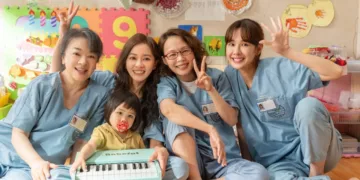
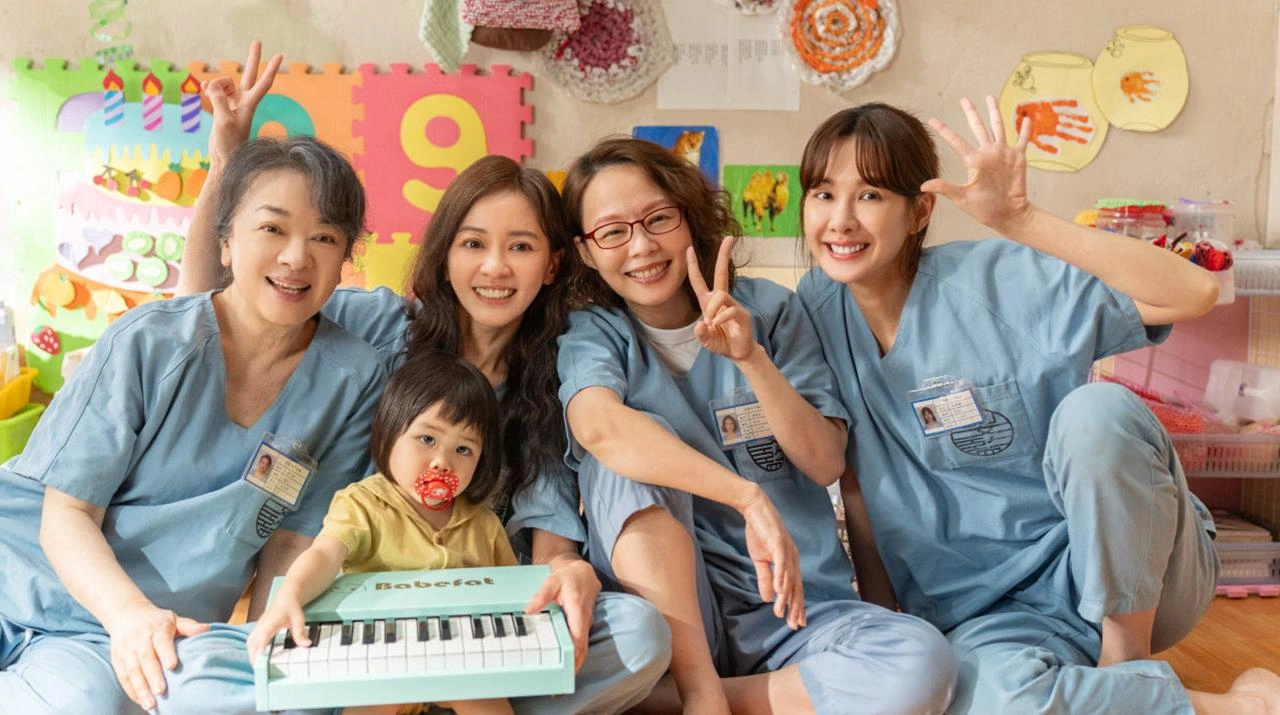
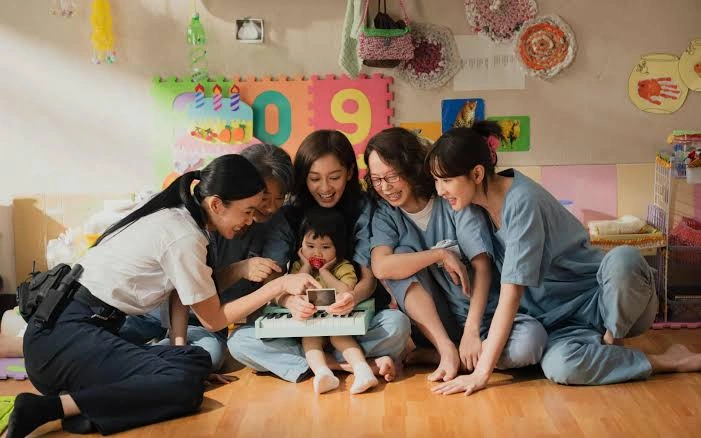
Hui-zhen raises Yun-shi with the help of her cellmates, a makeshift family formed under institutional fluorescent light. There is Yu-ying, a former singer whose quiet authority gives the dormitory a spiritual center; Pei-ying, a warm scam artist with comic timing; Xiu-lan, whose temper acts as both armor and warning sign; and You-xin, a rebellious newcomer whose arrival unsettles the group’s delicate order. Their world may be locked down, yet the film frames it as emotionally porous, a place where resentment, care, jealousy, and tenderness leak through every barred threshold.
The plot tightens when Yun-shi is diagnosed with a degenerative eye condition. Hui-zhen faces the unbearable fact that prison cannot provide the life her daughter needs. The choir forms as a farewell gift, a way to press love into memory before Yun-shi is sent away. Music becomes the film’s preferred moral instrument, less a performance craft than a temporary stay against erasure.
Lin’s dramatic architecture is built around mothers and daughters who fail, wound, remember, and seek repair. Yu-ying’s guilt over her broken bond with her daughter mirrors Hui-zhen’s terror that Yun-shi will forget her. You-xin’s anger, rooted in abandonment and exploitation, gives the film one of its sharper emotional edges before it softens into belonging. Male violence sits behind many of these stories like a shadow at the edge of a noir frame, though the film rarely holds that shadow long enough for true darkness to gather.
Memory is everywhere. Keepsakes, names, inmate numbers, birthday rituals, and songs all serve as proof that identity survives punishment. The film gestures toward questions about prison dignity and social erasure, then chooses tears over inquiry. Fair enough. The handkerchief industry deserves its occasional blockbuster.
Faces in the Half-Light
Ivy Chen gives Hui-zhen a charged mixture of tenderness and volatility. Her maternal love never feels passive. She can be impatient, forceful, even severe, yet Chen roots those harsher notes in panic rather than cruelty. Hui-zhen leads because she is afraid. She sings because language has failed her. In close-up, Chen carries the strain of a woman trying to convert guilt into usefulness before time closes around her.
Judy Ongg’s Yu-ying offers the film its calmest and most seasoned presence. A former music star, she gives the choir premise a necessary dramatic logic. Her return to music works best when the film treats it as self-punishment slowly bending toward self-forgiveness. Ongg plays stillness beautifully. She lets silence collect around Yu-ying before the songs release what she has been refusing to say.
Ho Man-xi’s You-xin injects abrasion into a story that can tilt toward softness. Her early hostility gives the dormitory scenes bite, while her gradual attachment to Hui-zhen and Yu-ying becomes one of the film’s most persuasive emotional turns. She is written in broad strokes, yet Ho finds small flares of shame and longing beneath the character’s defiance.
The supporting ensemble keeps the movie lively. Pei-ying, Xiu-lan, Mei-li, Nikki, Chief Fang, and guard Chen Yu-wen fill the prison with comic friction and sentimental warmth. Some roles lean toward familiar types: the funny inmate, the tough inmate, the wise elder, the strict official with a hidden soft spot. The cast’s chemistry helps conceal the machinery. Mostly.
Polished Tears, Bright Songs, Soft Shadows
Gavin Lin directs with a clear appetite for emotional volume. Sunshine Women’s Choir moves through comedy, prison drama, musical uplift, and tear-streaked melodrama with confidence, sometimes with grace, sometimes with the subtlety of a cymbal dropped down a stairwell. Its tonal shifts can work well, especially when humor punctures the heaviness of confinement. The laughter gives the women oxygen. It also makes the later heartbreak easier to accept, at least on the film’s chosen terms.
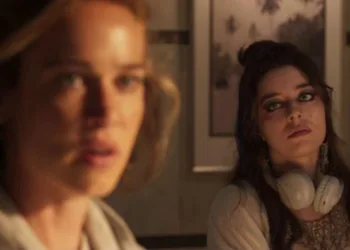
Eric Chao’s cinematography favors a clean, bright polish that makes the prison feel unusually warm. The lighting rarely carries the hard moral geometry of classic noir, yet the film occasionally brushes against that tradition in its flashbacks and traumatic recollections. Darker palettes, tighter framing, and more expressionistic shadow patterns appear when the women’s pasts intrude. These moments suggest a harsher film hiding beneath the gloss, one with sharper chiaroscuro and a less forgiving view of institutions.
The choir scenes are built as communal release. Group singing transforms private shame into public sound, while the choreography gives the inmates a language beyond confession. Cheng-Shin Lin’s editing keeps the ensemble readable and brisk, letting the film move across character arcs without turning sluggish.
The limitations are clear. The prison environment feels sanitized, sometimes oddly plush. Backstories often arrive as melodramatic shorthand. Adoption, correctional care, and institutional authority bend too easily toward emotional convenience. The film presses hard for tears, then presses again, just in case a few ducts remain uncooperative.
Yet its sincerity has force. Beneath the contrivance sits a film deeply committed to the idea that song can hold a person in memory after systems, families, and time have tried to erase her.
Sunshine Women’s Choir is a Taiwanese musical melodrama that made its theatrical debut on December 31, 2025, before expanding internationally through the global film festival circuit, including its international festival premiere at the Far East Film Festival. Based on the hit South Korean film Harmony, the narrative centers on a woman imprisoned for killing her abusive husband who gives birth to a baby girl behind bars. When she learns her daughter must eventually be put up for adoption due to a degenerative eye disease, she joins forces with her fellow inmates to form an emotional prison choir to give the child a beautiful final gift. Audiences can look for the record-breaking drama at selective international theatrical screenings or monitor major independent digital storefronts for its upcoming video-on-demand release.
Where to Watch Sunshine Women’s Choir (2025) Online


Full Credits
Title: Sunshine Women’s Choir (Yángguāng Nǚzǐ Héchàngtuán)
Distributor: Central City, Alpha Violet
Release date: December 31, 2025
Rating: 15A
Running time: 134 minutes
Director: Gavin Lin
Writers: Hermes Lu
Producers and Executive Producers: Liu Wei-jan
Cast: Ivy Chen, Judy Ongg, Manxi Ho, Amber An, Sun Shu-mei, Chung Hsin-ling, Annie Chen, Miao Ke-li, Esther Huang, Lo Chen-en
Director of Photography (Cinematographer): Eric Chou
Editors: Lin Chengxin
Composer: George Chen, Annie Lo
The Review
Sunshine Women's Choir
Sunshine Women’s Choir is polished, sincere, and almost aggressively tear-ready. Its prison world feels too soft and some plot turns strain belief, yet the cast gives the melodrama real warmth. Ivy Chen, Judy Ongg, and Ho Man-xi bring emotional weight to a story built on motherhood, memory, and female solidarity. The film works best when its songs feel like acts of survival rather than prompts for applause.
PROS
- Strong ensemble chemistry
- Ivy Chen gives a moving central performance
- Judy Ongg adds grace and emotional depth
- Choir scenes deliver warmth and catharsis
- Clear focus on motherhood, guilt, and forgiveness
CONS
- Prison setting feels too sanitized
- Some emotional beats are heavily manipulated
- Supporting characters can feel broad
- Institutional issues receive shallow treatment
- Later plot turns lean on convenience