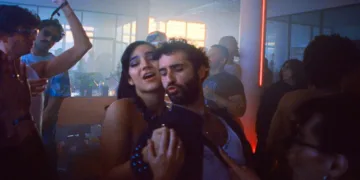

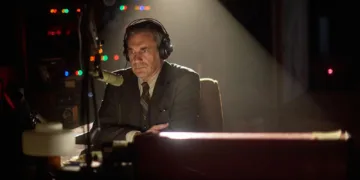




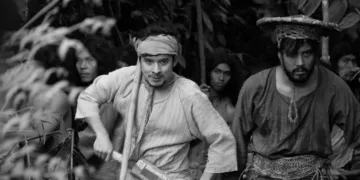











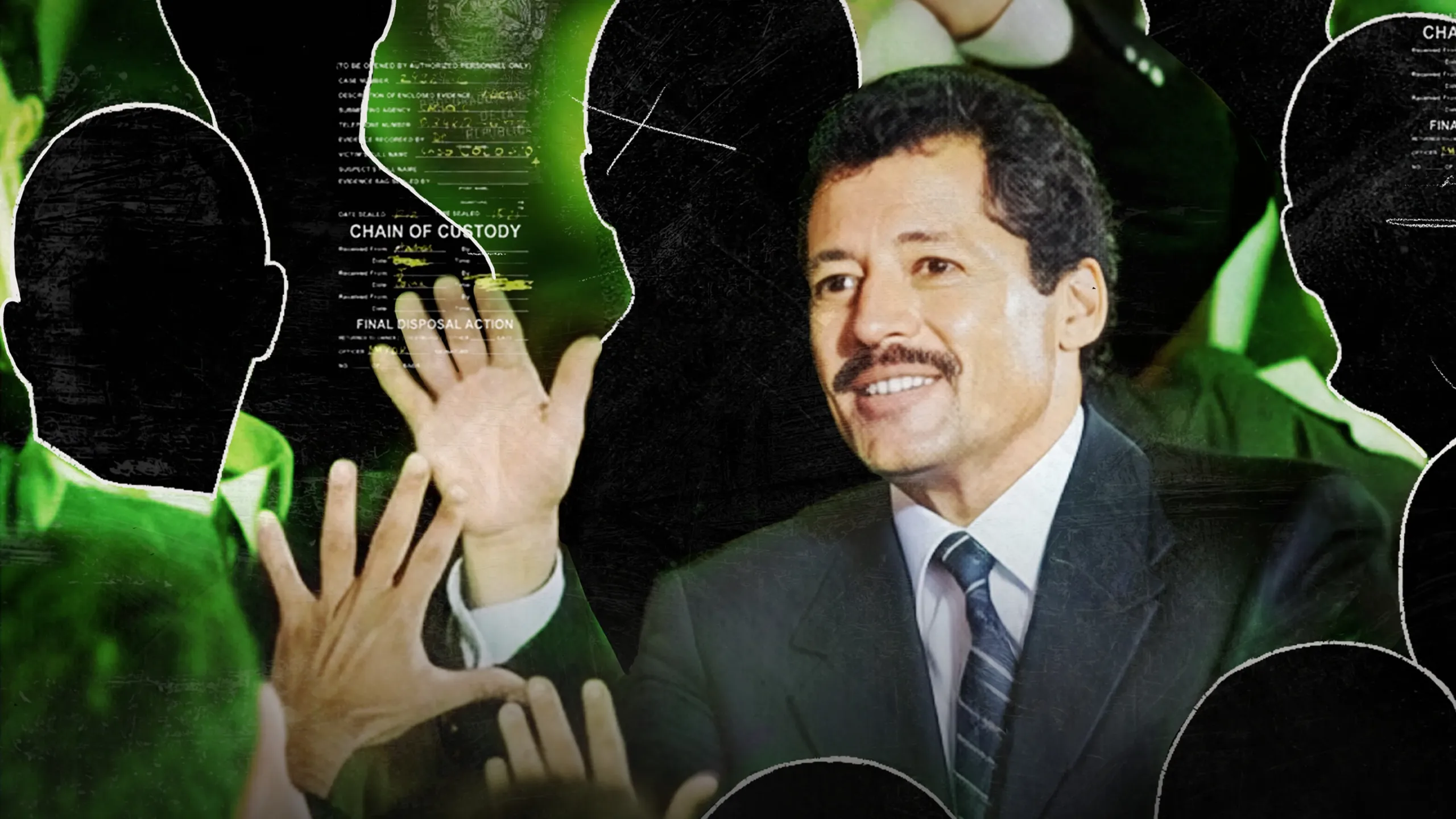

Colosio: Political Assassination returns to one of the most painful ruptures in modern Mexican history: the killing of Luis Donaldo Colosio, the Institutional Revolutionary Party presidential candidate shot on March 23, 1994, during a campaign rally in Lomas Taurinas, Tijuana.
HBO’s three-part documentary approaches the case with the tense rhythm of true crime, yet its subject reaches far past the mechanics of murder. This is a story about state power, public trust, political inheritance, and the dangerous gap between official truth and lived suspicion.
The series frames Colosio as a figure caught inside a party machine he seemed ready to reform. His death, captured in the confusion of a public gathering turned crime scene, became a national wound. Mario Aburto remains imprisoned as the lone perpetrator, yet the documentary builds itself around the doubts that have followed the case for decades.
Through archival footage, family testimony, legal documents, and newly surfaced material, it revisits an assassination that never fully settled into history. The reopening of the investigation in 2022 gives the series a sharper contemporary charge, especially in a global moment where political violence feels grimly familiar again.
A Mystery Shaped by Streaming Logic
The documentary’s three episodes move through the case with the restless structure of modern streaming nonfiction. Rather than laying out the assassination in clean chronological order, the series shifts between the rally, Aburto’s personal history, Colosio’s public image, family memories, forensic disputes, and later investigative developments. The result can be gripping. It can also be disorienting, especially for viewers entering the story without a working knowledge of Mexican political history.
That tension defines much of the series. Colosio: Political Assassination wants to be investigative journalism, political reckoning, and true crime thriller at once. Its pacing relies on withheld information, dramatic transitions, ominous testimony, and carefully staged reveals. Streaming television has trained audiences to expect each episode to end with a new crack in the wall, and the series follows that pattern with confidence. Sometimes too much confidence.
Its strongest passages come when the speculation is tied to concrete evidence. The questions around the second shot, the abdominal wound, the chaos in the crowd, and claims that Aburto may have been known to security-linked figures before the assassination give the documentary real force.
The recently declassified judicial file and the reopened investigation provide meaningful anchors, allowing the show to interrogate the confession, allegations of torture, police abuse, and gaps in the official record. The weaker moments arrive when atmosphere takes precedence over explanation. Mystery may hook the viewer, yet clarity keeps political nonfiction alive.
Families, Power, and the Cost of Suspicion
The series gains its emotional weight by placing two families under the shadow of the same crime. Colosio is presented as a husband, father, brother, and political symbol, a man remembered by those close to him as sincere, reform-minded, and unusually transparent within a system associated with control and compromise.
His wife Diana Laura’s pancreatic cancer at the time of his murder adds a devastating private dimension to a public catastrophe. The assassination did not merely end a candidacy. It shattered a household already living near grief.
Mario Aburto’s story is handled with notable care. The documentary traces his poverty, childhood in Michoacán and Tijuana, experiences of bullying, work at a cassette factory, time in the United States, and later incarceration. His family’s testimony, supported by prison phone recordings, gives the series one of its most human strands.
Their claims of coercion and abuse do not absolve him in the eyes of the film, nor should the review declare certainty where the series itself does not. What the documentary does is ask whether the official account can withstand the pressure of lived testimony and procedural doubt.
The political backdrop gives the series its cultural force. Colosio’s candidacy stood inside the PRI’s long rule, yet his image suggested discomfort with the party’s entrenched habits. The presence of Carlos Salinas de Gortari on camera brings the documentary close to the architecture of power it is questioning.
Still, the series could spend longer on ideology, neoliberal policy, and the mechanisms of party dominance. It gestures toward Mexico’s political transformation, then often returns to the simpler pulse of conspiracy. That choice makes the series accessible, though it narrows its historical reach.
Journalism, True Crime, and the Limits of Suspense
As television craft, Colosio: Political Assassination is polished, urgent, and often absorbing. Its most valuable elements are the voices rarely centered in official histories: Aburto’s family, Colosio’s sister Laura Elena Colosio Murrieta, lawyers, journalists, former officials, and figures such as Laura Sánchez Ley, whose long work on the case gives the documentary a needed investigative spine. The recordings from Aburto’s family supply an intimacy that staged reenactment could never match. Reality, as usual, has better writers than television.
The series also reflects a larger streaming trend: the conversion of political history into bingeable suspicion. This format can give neglected or unresolved cases a renewed audience, especially outside their country of origin. It can also flatten political complexity into a trail of clues.
The show’s use of talking heads, archival images, documents, and suspense beats is familiar, effective, and occasionally too tidy for such a messy case. Viewers may leave wanting stronger historical framing, especially around the PRI, its internal tensions, and the social climate of Mexico in 1994.
That said, the documentary’s imperfections do not erase its importance. It asks why certain wounds remain open, why institutions lose public trust, and why families are left to carry the emotional burden of uncertainty long after official statements have been filed away.
Colosio: Political Assassination is most powerful as a tense reconsideration of a national trauma. Its investigation is gripping and significant, while its reliance on true crime grammar sometimes weakens the political study waiting beneath the surface.
Colosio: Political Assassination is a gripping three-part documentary series that premiered on March 19, 2026. The true-crime investigative project delves into one of the most controversial events in modern Mexican history: the 1994 assassination of presidential candidate Luis Donaldo Colosio during a campaign rally in Tijuana. Utilizing newly declassified files and exclusive audio recordings provided by the family of convicted gunman Mario Aburto Martínez, the series re-examines long-held inconsistencies in the case and explores theories involving a potential second shooter and a deeper political conspiracy. Audiences can stream the complete docuseries exclusively on Max.
Where to Watch Colosio: Political Assassination Online


Full Credits
Title: Colosio: Political Assassination (Colosio: El asesinato político)
Distributor: HBO Max, Warner Bros. Discovery
Release date: March 19, 2026
Rating: TV-MA
Running time: 50 minutes per episode
Director: José Ortiz
Writers: Laura Sánchez Ley
Producers and Executive Producers: Luis Velo, Mario Cesar, Sergio Nakasone, Cecilia Abraham, Itaso Gallego
Cast: José Luis Aburto Martínez, Laura Sánchez Ley, Jesús González Schmal, Xavier Carvajal Machado, Adriana Miranda Badillo, Norma Meraz Domínguez, Laura Elena Colosio Murrieta
The Review
Colosio: Political Assassination
Colosio: Political Assassination is a gripping, politically charged docuseries that turns a historic Mexican assassination into a tense study of memory, power, and public distrust. Its rare testimony and renewed investigative angle give it real force, though its true-crime pacing sometimes clouds the political depth the subject deserves.
PROS
- Strong archival material
- Powerful family testimony
- Tense second-gunman investigation
- Timely political relevance
- Valuable focus on institutional doubt
CONS
- Fragmented structure
- Limited political background
- Some true-crime clichés
- Can confuse newcomers
- Leaves key ideas underexplored