






















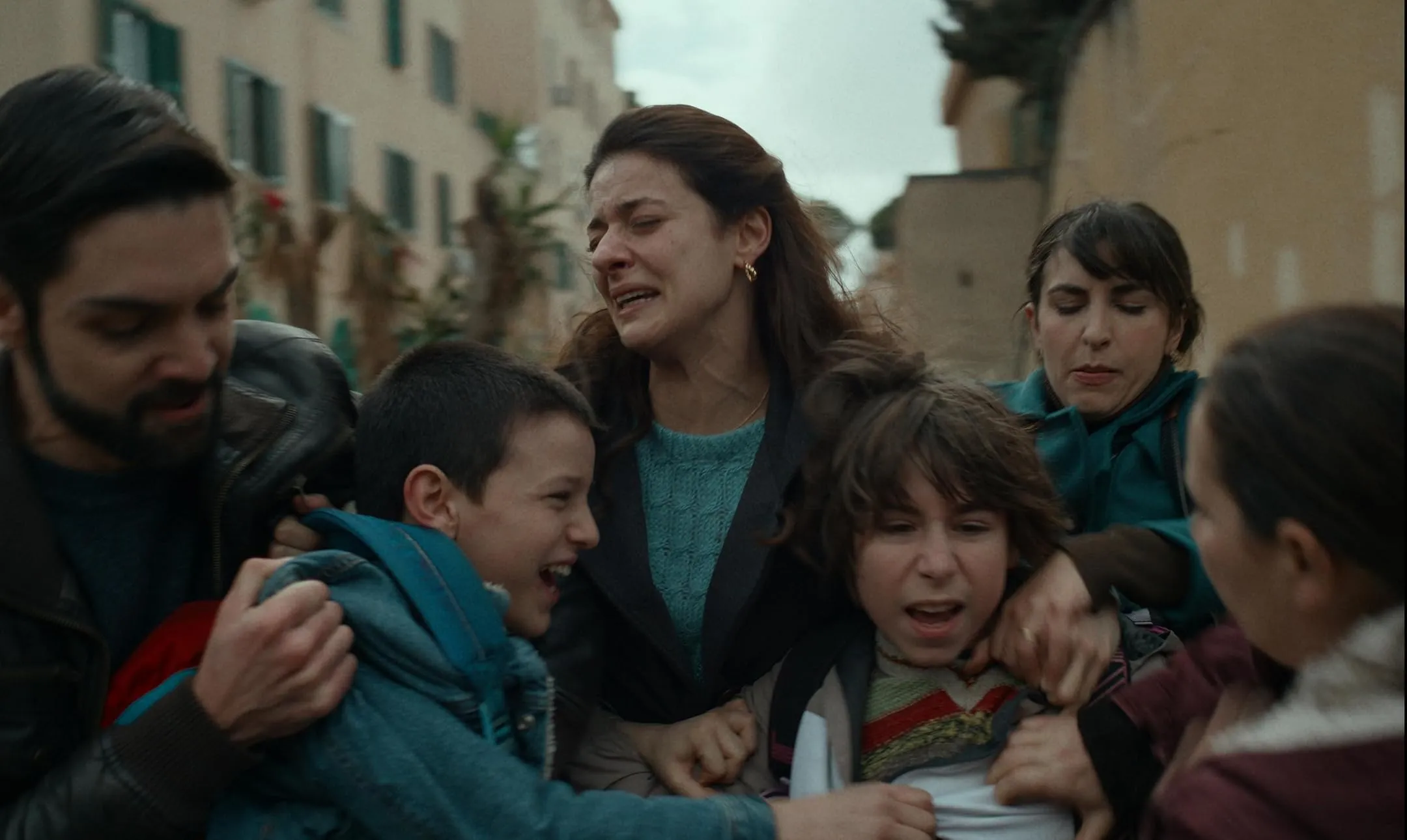

The translated title of Luigi Celeste’s memoir, “Non sarà sempre così” (“It won’t always be like this”), which was the source material for the movie, carries a faint promise of change, a murmur that time might loosen the grip of pain or freeze it in place forever. Francesco Costabile’s Familia answers that suggestion with something closer to a verdict.
The title becomes a stone dropped into a well, heavy with the weight of patriarchal rule, and the idea of home twists into a predesigned enclosure made for surveillance and domination. The film studies the long echo of harm inflicted by a tyrannical pater familias, Franco, upon his wife, Licia, and their sons, Luigi and Alessandro.
A dense sense of dread hangs over every scene, supported by storytelling that appears simple on the surface yet shelters tangled emotional currents beneath. The cycle of violence across generations feels less like a possibility and more like a law of nature written into daily habits. Costabile watches the way inherited sorrow hardens into a permanent state, and the spectator is asked to share the stale air of a home where intimacy has been poisoned.
The Geometry of Ruin and Recurrence
Costabile first presents the Celeste family in a fragile kind of balance. Early scenes carve out the reality of Franco’s abuse, where affection and brutality fold into one language of domination. He can hit his son for a perceived offence and then immediately command a hug, an embrace that functions as a ritual of obedience rather than comfort.
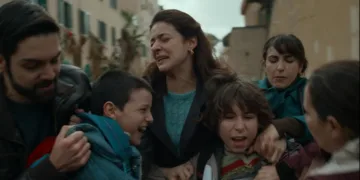
The children learn a code of survival: at the sound of “noises,” they withdraw, leaving their mother alone with a man who acts without consequence. Life inside this apartment becomes a prolonged holding of breath. That equilibrium fractures when Licia gathers the strength to call in the authorities.
Her decision leads to Franco’s arrest, an act that appears to crack the cycle, yet the fracture opens onto another wound. Social services take the boys from her arms and place them inside the indifferent rhythm of institutions. A system designed for protection generates another form of pain, one that stretches into the future and stains every memory of that rescue.
The narrative then leaps ahead by years. Luigi and Alessandro have grown into young men, now sharing a home with Licia and attempting to assemble a quieter existence. The effort feels fragile, because the time they spent apart and the original violence sit in the room like a presence that never leaves.
Their apartment holds more than furniture and family photographs; it holds a history that rustles at the edges of every conversation. Franco’s return to their lives enters this space like a familiar gravitational pull. The family may have changed addresses, yet his presence drags them toward a conflict they already know.
The film shifts its central question into sharper focus: does terror arise from the father who storms the home with his threats, or from the injuries that have already taken root in his sons? Costabile shows how these forces belong to the same movement of pain, two flows of the same dark river heading toward collision. The early, episodic structure of the story gradually reveals a pattern, and the different strands of violence and memory begin to align in a way that feels grimly inevitable.
The Anatomy of Pain: Performative Existence
The film’s most unsettling power lies in the exposed fragility and complexity of its central figures. Costabile places the actors under a patient gaze, using long, measured takes that refuse to release them quickly. The result feels like a series of examinations of people who can never fully escape the roles written for them by Franco’s cruelty.
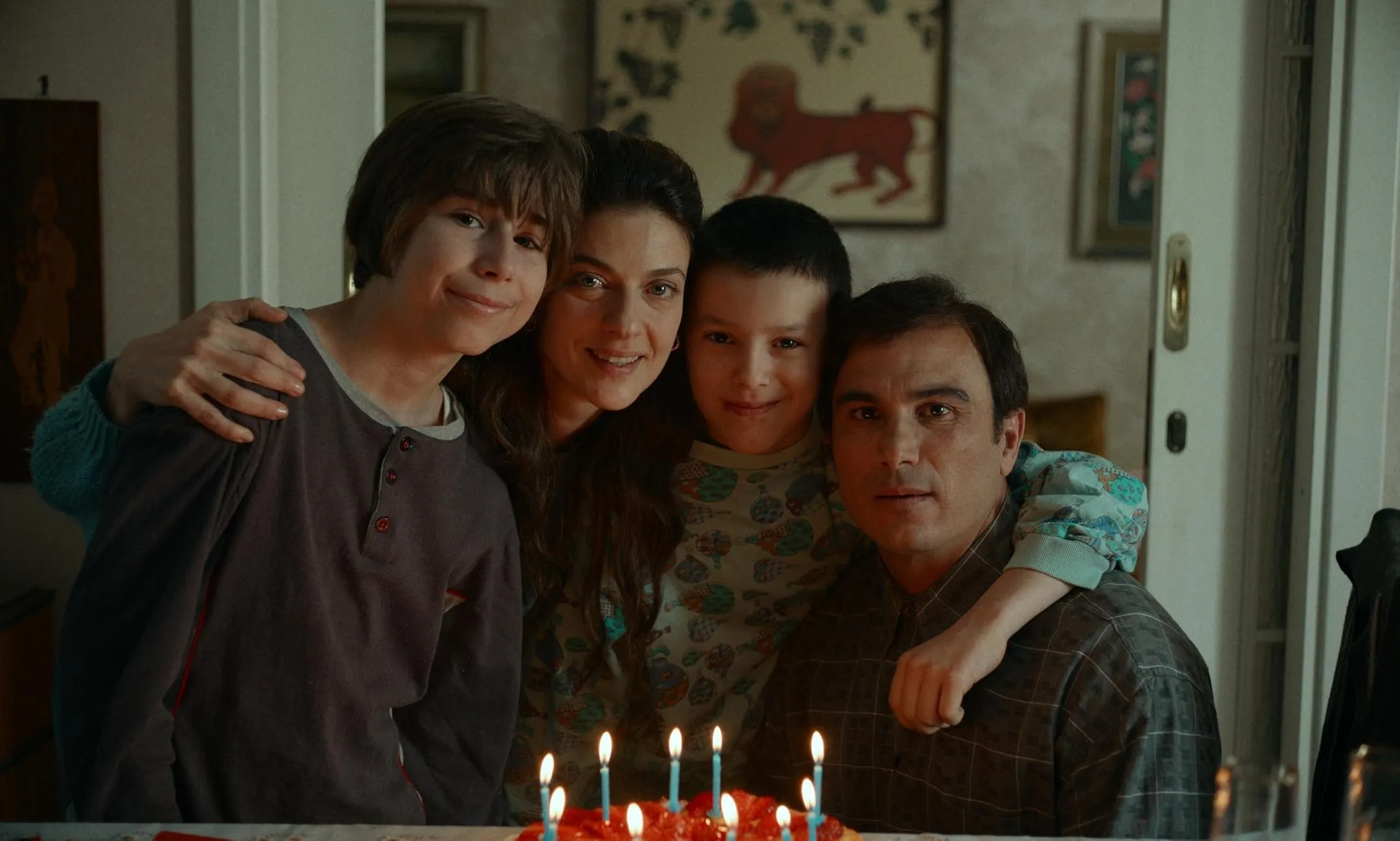
Francesco Gheghi’s Luigi becomes a portrait of a fractured self. He begins as a sensitive child forced to witness terror, and his path leads to a young man who carries rage like a charge in his body. His story operates on a fault line between two fears: the horror of becoming his father and the temptation of his own violent impulses. The film traces Luigi’s brief involvement with a neo-fascist group and his later imprisonment.
This strand of the plot sometimes feels compressed, yet it stays vital, because it externalizes the fury that has been carved into him since childhood. The move toward fascist comradeship appears less as a considered political shift and more as a pattern observed in young men marked by family brutality, a search for strict order and belonging inside a life shaped by domestic chaos.
Gheghi avoids easy statements about violence and instead fills Luigi with tensions that never fully resolve. His performance tightens into clenched energy, then cracks open in short, piercing moments of tenderness. When he tells his girlfriend that he does not want her to “end up like his mom,” the line exposes his self-knowledge and his fear of the damage he might repeat.
Barbara Ronchi’s Licia moves along a different emotional frequency. She carries quiet ruin with a restrained, dignified presence, and that restraint makes her suffering feel even sharper. The film presents her not as an outburst of “hysterics,” but as a woman whose sense of agency has been eroded piece by piece.
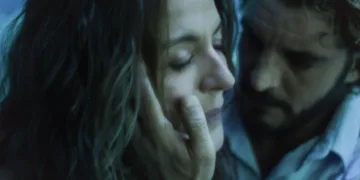
Fear holds her in place. She remains susceptible to Franco’s alternating charm and threats, still trying to shelter her sons while feeling the pull of the life she once escaped. Ronchi’s eyes often seem to scan the edges of the image, as if searching for a door that remains closed. Licia embodies the cruel truth that physical distance from an abuser does not erase the imprint of that relationship; the consequences lodge themselves into daily existence and refuse to leave.
Franco, played by the award-winning Francesco Di Leva, appears as an almost clinical study in predation. He moves between gentle paternal gestures and explosive menace with terrifying ease. Di Leva finds in him a figure who can ask for forgiveness with convincing sincerity and then reassert control through fear shortly after.
The act of leaving such a man never feels like a single decision; it becomes an ongoing psychological struggle that must be renewed every day. The family’s vulnerability and the shared trauma that binds them together gain their sharpest form through this ensemble work. The actors hold the idea of a family that has been damaged yet remains tied together, and that fragile knot lingers in the mind longer than any single violent outburst.
Cinematography as Psychological Cage
Costabile adopts a style that threads the tension of a psychological thriller through the emotional weight of melodrama, then steers that mix toward horror fueled by dread. Genre elements grow from realistic textures. Scenes of abuse rarely rely on explicit spectacle. Instead, suggestion and symbol do the work: a stuffed toy, a small domestic object, an ordinary item inside the apartment starts to carry the memory of unseen threats. The film feels saturated with a slow-acting toxin that spreads through gestures, glances, and pauses.
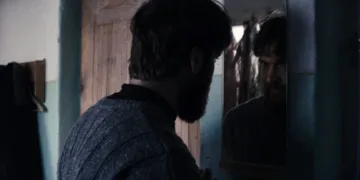
Giuseppe Maio’s cinematography deepens that sense of infection. The images sink the characters into a perpetual half-light, giving the impression that day never quite arrives for this family. The camera often holds a calm, fixed presence, like an unseen figure quietly observing, unwilling to intervene. In a key dinner scene, the lens gradually moves inward, shifting from a view of the whole table to an increasingly tight frame on Luigi.
The adjustment in distance turns the viewer into a participant in his mounting discomfort, trapping us within his breathing space. This visual tightening finds an echo in Valerio Vigliar’s sound design, which favors long, low industrial tones and sparse music. Silence becomes a pressure, something that hums around the characters and occasionally sharpens into a kind of atmospheric jump scare without overt tricks.
The film’s construction feels formal and deliberate, and that discipline does not suffocate the everyday texture; it gives the domestic details room to speak. Ordinary spaces and routines gain a fragile clarity, which makes the eruption of violence feel even more shocking. The world of Familia settles into a vision of family life where threat grows from inside the home itself. The house does not protect this family; it shapes their fear and gives it walls, a ceiling, and rooms that remember everything that has happened inside them.
Familia is an Italian psychological thriller based on the memoir of Luigi Celeste, chronicling the devastating long-term effects of domestic violence and patriarchal abuse on a family. The film had its world premiere at the 81st Venice International Film Festival on September 1, 2024, where actor Francesco Gheghi won the Orizzonti Award for Best Actor. It was theatrically released in Italy by Medusa Film on October 2, 2024. As of December 2025, the film is continuing its international festival circuit and seeing limited theatrical releases in various territories. Global availability on streaming platforms will vary by region, often following the local theatrical windows.
Full Credits
Title: Familia
Distributor: Medusa Film (Italy), True Colours (World Sales), Imovision, Breaking Glass Pictures, Damned Films, Falcon Pictures, Morandini Film Distribution
Release date: September 1, 2024 (Venice Film Festival), October 2, 2024 (Italy)
Running time: 124 minutes (2 hours, 4 minutes)
Director: Francesco Costabile
Writers: Francesco Costabile, Vittorio Moroni, Adriano Chiarelli, Luigi Celeste (based on his memoir Non sarà sempre così)
Producers and Executive Producers: Attilio De Razza, Nicola Picone, Nicola Giuliano, Pierpaolo Verga
Cast: Francesco Gheghi, Barbara Ronchi, Francesco Di Leva, Marco Cicalese, Francesco De Lucia, Stefano Valentini, Tecla Insolia, Enrico Borello, Giancarmine Ursillo, Carmelo Tedesco
Director of Photography (Cinematographer): Giuseppe Maio
Editors: Cristiano Travaglioli
Composer: Valerio Vigliar
The Review
Familia
Familia is a chilling, expertly crafted portrait of intergenerational trauma and the tyranny of the domestic space. Its power lies in the commitment of its performances, particularly Gheghi and Ronchi, who embody the fear and confusion of a family perpetually on the brink. Costabile transforms a true story of domestic violence into a psychological thriller that is both unflinching in its realism and suffocating in its tone. It confirms that the home can be the most dangerous place, a prison of inherited sorrow from which escape feels tragically impossible.
PROS
- Exceptional acting from the main cast (Francesco Gheghi, Barbara Ronchi, Francesco Di Leva) creates deeply resonant, complex characters.
- Francesco Costabile creates a consistently unsettling, dread-filled atmosphere, effectively blending melodrama with psychological horror.
- The film avoids sensationalism, using implication, sound, and lighting to depict abuse and terror.
- An unflinching exploration of generational trauma and the cyclical nature of violence.
- The use of formal, steady cinematography enhances the feeling of being trapped and observed.
CONS
- Luigi’s involvement with the neo-fascist group is introduced and used to highlight his rage but sometimes feels narratively underdeveloped or slightly disjointed from the core domestic conflict.
- The persistent, suffocating dread and focus on relentless abuse may be emotionally taxing for some viewers.
- The shift between domestic drama and psychological thriller may slightly cleave the tone for audiences expecting a more singular genre experience.