












The boy runs, his small body swallowed by the shadows of the Montenegrin mountains, stone and snow rising behind him in a harsh, beautiful wall. This single desperate sprint opens Nikola Vukčević’s Tower of Strength and immediately announces a world governed by chaos. Set among the Albanian minority during the brutal years of World War II, the film quickly moves away from the spectacle of conflict to concentrate on the unstable ground of morality.
The central dilemma begins when the impulsive Mehmet, son of respected patriarch Nuredin Doka (Edon Rizvanolli), calls the fleeing Christian boy into the family home. A Waffen SS Skanderbeg unit, hungry for the child’s death, arrives as an immediate threat.
Nuredin, a man whose life is shaped by ancient codes of honor, confronts a devastating choice: uphold the sacred obligation of Besa, the vow of hospitality, or shield his own family from annihilation. The film shapes this decision into an intimate portrait of a man’s character pressed against a turning point in history.
The Ethical Battlefield
The drama gains its force from a rigorous engagement with the Kanun, the traditional Albanian code, and especially the principle of Besa. This operates as Tower of Strength’s philosophical spine. The film frames true strength as the courage to choose humanity over hatred in a world that punishes compassion.
Nuredin’s crisis reaches deep into questions of identity, a choice between preserving the lives of his family and preserving their reputation for honor, their good name. The prologue establishes that this impulse has a history; years earlier he chose human life over a blood feud by adopting a rival’s son, Mehmet.
In the present, the dangers have multiplied. Vukčević turns the Doka household into a tight, pressurised microcosm through which to examine themes of social responsibility and resistance to oppression. Each supporting figure offers a distinct stance toward the moral test. The elderly father provides spiritual steadiness, convinced that the child arrives as a trial sent by a higher power.
The wife gives voice to the primal urge to protect one’s children at any cost. Sokol Gjonaj (Alban Ukaj), once Nuredin’s rival and now a member of the SS unit, stands between his Nazi oath and his deep respect for the Kanun code. Their confrontation concentrates dramatic energy inside this small space and treats the ethical question itself as the primary field of conflict.
Gesture, Presence, and Pacing
Director Nikola Vukčević works in a style that feels sturdy and classical, joining the gravity of a war drama with the tight focus of a high-stakes western. This clear, broad-strokes approach suits the moral clarity of the story. The screenplay by Ana Vujadinović and Melina Pota Koljević is frequently taut and carefully detailed, though certain lines drift toward the theatrical or overly literal in their effort to carry the weight of the ethics in play.
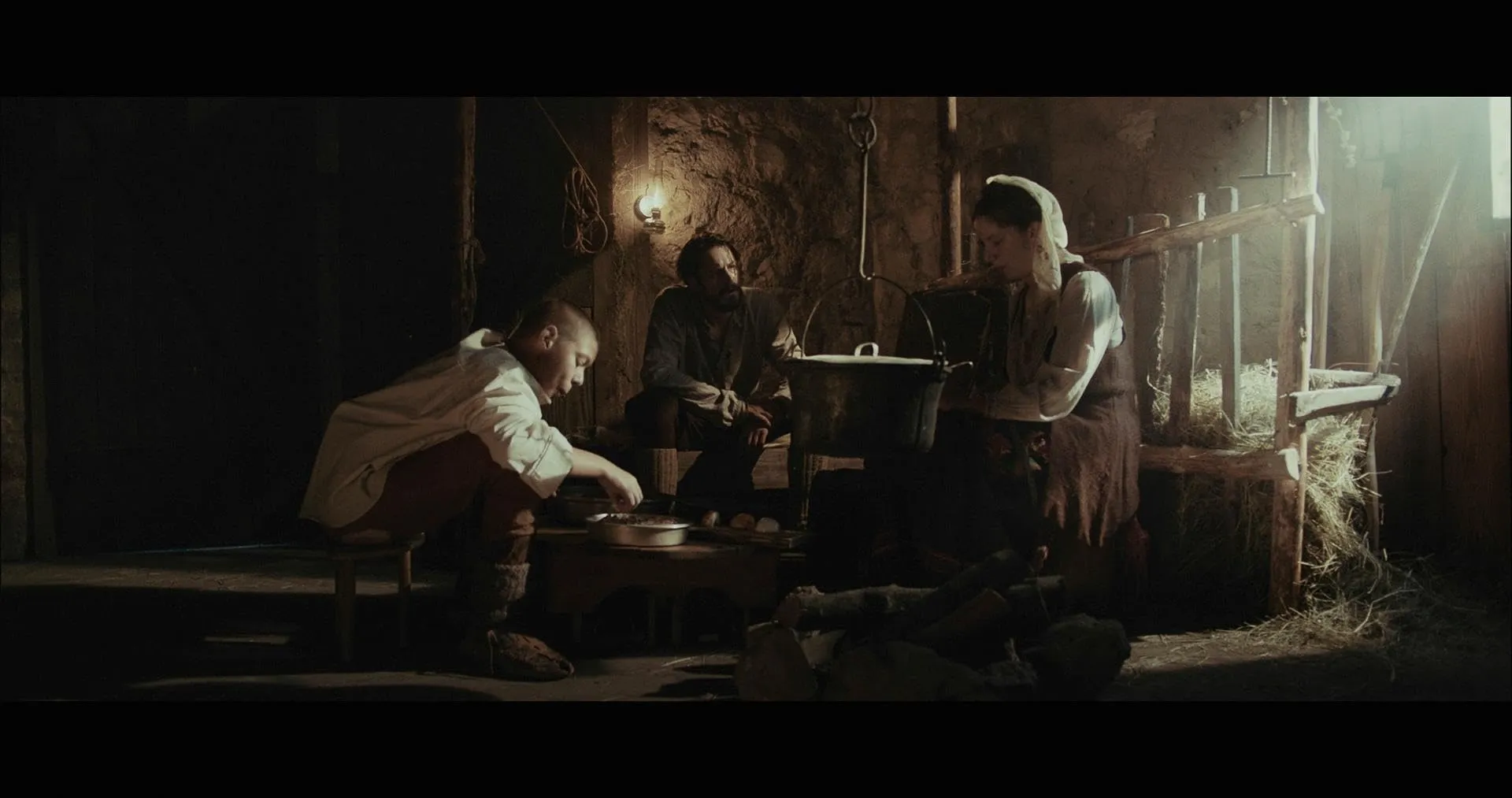
The cast’s strong presence secures the material. Edon Rizvanolli gives Nuredin a commanding physicality and a deep internal struggle. The surrounding ensemble stays keenly responsive: Selman Jusufi lends quiet authority to the wise father, while Aleksandar Radulović shapes Abid into a figure of vicious, brutal menace.
Editing maintains a firm rhythm, keeping interest high and steadily tightening the tension that defines the final 20 minutes, where the film reaches an ending that arranges the threads of virtue, sacrifice and fate into a sombre, poetic resolution.
Sensory Details and Immersion
Tower of Strength benefits from high production values made possible by its multi-national co-production structure. These technical achievements serve the viewer’s sense of immersion. Djordje Stojiljković’s cinematography stays agile, equally assured in wide vistas of rugged landscape and in close-ups that trace the strain in a character’s face. Lighting works with care, accentuating the vulnerability of the world outside the home and the fragile security within its walls.
Dušan Maksimovski’s evocative score remains present throughout, an ethnic-sounding musical terrain that heightens emotion without becoming a distraction. Period detail receives meticulous attention: convincing locations, thoughtful production design and precise costume copies combine to create a contained and believable world. These elements hold the intense drama in place and keep the viewer fully situated in Nuredin’s harsh time and place as his moral struggle unfolds.
The Tower of Strength is a 2024 biographical drama film, a co-production between Montenegro, Serbia, Croatia, and Germany. The film had its world premiere at the FilmFestival Cottbus on November 7, 2024, and has since screened at other international festivals, including the Cairo International Film Festival. Set in 1941 Montenegro during World War II, the story centers on a Muslim Albanian patriarch named Nuredin Doka who is forced to choose between the life of an innocent Christian child he shelters and the safety of his own family, thereby testing the strength of the ancient Albanian code of honor, the Besa. As of December 2025, the film is primarily circulating on the festival circuit and is not yet available for general streaming or theatrical viewing.
Full Credits
Title: The Tower of Strength (Original title: Obraz)
Release date: 7 November 2024 (World Premiere at FilmFestival Cottbus)
Running time: 95 minutes
Director: Nikola Vukčević
Writers: Ana Vujadinović, Melina Pota Koljević, Zuvdija Hodžić (story inspiration)
Producers and Executive Producers: Milorad Radenović, Nevena Savić, Ivica Vidanović, Christoph Thoke
Cast: Edon Rizvanolli, Elez Adžović, Alban Ukaj, Aleksandar Radulović, Vuk Bulajić, Xhejlane Terbunja, Selman Jusufi, Nikola Ristanovski, Branimir Popović
Director of Photography (Cinematographer): Djordje Stojiljković
Editors: Olga Toni, Nikola Vukčević
Composer: Dušan Maksimovski
The Review
Tower of Strength
Tower of Strength is a potent, morally complex drama that transcends its setting. Director Nikola Vukčević masterfully uses an intense ethical standoff, governed by the ancient code of Besa, to illuminate the enduring power of honor and human conviction during a period of utter collapse. The film is a powerful fable about the courage required to protect innocence when fear reigns. Anchored by Edon Rizvanolli’s compelling central performance and high production values, this cinematic work confirms the universal resonance of profound human choices.
PROS
- Profound exploration of morality, honor (Besa), and humanity. Intimate drama, not just a war spectacle.
- Masterful build-up of tension; effective use of an "old-fashioned" genre style.
- High production values, including agile cinematography and evocative ethnic score.
- Edon Rizvanolli's central performance is outstanding and deeply conflicted.
CONS
- Occasional over-written or theatrical dialogue in the screenplay.
- Some minor supporting roles play too broadly or in a "soap opera-like" manner.
- Period costumes sometimes appear slightly too clean for the setting (e.g., hunting scenes).