

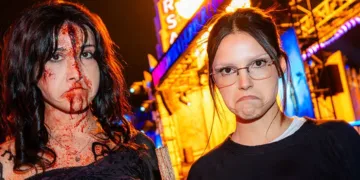










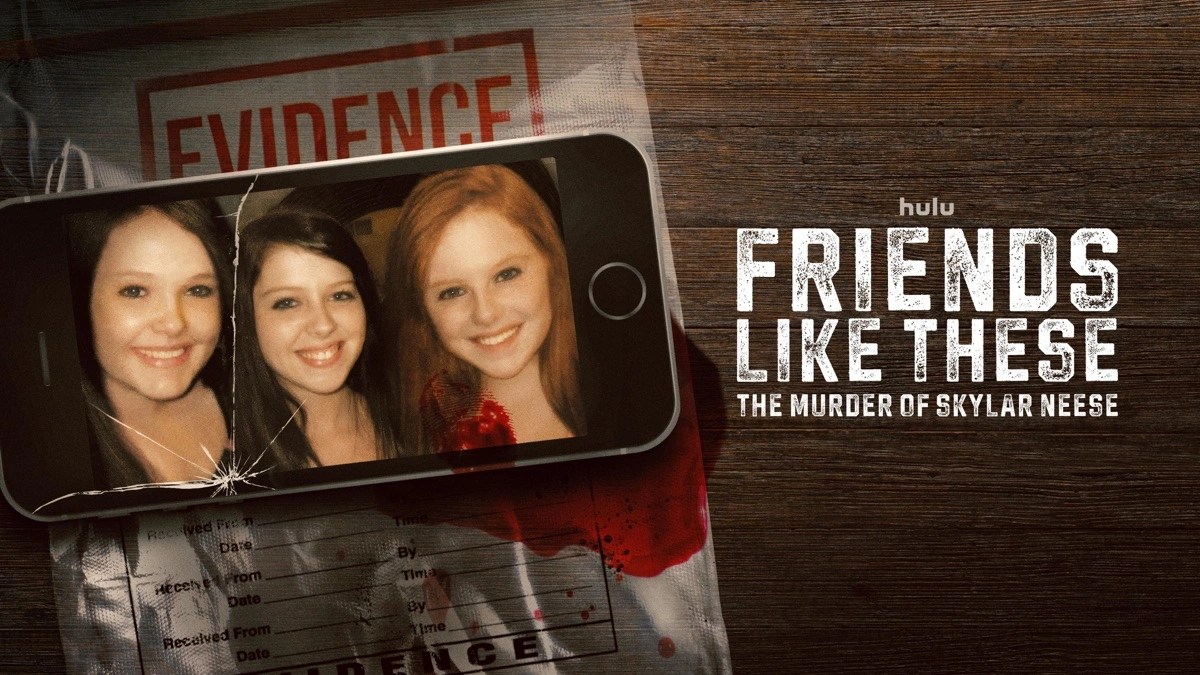

Hulu’s Friends Like These: The Murder of Skylar Neese returns to a 2012 tragedy in West Virginia. The three-part series follows the disappearance of sixteen-year-old Skylar Neese from Star City, where an apparent runaway case curdled into a story of intimate betrayal.
Her best friends, Shelia Eddy and Rachel Shoaf, later stood accused of her death. Director Clair Titley studies the poison inside this high school circle, using archival material and interviews to piece together the months before the truth surfaced. The title gives away the ending from the start, so suspense is already walking uphill.
The series places its attention on the social machinery around the girls, examining how ordinary school routines can conceal lethal intent. It also traces the legal aftermath and the damage left in the lives around Skylar. The aim is a full retelling of a case that still reads like a warning about how fragile teenage bonds can become.
Teenage Tropes and Visual Static
Titley gives the series a visual vocabulary that often jars against the brutality of the case. Tweets and social media posts appear “scribbled” across lockers and school hallways, a device meant to capture how quickly the story took hold in the local community.
The production also uses actors to voice diary entries and letters. Those readings land awkwardly, borrowing the breathy rhythm of a teen drama like Gossip Girl. That choice creates a tonal skid mark. The neon graphics and stylized voices feel imported from a lighter rom-com, then dropped into a murder case with the labels still attached.
The effect cheapens the weight of the material. The documentary also wanders into speculation about the girls’ private lives, suggesting sexuality as a possible motive without firm evidence. Having actors perform private thoughts adds an invasive charge to the presentation.
At times, it edges close to voyeurism. These creative flourishes pull attention away from the tragedy. The style clash rarely helps the story breathe. It favors sheen over sober attention to the facts. The series seems eager to court younger viewers through its graphics, then loses sight of the real life taken from the frame.
The Human Toll and the Digital Footprint
The series gains its strongest emotional force from Dave and Mary Neese. Skylar’s parents speak with a plainness that makes their grief feel immediate. Their presence gives the narrative its anchor. They recall the months of waiting with quiet dignity, and the show is at its best when it lets that steadiness hold the screen.
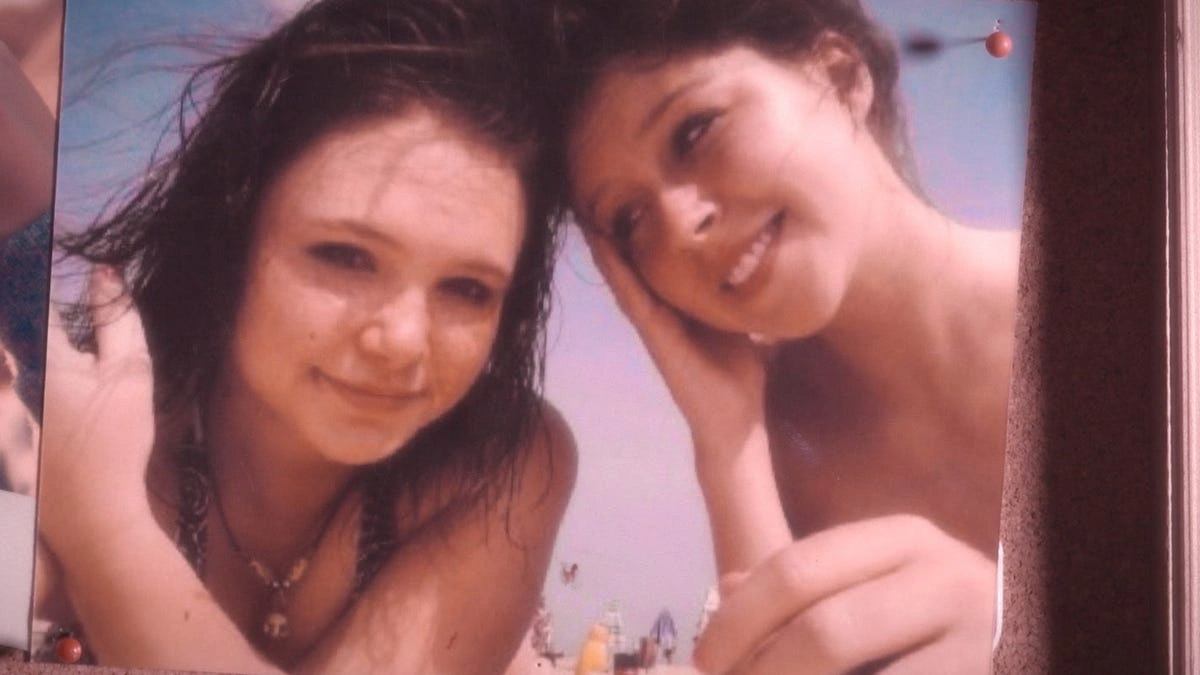
The documentary also collects accounts from people inside the social circle. Fantasia emerges as a key witness, having spent considerable time with one of the killers shortly before the arrest. Her testimony captures the brutal collapse of trust. It also conveys the psychological shock of recognizing that a close friend is capable of murder. Law enforcement supplies the procedural spine. FBI agent Morgan Spurlock and local investigators explain how the case shifted from a runaway search into a homicide investigation.
Social media becomes a digital witness. Twitter posts and texts serve as a running record of the trio’s falling out, preserving the pettiness and rising hostility that came before the crime. The trail is chilling because it places casual teenage communication beside something monstrous. These messages offer a view into the perpetrators’ minds during the lead-up to Skylar’s disappearance. The personal accounts do the work the glossy graphics cannot. They restore scale. A headline becomes a family shattered in public.
Structural Stumbles and Forgotten Legacies
The series’ three-part format raises a basic question: did this story need that much room? A single feature-length documentary might have carried sharper tension. Across three hours, repetition creeps in. Viewers know the killers from the opening credits, so a long march toward a “reveal” feels dramatically thin.
The pacing sags under filler interviews, with several casual high school acquaintances adding little substance. Their presence feels like episode padding, the true-crime equivalent of stretching a group project to meet the page count.
The production also lacks actual police interrogation video. It leans on a polygraph examiner to recount key moments, which weakens the force of those scenes. Hearing about the suspects through a third party cannot match the impact of seeing them directly.
The largest missed opportunity involves Skylar’s legacy. Dave and Mary Neese worked to pass “Skylar’s Law” in West Virginia, legislation that changed how Amber Alerts function in the state. The series pushes that achievement into a brief endnote.
A story shaped by tragedy deserves room for the change that followed it. Here, the documentary stays locked on the crime’s familiar beats and gives too little attention to the legislative victory born from loss. Is a story complete if it rushes past the path that helped protect others?
The three-part true-crime docuseries “Friends Like These: The Murder of Skylar Neese” premiered on March 6, 2026. The series is currently available to stream on Hulu in the United States and on Disney+ for international viewers. It reconstructs the tragic 2012 disappearance of a West Virginia teenager using an extensive archive of social media data, personal diaries, and intimate interviews with those closest to the case. The production explores the harrowing transition from a missing person investigation to a confession that revealed a shocking betrayal within a tight-knit circle of friends.
Where to Watch Friends Like These: The Murder Of Skylar Neese Online

Full Credits
Title: Friends Like These: The Murder of Skylar Neese
Distributor: Hulu, Disney+
Release date: March 6, 2026
Rating: TV-MA
Running time: 51 minutes (Episode 1), 41 minutes (Episode 2), 57 minutes (Episode 3)
Director: Clair Titley
Writers: Clair Titley
Producers and Executive Producers: Josie Besbrode, Melanie Archer, Rebecca Burrell, Julia Nottingham, Lily Kaplan
Cast: Dave Neese, Mary Neese, Dr. Rob Ambrosini, Eric Finch, Fantasia, Shelia Eddy, Rachel Shoaf
Director of Photography (Cinematographer): Not Specified
Editors: Kevin Austin, Jane Hodge
Composer: Adiescar Chase
The Review
Friends Like These: The Murder Of Skylar Neese
The docuseries struggles to balance its serious subject with a misguided aesthetic. It offers deep access to the parents and peers. Still, the stylized narration and neon graphics create a tonal clash. The three-episode length feels stretched given the lack of interrogation footage. It misses an opportunity to highlight the impact of Skylar’s Law. This is a thorough account for newcomers but lacks fresh insight for those familiar with the case.
PROS
- Heartfelt and grounding interviews with Dave and Mary Neese.
- Insightful testimony from inner-circle friends like Fantasia.
- Effective use of social media archives to track the trio's fallout.
CONS
- Jarring "teen drama" visual style and narration.
- Repetitive pacing across three episodes.
- Minimal focus on the passage of "Skylar’s Law."
- Speculative segments regarding the girls' private lives.