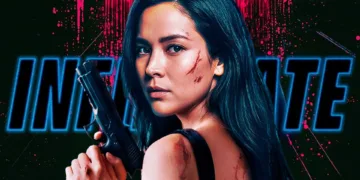













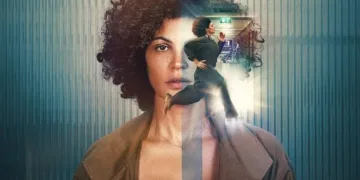









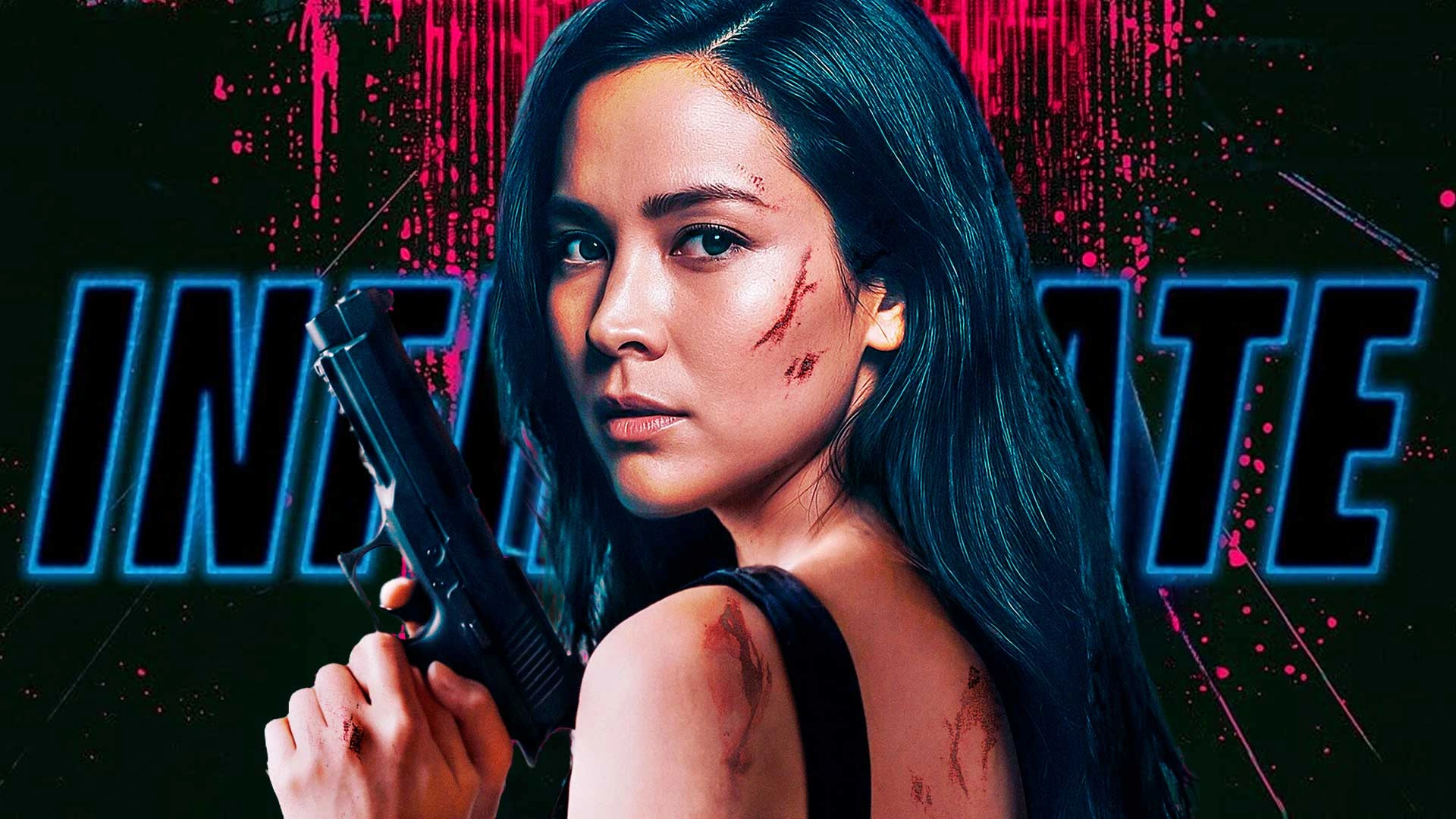

The quiet inside a home can conceal the blade edge of a hidden life. In Infiltrate, the wall between a violent profession and domestic routine breaks during an ordinary kitchen argument. Lily Chen, a field operative working for a shadowy government agency, exists in the tense space between lethal training and her marriage to John. Tim Rozon plays a husband searching for stability his wife struggles to give him.
The story pivots when John vanishes after taking a walk to clear his head. The silence of the home gives way to the voice of a digital puppet master claiming to have John captive. That unseen force pushes Lily into a chain of high-level assassinations inside Marcel LaFleur’s criminal organization.
The film skips a slow ascent and throws the viewer straight into Lily’s panic. The setup creates a collision between personal loyalty and professional violence. The story moves through urban spaces at a frantic clip, building a world where trust becomes a liability. Lily has to test whether her skills can recover a life already cracking before the kidnapping began.
Tactile Combat and Environmental Resourcefulness
The film’s physical language has a blunt clarity shaped by the stunt expertise of James and Chris Mark. Their sequences carry the texture of real struggle, with bodies colliding in ways that feel painful and specific. The action opens with an undercover operation that erupts into visceral savagery, setting a fierce standard for the violence that follows.
Lily Chen fights with the practical urgency of a survivor who understands her limits. Her combat style has the logic of a well-designed game encounter: she reads the room, adapts to pressure, and turns the environment into a weapon.
One sequence captures that design especially well. Lily strips off her high heels and uses the sharp points as stabbing weapons against a group of Triad enforcers. The moment works because it treats improvisation as character expression.
She survives through training, awareness, and a willingness to use whatever the space gives her. The choreography stays readable, avoiding the frantic quick cuts often used to mask weak training in modern action cinema. In the nightclub and furniture warehouse scenes, the performers’ martial arts skills remain visible, giving the fights rhythm, weight, and consequence.
The encounter with Romeo and Juliette, a pair of sadistic bodyguards, brings a sharper emotional charge. Their pleasure in cruelty makes their battle with Lily especially nasty, turning the scene into a clash of survival instincts and predatory performance.
The final confrontation with Marcel LaFleur delivers a grueling exchange that ends with a heavy impact against a table. The showdown feels earned because the film has already established Lily’s body as a resource under constant strain. By the time she reaches LaFleur, every blow carries the memory of what she has endured.
Theatrical Villains and Grounded Leads
Orphée Ladouceur-Nguyen makes a strong impression in her first major leading role, carrying the film through a performance built on physical commitment and emotional pressure. She plays Lily as someone whose moral compass is tested with every life she is forced to take. That tension gives the violence a human anchor. The viewer sees the cost of each assignment through the way she moves, reacts, and keeps pushing forward.
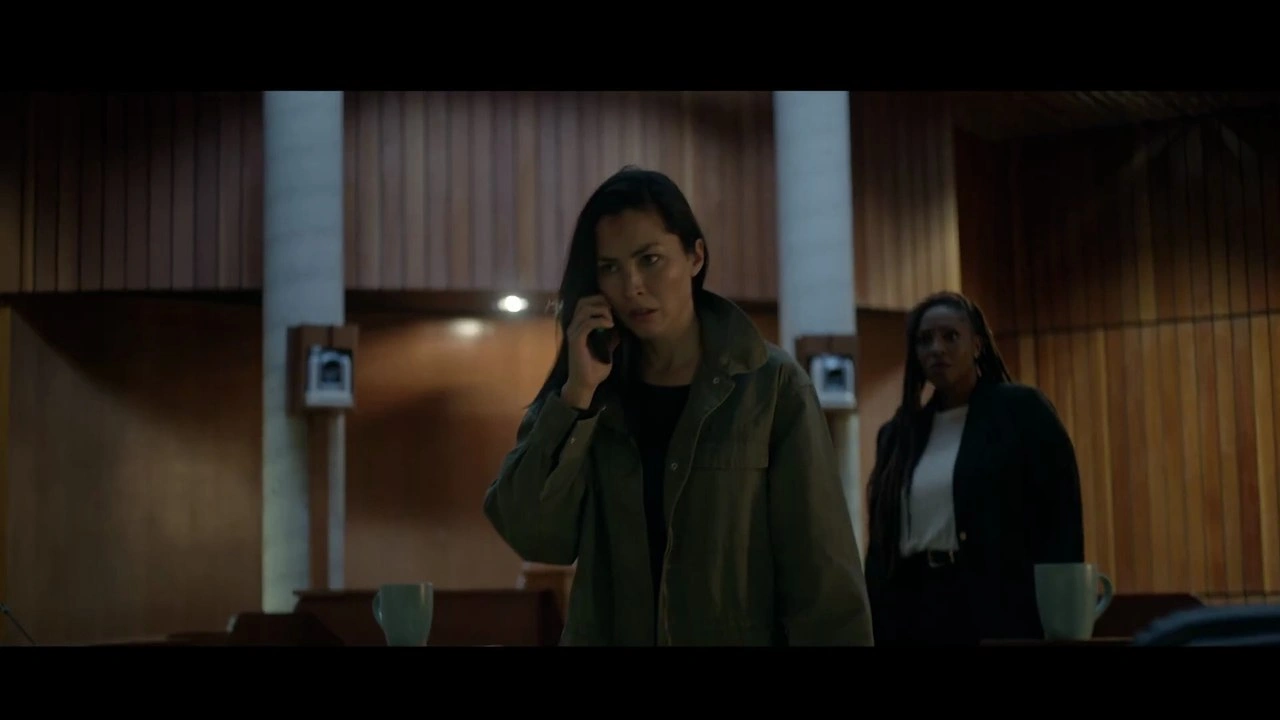
That grounded presence plays well against Alain Moussi’s Marcel LaFleur. Moussi leans into the villainous role with a dark beard and bleached blond hair, creating a striking visual profile before the character even speaks. LaFleur’s use of human blood as paint gives him a vampiric quality that separates him from a standard crime boss. His movement between English and French adds charisma and menace, making him feel theatrical without draining the danger from the scenes.
Tim Rozon gives John a quieter kind of weight. He plays the husband as a man exhausted by life in the shadow of secrets, making him the emotional engine behind Lily’s violent mission. Finn McCager Higgins and Mitra Suri bring disturbing energy to Romeo and Juliette.
Their bond with violence makes their scenes uncomfortable in a way that serves the film’s darker pulse. Jonathan Goad’s voice functions as the plot’s invisible hand, turning instructions into surveillance and manipulation. Each performance builds a world that feels unstable and threatening. The cast embraces the physical demands of the script, helping the stakes land even when the story follows familiar thriller patterns.
Institutional Betrayal and Technical Execution
This Canadian production reflects its Quebec roots through French dialogue that feels organic to the setting. The bilingual texture gives the urban environment a clear identity and helps the world feel lived-in. The script uses flashbacks to explain Lily’s history, including a traumatic kidnapping that clarifies her cold efficiency in the present. These memories expose the psychological scars driving her actions, giving her violence a personal history.
The pacing stays steady, moving from one target to the next without lingering on exposition that would slow the momentum. The story uses formulaic pieces, yet the execution keeps the viewer engaged through clean action design and a firm sense of escalation.
The lighting in the action scenes, especially the later fights, lets the audience follow each movement clearly. That visual clarity matters because the film treats combat as storytelling. Each exchange shows how Lily adapts, absorbs damage, and keeps control of a collapsing situation.
One technical choice reshapes the thriller framework: the reveal of the force behind the phone calls. The discovery that an AI system inside the agency is manipulating Lily brings modern anxiety into the familiar hostage-driven premise. The twist redirects the conflict from criminal rivalry toward institutional betrayal.
James Mark uses a handheld camera style to create urgency during chase sequences, then returns to steadier shots for the martial arts choreography. That shift keeps the energy high while preserving the precision of the fights. The film closes with a hint of a larger world still waiting beyond this story, leaving room for Lily’s path to continue. Its strongest charge comes from the meeting point between technology, agency, and individual will.
The Canadian action thriller Infiltrate was released on April 10, 2026, skipping a traditional theatrical run for a direct-to-digital launch. As of today, April 30, 2026, the film is readily available for streaming, rental, or purchase on major Video on Demand (VOD) platforms such as Prime Video and Apple TV. Directed by stunt veteran James Mark, the film centers on a seasoned operative who must navigate a series of brutal forced assignments to rescue her husband, offering a gritty showcase for its lead performers and specialized stunt choreography.
Where to Watch Infiltrate (2026) Online







Full Credits
Title: Infiltrate
Distributor: Quiver Distribution
Release date: April 10, 2026
Rating: TV-14
Running time: 1 hour 33 minutes
Director: James Mark
Writers: James Mark
Producers and Executive Producers: Tony Del Rio, Bruno Marino, Brent Jones, Tim Rozon
Cast: Orphée Ladouceur-Nguyen, Alain Moussi, Lisa Berry, Jonathan Goad, Tim Rozon, Jeff Yung, Paul Braunstein, Jason Cavalier, Finn McCager, Mitra Suri
Director of Photography (Cinematographer): Rafal Strupinski
Editors: Andrew Cromey
Composer: Patrick O’Mara
The Review
Infiltrate
Infiltrate functions as a display of high-level stunt work but struggles with a predictable script. The physical commitment of the leads makes the combat sequences stand out. The narrative beats and the technological twist feel thin. It remains a viable choice for fans of grounded martial arts who prefer action over plot depth.
PROS
- Visible stunt choreography
- Inventive environmental weapons
- Strong physical performances
CONS
- Formulaic plot tropes
- Underdeveloped characters
- Weak technological twist