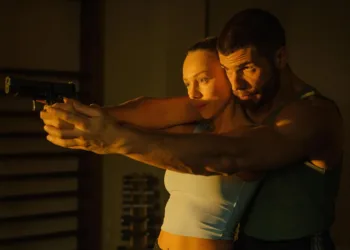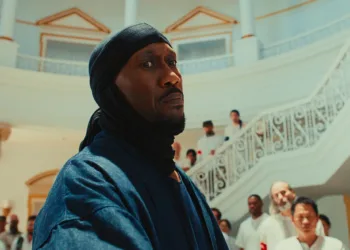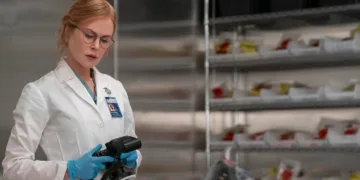








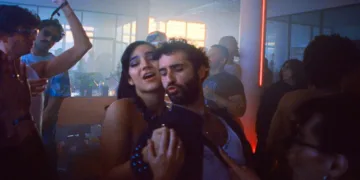


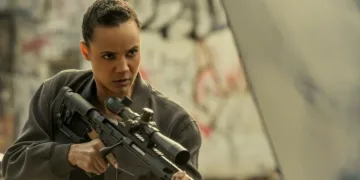
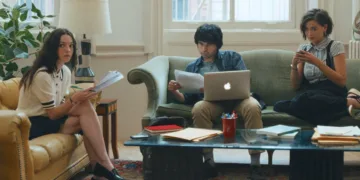
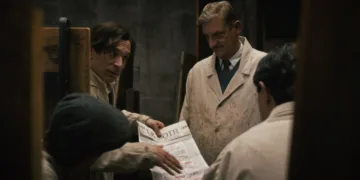











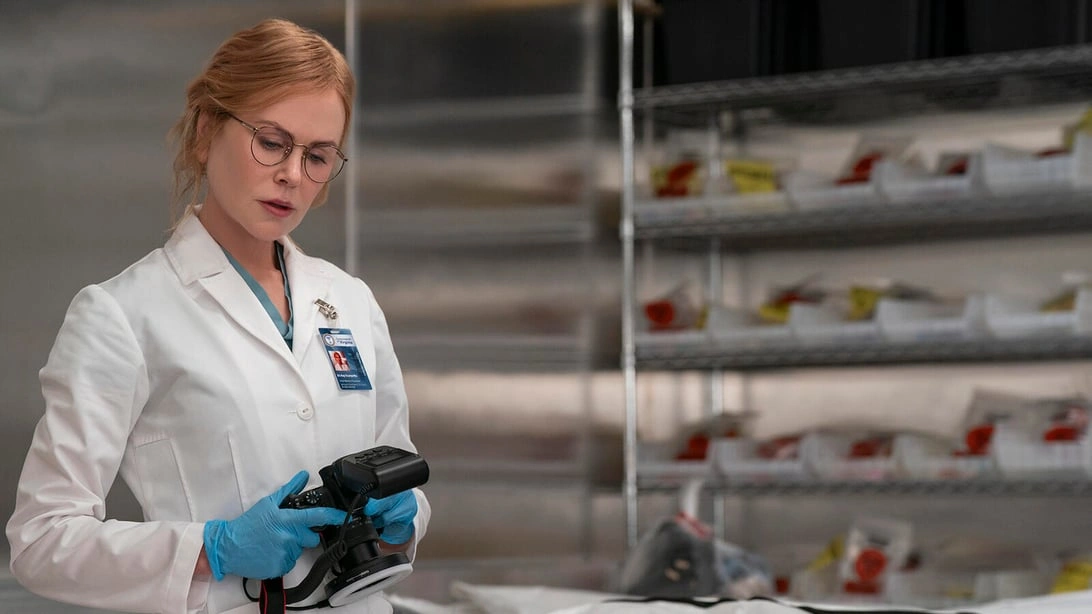

The long-awaited arrival of Kay Scarpetta on Prime Video arrives with decades of anticipation attached to it, along with a cast led by three Oscar winners. After years of existing in the shadow of figures she helped inspire, the forensic pathologist steps into a major screen adaptation with Nicole Kidman in the lead role. The series returns Dr. Scarpetta to Richmond, Virginia, where she takes back her position as Chief Medical Examiner.
That homecoming comes with immediate strain inside her personal life. She lives on a large family estate with her FBI husband, her volatile sister, and her niece. The arrangement generates constant conflict, and that tension sits in close proximity to the darkness of her profession.
A new victim discovered near train tracks pulls her back toward a case from twenty-eight years earlier. The story links a serial killer investigation from the 1990s to a present-day chain of crimes. Graphic forensic detail runs through the series, along with the psychic toll of family history. Across two timelines, the production traces the making of a professional legend and the endurance of a woman pursued by her own past.
Chronological Architecture and Narrative Logic
The series builds itself around a dual-timeline design that asks viewers to follow two investigations set decades apart. In 1998, a younger Kay Scarpetta, played by Rosy McEwen, struggles to secure her place in a city under the threat of a serial killer. That thread centers on the pursuit of Matthew Petersen and the pressure of a moment that shapes her career. In 2026, an older and tougher Kay returns from Boston to her former office.
She arrives after an interim chief leaves the department charged with resentment. The show jumps between these periods again and again. That rhythm can feel tiring. Its editing works almost like a pulse, moving from one discovery in the past to one revelation in the present. Material from the 1990s resurfaces in the modern investigation, giving the story a tight causal thread between an old killer’s legacy and new crimes.
The adaptation pulls material from the early novel Postmortem and the much later Autopsy. That decision lets the writers present Kay as a figure at the start of her rise and as an established force in the present day. The plot is dense across eight episodes, and that density points to a streaming-era habit of making viewers absorb information while living through distraction. The show often leans on blunt exposition to keep every fact legible. Characters announce what they are doing or restate information so names and dates remain clear inside the complicated structure.
That method says something revealing about television in the streaming age. Series now operate in competition with fractured attention spans, and this one seems fully aware of that condition. The pacing stays quick. Viewers have to track victims, suspects, and investigators across two eras. The writing keeps pressing one central question: was the justice secured decades earlier ever real at all? By framing the past as something that can be reopened and examined, the narrative turns history into a body under forensic scrutiny.
Performance Dynamics and Performance Style
Nicole Kidman gives Dr. Kay Scarpetta a tightly controlled presence. Her work is quiet and highly measured. A slight expression or a fixed stare suggests a mind sorting data at all times. That reserve establishes the emotional temperature of the series.
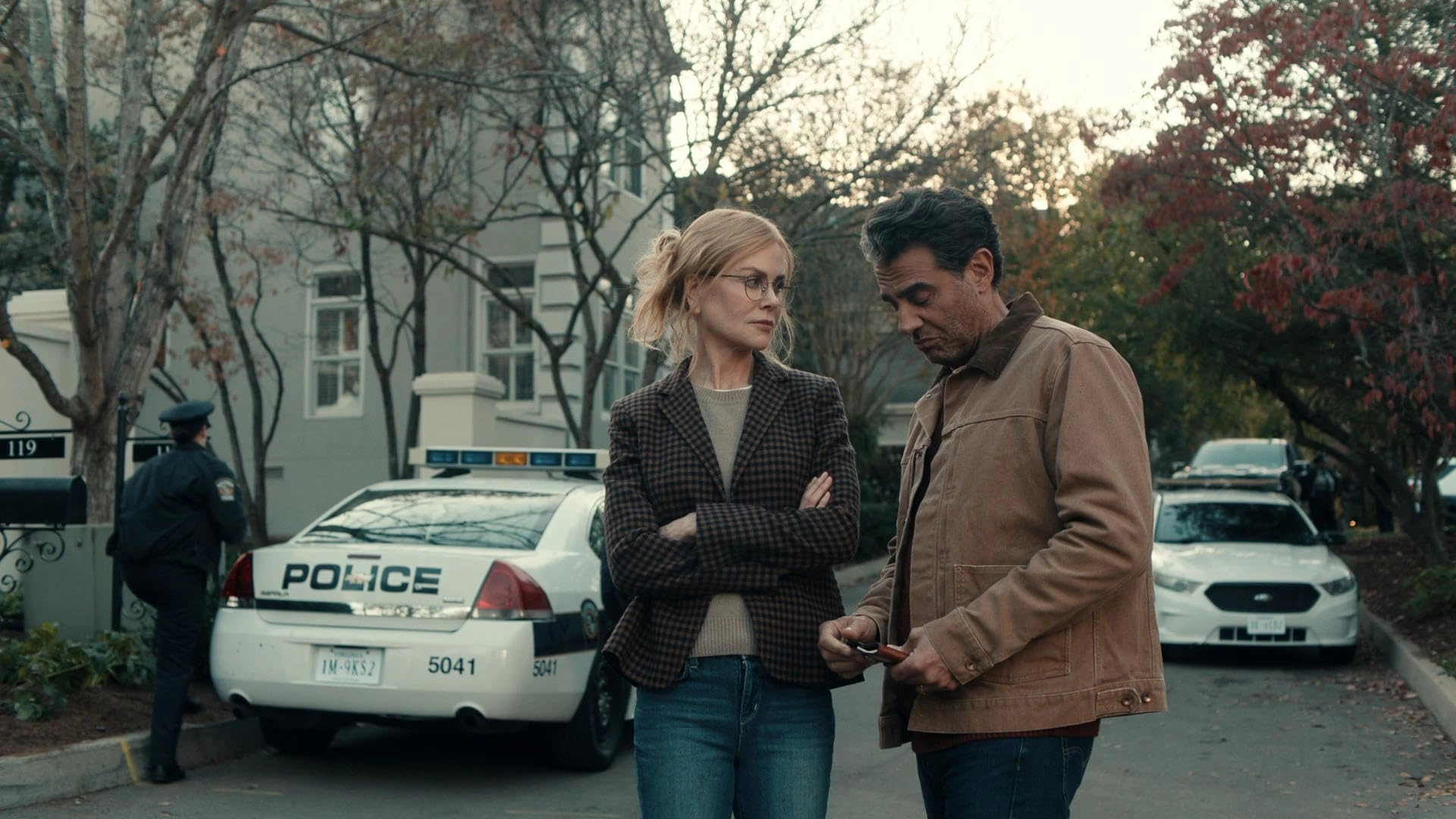
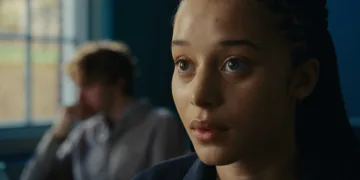
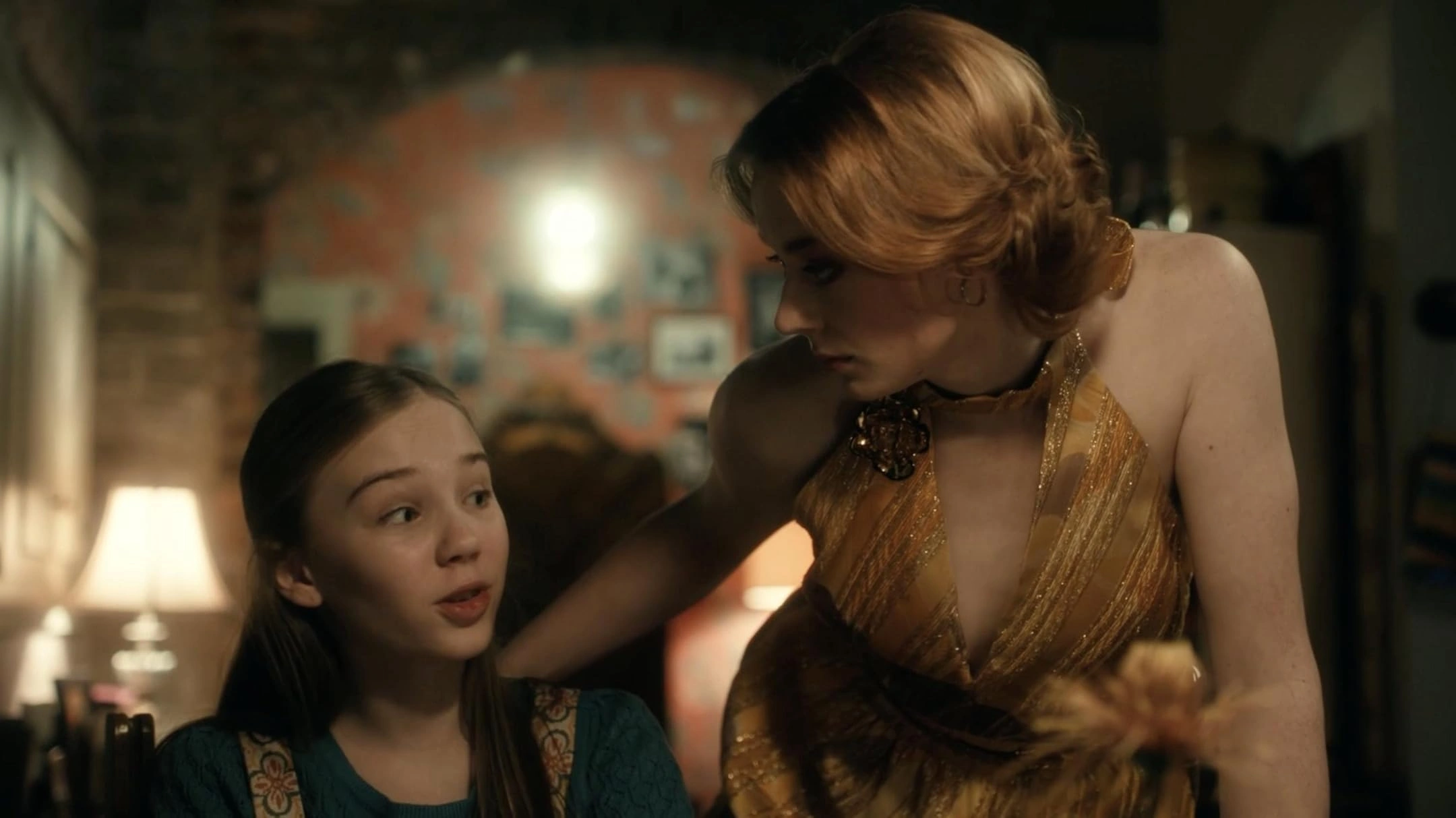
Rosy McEwen, playing the younger Kay, carries over Kidman’s mannerisms and that same habit of looking into the middle distance. The connection between the two performances gives the character a believable continuity. You can see the route from an open, ambitious professional to a seasoned expert marked by damage and experience.
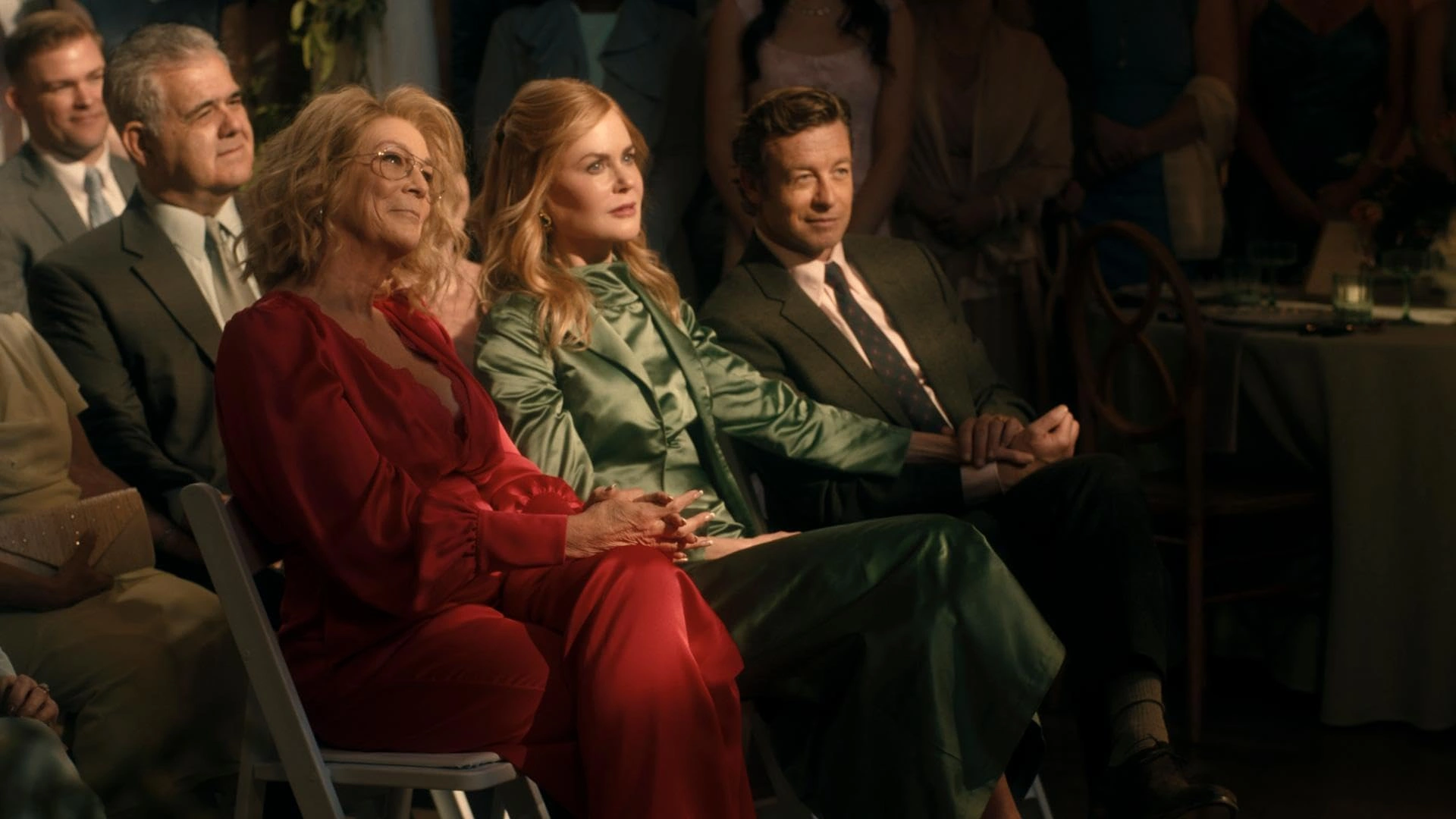
Jamie Lee Curtis enters the series with a completely different register as Kay’s sister Dorothy. She fills scenes with force, noise, and raw feeling. The effect is immediate: every encounter between the sisters feels charged. Their relationship unfolds through repeated verbal assaults. Dorothy clings to old resentments with a severity that throws Kay’s clinical restraint into sharper relief.
The male characters offer several models of masculinity across the two timelines. Simon Baker plays Benton Wesley as a husband who appears shaken yet steady in his support. Bobby Cannavale gives the older Pete Marino an easy charm and a line delivery that brings flashes of humor into material soaked in death. Hunter Parrish and Jake Cannavale, portraying younger versions of those men, reveal the earlier weaknesses that shaped them.
The family mansion serves as a permanent site of conflict. Five adults share a home with very little room for privacy. The result is a cutting, hostile atmosphere. Each person carries a distinct trauma, and those injuries surface during arguments as weapons. The house becomes a sealed chamber for years of resentment. That domestic arrangement has the pitch of a soap opera, and its emotional messiness rubs against the colder procedures inside the medical examiner’s office.
The series presents family management as another difficult investigation. The cast commits hard to that friction. At times, the repeated shouting becomes exhausting. That choice reflects a current prestige-TV pattern in which severe family damage signals seriousness and depth. The irony is hard to miss. Television keeps treating emotional collapse as a badge of prestige, then wonders why audiences look tired by episode six.
The Giallo Aesthetic and Visual Brutality
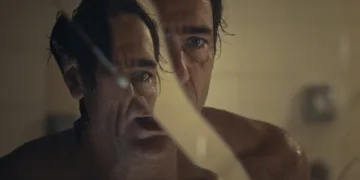
The series shows death in direct and unsparing ways. It includes repeated images of naked female corpses marked by violence and trauma. Those images appear often. The show stays close to autopsy detail and to the physical state of decomposing bodies.
 This emphasis underlines the harsh reality of Kay’s work. It also brings in 3D printing technology used to create synthetic human organs, adding a contemporary layer to the forensic material. Director David Gordon Green draws on horror experience in the handling of these scenes. He approaches gore with clinical curiosity. His shot choices often feel off-angle or unusual, giving the series a strong cinematic identity.
Visually, the show carries an American giallo quality. The atmosphere is lurid and the violence is stylized. That choice creates unease, and it opens a larger cultural question about how often the entertainment industry relies on women’s bodies to generate suspense. The production design deepens that mood.
The family mansion is crowded with old furniture and thick wallpaper, and those details create a heavy sense of accumulated history. The medical examiner’s office is cold, spare, and sterile. Together, these spaces map the divided structure of Kay’s life. One space is emotional and unruly. The other is orderly and clinical.
The series also uses violent spectacle to propel its story. In the final scene, a familiar sporting object becomes a deadly weapon. That sensational streak is central to the production’s identity. It fits neatly into a streaming pattern that favors polished crime thrillers built from violence and visual flair.
The surface is sleek, and that polish gives the show a distinct texture. It helps position the series as an event title for the platform. The graphic imagery is meant to pin the narrative to physical reality and to force viewers into contact with the ugliness of death. That choice changes the feel of the procedural form. The clean, detached investigations familiar from older television give way here to the bodily and mental wreckage of crime scenes.
Technical Evolution and Generational Echoes
One of the series’ most striking contemporary elements is its use of an AI video companion. Lucy speaks with a digital version of her late wife Janet. The subplot presents a modern form of grief shaped by technology. It imagines a world in which digital tools stand in for the presence of the dead. That virtual afterlife functions as comfort, and it also signals behavior that feels unhealthy.
Through that device, the show reflects present-day anxieties about loneliness and technological substitution. It also examines misogyny inside law enforcement. The scenes set in the 1990s depict a workplace in which Kay meets routine disrespect from the men around her. The younger Pete Marino is presented as someone shaped by sexist views. Those attitudes form part of the toxic environment Kay had to endure.
Trauma moves through the series with the force of a family inheritance. Each character carries a defining wound from the past and uses that pain to explain present behavior. Flashbacks keep returning to those injuries, reinforcing the sense that none of them have healed.
The forensic work becomes the show’s clearest metaphor. Kay opens bodies to locate truth, and she must perform a similar excavation on her own history to make sense of current events. That theme gives the series a strong link to present cultural conversations about memory, institutional harm, and the long afterlife of violence.
The idea of monstrosity extends through the story in several directions. The killers are part of that picture, yet the series also points toward harm produced inside supposedly legitimate systems. Villainy exists across multiple sites here, including inside authority itself. That framing speaks to a period in television and public discourse shaped by suspicion toward institutions and renewed scrutiny of who gets protected by them. The crimes leave their mark on every relationship in the show.
The characters live as survivors of a specific violence, and that shared damage creates intimacy, hostility, and mutual recognition. The final cliffhanger keeps the past active and unresolved, setting the stage for a second season. In that sense, Scarpetta uses crime storytelling to examine trauma as an ongoing social condition. Secrets remain buried under history, power, and family memory, and the series keeps insisting that the dead never fully leave the room.
Scarpetta premiered on Prime Video on March 11, 2026. The series is based on the best-selling novels by Patricia Cornwell and follows forensic pathologist Dr. Kay Scarpetta as she returns to Virginia to reclaim her position as Chief Medical Examiner. While investigating a grisly modern murder, she discovers disturbing connections to a case that defined her career nearly three decades earlier. All eight episodes of the first season are currently available for streaming exclusively on Amazon Prime Video.
Where to Watch Scarpetta Online



Full Credits
Title: Scarpetta
Distributor: Prime Video, Amazon MGM Studios
Release date: March 11, 2026
Rating: TV-MA
Running time: 50 minutes
Director: David Gordon Green, Charlotte Brändström, Ellen Kuras
Writers: Liz Sarnoff, Iturri Sosa, Ahmadu Garba, Matthew Zucker, Maisha Closson, Alison Balian
Producers and Executive Producers: Nicole Kidman, Jamie Lee Curtis, Liz Sarnoff, Patricia Cornwell, Jason Blum, Jeremy Gold, Chris Dickie, Chris McCumber, Per Saari, Amy Sayres, David Gordon Green
Cast: Nicole Kidman, Jamie Lee Curtis, Bobby Cannavale, Simon Baker, Ariana DeBose, Rosy McEwen, Jacob Lumet Cannavale, Hunter Parrish, Tiya Sircar, Janet Montgomery, Sosie Bacon, Stephanie Faracy, Georgia King, Mike Vogel, Anson Mount, Graham Phillips, Anna Diop, Amanda Righetti
Director of Photography (Cinematographer): Michael Simmonds, John Brawley, Eliot Rockett
Editors: Colin Patton, JoAnne Yarrow, Cecily Rhett, Andrew Wesman
Composer: Jeff Russo, Perrine Virgile
The Review
Scarpetta
Scarpetta succeeds through cold, clinical precision and the formidable presence of Nicole Kidman. The narrative braiding of past and present creates a sense of inevitable trauma. While the family drama occasionally veers into loud soap opera territory, the technical realism of the forensics provides a grounding force. It reflects a modern obsession with the physical body and the ghosts of the nineties. This version of Dr. Kay Scarpetta is worth the long wait.
PROS
- Nicole Kidman and Rosy McEwen deliver a seamless, shared character history.
- The visual style captures a grisly, scientific realism.
- The depiction of the nineties highlights the era’s institutional obstacles.
- The AI subplot involving Lucy provides a look at modern digital grief.
CONS
- The domestic scenes sometimes lack the subtlety of the forensic work.
- The graphic nature of the bodies feels excessive at times.
- The dialogue leans heavily on loud explanations and repetitive facts.
- The density of subplots can make the central mystery feel secondary.