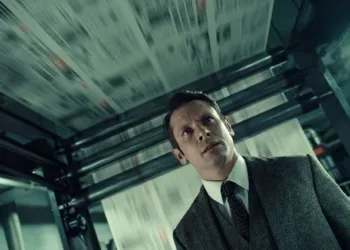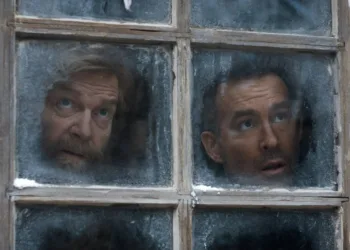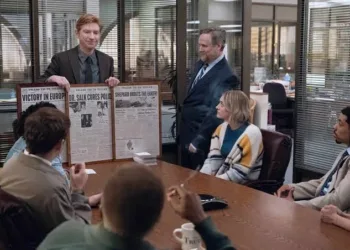

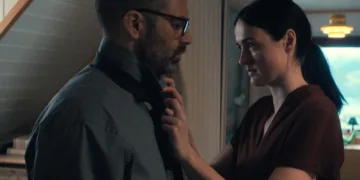
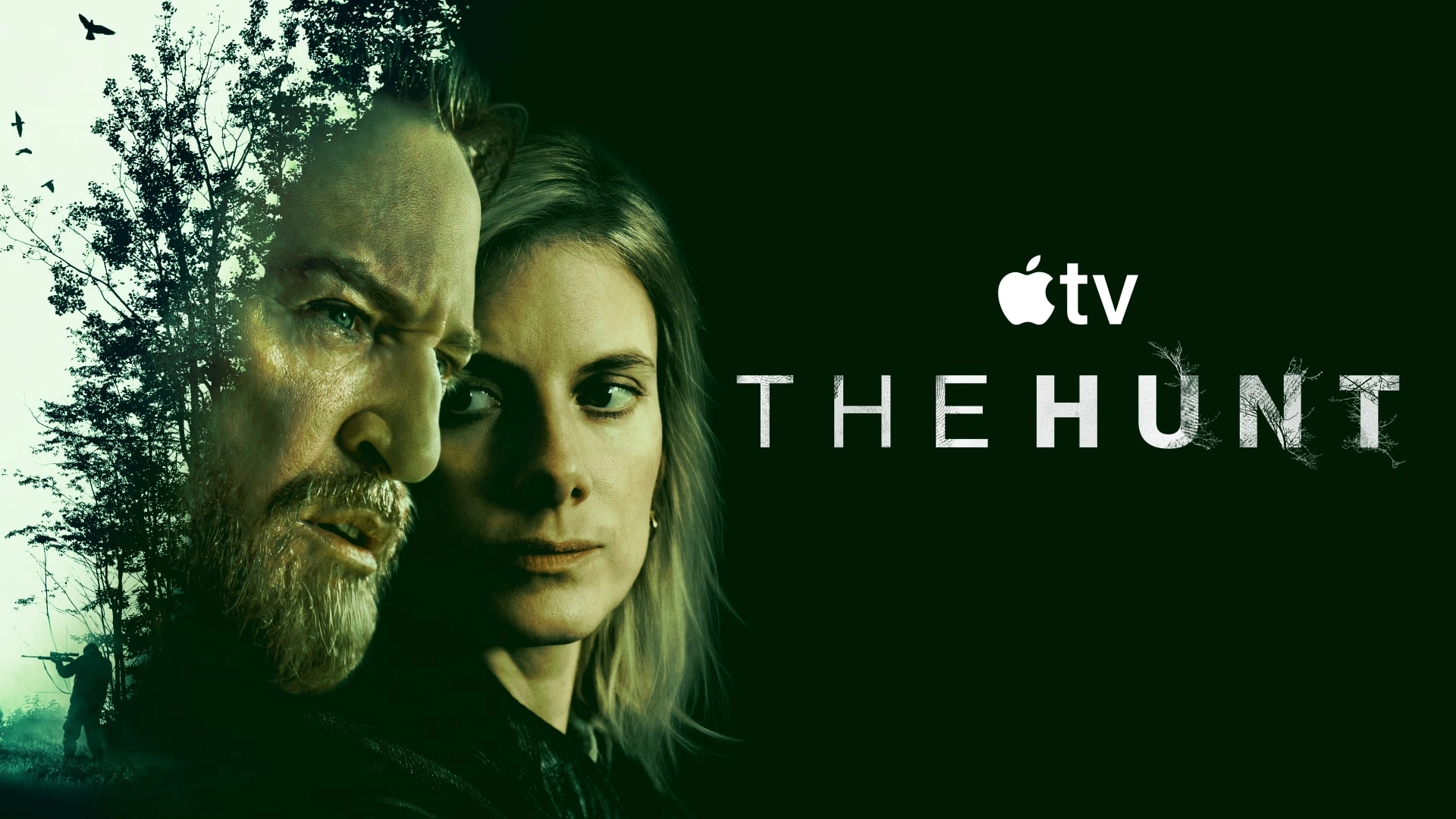
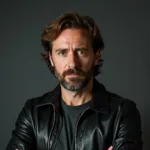
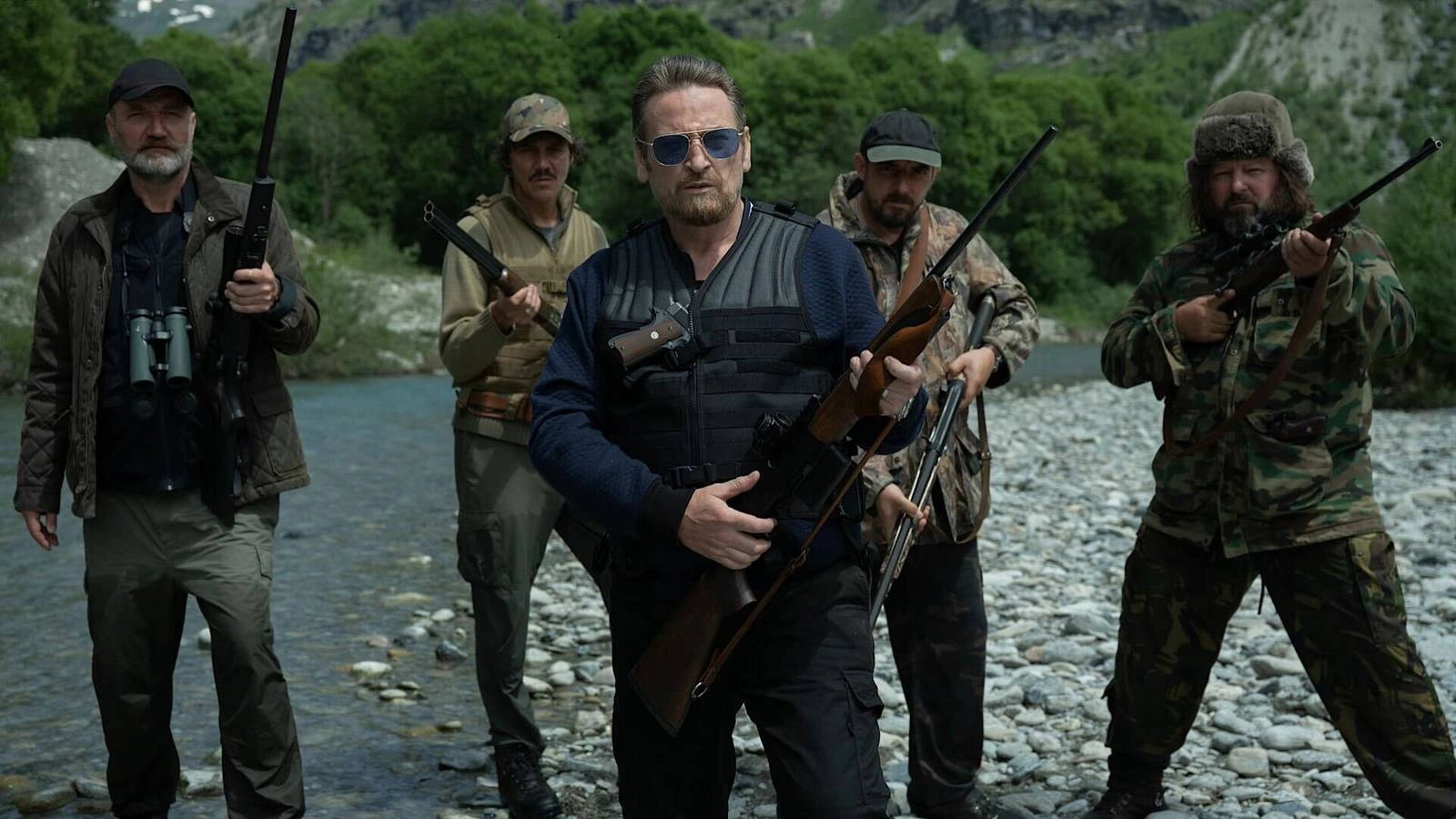
The Hunt opens with calm that feels almost suspicious. Four friends head into the French countryside for what should be a routine hunting trip. Franck, Xavier, Simon, and Gilles expect a weekend built around leisure, distance, and the quiet rituals of the woods.
That illusion breaks when an unseen attacker ambushes them. Under fire, they shoot back in panic. One impulsive act leaves someone dead, and the men make the decision that shapes the entire series: they run. Their silence becomes the first step in their psychological collapse.
From there, the series moves from rural drama into a tense study of paranoia. The men are tracked by a precise and patient force, with threats appearing through anonymous tokens left at their homes. The invasion of domestic space pushes them into a moral reckoning inside a small-town system quick to judge and slow to forgive.
The story keeps its attention fixed on the group’s internal breakdown as their ordinary lives fall apart. It builds a world where hunter and prey can trade places with terrifying ease. Across six episodes, The Hunt studies the price of secrets in a community where each neighbor can look like the next threat.
The Architecture of Paranoia and Narrative Pacing
The story builds dread through the gradual collapse of personal safety. After the opening violence, the danger moves from the forest into the mind. The series turns ordinary spaces into traps. A mailbox filled with used shell casings or a severed animal head left on a doorstep makes home feel exposed. These scenes work because they imply an enemy who understands the men’s routines with intimate precision.
That pressure reveals every crack inside the group. Their shared choice to hide the crime hangs over them with increasing weight. Each man filters guilt through his own fear. Some grow reckless. Others retreat inward. The friction among them starts to feel as dangerous as the people hunting them.
The pacing mirrors that deterioration. The forceful opening gives way to a patient middle stretch, one that stays with the sensation of being watched. Some viewers may find the slow pace demanding, yet it creates a thick sense of gloom that feels difficult to escape.
A parallel mystery about a missing girl named Anya gives the series a second narrative line. At first, that thread appears separate from the shooting in the woods. The story slowly draws the pieces together. This connection deepens the town’s social world and suggests that the violence in the forest belongs to a larger pattern of decay. The careful release of information keeps the audience close to Franck’s point of view. Viewers assemble the puzzle with him, clue by clue. The method rewards patience once the links between the separate plot lines come into focus.
Character Portraits and Performances
Benoît Magimel anchors the production as Franck, the group’s unofficial leader. Magimel plays him as a man whose survival instincts were clearly formed long before this crisis. Franck is marked by tactical habits and hidden resources, including burner phones and concealed weapons.
Those details imply a troubled past, giving his leadership a mix of necessity and suspicion. Beside him, Mélanie Laurent gives Krystel a grounded presence. As a doctor at a youth shelter, she brings a steadiness that throws the men’s panicked decisions into sharper relief. Her attempts to help a runaway teen become the series’ emotional anchor.
The supporting cast gives the hunting group distinct, bleakly drawn shapes. Damien Bonnard plays Xavier with frantic desperation. He lives on the margins, stealing packages and dealing with local criminals, which makes him the most unstable link among the four men. Cédric Appietto plays Simon, the man carrying the burden of the fatal shot. His home life with an ailing father sharpens the threat of possible imprisonment. Manuel Guillot completes the group as Gilles, whose anxiety and drinking make him the clearest target for the tormentors closing in around them.
The story also reaches into the next generation. Estelle, Franck’s daughter, becomes an accidental participant in the danger surrounding her father. Her relationship with a local biker connects Franck’s family to the town’s more predatory elements. This subplot uses children’s vulnerability to raise the stakes and shows how the parents’ secrets contaminate the lives they are trying to protect. The performances stay steady even when the writing leans on familiar notes of teenage rebellion.
Atmospheric Setting and Cultural Adaptation
The series draws much of its force from the oppressive beauty of the French countryside. The cinematography presents the woods as a gray, haunting expanse where ancient trees keep blocking the line of sight. The setting creates isolation without needing to announce it. The small-town streets feel equally threatening, shaped by shadows and narrow visual angles. The visual style suggests a community where everyone watches and safety has become a fragile idea.
The show also attempts a cultural translation. It takes the conventions of American rural noir and places them inside a French social system. Familiar markers appear: gun culture, bars where men drink and shoot pool, and a strong sense of territorial control.
At times, these pieces can feel borrowed from Western thrillers. The class tensions within the French village give the material a sharper local grounding. The friction between established residents and the more unstable figures moving through the community feels credible.
Light intensifies that dread. Many scenes unfold in the dim wash of dawn or beneath the hard artificial glare of a hardware store. These choices strengthen the trapped feeling that defines the series. The show depicts a world where the social contract has given way to harsher rules.
It also fits a current television pattern: picturesque rural life presented as a surface covering darker impulses. The series argues that violence sits close beneath polite behavior. By relocating the source material into this French setting, The Hunt finds a fresh angle on revenge and its damage.
Final Escalation and Thematic Resolution
The last movement shifts from psychological pressure to direct confrontation. The final two episodes lean into action after the slower middle chapters have tightened the screws. Physical attacks take the place of anonymous warnings, pushing Franck and his friends into a desperate stand. The escalation feels like the natural result of their first act of cowardice. The move from suspense to visceral action is handled with clear technical control.
The sixth episode’s revelation about the forest ambush brings a sobering clarity. The motive behind the violence proves simpler and sadder than a grand conspiracy. That truth reframes the entire series. The conflict becomes a tragic waste of life shaped by misunderstanding and failed empathy. The retaliation came from people molded by grief and rage.
The final showdown avoids genre triumph. It stays with the emotional wreckage. Weapons and violence never give the men the protection they wanted. Their families are broken into pieces. Their homes no longer feel safe. The story closes by examining the cycle of violence that began with one shot. It leaves the viewer with a bleak study of how fear can push people to destroy the very lives they are trying to preserve. The ending feels drained and bitter. In this game, nobody wins.
The Hunt (originally titled Traqués) is a gripping French-language psychological thriller that premiered globally on Apple TV+ on March 4, 2026. After a brief delay from its original late-2025 schedule to finalize rights related to its source material, Douglas Fairbairn’s novel Shoot, the six-episode series has become a standout for the platform this spring. The story centers on a group of lifelong friends whose weekend hunting trip in the French countryside descends into a nightmare of paranoia and vengeance after a deadly encounter with another group of hunters. You can currently stream the entire first season exclusively on the Apple TV+ app.
Where to Watch The Hunt Online


Full Credits
Title: The Hunt (Traqués)
Distributor: Apple TV+
Release date: March 4, 2026
Rating: TV-MA
Running time: 52 minutes per episode
Director: Cédric Anger, Guillaume Renusson
Writers: Cédric Anger
Producers and Executive Producers: Sidonie Dumas, Isabelle Degeorges, Clémentine Vaudaux, Alexis Barqueiro
Cast: Benoît Magimel, Mélanie Laurent, Damien Bonnard, Manuel Guillot, Cédric Appietto, Frédéric Maranber, Angélyna Mignot, Paul Beaurepaire
Director of Photography (Cinematographer): Rémy Chevrin
Editors: Bertrand Nail, Sarah Ternat
Composer: Eric Neveux
The Review
The Hunt
The Hunt succeeds as a claustrophobic exercise in paranoia. It effectively transplants a classic thriller premise into a rural French landscape. Benoît Magimel and Mélanie Laurent anchor a story exploring the heavy toll of secrets and the futility of violence. While the middle chapters suffer from a sluggish pace and familiar tropes, the final revelation provides a poignant, tragic weight to the preceding chaos. It is a somber reflection on the fragmentation of the domestic sanctuary.
PROS
- Exceptional lead performances from Benoît Magimel and Mélanie Laurent.
- Atmospheric cinematography that captures the isolation of the rural setting.
- A meaningful resolution that avoids simple genre cliches.
- Effective use of psychological pressure to drive the narrative.
CONS
- Inconsistent pacing during the middle episodes.
- Predictable subplots involving the younger characters.
- Thinly written supporting cast members.