
























![Kingdom Hearts Collection [I-III] Review](https://gazettely.com/wp-content/uploads/2026/10/Kingdom-Hearts-Collection-I-III-1-360x180.webp "Kingdom Hearts Collection [I-III] Review: KHII Holds Steady as Newer Entries Fluctuate 37")



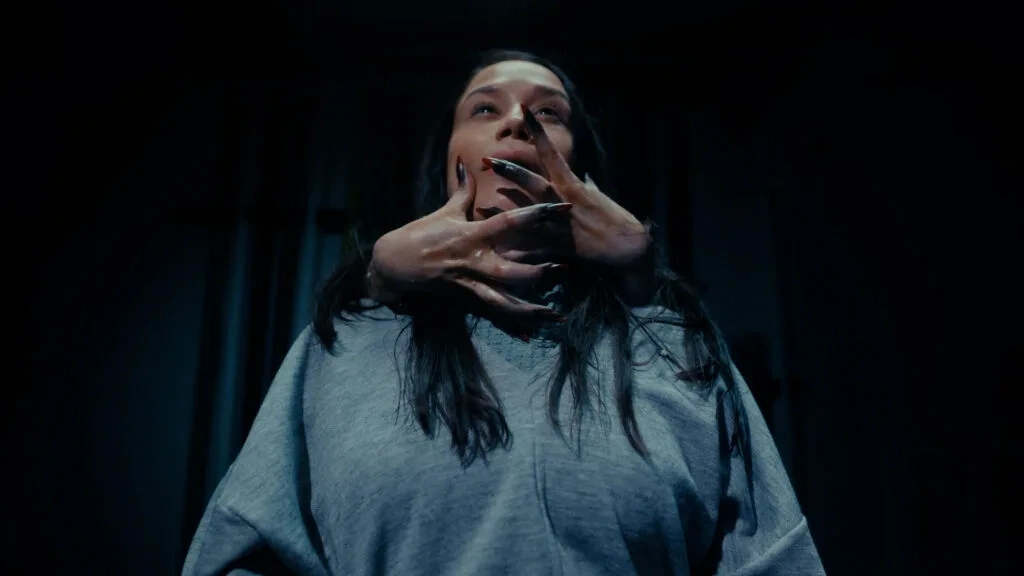

Thinestra opens in a bright Los Angeles winter, where palm trees wear tinsel and the demand for perfection hangs over every interaction. Penny works as a photo retoucher, trimming inches from models who already appear thin. The irony in that job cuts deep.
She spends her working hours building an illusion that she longs to see in herself. Her life moves through liquid breakfasts and constant self-disgust. Everything shifts after she crosses paths with a fragile model who passes along a packet of unapproved experimental diet pills. Penny hesitates, then takes one.
The change is immediate and horrifying. Weight falls from her body at an impossible speed, and she watches herself change in ways that feel outside biology. These opening scenes lock the film into a world obsessed with surfaces, where the price of maintaining them stays tucked behind camera flashes and closed apartment doors.
The Commercialized Horror of Consumption
The film grows sharper in its portrayal of the businesses that make money from insecurity. Penny is assigned to a campaign for SNOG, an eggnog brand sold for every season of the year. It stands as a pointed image of consumer culture at its most absurd.
A rich, calorie-heavy drink is sold through the body of a skeletal model, feeding the same loop of desire and shame that traps Penny. Her boss, Neils, serves as one of the film’s clearest expressions of this cruelty. He looks at bodies as problems to edit and measurements to control. In his workspace, value is tracked through pixels and pounds.
Holiday imagery keeps food in constant view, and the film treats it like a threat stalking Penny through daily life. Sweets fill the frame, carrying the charge of temptation, comfort, and punishment all at once. When Penny gives in to a craving, the camera stays close to her discomfort.
It captures the sting of that moment before the drug begins its chemical work. The story frames the real horror as the endless pressure to maintain an approved body. Under that pressure, eating becomes loaded with guilt and fear. Penny lives in a world that scolds her for eating a cookie and asks her to help sell a calorie-dense drink to everyone else. The system runs on dissatisfaction and keeps reproducing it.
A Fractured Identity in Double Vision
Casting real-life twins Michelle and Melissa Macedo gives Penny’s unraveling a physical presence that lands with unusual force. Michelle plays Penny with a fragile, searching vulnerability that makes her easy to invest in, even as her decisions grow riskier.
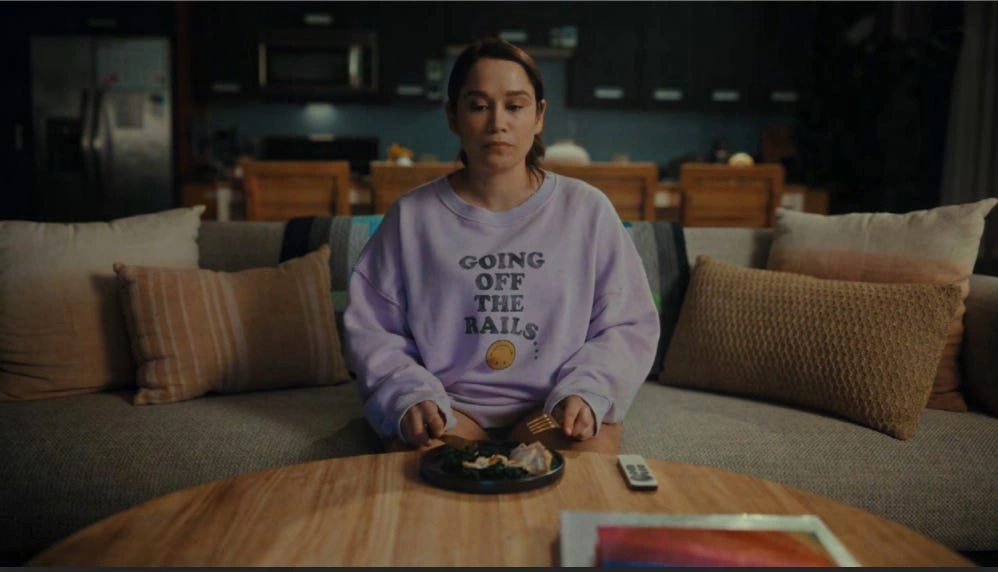
Once the medication begins to take hold, Penelope emerges as a second self, carrying Penny’s buried desires and her consuming hunger into the open. The turn toward psychological horror feels natural because the film has already shown the strain of Penny’s loneliness.
Her mother attempts to reach her with hard-earned wisdom, yet that voice is swallowed by the city around them. Her neighbor Josh offers sincere interest before the medication enters her life, which makes Penny’s emotional state hurt even more to watch. She is so consumed by the flaws she sees in herself that she misses the care already in front of her.
The drug changes far more than her body. It tears through her sense of self. The movement between the two sisters creates an eerie feeling that Penny is losing possession of her own body. That split gives shape to the film’s central idea: self-hatred can become its own living force, one that feeds on the person who created it until little is left.
Visceral Nightmares and Low-Budget Brilliance
The film uses its limited resources with real imagination, leaning hard into surreal and nightmarish images. One of the most memorable sequences places Penny inside a room made entirely of glazed donuts, forcing her to eat through it to escape. Scenes like this abandon everyday logic and hit with the force of a bad dream. They work because they translate Penny’s relationship with food into something physical, humiliating, and inescapable.
The body horror carries a grimy, hands-on texture. The doppelgänger’s birth arrives in a thick dark ooze that feels heavy, wet, and revolting. That tactile quality gives the image a stronger impact than slick digital polish would have. The practical effects keep the horror close enough to touch, which makes the film’s nastiest moments stick.
Its pacing also shifts with purpose, starting as a slow character study before mutating into a frantic and bloody survival story. Once the feeding frenzies begin, the satire gives way to dread. Tight framing and warped perspectives pull the viewer into Penny’s destabilized headspace, especially as she wakes from blackouts and discovers what Penelope has done.
That change in tempo works like a gameplay escalation in a horror title, where tension builds through repetition and then suddenly breaks into panic. The film understands how rhythm shapes feeling. Early restraint gives the later chaos room to hit harder. With a handful of carefully used locations and several strong practical effects, it creates a story about the bodily cost of obsession. Its genre tools are simple, direct, and effective, and they keep the psychological pain tied to every moment of physical horror.
Thinestra reached streaming platforms on April 14, 2026, following a successful run at several major international film festivals throughout 2025. This production marks the feature debut of its director and focuses on the high-pressure environment of Los Angeles during the holiday season. You can currently find the film available for rent or purchase on digital storefronts such as Prime Video, Apple TV, and Fandango at Home. The story follows a woman working in the advertising industry who discovers a experimental weight-loss drug with catastrophic physical and psychological consequences.
Where to Watch Thinestra (2026) Online










Full Credits
Title: Thinestra
Distributor: Breaking Glass Pictures
Release date: April 14, 2026
Rating: TV-MA
Running time: 87 minutes
Director: Nathan Hertz
Writers: Avra Fox-Lerner
Producers and Executive Producers: Kelly Parker, Alexandra Bromstad, Joshua Raymond Lee, Nathan Hertz, Melissa Macedo, Michelle Macedo, Joseph Wesley
Cast: Michelle Macedo, Melissa Macedo, Mary Beth Barone, Brian Huskey, Annie Ilonzeh, Gavin Stenhouse, Shannon Dang, Norma Maldonado
Director of Photography (Cinematographer): Joseph Wesley
Editors: Aashish D’Mello, Joshua Raymond Lee, Zekun Mao
Composer: Thomas Walley, Charlie Laffer
The Review
Thinestra
This film serves as a sharp, practical horror experience that uses a holiday setting to expose the ugliness of beauty culture. The choice to cast twins provides a visceral reality to the psychological fracture of the lead character. While the narrative logic occasionally falters, the emotional resonance of Penny's plight remains strong. It is a grim, effective piece of indie cinema that prioritizes tactile dread over digital polish. It succeeds as a cautionary tale about the high price of self-hatred.
PROS
- Creative and visceral practical horror effects.
- Strong, dual-layered performances by the Macedo sisters.
- Biting satire regarding the advertising and diet industries.
- Effective use of a festive Los Angeles backdrop to heighten isolation.
CONS
- Minor inconsistencies in narrative logic.
- Abrupt tonal shifts in the final act.
- Predictable outcomes for certain side characters.







