

























![Kingdom Hearts Collection [I-III] Review](https://gazettely.com/wp-content/uploads/2026/10/Kingdom-Hearts-Collection-I-III-1-360x180.webp "Kingdom Hearts Collection [I-III] Review: KHII Holds Steady as Newer Entries Fluctuate 37")



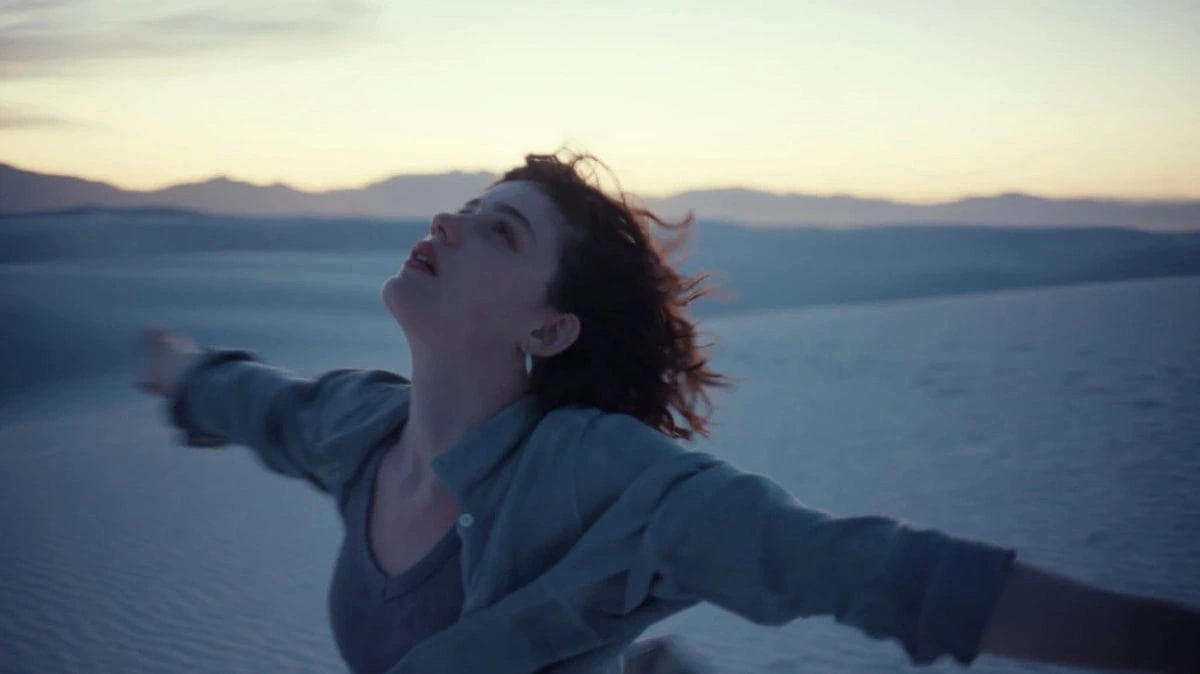

The open desert of the American Southwest has often acted as cinema’s favored stage for self-invention; in I’ll Be Gone in June, it becomes a landscape of hushed psychological enclosure. German director Katharina Rivilis uses her feature debut to puncture the polished mythology of the American Dream through sixteen-year-old Franny, a student arriving from the recently unified plains of eastern Germany.
The year is 2001, and its historical charge presses against every frame. By placing this semi-autobiographical story in Las Cruces, New Mexico, as the September 11 terrorist attacks unfold, Rivilis moves away from familiar adolescent self-discovery beats and studies the instant corrosion of social life inside a remote border community.
Franny enters a world whose cultural walls are tightening around her, turning a temporary educational stay into a slow lesson in systemic estrangement. The film watches youthful openness meet the paranoid architecture of a society folding inward, and its calm surface makes that collision feel all the colder.
Chilling Currents in the Desert
The film’s narrative design rejects the mechanical escalation associated with Hollywood drama, favoring a loose, vignette-shaped form built from accumulated moments. That patient rhythm mirrors Franny’s drifting, unmoored daily existence. She is passed between military host families, spaces where initial surface kindness quickly hardens into defensive nationalism.
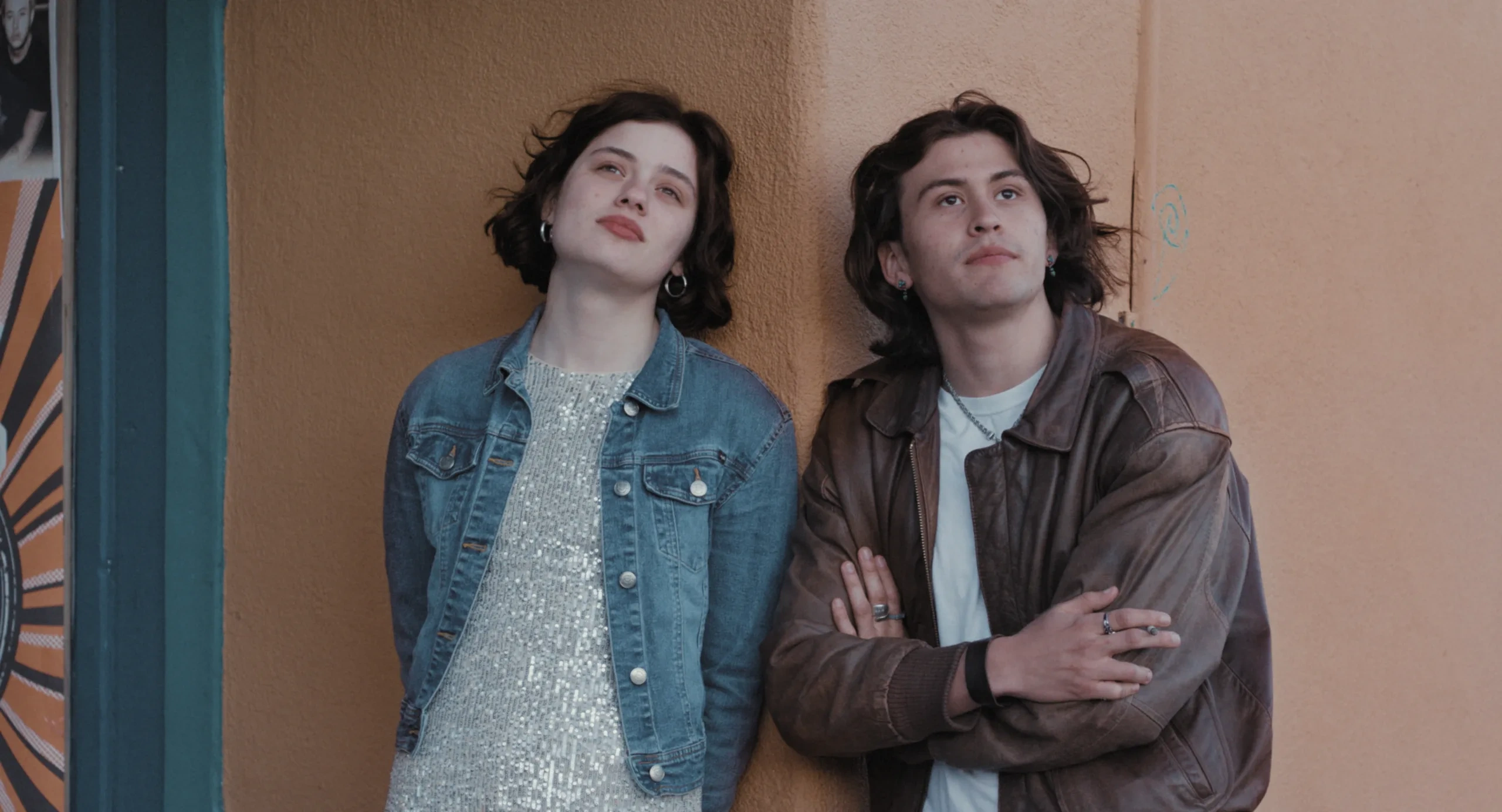
The home becomes a quiet field of micro-aggressions. Her host parents scrutinize her physical appearance under the punishing New Mexico sun and forbid her from speaking German around the child in their care. These scenes of domestic restriction give intimate shape to a society closing ranks.
Brief emotional refuge arrives through her contact with a small group of peers, chiefly fellow exchange student Ida and the uninhibited Sam, whose swimming trips create a fragile sisterhood capable of holding loneliness at a slight distance. The water carries a faint promise of ease, a temporary freedom from rooms filled with rules and suspicious glances.
That delicate social balance changes across the film’s second half, which follows Franny’s romantic involvement with Elliott, a local garage-band vocalist whose low-glow charisma carries a deep, muted despair. Their bond grows through hushed late-night conversations about the moon and shared artistic sympathies. The romance leads Franny toward a bruising disillusionment, since she places grand hopes of mutual rescue onto a partner capable of emotional half-measures and tentative commitment.
Past this intimate heartbreak, the script draws a severe ideological split between the adult authorities’ reactionary wartime patriotism and the adolescents’ sharp, instinctive skepticism. That generational fracture reaches a vivid high point in an unscripted classroom debate, where students openly question the impending war on terror. Their philosophical poise and historical caution expose the defensive narrowness surrounding them, giving the film one of its clearest acts of political listening.
Mixed Media and Mirages
Giulia Schelhas gives the film a striking visual language, using digital cinematography to turn the arid terrain of Las Cruces into an expressive field of heavy blues, sunburnt terracotta roads, and luminous pink sunsets. The desert becomes a psychological mirror for Franny’s alienation and longing, its beauty sharpened by emotional distance. This polished visual surface is deliberately interrupted by a mixed-media method that folds low-fidelity handheld camcorder footage into the professional cinematic flow.
The low-resolution camera serves as Franny’s subjective video diary, collecting close glimpses of faces and ordinary details that feel untouched by artistic varnish. The strategy places fiction’s sculpted imagery beside memory’s raw texture, asking how one person absorbs a collective national trauma through private sensation and stray fragments of everyday life.
This dual-format aesthetic gives the project a tactile intimacy, though its execution invites formal criticism. The gap between crisp digital wide shots and grainy, unstable handheld passages sometimes creates harsh visual friction. Sudden edits can produce noticeable disconnects that break the story’s spell. The film’s sound design follows a similar disregard for strict historical accuracy, using an eclectic, cross-generational soundtrack to unsettle period nostalgia.
Rivilis pairs 1950s blues from Nina Simone with contemporary alternative rock, including a somber PJ Harvey interpretation of a Bertolt Brecht theatrical composition, along with the mournful Spanish melodies of Chavela Vargas. This purposeful temporal displacement forms a dense acoustic atmosphere that strengthens the film’s vision of a protagonist suspended among worlds, histories, and identities. Music becomes a ghostly archive, shaping emotional memory across eras.
The Weight of Observational Pacing
Newcomer Naomi Cosma gives a breakout performance of remarkable restraint, holding the film together through an emotionally transparent presence that communicates great depth through silence. Franny is written as easygoing and non-confrontational, someone who moves around conflict with practiced softness, and Cosma plays that passivity with full sincerity.
This character design creates a real narrative weakness. The script often sidesteps traditional plot milestones, leaving room for the criticism that the film offers limited dramatic evidence for the profound internal change Franny claims by the final image.
The supporting cast of local, non-professional actors helps offset that looseness, giving the school and party scenes an adolescent cadence that feels spontaneous and unforced by Hollywood machinery. Their textures of speech and movement deepen the film’s social world.
Rivilis shows impressive directorial maturity across the project, especially in her refusal to infantilize teenage characters. She grants them intellectual agency and complex political voices while the global landscape fractures around them. The film runs past the two-hour mark, and its deliberate, meditative pacing becomes a major narrative risk that sometimes strains cohesion.
The wandering, sketch-like movement of the final acts threatens to drain momentum, testing viewers used to tighter editing. Still, the extended duration serves a clear conceptual purpose. It mirrors the painfully slow, suspended quality of an exchange student’s final months abroad, allowing the expected June departure to gather the weight of existential exhaustion and quiet loss.
The coming-of-age road drama I’ll Be Gone in June had its official world premiere on May 17, 2026, screening in the Un Certain Regard section at the Cannes Film Festival. Centered on a teenage German exchange student navigating life in New Mexico immediately after the events of September 11, 2001, the film is currently making its run through the international festival circuit. Because it has just debuted at Cannes, wide streaming and theatrical distribution platforms have not yet launched it for public home viewing, though it is scheduled for future theatrical release via DCM in Germany and Switzerland.
Where to Watch I’ll Be Gone in June (2026) Online
Full Credits
Title: I’ll Be Gone in June
Distributor: DCM
Release date: May 17, 2026
Running time: 125 minutes
Director: Katharina Rivilis
Writers: Katharina Rivilis
Producers and Executive Producers: Léa Germain, Wim Wenders, Clemens Köstlin, Vincent Savino, Andrea Kühnel, Simon Jaquemet, Olga Lamontanara, Katharina Rivilis, Lauren Melinda, Helena Sardinha, Rafael Thomaseto
Cast: Naomi Cosma, David Flores, Rebecca Schulz, Bianca Dumais, Logan Sage, Elijah De Billie, Mia Ayon, Marco Silva
Director of Photography (Cinematographer): Giulia Schelhas
Editors: Nicole Kortlüke
Composer: Shigeru Umebayashi
The Review
I’ll Be Gone in June
I’ll Be Gone in June succeeds as a deeply felt, atmospheric exploration of cultural friction and sudden historical displacement. Katharina Rivilis avoids standard adolescent sentimentality, offering a patient study of a shifting global climate through an outsider's gaze. While the narrative occasionally drifts and the substantial running time overtaxes its own structural momentum, the sheer sensory texture of the desert landscape and the intelligence granted to its young characters rescue the project from standard coming-of-age formulas. It marks a patient, conceptually mature arrival for a promising cinematic voice.
PROS
- A remarkably restrained, emotionally transparent breakout performance by Naomi Cosma.
- Lyrical digital cinematography by Giulia Schelhas that effectively utilizes the desert as an active character.
- An evocative, cross-generational soundtrack that resists obvious period nostalgia.
- A refreshing refusal to infantilize teenage subjects, offering them genuine intellectual agency.
CONS
- An episodic, wandering structure that lacks definitive dramatic milestones to fully validate the protagonist's final transformation.
- An excessive running time that overstays its welcome and causes the momentum to stall.
- Visual friction caused by the occasionally jarring edits between crisp digital wide shots and grainy handheld camcorder footage.







