

























![Kingdom Hearts Collection [I-III] Review](https://gazettely.com/wp-content/uploads/2026/10/Kingdom-Hearts-Collection-I-III-1-360x180.webp "Kingdom Hearts Collection [I-III] Review: KHII Holds Steady as Newer Entries Fluctuate 37")



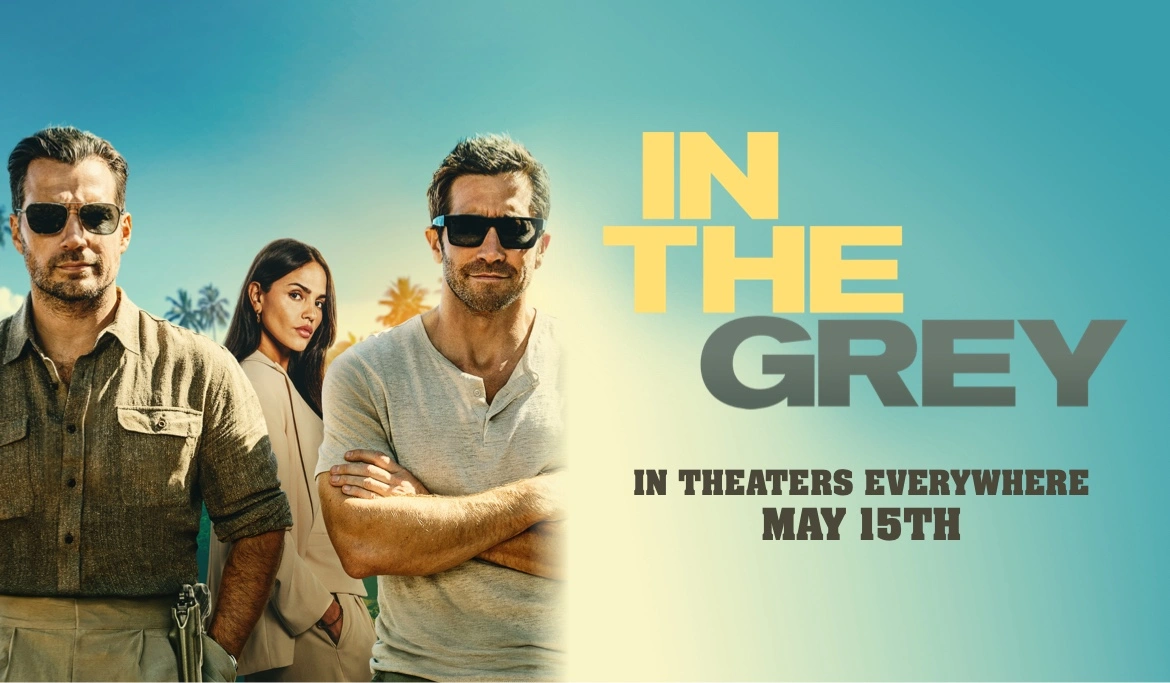

Guy Ritchie reconfigures his directorial signature with In the Grey, a film mapping the clinical geometry of international asset recovery. The narrative architecture rests on Rachel Wild, an elite attorney operating within the amoral margins where legal enforcement collapses into criminal coercion.
Her current portfolio involves a corporate banking entity seeking the extraction of a stolen billion-dollar fortune. The target is Manny Salazar, a ruthless dictator entrenched on a fortified private Spanish island. Wild deploys Sid and Bronco, her primary tactical field agents, to bridge the operational gap between financial litigation and physical enforcement.
Ritchie establishes a cold, transactional framework where high-octane violence, asset forfeitures, and court injunctions serve as interchangeable instruments of corporate negotiation. Ideology holds no seat at this table. The film presents lethal force as a bureaucratic ledger entry. Survival aligns with tactical logistics alone.
The Architecture of Explanation
Ritchie adopts the formal mechanisms of a process movie, turning financial extraction into a clinical exercise. The script emphasizes the methodical realities of professional competence, lingering over forensic accounting, jurisdictional leverage, and the cold logistics of tactical planning.
We watch these operatives construct a clockwork mechanism. For the first two-thirds of the running time, the film functions as a boardroom procedural, then executes a sharp pivot into physical action. This structural shift promises a payoff that remains frustratingly intellectualized. The film substitutes systemic clarity for kinetic tension.
This hyper-detailed framework stumbles under the weight of its own exposition. Rachel and Bronco deliver a relentless stream of explanatory voiceovers, dictating plot points before they manifest on screen. The cinematic principle of showing yields entirely to telling. Pacing suffers accordingly. By mapping every possible contingency beforehand, the script drains the narrative of unpredictability.
Suspense requires a certain degree of shadow, a space where the audience wonders what lies around the corner. Here, the internal machinery is laid bare. This reliance on voiceover displaces genuine character development. Natural dialogue disappears, replaced by a monotone recitation of logistical steps. The characters communicate as algorithms, stripped of any resemblance to human agents trapped in a high-stakes crisis.
To offset this narrative sterility, Ritchie inserts hyperactive visual flourishes. Onscreen graphics flash across the frame, indexing weapon checklists, personnel profiles, and the literal ingredients of a cocktail. These textual overlays mimic the aesthetic of a high-end corporate presentation or a stylized software interface. Glossy distraction. These visual insertions act as aesthetic band-aids covering a deficit in character-driven exposition.
The film mistakes data accumulation for storytelling. We learn what the characters carry and what they drink; their internal motivations remain entirely opaque. The stylistic excess operates as a smoke screen, hiding an empty emotional center under layers of sleek, superficial telemetry.
Sun-Drenched Geometry and Bulletproof Logic
Visually, the film rejects the traditional ink-washed shadows of classic noir. Ritchie swaps expressionistic framing for high-glare saturation, deploying rapid editing patterns, aggressive split screens, and sweeping overhead drone photography. This aesthetic captures the sun-bleached opulence of Spain, Saudi Arabia, and the Canary Islands. The camera frames these luxury landscapes with geometric precision.
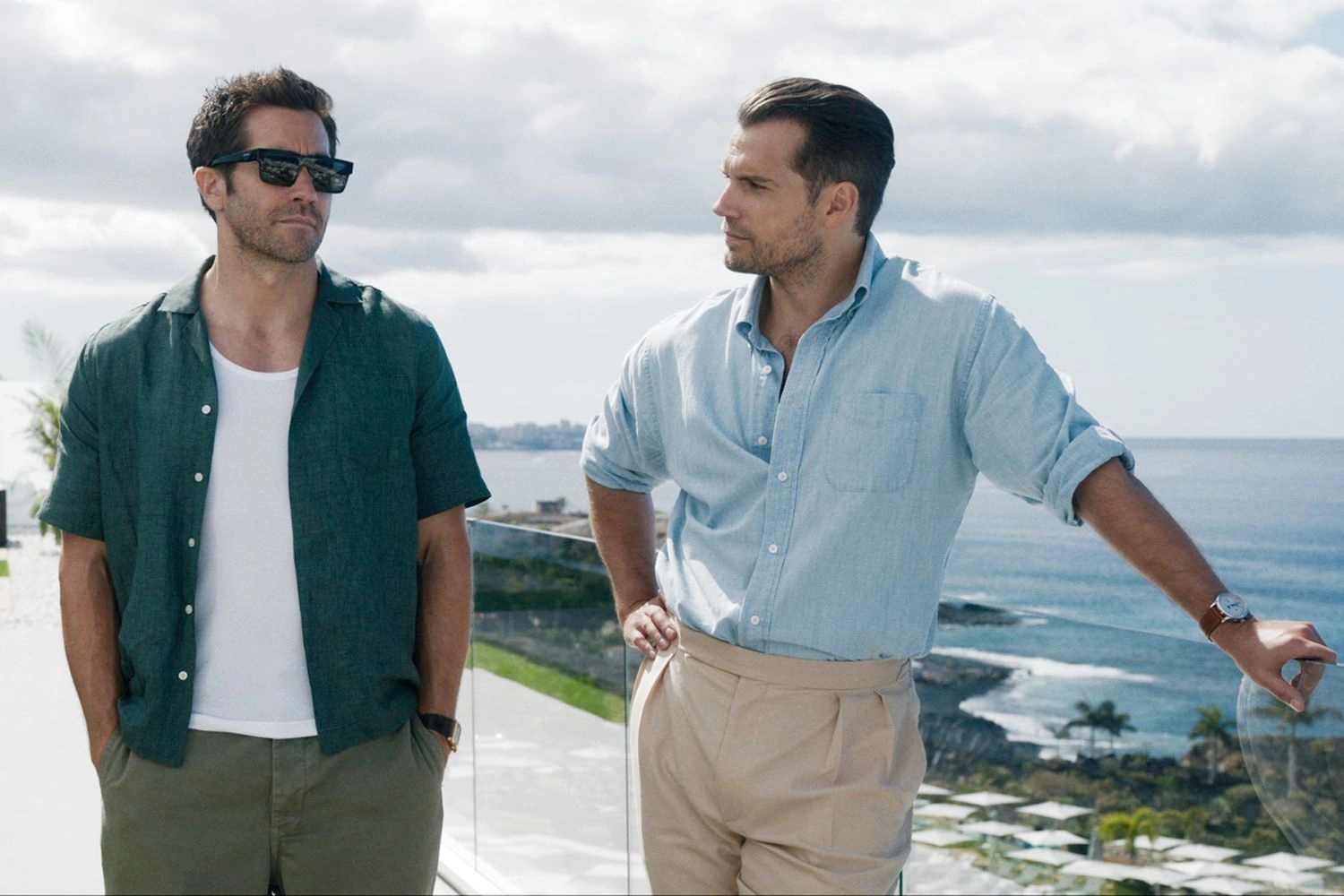
During the final act, these pristine vacation spaces transition into chaotic battle zones. The juxtaposition offers a brief spark of interest. Sleek white architecture becomes a canvas for tactical violence. The absence of directional shadows prevents any true psychological depth. Bright, revealing light surrenders all room for moral ambiguity or atmospheric dread.
The action sequences operate under the rules of a pristine simulation. The screenwriters detail complex trap mechanics, secret tunnels, and escape routes prepared months in advance. The execution is flawless. This perfection introduces a distinct thematic problem: the total invincibility of the protagonists. Sid and Bronco move through massive firefights without taking damage. Their weapons fire with endless capacity; reloading appears optional. Danger becomes a theoretical concept.
Classic thrillers manipulate audience psychology by placing heroes in positions of extreme vulnerability. Here, tension evaporates because the outcome is pre-ordained. The film adopts a binary approach to mortality. The headlining stars remain completely immaculate. The secondary team members are eliminated with rapid efficiency, existing merely to prove that bullets can indeed kill.
The final act accelerates into a prolonged vehicular chase. The choreography utilizes motorcycles, trucks, and watercraft in a relentless sequence of explosions. This finale changes the film’s rhythm entirely. The narrative sheds its heavy procedural scaffolding, transitioning into a breathless shootout.
The sudden shift in pacing satisfies a basic appetite for spectacle. The payoff feels hollow. Because the planning was so absolute, the execution lacks the thrill of improvisation. The mechanics are flawless; the soul is absent. We watch a perfectly engineered machine perform its function, waiting for friction that never arrives.
Archetypes in the Corporate Ledger
Rachel Wild stands as the theoretical anchor of the operation. Eiza González portrays this strategist with a performance restricted by the rigid limits of the script. Her subordinates call her “Mom,” a codename suggesting a protective leadership role that sits uncomfortably alongside her corporate efficiency. The writing creates an internal disconnect.
She exhibits absolute confidence during the boardroom planning phases and shows flashes of visible anxiety when confronted with real-world carnage. This flicker of human vulnerability is an excellent addition. The script quickly suppresses it. The narrative locks her into a singular note of fierce efficiency. She solidifies into a concept alone, her talents underutilized within a clinical framework.
The film finds its most reliable energy in the partnership between Sid and Bronco. Henry Cavill and Jake Gyllenhaal display an unforced chemistry, trading deadpan insults and casual dialogue with effortless timing. Their pairing relies on contrasting behavioral archetypes.
Cavill projects a dry, square-jawed composure, looking like a man who balances a spreadsheet before neutralizing an opponent. Gyllenhaal provides a looser, slightly erratic screen presence. Beneath their standard field interactions lies a fascinating subtextual partnership.
They trade deadpan expressions of affection and hints of a deep mutual bond. This emotional shorthand hints at a more substantial movie, a narrative where human relationships challenge the transactional sterility of the mission. The film keeps these elements safely in the background, treating genuine human connection as an ironic aside.
The surrounding ensemble fades into the background architecture. Carlos Bardem delivers a traditional, unmemorable portrayal of the wealthy villain Salazar, functioning as a stationary target devoid of dynamic menace. Fisher Stevens offers a few moments of dry humor as a sweating, stressed legal counsel. His panic provides a welcome divergence from the cold composure of the leads. Rosamund Pike is entirely wasted in a brief boardroom appearance as a calculating banking executive.
Her natural screen authority makes Rachel’s leadership feel tenuous. The rest of the tactical squad, given generic names like Baker and Gucci, operate as complete non-entities. They possess no distinct skills or defining traits. They are simply moving pieces on a board, underscoring the film’s tendency to view human beings as assets.
The action thriller film debuted theatrically on May 15, 2026. Audiences can currently view the feature exclusively in cinemas worldwide following its recent premiere. Future streaming or digital video-on-demand platform availability has not been officially scheduled.
Where to Watch In the Grey (2026) Online










Full Credits
Title: In the Grey
Distributor: Black Bear Pictures
Release date: May 15, 2026
Rating: R
Running time: 97 minutes
Director: Guy Ritchie
Writers: Guy Ritchie
Producers and Executive Producers: John Friedberg, Dave Caplan, Guy Ritchie, Ivan Atkinson
Cast: Henry Cavill, Jake Gyllenhaal, Eiza González, Carlos Bardem, Fisher Stevens, Rosamund Pike, Kristofer Hivju, Emmett J. Scanlan, Kojo Attah, Jason Wong
Director of Photography (Cinematographer): Ed Wild
Editors: Martin Walsh, Jim Weedon
Composer: Christopher Benstead
The Review
In the Grey
In the Grey functions as a perfectly engineered corporate machine that forgets to install a pulse. While the meticulous focus on professional competence and tactical logistics provides an interesting departure from chaotic action tropes, the film remains suffocated by its own endless, hand-holding voiceovers. Ritchie substitutes glossy data arrays and hyper-saturated geography for genuine psychological depth or narrative stakes. The result is a clinically proficient, visually striking thriller that remains entirely emotionally inert, leaving a talented cast stranded in a beautifully lit void.
PROS
- Meticulous structural focus on tactical logistics and the realities of professional competence.
- Visually striking, high-glare cinematography capturing pristine international landscapes.
- Natural, unforced screen chemistry and deadpan timing between Henry Cavill and Jake Gyllenhaal.
CONS
- Exhaustive overreliance on explanatory narration that actively destroys narrative unpredictability.
- Complete invincibility of the primary protagonists, eliminating any genuine sense of stakes or danger.
- Superficial visual data overlays used as a substitute for organic character construction.







