



























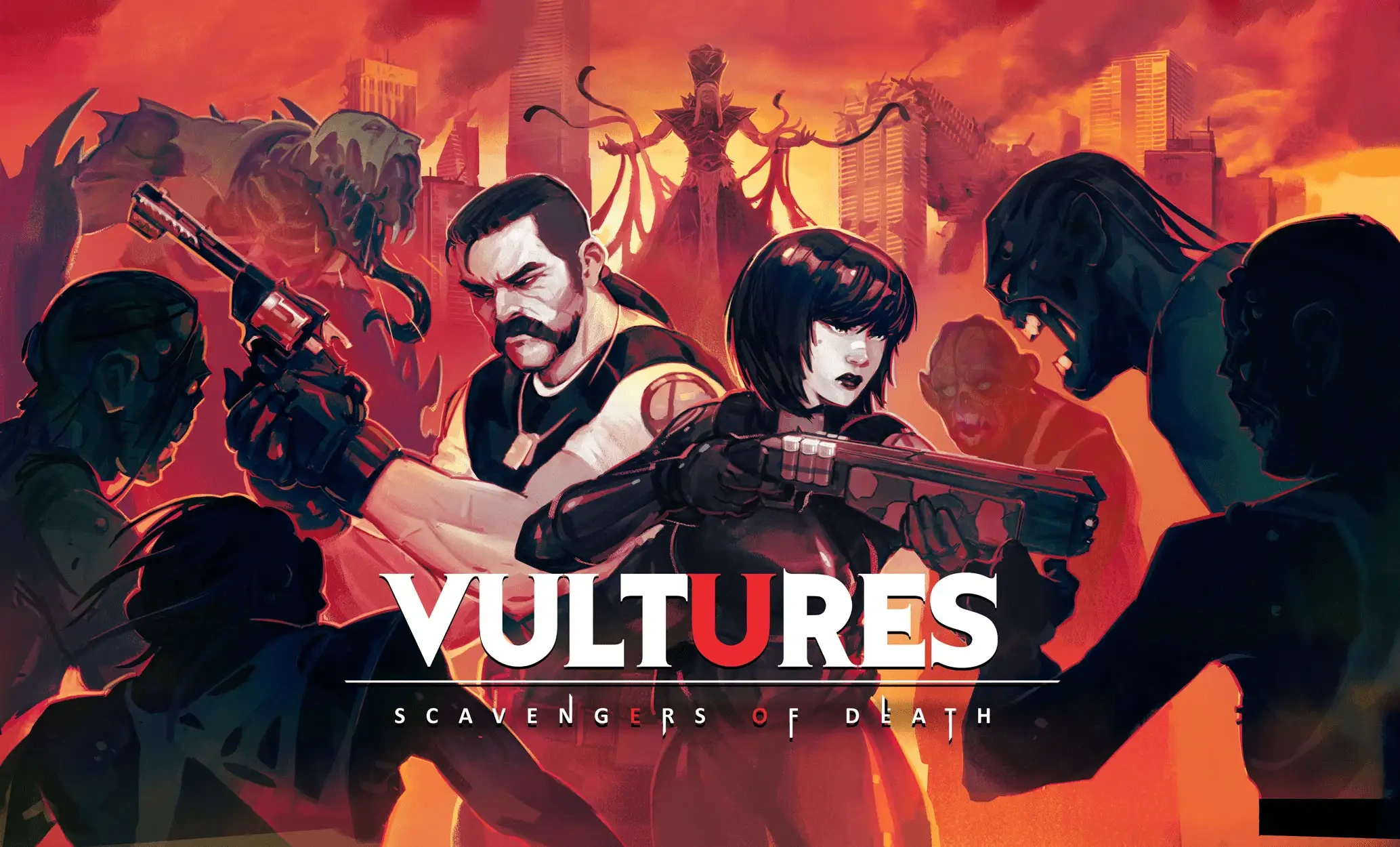

Vultures – Scavengers of Death opens in the ruined reach of Salento Valley, an isolated wasteland crushed by catastrophic bioterrorist strikes. The premise casts the player as a member of a specialized mercenary unit hired to inspect Eugenesys, an opaque organization connected to the outbreak.
This tactical survival horror game favors rigid grid movement and careful resource handling, giving its horror a procedural texture. The main goal involves searching infected facilities while living inside a narrow margin of ammunition and healing supplies. The plot follows a lean, practical line.
Information comes through remote radio briefings from your client, Alexei, and a distant handler named Satsuki. Character development stays behind the demands of mechanical execution. That sparseness recalls the cold corporate dread of late twentieth-century techno-thrillers, where systems, institutions, and survival logistics carry greater weight than personal revelation.
Functional Asymmetry and Regional Layouts
The tactical design rests on a strict dual-protagonist structure that shapes mission selection across the campaign. Operations begin at a base hub called The Nest, where players choose from familiar horror spaces: asylums, desolate police stations, military installations, and underground research laboratories. The map design creates a clear division of labor between the two lead mercenaries.
Leopoldo brings physical force, letting him move heavy objects, vault across obstacles, and shove enemies backward. Amber uses quiet mobility, relying on a specialized hook device to cross wide chasms and alter enemy positions. Certain levels require one fixed character because the layout is built around that precise ability set. The final mission gives players a choice between the two operatives.
Each stage follows historical survival design patterns through backtracking, key hunting, control-panel activation, and light puzzle solving. The structure draws from European escape-room traditions, treating architecture as a cultural language of locks, routes, blocked passages, and embodied problem solving.
Algorithmic Survival and Action Economy
Exploration unfolds on a real-time grid with three movement modes: walking, running, and sneaking. The stealth layer permits surprise takedowns and full evasion, giving players a small tactical vocabulary before combat begins. Sight lines are limited by fog of war, with enemies hidden according to light sources and direct visibility.
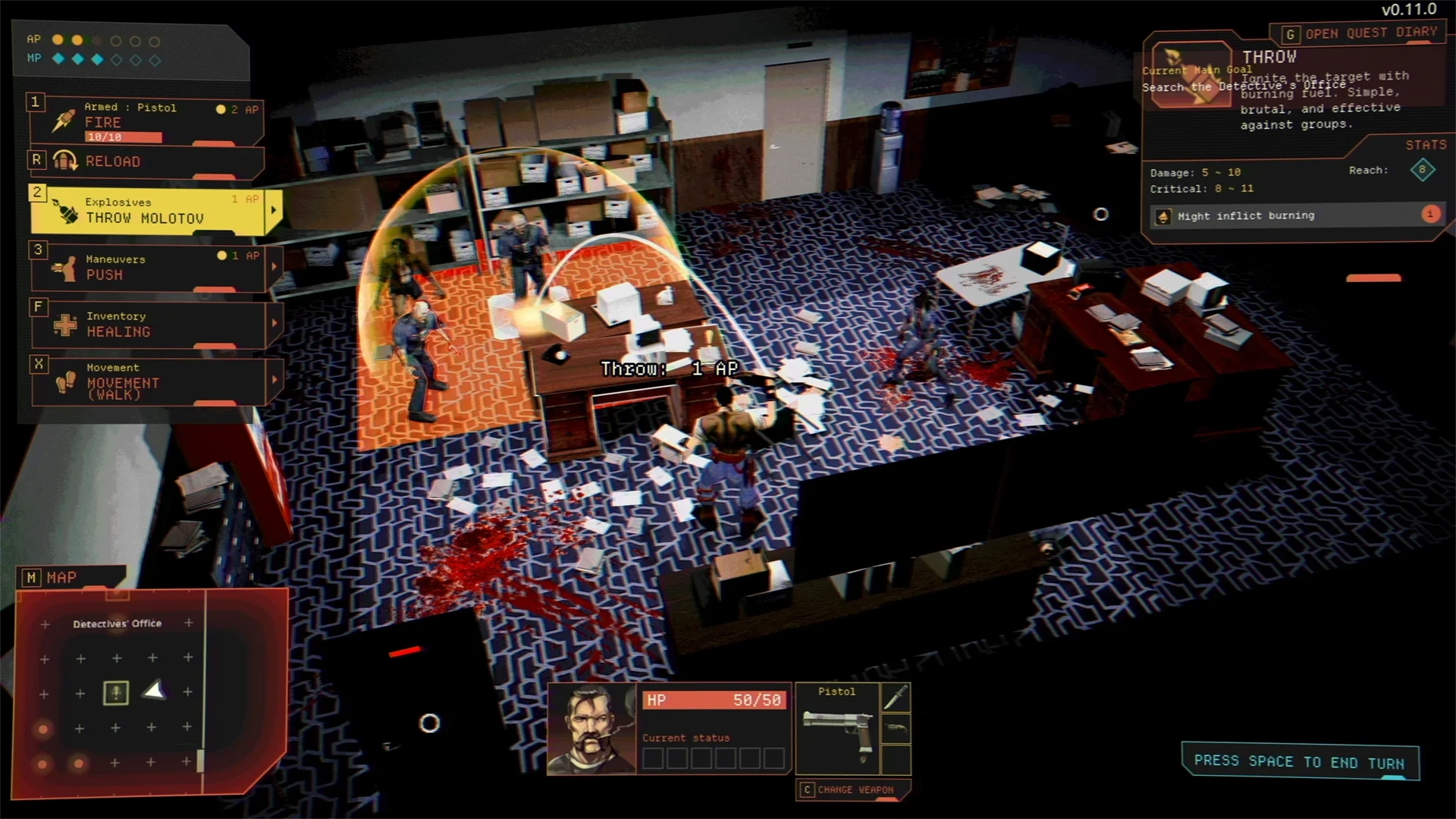
Contact with an enemy shifts the game into turn-based tactics ruled by Action Points and Movement Points, usually three of each per turn. The combat math teaches a precise safety lesson: four spaces from a standard zombie keeps the player secure. Targeted shooting creates meaningful tactical costs, such as spending extra points on headshots or firing at legs to stop enemy movement.
The default arsenal consists of a handgun and knife that remain permanently equipped. Situational weapons widen the decision space through a close-range stun shotgun and an inaccurate long-range assault rifle. Hot-swapping costs zero Action Points, so adjustment feels immediate. Valuables recovered during missions can be sold at the base market for inventory slots, health boosts, or weapon traits, including an instant-kill surprise knife stab.
Resource distribution gives the campaign an unusual survival curve. Early deployments feel supplied, yet late-game areas drain reserves heavily and demand sharp concentration. The usual action fantasy gives way to a steady decline into scarcity, which makes the mechanics speak the same bleak language as the setting.
Retro Aesthetics and Structural Fractures
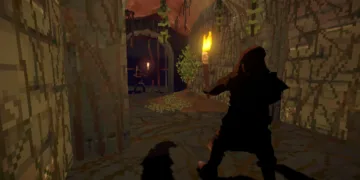
The presentation adopts a retro visual dialect shaped by early console generations, with blocky character models, dark environments, and an optional CRT display filter. The audio design carries classic genre memory through quiet safe-room melodies, distant monster groans, wet body horror squelches, and echoing gunfire.
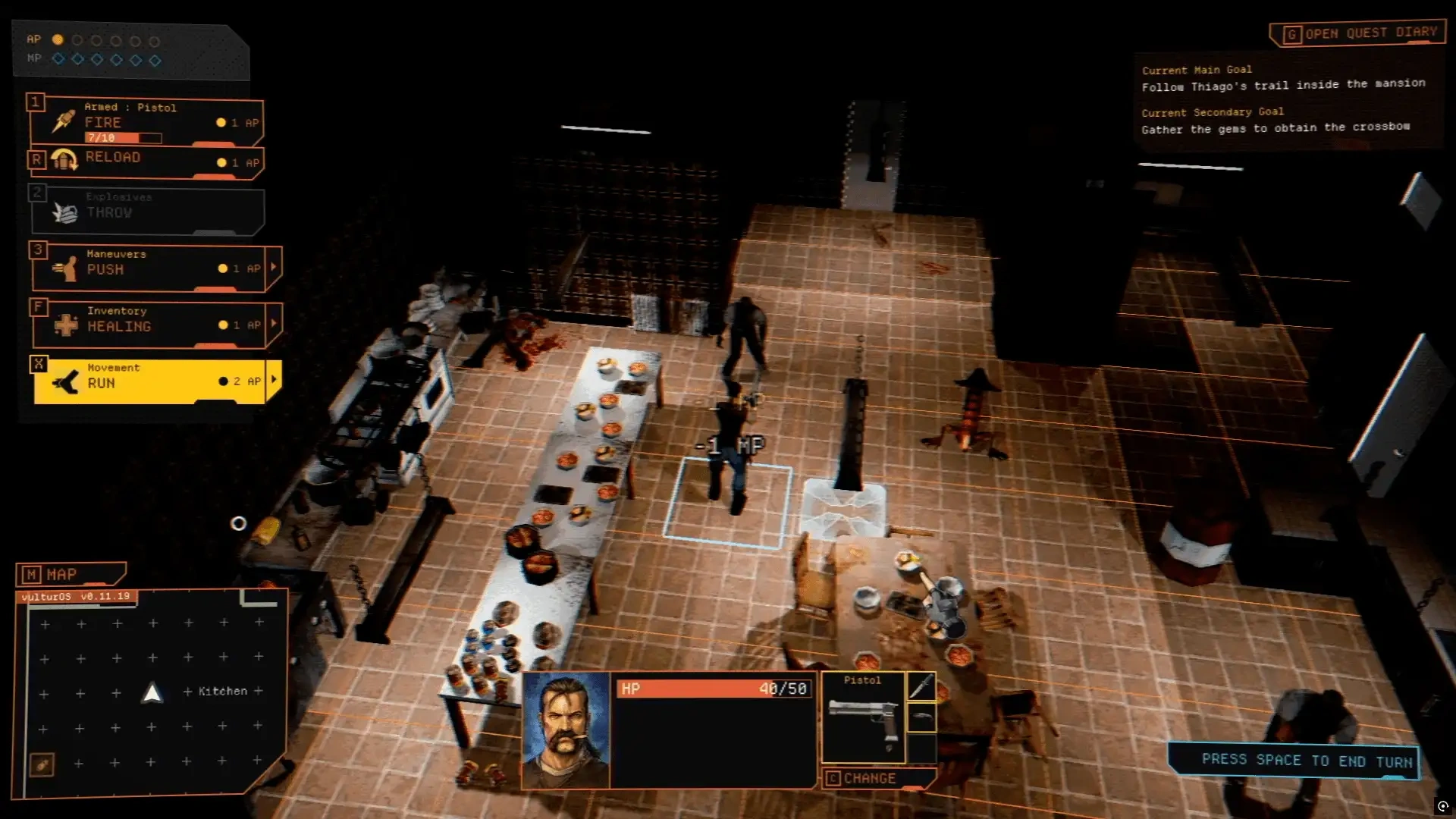
This creates a recognizably transnational horror vocabulary, familiar to players raised on survival games across regions, and remains tied to the game’s harsh bioterror wasteland. Severe software instability interrupts that carefully built simulation. Minor issues appear through hidden inventory buttons after storage expansion and overlapping user interfaces inside the base hub.
Larger failures damage the experience. The software often crashes when reloading a save after death, and ammunition stacks sometimes vanish from inventory. The most harmful problems arrive in later stages, where mandatory quest items disappear completely or objective triggers refuse to clear. These bugs can force full mission abandonment and erase over an hour of progress. The game’s digital architecture cracks under its technical strain, weakening the atmosphere it worked so carefully to construct.
The Review
Vultures - Scavengers of Death
Vultures features brilliant mechanical systems and a striking retro atmosphere. The turn-based combat and tactical grid movement provide immense strategic tension. Sadly, severe progression bugs and frequent system crashes heavily fracture the experience. Game-breaking technical flaws erase extensive progress, undermining its strengths.
PROS
- Engaging turn-based tactical combat systems
- Excellent asymmetrical character mechanics
- Striking retro presentation and audio
CONS
- Severe progression-blocking software bugs
- Frequent application crashes during save reloads
- Basic, uninspired narrative delivery