

























A sharp act of geographical displacement opens Dominga Sotomayor’s La Perra, carrying the psychological foundations of Pilar Quintana’s novella three thousand miles south. The humid Colombian coastal jungle disappears, replaced by Santa María Island, an isolated, wind-scoured landmass off the coast of Chile. In this bleak maritime zone, climate becomes an instrument of pressure. It shapes bodies, habits, silences.
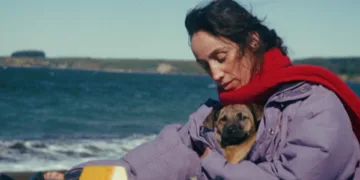
Silvia, played by Manuela Oyarzún with magnificent, weather-beaten reserve, survives through seaweed gathering and shellfish harvesting along the jagged littoral. Her life has the rhythm of hard labor: repetitive, solitary, physically exacting. The body works. The mind calcifies.
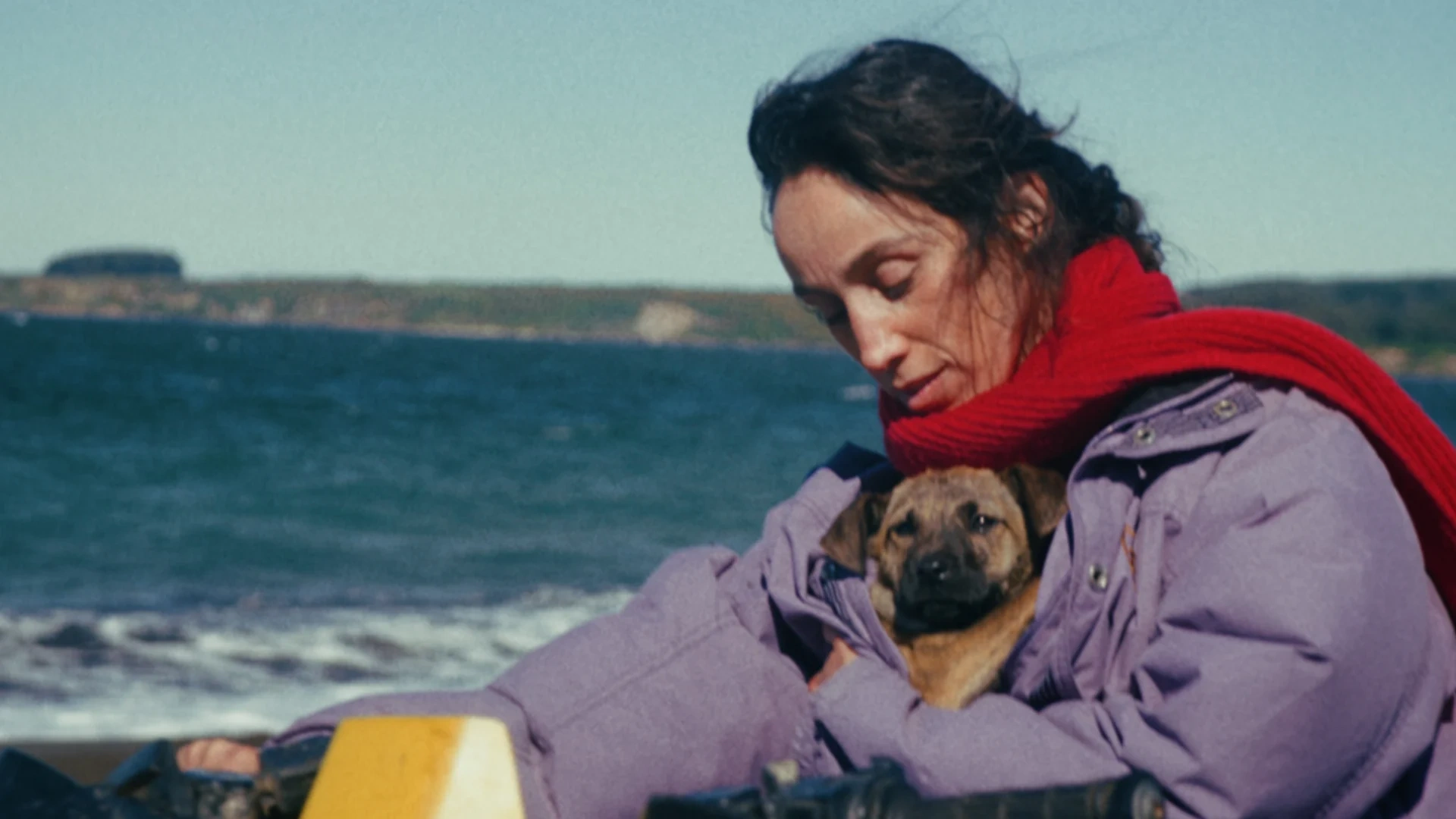
That static world shifts after Silvia makes an impulsive choice and adopts an abandoned puppy rescued at sea. She names the dog Yuri, an ironic nod to a 1980s Mexican pop vocalist whose cassettes once filled Latin American airwaves. The animal changes the film’s emotional ecosystem, forming a complicated, quasi-maternal bond that cracks Silvia’s stoic defenses. Sotomayor shapes this material into a tactile, forensic character study, examining human displacement through domestic isolation and the strange moral weather of attachment.
The Topography of Chiaroscuro and Sound
Cinematographer Simone D’Arcangelo rejects postcard beauty and builds a heavy, tactile visual field rooted in material fact. The screen sits in deep, briny hues. Extreme close-ups of tangled, glistening algae press the audience against the grime of Silvia’s work. Salt seems to crust the image itself, collecting on skin, wood, rope, and memory.
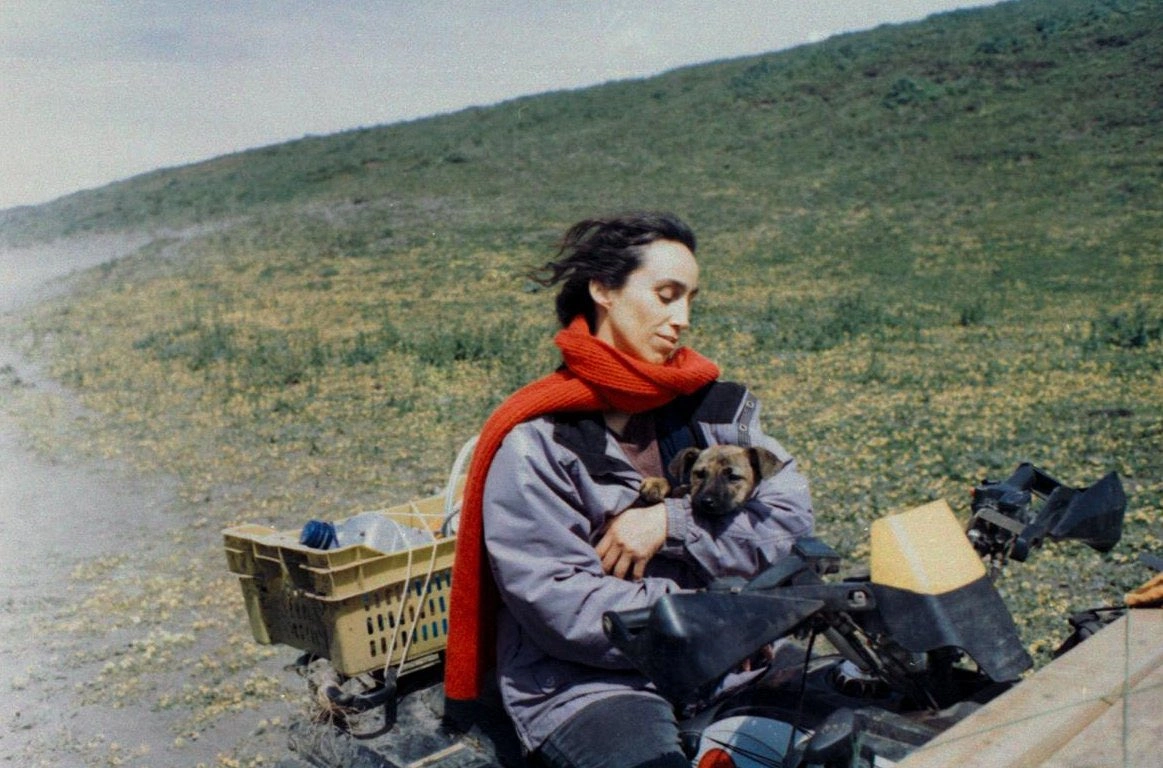
The camera often lowers to hound height, tracking Yuri through beach grass, slick stones, and coastal debris. This low framing gives the dog a separate emotional route through the film, a parallel line moving away from human explanation. Sotomayor avoids the cheap comedy of animal point-of-view and holds a rigorous formal distance. Yuri remains other. Admirably inconvenient, as dogs in art and life tend to be.
Santa María Island functions as an oppressive antagonist inside this visual system. Its cliffs, tides, and semi-submerged cave systems produce a mood of containment, like a noir penal colony carved from salt and rock. The film draws from classic noir technique through expressionistic framing, distorted reflections, and faces obscured by hazed glass. Memory fractures in the image before it fractures in speech.
The monumental concrete vacation house that Silvia meticulously polishes cuts sharply against the island’s coastal austerity. It stands as an empty tomb for wealthy outsiders, looming above the local shacks with modernist indifference. Sound design tightens the isolation. Nighttime television singing competitions and melodramatic Latin American pop anthems flicker through the dark, giving Silvia a ghostly connection to a civilization that has left this outpost behind.
Temporal Dislocation and the Return of the Repressed
The narrative balance breaks midway when Yuri vanishes, rupturing the quiet domestic arrangement Silvia shares with her watchful partner, Mario. The disappearance creates an abrupt psychological turn. The film’s observational pulse snaps. The screenplay turns inward, leaving the linear present for a prolonged, disorienting flashback set in the 1990s.
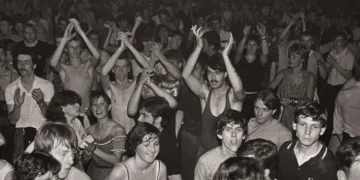
We meet young Silvia, played by Rafaella Grimberg with remarkable internal clarity, moving through the same unforgiving shoreline during a deceptively idyllic summer. The arrival of a wealthy Brazilian architect and his family brings class tension into the island’s social order.
Sotomayor stages an agonizing cliff sequence where unmonitored children roam against warnings about the tides. The fatal accident, inadvertently caused by young Silvia during a brief moment of preteen apathy, becomes the film’s structural and emotional anchor.
This pivot clarifies Yuri’s role as an emotional surrogate, tying adult Silvia to repressed childhood grief and maternal abandonment. Screenwriter Inés Bortagaray shows severe narrative restraint by removing the novella’s explicit, gory details of water-logged corpses and canine infanticide.
Atmospheric ambiguity guides the film, and clinical psychological explanation recedes. Past horror seeps into the present with quiet pressure, manipulating audience anxiety through delay, omission, and dread. A conventional thriller might chase resolution. This film lets the wound breathe.
Silent Faces and Unsentimental Instincts
Manuela Oyarzún gives a masterclass in minimalist performance, carrying historical trauma through posture, rhythm, and facial control. Expository dialogue and emotional eruptions play little part in her work. Her stern countenance and heavy, deliberate movement mirror the island’s geology, suggesting a life formed through resistance to pressure. Each micro-expression registers grief mixed with tightly suppressed anger, turning her face into a terrain of unresolved conflict.
Sotomayor subverts the sentimental habits of canine melodrama with impressive discipline. Yuri receives no anthropomorphic polish designed to extract easy tears. She remains chaotic, primal, and stubbornly animal, chewing crab shells and running wild with little interest in human commands. This raw behavior exposes the household’s alienation and the fragility of human projection. The dog refuses the assignment. One can hardly blame her.
Silvia’s features soften around Yuri, revealing a tenderness absent from her guarded interactions with Mario, who watches her fixation with quiet bewilderment. The film presses into existential questions about loss, ownership, and recurring anguish.
Silvia projects a complex private story of redemption onto a creature that may be acting through predatory reflex. On this rocky coastline, moral certainty erodes quickly. Sotomayor leaves the audience with a harsher possibility: the bonds we form may be genuine connections, desperate fabrications, or both at once.
La Perra had its world premiere at the Cannes Film Festival in the Directors’ Fortnight section on May 18, 2026. Following its prestigious international festival debut, the Chilean drama is slated for select theatrical runs and subsequent arthouse streaming platforms under its current distributor.
Full Credits
Title: La Perra
Distributor: Lucky Number
Release date: May 18, 2026
Running time: 85 minutes
Director: Dominga Sotomayor
Writers: Inés Bortagaray, Dominga Sotomayor
Producers and Executive Producers: Rodrigo Teixeira, Lourenço Sant’Anna, Omar Zúñiga
Cast: Manuela Oyarzún, David Gaete, Selton Mello, Paula Luchsinger, Paula Dinamarca, Rafaella Grimberg
Director of Photography (Cinematographer): Simone D’Arcangelo
Editors: Federico Rotstein
The Review
La Perra
La Perra rejects sentimental canine cliches, offering an uncompromising study of emotional isolation and historical trauma. Dominga Sotomayor structures the film around memory, anchoring the heavy narrative weight in the austere landscapes of Santa María Island. While the structural pivot mid-film disrupts the observational narrative flow, the deliberate pacing and spare performances reward careful attention. It stands as a challenging, sensory investigation into human projection.
PROS
- Tactile, evocative cinematography capturing the severe physical textures of the island.
- A minimalist, heavy performance by Manuela Oyarzún that avoids typical expository dialogue.
- Subversion of standard animal-centric tropes, maintaining authentic canine instinct over sentimentality.
CONS
- The abrupt, prolonged mid-film flashback disrupts the established present-day narrative rhythm.
- Heavy reliance on structural ambiguity leaves major thematic elements feeling disconnected.