





























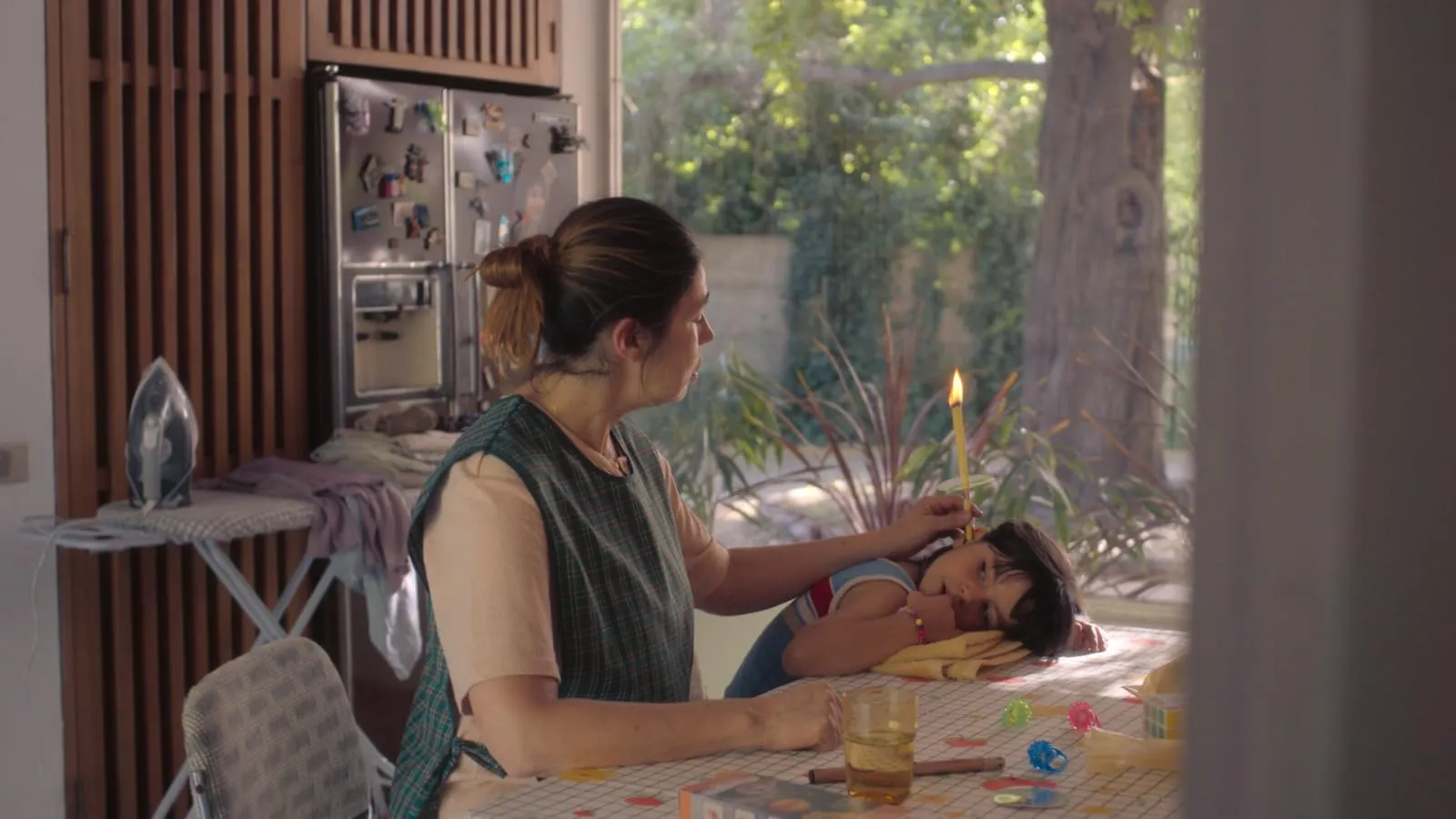

Some silences are not empty spaces; they are architectural forms, built from the weight of things unsaid and duties performed without acknowledgment. Dominga Sotomayor’s Swim to Me is a film that understands this architecture intimately. It is an act of inhabitation, a descent into a quietude so profound it vibrates with tension. We are brought into the world of Estela, a woman who has traded the geography of her rural past for the sterile geometry of a wealthy Santiago home.
She is a necessary phantom, the silent engine that allows a prosperous family to function. The story finds its fragile, beating heart in the bond she forms with the family’s young daughter, Julia, a connection that blossoms in the arid landscape of parental absence. Through its measured and deeply observant style, the film conducts a quiet autopsy on the invisible structures of class, the psychic cost of emotional labor, and the devastating physics of a human relationship built on a foundation of profound inequality.
The Geometry of Servitude
The family’s home is a monument to a specific kind of modern emptiness. It is less a home than a gallery of affluence, where marble floors gleam with a cold, indifferent light and a pristine swimming pool holds its placid, blue surface like a carefully guarded secret. Within these walls, Julia’s parents, Mara and Cristobal, move with the distracted air of ghosts in their own lives.
They are not villains in a theatrical sense; their cruelty is a quieter, more pervasive thing, a systemic indifference born of a privilege so absolute it renders the humanity of others an abstraction. Their work, their social engagements, their very self-conceptions eclipse the small, essential needs of their child.
The girl suffers a dog bite, a moment of sharp terror, and it is Estela who must manage the aftermath, the event remaining unknown to Julia’s mother until it is mentioned almost by accident. Estela’s own life, her own dying mother, becomes a mere inconvenience, a scheduling conflict in the seamless operation of their comfort.
Her role is a study in the metaphysics of servitude. Estela provides more than clean floors and prepared meals; she offers the emotional sustenance that is the true, unacknowledged currency of the household. The film is a devastating portrait of invisible care work, where a human being’s personal history and future are sacrificed at the altar of another family’s ease.
The power dynamic is a constant, low-frequency hum beneath every interaction. Estela’s affection for Julia is undeniably real, a genuine source of warmth in the refrigerated atmosphere of the house. Yet this warmth is a product she is paid to deliver. It exists within the unbreachable contract of her employment, a love that is both authentic and transactional, and this paradox poisons the very air she breathes.
An Alliance in the Void
The relationship that grows between Estela and Julia is not a simple surrogate bond. It is a fragile, desperate alliance forged in a shared void, a pact made by two people imprisoned in different ways by the same cold architecture. Their connection is charted in a constellation of small, furtive moments that feel like acts of quiet rebellion.
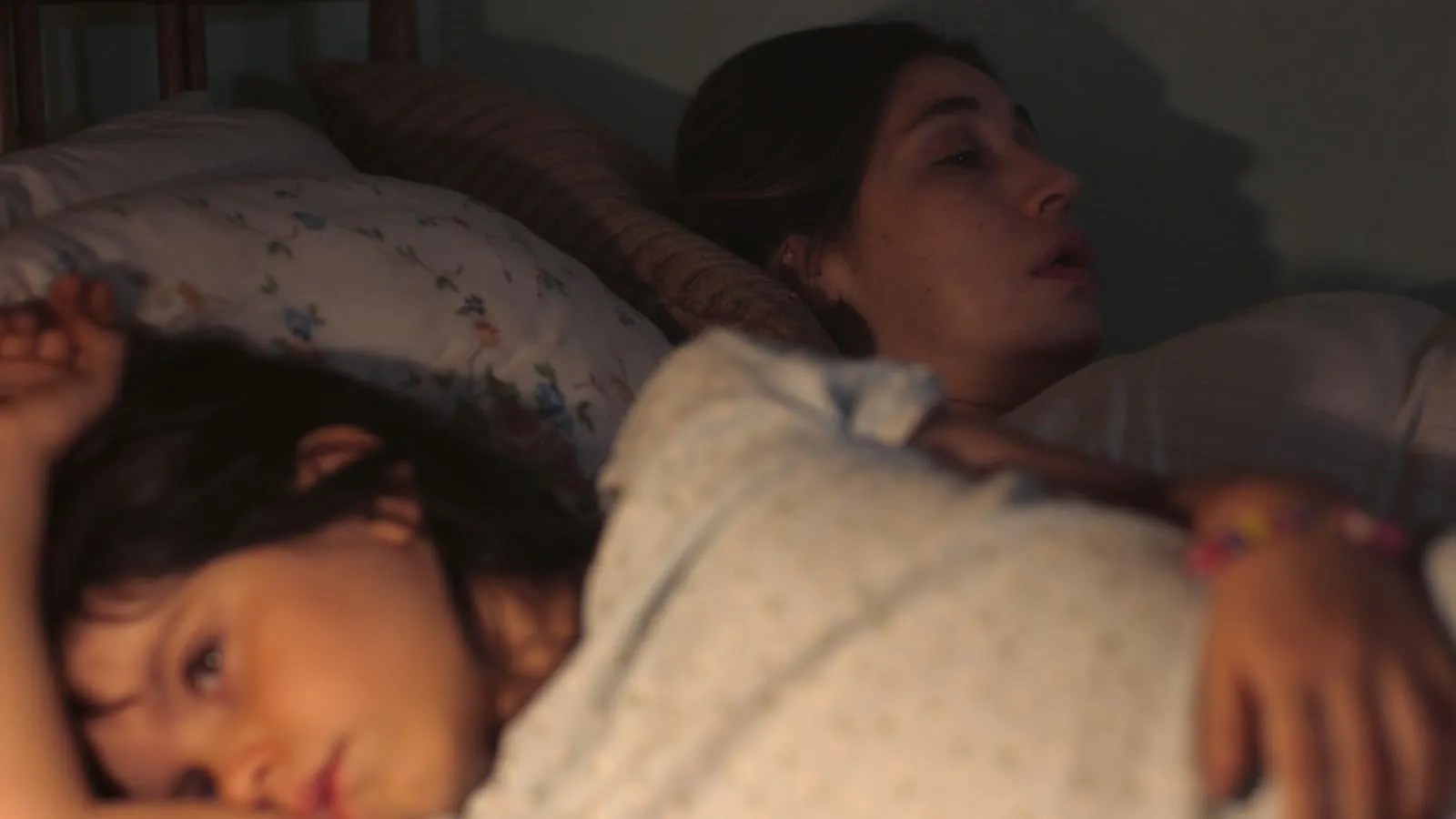
They retreat to the sanctuary of Estela’s small room during a loud, alienating party. They find comfort in a shared silence that communicates a depth of understanding words could only cheapen. A necessary trip to the hospital becomes a secret pilgrimage, a brief escape from the established order.
Together, they construct a private world, a two-person state with its own language and laws, walled off from the oblivious adults who drift through the main house. This secret nation is their salvation and their trap. It deepens their mutual dependency, binding them in a knot of affection and necessity that isolates them ever more completely from the outside world.
María Paz Grandjean’s performance as Estela is a tour de force of quiet implosion. She withholds everything, offering no cathartic speeches or dramatic meltdowns. The character’s immense spiritual exhaustion and buried anguish are written in her posture, in the subtle slump of her shoulders, in the vacant geography of her gaze.
As Julia, Rosa Puga Vittini is a small miracle, giving a performance that is raw and achingly natural, entirely free of the polished precociousness that often marks child acting. The chemistry between them is palpable and authentic. The work of Ignacia Baeza and Benjamin Westfall as the parents is crucial, their performances calibrated to create the precise emotional vacuum that necessitates the central bond. Their cultivated distance gives the connection between nanny and child its desperate, heartbreaking weight.
The Language of Water and Silence
Dominga Sotomayor’s direction is patient, her camera a meditative, almost passive observer. The film’s deliberate slowness is a conscious aesthetic choice, a method for immersing the viewer in the temporal prison of Estela’s existence. Time for her is not a linear progression but a cyclical state of being, a series of duties repeated into oblivion.

The unhurried pace forces the audience to experience this oppressive rhythm, to feel the leaden weight of each passing hour. This methodical speed is the very source of the film’s accumulating dread. The narrative itself mirrors Estela’s experience, feeling at times disjointed and fragmented, a collection of moments rather than a story driving toward a clear destination. It is the structure of a life lived for others, a life without its own clear narrative arc.
Water is the film’s dominant visual metaphor, a silent, elemental presence. The swimming pool, the endless rain, the shimmering reflections on glass—these images recur like a refrain in a somber poem. They suggest a world of submerged feelings, of emotions held deep beneath a placid surface. They also hint at the constant threat of being pulled under, of drowning in one’s circumstances.
Silence is the film’s other primary language. Sotomayor builds her scenes on long, quiet takes, allowing the unspoken to carry the dramatic load. The viewer must learn to read the subtle grammar of a furtive glance, a hesitant touch, a hand lingering on a doorframe. This focus on the unsaid charges the atmosphere of the house with a potent, unspoken tension, making every quiet room a potential theater of emotional violence.
A Tide that Pulls Under
The film’s climax arrives not as a crescendo but as a sudden, violent fissure. The slow-burning tension that has been building for the entire narrative finally ignites, and the household’s fragile equilibrium is irrevocably shattered. A single mistake, a moment of profound human error, breaks the unspoken contract that governs this small universe.

It is the catalyst that allows Estela’s lifetime of suppressed rage and sorrow to find a devastating physical expression. Here, the title, Swim to Me, is brutally re-contextualized. What might have sounded like a gentle invitation is revealed to be a desperate, fatalistic command, an order issued at the edge of an abyss.
The ending is swift, quiet, and emotionally annihilating. It offers no release, no sense of justice or catharsis. It simply stops, leaving the audience stranded in the wreckage. The questions it leaves behind are stark and unsettling.
It speaks to the crushing weight of guilt, to the terrifying disposability of human beings deemed to be in service to others, and to the heartbreaking fragility of love when it is intersected by the rigid, unforgiving lines of social power. The film’s enduring power is located in this deep, resonant sadness, in its steadfast refusal to provide easy answers or moral comfort. It is a story that lingers not as a memory but as a feeling, a lasting and profound disquiet that settles deep within the bones.
Swim to Me is a Chilean drama directed and co-written by Dominga Sotomayor, adapted from the award-winning novel by Alia Trabucco Zerán. The film is a haunting family drama that explores the intense and dependent relationship that develops between Estela, a domestic worker from rural Chile, and Julia, the six-year-old girl from an affluent, emotionally distant family she is hired to care for day and night. The narrative delves into themes of class hierarchy and the invisibility of domestic labor in Latin America, set against a backdrop of broader social tension. The film, produced by Fabula, celebrated its world premiere at the 73rd edition of the San Sebastián International Film Festival and is available for worldwide viewing on the streaming platform Netflix.
Full Credits
Director: Dominga Sotomayor
Writers: Dominga Sotomayor, Gabriela Larralde
Producers and Executive Producers: Juan de Dios Larraín, Pablo Larraín, Rocío Jadue
Cast: María Paz Grandjean, Rosa Puga Vittini, Ignacia Baeza Hidalgo, Benjamín Westfall, Rodrigo Palacios
Director of Photography (Cinematographer): Bárbara Álvarez
Composer: Carlos Cabezas
The Review
Swim to Me
Swim to Me is a haunting and masterfully controlled drama that rewards patience. Its deliberate, meditative pace and suffocating quietude build an atmosphere of profound dread, anchored by two extraordinary central performances. This is not a film of grand events but of small, devastating erosions of the human spirit. A deeply unsettling examination of servitude and the silent violence of class, it is a powerful piece of cinema that lingers long after its abrupt, chilling conclusion.
PROS
- Extraordinary and deeply internalized lead performances from María Paz Grandjean and Rosa Puga Vittini.
- Masterful, patient direction that creates a potent and immersive atmosphere.
- Profound thematic exploration of class, emotional labor, and neglect.
- Stunning cinematography that uses water and silence as powerful symbolic motifs.
- A lasting emotional impact that is both haunting and thought-provoking.
CONS
- The extremely slow, deliberate pacing may not be suitable for all viewers.
- An overwhelmingly bleak and somber tone with an emotionally devastating conclusion.
- The narrative feels intentionally fragmented, which can be challenging to follow.
- Offers no sense of catharsis or resolution, leaving the viewer in a state of disquiet.