
























Some narratives set the difficulty to impossible from the start. The rules feel arbitrary, the odds are stacked, and the player is left with a profound sense of solitude against an overwhelming system. This is the emotional landscape of Violet Du Feng’s documentary The Dating Game. The film’s premise is simple: three young men in China attend a dating bootcamp.
The mechanics governing their lives, however, are anything but. Decades of a state-enforced one-child policy have engineered a society with 30 million more men than women, transforming the search for love from a personal quest into a brutal numbers game. The sprawling, neon-drenched metropolis of Chongqing serves as the game world, a glittering and indifferent space where millions of people live in close proximity yet feel utterly alone.
In this challenging environment, we meet our protagonists: Zhou, Li, and Wu. They are not heroes with special abilities, just earnest, hopeful men trying to find a genuine connection in a world whose very design seems to conspire against them.
Crafting an Avatar for Love
The bootcamp is run by Hao, a coach who acts as the game’s guide, offering what he claims are the cheat codes to romance. He is a polished salesman of self-transformation, preaching a doctrine of pure performance. His methods are a systematic dismantling of his clients’ authentic selves to be replaced with a more marketable avatar.
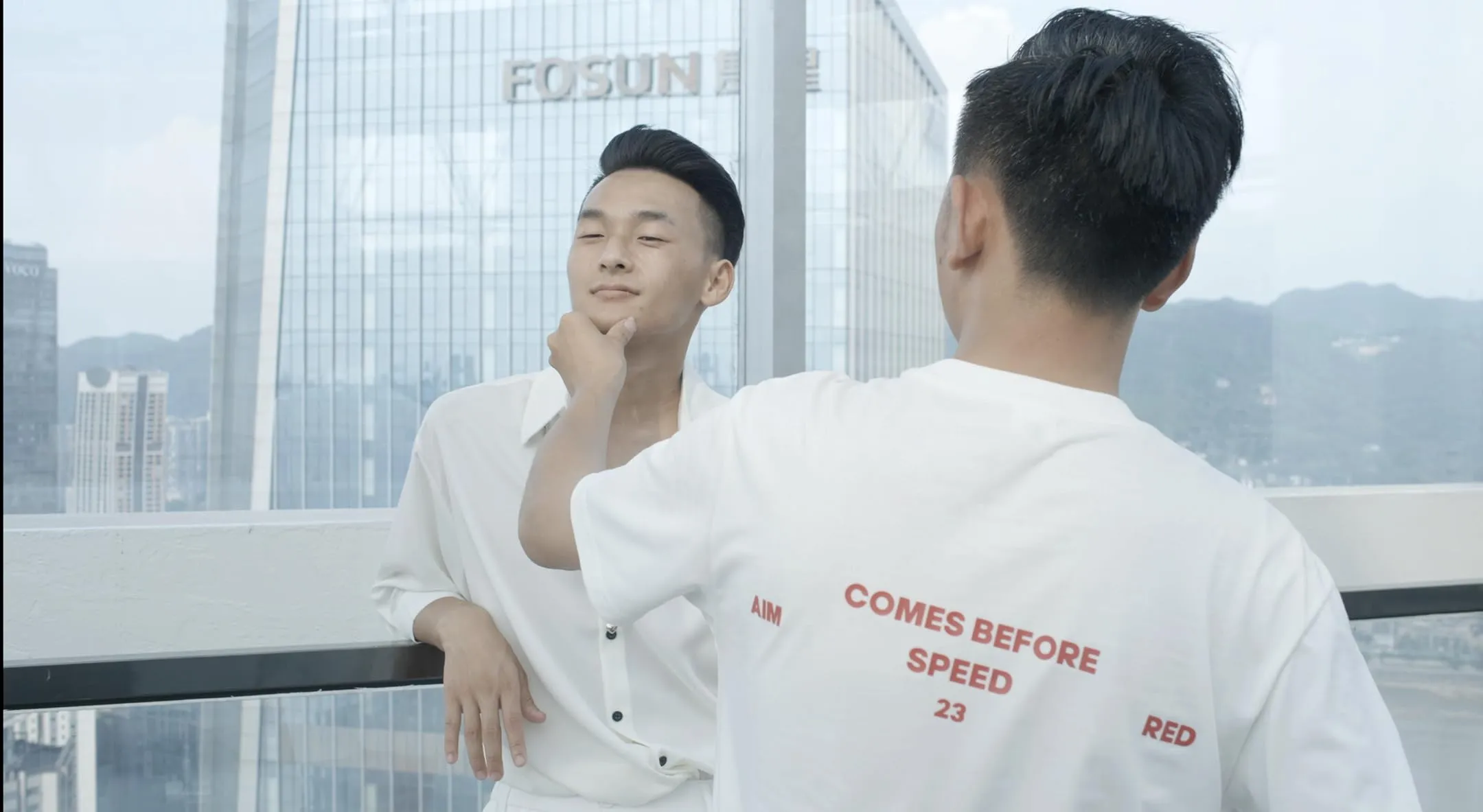
The process begins with superficial changes like new haircuts and flashy clothes. It quickly moves to constructing a false life story through elaborately staged photoshoots; the men pose with adorable dogs they do not own or on golf courses they do not frequent, all to project an image of success girls supposedly desire. Hao’s core strategy is a manipulative communication technique he calls “Push and Pull,” a psychologically jarring sequence of compliments followed by insults meant to create insecurity and dependence.
His students receive this instruction with a mix of desperation and quiet resistance. Thirty-six-year-old Zhou, a gentle romantic, fears he is already too old for the competition and clings to Hao’s advice with a sense of last-ditch hope. Li, the youngest at 24, is shy and obedient, his unease visible even as he tries to follow every command.
Then there is 27-year-old Wu, the quiet observer, whose thoughtful skepticism forms a moral backbone for the group. He grew up in a rural village of boys and seems to view the entire artifice with a blend of curiosity and sorrow. Their collective journey highlights a painful internal conflict between their deep desire for connection and the inauthentic persona they are told is required to achieve it.
The High Cost of Pretending
The film’s emotional weight comes from watching the men test these new personas in the real world. Hao sends them on missions into crowded shopping malls with a single objective: approach random women and ask for their WeChat contact. These sequences are difficult to watch.
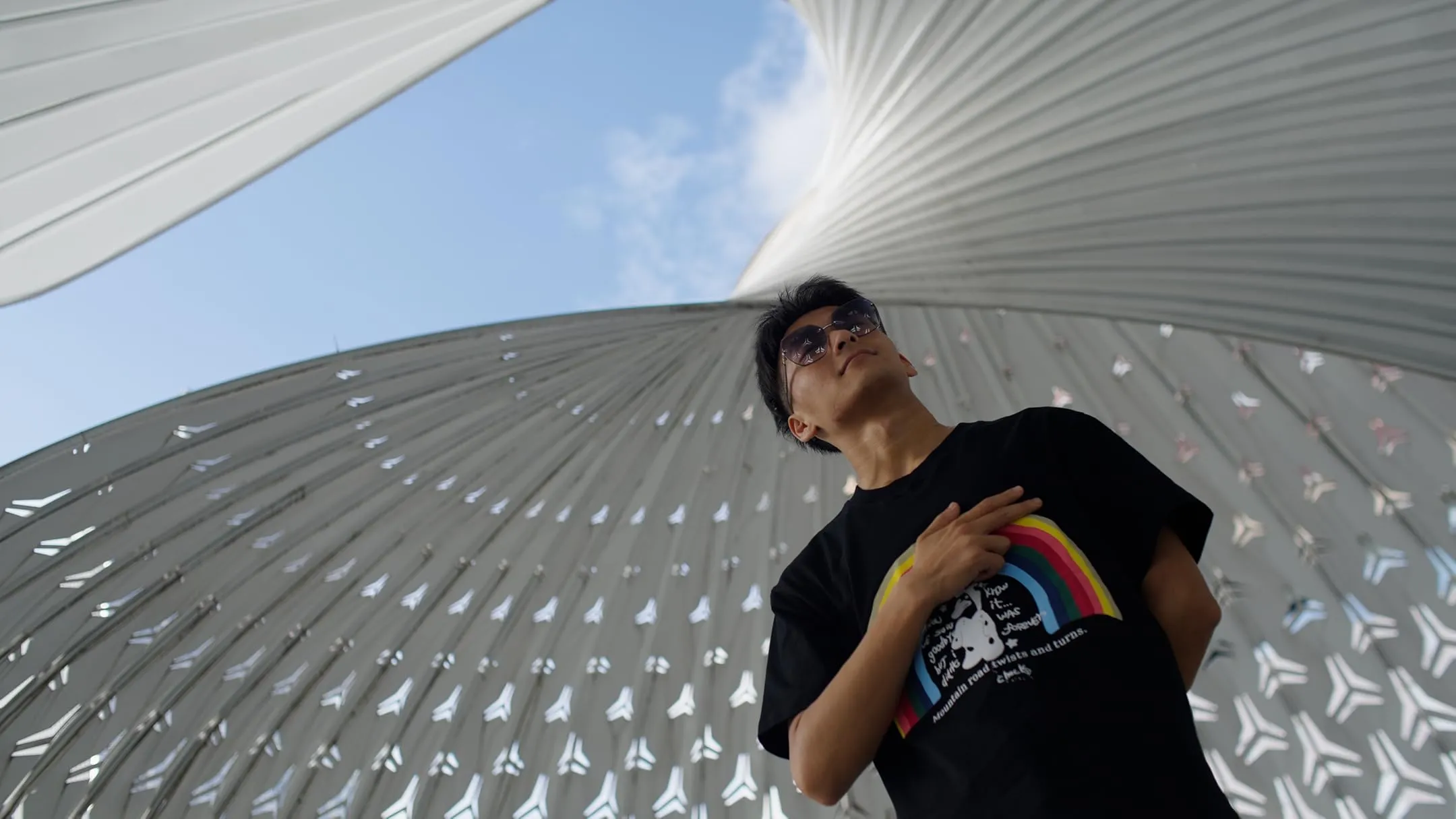
They are not just about building confidence through exposure therapy; they become public rituals of humiliation that sharpen the men’s feelings of failure. Each rejection feels less like a simple “no” and more like a confirmation of their deepest insecurities. The documentary cleverly introduces a powerful counterpoint to Hao’s philosophy through his wife, Wen.
She is also a relationship coach, but her approach is the antithesis of his. She helps women find fulfillment from within rather than changing for others. In private moments, she calls her husband’s methods “greasy” and confesses that his obsession with performance has eroded the man she fell in love with.
Their strained marriage becomes a powerful, real-time case study on the consequences of Hao’s worldview, revealing how a life built on performance can poison even the most intimate connections. This emotional drama is amplified by the film’s visual style. The camera work often mimics the glossy, upbeat feel of a romantic comedy, creating a sharp and unsettling dissonance with the characters’ palpable loneliness and despair.
An Unresolved Search
In a lesser film, the story would end with the men finding partners, their training validated. The Dating Game, however, makes a braver choice. The bootcamp ends, and the men are still single. Their romantic futures remain as uncertain as ever. This lack of a tidy resolution feels honest, reflecting a reality where formulas and quick fixes rarely solve deep human problems.
The true narrative arc belongs not to the students but to the teacher. An epilogue one year later shows Hao advising a new client. The man we see is transformed. Gone is the talk of tricks and manipulation. Instead, he speaks of building “inner strength” and amplifying one’s “true attributes.”
His own system failed him in his personal life, forcing him to learn the lesson his students were grappling with all along: authenticity is the only sustainable path. His evolution is the film’s quiet triumph. The Dating Game doesn’t offer easy solutions to loneliness, but it leaves us with a thoughtful and deeply human message. In a world that constantly asks us to perform, the most courageous and rewarding quest is the one to simply be ourselves.
The Dating Game is a 2025 documentary that offers an intimate look at China’s modern dating culture and the societal challenges facing its bachelors. The film follows three long-term single men—Zhou, Li, and Wu—who enroll in an intensive, seven-day dating camp led by the dating coach Hao and his wife Wen. It explores the pressures, insecurities, and vulnerabilities of these men as they attempt to find love in a country where the one-child policy has led to a significant gender imbalance. The film premiered at the Sundance Film Festival in 2025 and has since had a theatrical release in territories such as the U.K. It is a portrait that balances humor with the bittersweet reality of loneliness and the search for genuine connection amidst massive social shifts.
Full Credits
The Review
The Dating Game
The Dating Game is a poignant and deeply human documentary that transcends its simple premise. By focusing on the vulnerable quest of three men, it offers a sharp critique of a dating culture that prizes performance over personhood. While some of its broader societal observations feel brief, the film's strength lies in its emotional honesty and its thoughtful exploration of loneliness in our hyper-connected world. It is a compelling, quietly moving character study that will resonate long after the credits roll.
PROS
- A deeply empathetic and moving portrait of loneliness.
- Offers a fascinating look into the social consequences of China's one-child policy.
- Features a compelling character arc that thoughtfully critiques performative dating culture.
- Resists easy answers with an honest, unresolved conclusion.
CONS
- The brisk runtime leaves some fascinating societal tangents feeling underdeveloped.
- The focus remains tightly on the men, offering limited perspective from the women they pursue.
- The polished visual style can occasionally feel at odds with the subjects' raw vulnerability.