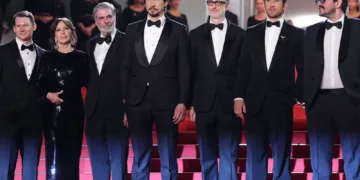











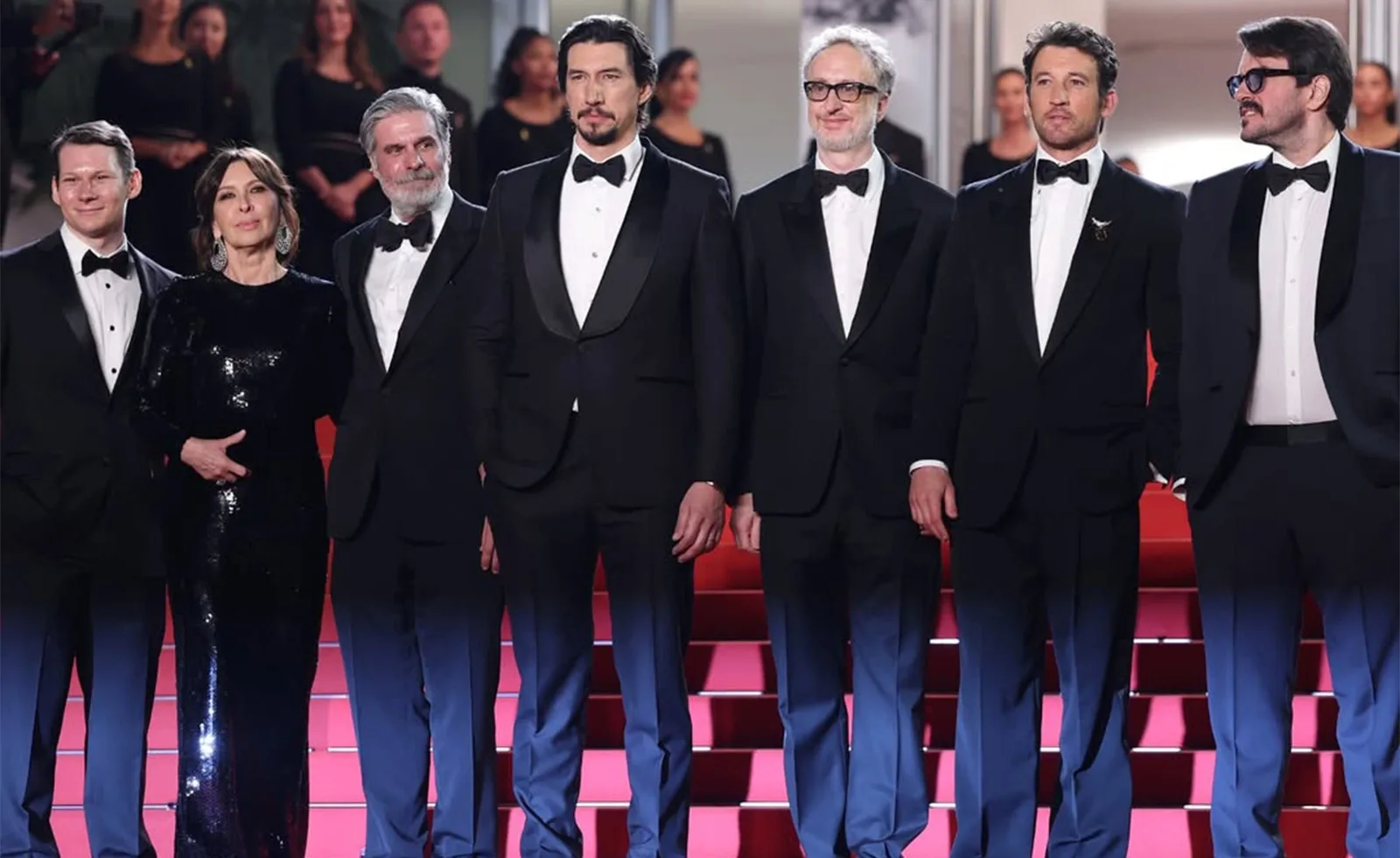

James Gray’s Paper Tiger exploded onto the Cannes competition Saturday night, earning a standing ovation that stretched close to ten minutes and left the director visibly overcome — though he couldn’t share the moment with one of his three stars. Scarlett Johansson, unable to attend because she is currently filming The Exorcist reboot, didn’t answer when Gray tried to reach her by FaceTime during the applause. He shook his head in mock exasperation as the call went to voicemail.
Adam Driver and Miles Teller, who play brothers drawn into catastrophe by a get-rich scheme gone badly wrong, flanked a boisterous Gray on stage. The director gestured to each of his leading men in turn, giving them their own moment in the spotlight. Cate Blanchett, Julianne Moore, and director Pawel Pawlikowski were spotted applauding in the audience.
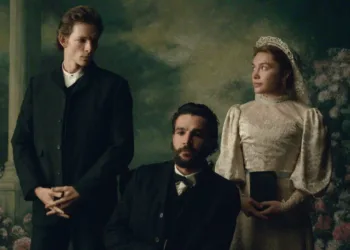
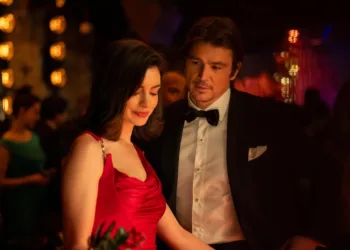
Set in 1986 Queens, the film follows brothers Irwin (Teller), a nebbish family man, and Gary (Driver), a former cop, whose plan to profit from a Gowanus Canal cleanup collapses when Irwin accidentally witnesses Russian mob activity. Gary’s attempt to broker a deal pulls them both deeper into violence. Johansson plays Hester, Irwin’s wife and the family’s moral anchor. Initial plans had Anne Hathaway and Jeremy Strong reprising their Armageddon Time roles, but scheduling conflicts forced Gray to reconceive the project in a more heightened, melodramatic register.
“To be very pretentious about it, the intention was to try to make a very classical drama,” Gray told The Hollywood Reporter ahead of the premiere. “People sometimes shit on that idea, ‘classical’ — they equate it with ‘old-fashioned,’ but the two are not the same thing.”
Critical reaction proved divided. The Hollywood Reporter called it Gray’s “ninth and arguably best film,” praising its “raw emotional power.” One review cited Driver’s performance — “slipping into Gary’s forced cockiness like it’s one of those tailored suits he wears” — and said Teller delivers his most satisfying work since Whiplash. Variety’s critic, however, wrote that Gray “serves up another hardscrabble outer-borough Jewish family, but the movie has more atmosphere than plausibility.”
This is Gray’s sixth Cannes competition entry, following Armageddon Time, The Immigrant, Two Lovers, We Own the Night, and The Yards — a run that has generated enormous critical admiration but no Palme d’Or. Neon, which has won the festival’s top prize for six consecutive years, holds North American distribution rights.
Addressing the crowd with evident emotion, Gray said: “Cinema needs you guys more than ever. Really, this is a very important time, and Cannes is so important for that reason.”