


















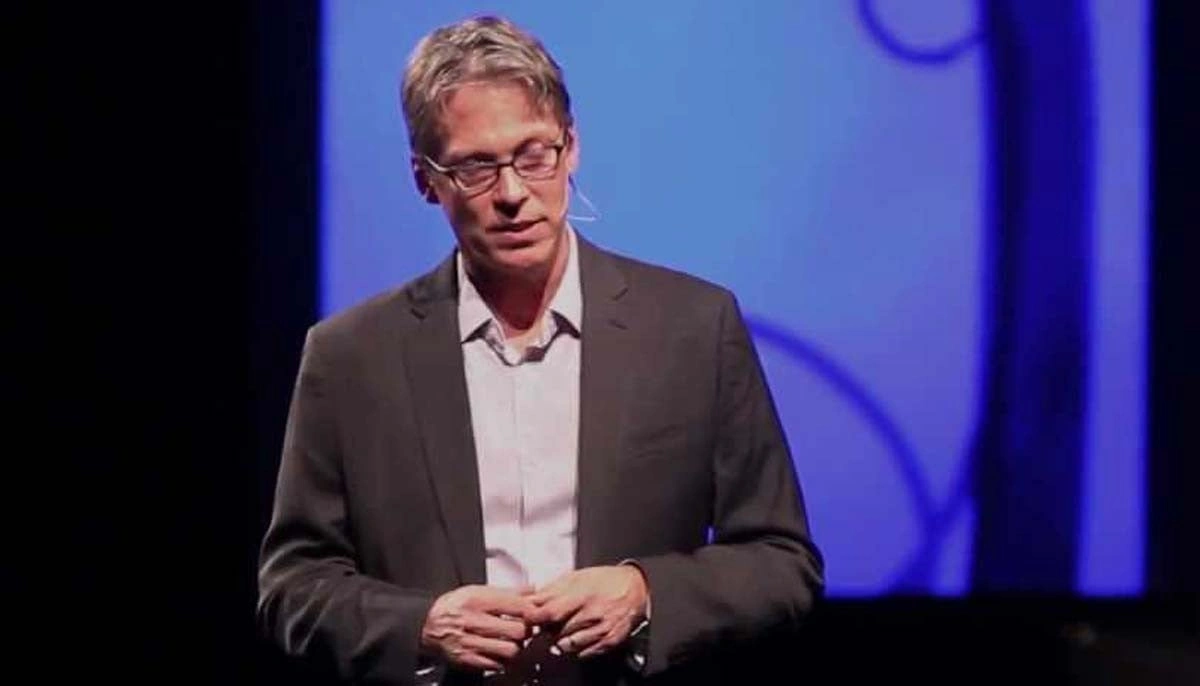

Brian Lindstrom, the Portland documentary filmmaker who spent three decades training his camera on the people America most readily ignores — the incarcerated, the homeless, those living with mental illness — died on May 15 from complications of Progressive Supranuclear Palsy. He was 65.
His wife, Wild author Cheryl Strayed, announced his death on Instagram. “Brian Lindstrom died this morning the way he lived — with gentleness and courage, grace and gratitude for his beautiful life,” she wrote. “Our children, Carver and Bobbi, and I held him as he took his last breath and we will hold him forever in our hearts.” Strayed had told followers only weeks earlier that Lindstrom had received a diagnosis of a serious, fatal illness.
Born in Portland on February 12, 1961, Lindstrom graduated from Lewis & Clark College with a degree in Communications in 1984 and later earned an MFA in screenwriting and film directing from Columbia University. The first in his family to attend college, he worked eight summers in an Alaskan salmon cannery to pay for his education — an experience that grounded his filmmaking in a lasting respect for individual struggle.
His 2013 film Alien Boy: The Life and Death of James Chasse examined the death of a man diagnosed with schizophrenia who died in Portland police custody on September 17, 2006. The film drew wide attention and earned Lindstrom the ACLU of Oregon’s Civil Liberties Award in 2017. His final feature, Lost Angel: The Genius of Judee Sill, documented the turbulent life of the acclaimed 1970s singer-songwriter, featuring interviews with Linda Ronstadt, Jackson Browne, David Crosby and Graham Nash. It premiered at DOCNYC and was awarded Documentary of the Year by the Docnroll Film Festival.
“I’m fascinated with people who transcend human frailty and other setbacks to discover their truer, better selves,” Lindstrom wrote on his website in 2007. “My films attempt to answer the question: ‘How does a person grow?'”
Strayed captured the through-line of his entire body of work in her tribute. “He made films about incarcerated moms and their kids, about people with mental illness and substance use disorders, about teens living in homeless shelters, foster care, and detention centers, about people who were at the bottom and trying to climb up,” she wrote. “He erased that X with his camera and his astonishing heart.”
Film critic Marc Mohan wrote of Lindstrom: “I don’t imagine I’ll encounter a human being with more compassion, integrity, and dignity.”
Strayed, who was his partner for more than thirty years, wrote: “He was a stellar husband. He was the most magnificent dad. He was a man whose every word and deed was driven by kindness, compassion, and generosity. He saw the goodness in everyone. He believed that we are all sacred and redeemable.”