
























![Kingdom Hearts Collection [I-III] Review](https://gazettely.com/wp-content/uploads/2026/10/Kingdom-Hearts-Collection-I-III-1-360x180.webp "Kingdom Hearts Collection [I-III] Review: KHII Holds Steady as Newer Entries Fluctuate 37")



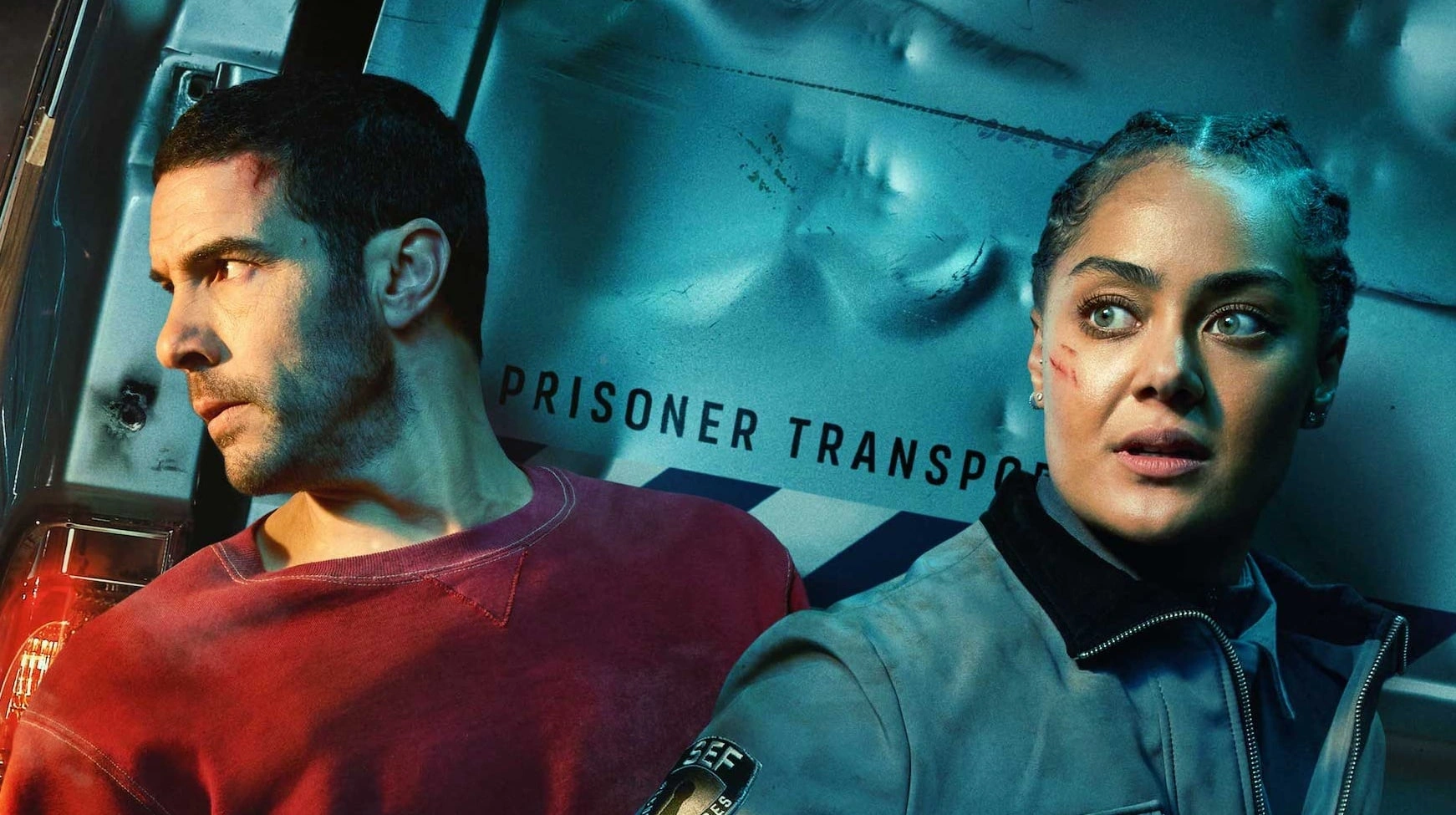

Amber Todd begins the day in a hush of domestic routine, the kind of quiet that feels ancient by lunchtime. At 6:30 am, she cradles her sleeping baby and prepares to return to a job where the workplace hazards go far past leaking bottles and nursery chaos. Her first shift back as a prison transport officer gives her exactly zero warm-up time.
Her assignment is Tibor Stone, a high-value asset with a redacted file and an unnerving gift for psychological x-ray vision. Stone is a living weapon for the Pegasus crime syndicate, a shadowy organization staring down a court case meant to cut off its head. The state needs his testimony to bring down Harrison Dempsey. The future of the prosecution rests on a man linked to forty-seven confirmed murders. No pressure, welcome back from parental leave.
The move from a Welsh safe house to the Old Bailey implodes inside a tunnel. A drone strike, carried out with military precision, turns the convoy into fire, metal, and bodies. Amber survives the blast and the wreckage, then finds herself alone with a prisoner who instantly smells a route to freedom. Her answer is tactical, frantic, and wonderfully simple: she clamps one handcuff around his wrist and the other around her own.
One metallic snap ties a law officer to a contract killer. They run into the Welsh wilderness with high-tech assassins closing in. The series treats the escape as a breathless race against time. The British legal system depends on the survival of a sociopath and the stamina of a woman who wants to get home to her child.
The Architecture of a Forced Partnership
The show’s main engine is the physical tether between Amber and Tibor. The writers turn a familiar chase setup into a pressure cooker built on cramped, miserable proximity. The handcuffs operate like the world’s worst relationship counselor. They remove privacy, comfort, and any clean path to safety. Every movement becomes a negotiation. Every dash through the trees turns into a clumsy survival duet.
That constraint keeps the balance of power shifting, which gives the series its pulse. Amber carries the bruised authority of the state. Tibor brings the cold, practiced competence of a man shaped by life in the shadows. Their physical connection makes the verbal combat feel inevitable, which is lucky, since they argue with the precision of people who might kill each other if given a spare minute.
Izuka Hoyle gives the show its human anchor. Her Amber is sharp, capable, and grounded in prison rehabilitation theory. She thinks about Albert Bandura’s social learning theory while people are shooting at her, a sentence that says plenty about the series’ chosen flavor of madness.
Amber comes across as a professional with a mind built for strategy. Her ethical conflict gives the action its emotional charge. She has to decide how many principles can be sacrificed before survival starts to resemble surrender. The thought of her newborn at home drives every dangerous move. She is a mother first and an officer second, and she still refuses to lose her prisoner.
Tahar Rahim meets that urgency with quiet, gravelly threat. His Tibor Stone understands his value in the food chain. He is a predator trapped in a cage, and still the most dangerous presence nearby. The script gives him Type 1 diabetes, a pulpy detail that works because it adds a separate countdown to the chase.
He needs insulin, which means his body is as dangerous to him as the assassins on the trail. His high IQ becomes another weapon. He studies Amber, probes her weak spots, and tests her moral limits with the calm of a man taking inventory. Their chemistry grows from distrust, wary respect, and the shared irritation of being physically attached to the last person either of them would choose.
The supporting cast widens the chaos with mixed levels of success. Brían F. O’Byrne makes Harrison Dempsey chilling by playing crime like corporate management. He is cold, rational, and frighteningly tidy. Leonie Benesch gives Nina, the assassin hunting her former mentor, a sharp and predatory charge. She stands for a newer kind of killer, one with fewer flashes of humanity than Tibor occasionally reveals.
Eddie Marsan and Catherine McCormack handle the bureaucratic strain of the conflict from the sterile rooms of the National Crime Unit. Their characters manage moles, missed deadlines, and institutional panic while Amber and Tibor bleed through the woods. The split between clean offices and muddy survival gives the show a wider sense of scale without losing its blunt momentum.
High Stakes and Swiss Cheese Logic
The Pegasus crime syndicate makes a strong antagonist because its tools feel current enough to sting. The operation has muscle, and technology gives the group its real menace. The warehouse devoted to 3D printing untraceable firearms anchors the threat in a world where organized crime can manufacture danger with unnerving efficiency. Harrison Dempsey’s trial hangs above the plot, giving the pursuit a clear purpose. Pegasus wants to keep its empire intact, which explains the extremity of its tactics, from drone attacks to government infiltration.

The script asks the audience to swallow several football-sized holes in practical logic. The transport plan for the state’s most vital witness feels like a masterclass in underthinking. A standard van, a handful of guards, and a known crime syndicate hunting the man? That security strategy seems designed by someone who confused danger planning with wishful thinking.
Harrison Dempsey’s house arrest raises similar questions. An electronic tag and a single guard feel flimsy for someone able to orchestrate a drone ambush. The series runs on pulp velocity, and that means a viewer may need to place several brain cells in airplane mode. The plot prizes speed ahead of sturdy mechanics.
The mole hunt inside the National Crime Unit supplies a second layer of tension. Suspicion ricochets among senior figures at a pace that borders on competitive sport. Alex Tebbit and Josephine Campbell represent the friction inside the system. Their professional hostility complicates rescue efforts and feeds disastrous judgment calls. The internal leak reaches Amber’s family with direct force.
Her husband, Olly, ends up fleeing after someone at headquarters compromises his location. That expands the threat from the Welsh hills into the space of the home, where safety should feel automatic. The traitor plot keeps the story moving during pauses in the chase. It pushes the audience to look for rot inside the institutions built to protect people.
The writing still finds smart, grounded details amid the carnage. The show addresses the logistical horror of two people handcuffed together during a bathroom break, which feels both practical and grimly funny. The choice to linger on that indignity makes the situation feel bodily, awkward, and human.
The detail adds practical misery to the setup. Amber and Tibor are bodies under stress, stuck with the same basic needs as everyone else. Those flashes of realism balance the larger swings of the plot. They make the danger feel rougher, sweatier, and less neatly choreographed.
Technical Precision and the Art of the Chase
The series finds its firmest footing in the technical execution. The first episode’s tunnel ambush is a visceral standout. The drone feels like its own character, a mechanical predator spraying fire and bullets with blank accuracy. The sequence is loud, chaotic, and genuinely jolting. It sets a high action bar.
The show favors a gritty, textured visual approach. It moves from rainy green Welsh expanses to cold industrial warehouses, and the settings carry the proper bleakness. The landscape seems ready to swallow the leads whole. The local tourism board may want that footage buried.
The action direction stresses the cost of movement. Wounds are patched with makeshift tools. Field medicine looks agonizing, messy, and unpleasantly specific. The scene involving the removal of a large piece of shrapnel from Tibor’s back is especially hard to watch.
The shootouts feel frantic and ragged, stripped of slick thriller polish, as if survival is being improvised second by second. That roughness recalls the weighty violence of shows like Gangs of London, where impact carries consequence. The camera stays close to Amber and Tibor, locking the audience into their shared orbit. The pull of the handcuffs is felt in every frame.
Sound design keeps tightening the screws. The score leans on low, pulsing rhythms that suggest constant emergency. The music’s identity is atmospheric dread, built far from traditional heroic themes. Aurora’s The Blade gives key moments a sharper edge, cutting through the visual carnage with icy force.
The location work gives the chase a grounded quality studio sets rarely achieve. The Welsh terrain looks beautiful and lethal, a stretch of hills and forests where help always seems miles out of reach. The move into London changes the rhythm of the pursuit. Wilderness survival mutates into a city-wide manhunt, and the series adjusts its tempo with clean efficiency.
The show works best as popcorn entertainment that knows the exact size of its popcorn bucket. It is a six-episode sprint, paced to keep viewers from staring too long at the plot holes. It leans on the strength of its two lead performances and the blunt force of its premise. The visual effects occasionally reveal budget limits during the larger explosions. They create enough danger to sell the threat.
The drone technology looks plausible enough to unsettle, which is half the job and possibly half the nightmare. The editing keeps the story moving at a brisk clip, built for a weekend binge and powered by one bleak question: is keeping a killer alive worth the damage done to everyone ordered to protect him?
Prisoner is a high-stakes British action-thriller that premiered on April 30, 2026. The six-part series, created and written by showrunner Matt Charman, is currently available to stream on Sky Atlantic and the NOW platform in the UK, with international distribution handled by NBCUniversal Global TV Distribution. The narrative centers on Amber Todd, a prison transport officer who is forced into a desperate survival mission when her convoy is ambushed. Shackled to a lethal contract killer, Tibor Stone, she must navigate a deadly manhunt through the Welsh countryside to reach the Old Bailey before a powerful crime syndicate silences their star witness.
Full Credits
Title: Prisoner
Distributor: Sky Atlantic, NOW
Release date: April 30, 2026
Rating: TV-MA (UK: 15)
Running time: 44–50 minutes per episode
Director: Otto Bathurst, Pia Strietmann
Writers: Matt Charman, Haleema Mizra
Producers and Executive Producers: Barney Reisz, Matt Charman, Foz Allan, Otto Bathurst, Adrian Sturges
Cast: Tahar Rahim, Izuka Hoyle, Eddie Marsan, Catherine McCormack, Leonie Benesch, Finn Bennett, Laurie Davidson, Brían F. O’Byrne, Ken Nwosu, Youssef Kerkour, Sam Troughton, Steven Elder, Kitty Reed, Daniel Betts, Selorm Adonu
Director of Photography (Cinematographer): Aske Foss, Florian Emmerich
Editors: Dan Roberts, Melanie Viner-Cuneo, Jesse Parker, Mags Arnold
Composer: Rupert Gregson-Williams
The Review
Prisoner
Prisoner succeeds as a relentless, high-octane distraction. It thrives on the magnetic friction between Izuka Hoyle and Tahar Rahim. While the script often collapses under the weight of its own logic, the propulsive pacing keeps the viewer anchored. It is a pulpy, explosive ride that favors adrenaline over airtight storytelling. If you can ignore the gaping plot holes and questionable transport logistics, you will find a thrilling, bingeable series that effectively scratches the itch for cinematic mayhem.
PROS
- The physical and verbal sparring between Hoyle and Rahim anchors the series.
- The six-episode format ensures the chase never feels stagnant.
- The inclusion of drone warfare and 3D-printed weaponry adds a contemporary edge.
- High-stakes set pieces, like the tunnel ambush, deliver genuine tension.
CONS
- Massive logistical errors in the transport plan strain credibility.
- Respected actors like Eddie Marsan have surprisingly little to do.
- Characters often choose the most dangerous path for the sake of drama.
- Certain CGI elements in large-scale explosions feel noticeably digital.







