








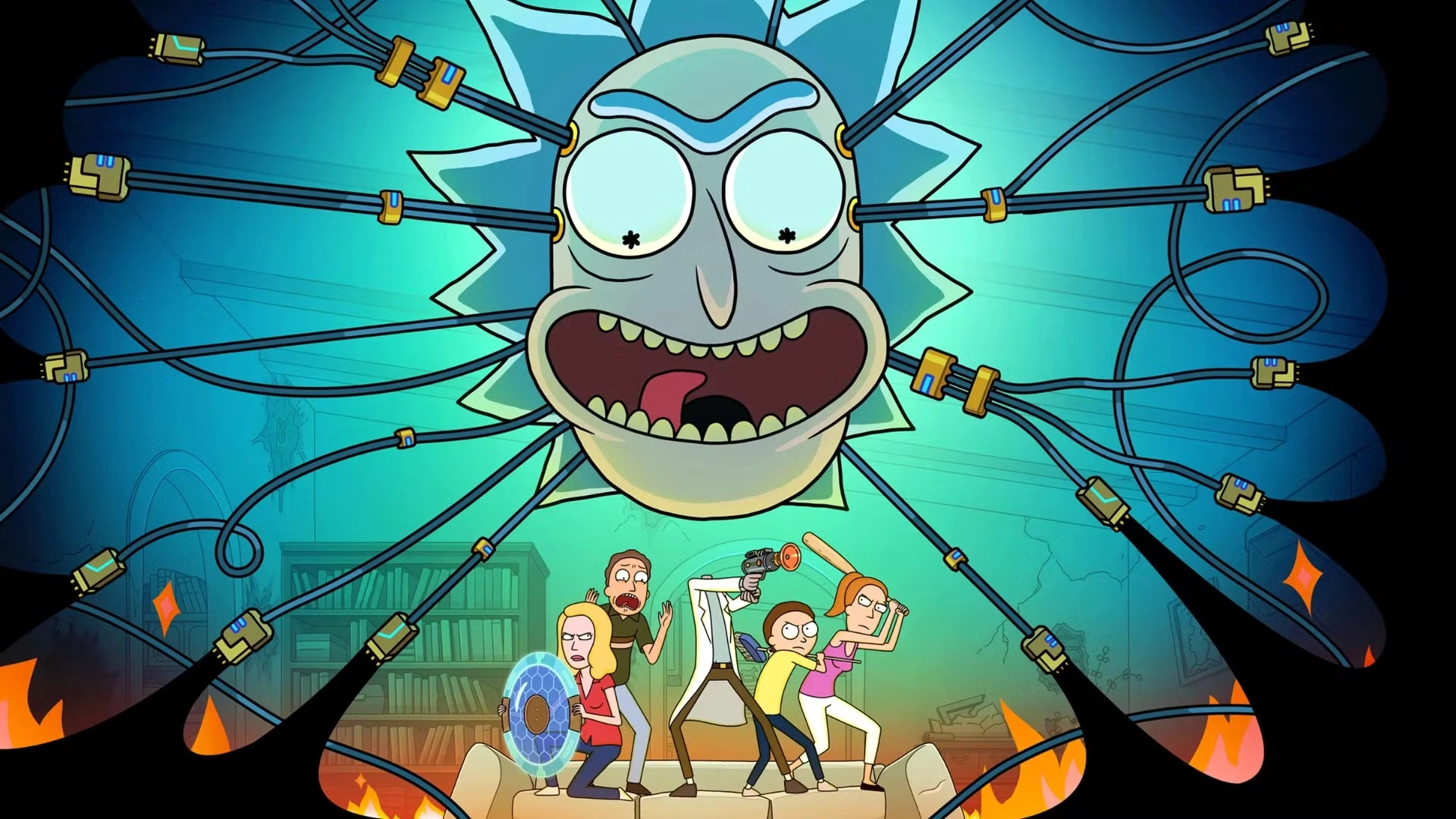

Contemporary television animation remains heavily populated by institutional mainstays rooted in comforting domestic repetition. Against this predictable backdrop, the emergence of a chaotic, multi-versal framework fundamentally altered the trajectory of speculative media.
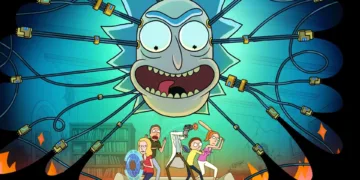
The series details the volatile exploits of Rick Sanchez, a brilliantly unhinged scientist, and Morty Smith, his deeply traumatized grandson, whose intergalactic excursions routinely fracture the stability of their mundane household. This structure operates as an ongoing interrogation of human insignificance, utilizing high-concept physics to strip away the traditional safety nets of the sitcom format.
Now entering its ten-episode ninth season under showrunner Scott Marder, the production functions within a stabilized creative infrastructure. The behind-the-scenes voice acting adjustments have completely solidified, allowing the text to shed any lingering transitional anxiety.
This specific run positions itself as a mature, self-aware critique of its own cultural legacy. Holding the structural tension between isolated, chaotic narratives and long-form canonical progression in productive friction, the show reflects current anxieties about identity, media saturation, and the exhaustion of generational trauma within digital streaming spaces.
Narrative Architecture, Linear Dissolution, and Pacing Mechanics
Modern digital platforms have structurally conditioned audiences to consume media through a rapid, hyper-linked methodology, a trend that directly influences the structural layout of this ninth season. The writing team engineering this run deliberately shifts away from traditional, wholly isolated episodes, constructing an interconnected framework where individual narratives fluidly bleed into subsequent chapters.
This design choice minimizes inconsequential filler material, establishing a cohesive trajectory that satisfies the demands of contemporary serialized viewing while maintaining the rapid-fire comedic rhythm essential to the animation’s identity.
This architectural shift begins with a dense, lore-heavy premiere that carries significant narrative risks. By leading the season with an entry deeply dependent on historical continuity, the production occasionally struggles under the weight of its own dense mythology. The series resolves this tension through a recurring, calculated contempt for its own established canon, utilizing aggressive retcon mechanisms to mock the audience’s desire for linear storytelling.
Characters are retroactively inserted into the fabric of the family’s history under the comedic pretense that they have always been vital components of the household, a narrative strategy that yields brilliant satire when paired with specific guest casting choices.
The core strength of this ten-episode block rests in its complex, half-hour genre deconstructions, which function as sharp criticisms of an entertainment industry currently obsessed with nostalgic pastiche. The creative team executes precise parodies that dissect cinematic structures, including:
- A meticulous martial arts deconstruction centered entirely on the absurd mechanics of a lethal exploding heart technique, parodying hyper-stylized action cinema.
- A psychological memory-wiping storyline that recontextualizes Rick under a mundane, vacation-focused identity, subverting the typical trope of the troubled genius seeking domestic escape.
- A hyper-violent, profane subversion of traditional summer camp narratives that strips away adolescent sentimentality in favor of survivalist chaos.
- A dense, multi-layered ecological spoof combining elements of classic science fiction and wilderness survival films, dismantling corporate environmental tropes.
The comedic execution achieves its highest level of success when it isolates mundane domestic details and systematically hammers them into absolute absurdity. The writers seize upon the simple fact that the Smith family possesses a suburban swimming pool, elevating this throwaway property asset into a recurring, cyclical joke that gains comedic power through relentless repetition.
The mechanical precision of the writing remains largely sharp, with rare pacing hitches occurring when specific jokes are allowed to linger too long in the frame. These brief moments generate an awkward, static silence where the dialogue lacks the strength to fill the void, though these instances remain exceptions within a highly sophisticated exploration of television form.
Character Dissolution and the Morality of Cosmic Consequence
The thematic focus of this season moves deliberately away from external, multiversal threats to examine the psychological decay occurring within the central duo. Following the definitive resolution of his long-standing arc with Rick Prime, Rick Sanchez encounters the grim reality that his ultimate adversary is his own unyielding self-loathing.
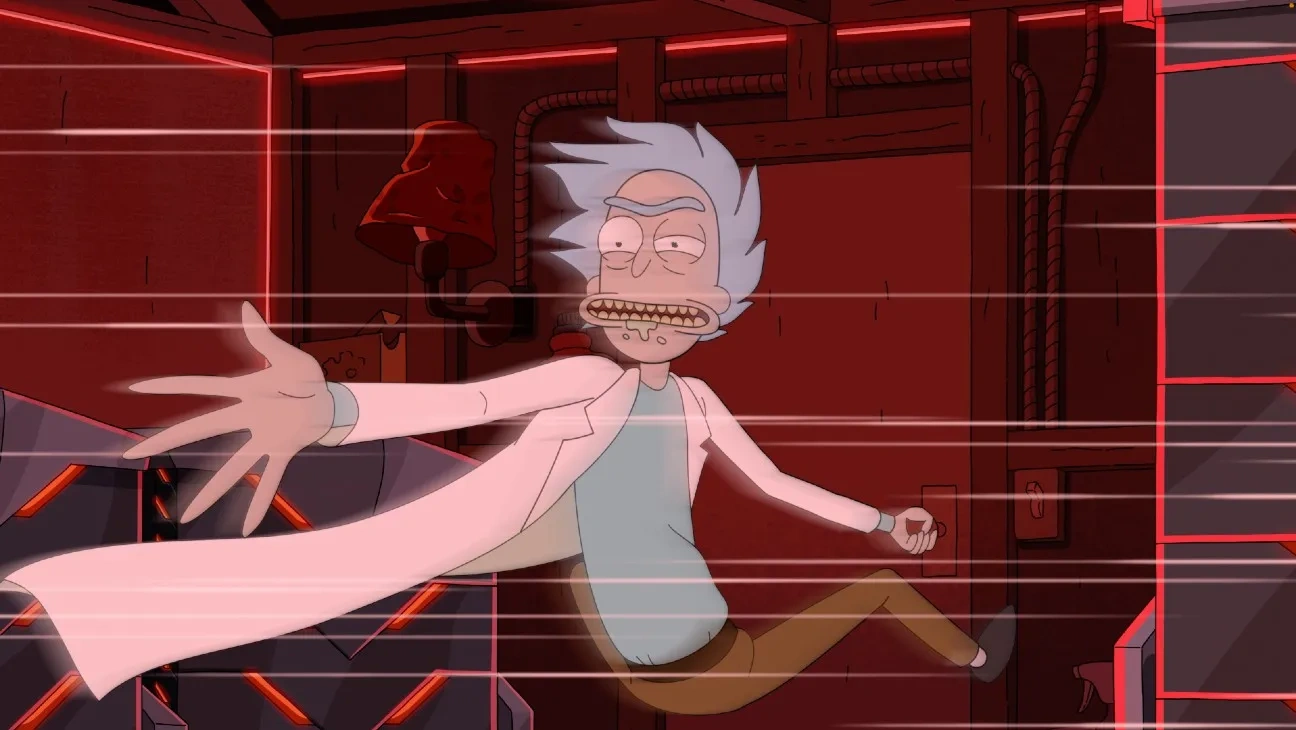
The narrative focuses squarely on his severe flaws, explicitly linking his unparalleled scientific intellect to an active, destructive sociopathy. His profound existential torment is fueled and symbolized by a literally bottomless vodka flask connected to dimensional portals, an inventive visual device that transforms a tragic, addictive coping mechanism into an infinite loop of reckless behavior.
Simultaneously, Morty Smith undergoes a parallel psychological evolution defined by an increase in personal autonomy and self-esteem. This growth comes at an immense moral cost to his character. Morty displays a systematic willingness to make ruthless, deeply selfish decisions, demonstrating that his years spent acting as a cosmic sidekick have infected his psyche with his grandfather’s toxic individualism.
The typical narrative structure of the season regularly places the protagonists in idealized alien environments or alternate dimensions, with the duo proceeding to completely ruin these societies for purely narcissistic ends, leaving vast mountains of collateral damage in their wake.
This ethical decay reverberates directly through the shifting dynamics of the suburban household. The writing occasionally reaches for a collaborative family dynamic, though Rick’s overwhelming narrative dominance frequently sidelines the female characters.
Summer, Beth, and Space Beth are often compressed into brief comedic asides rather than receiving sustained development, exposing a structural imbalance in how the show distributes its representational focus. Jerry benefits from dedicated subplots driven entirely by an unearned, fragile confidence, providing the series with an excellent vehicle to critique contemporary masculine anxieties and domestic inadequacy.
The series balances this consequence-free sci-fi anarchy with a dark, persistent undercurrent of human accountability. The cartoon format permits extreme violence without immediate legal or physical retribution for the main characters, yet the vast trail of mutilated corpses left behind highlights their fundamental sociopathy.
Both characters remain trapped in a state of deep emotional neediness, framing Rick as both the chaotic source of and the desperate solution to the family’s ongoing existential crises. By continuously exploding and reforming this nuclear family structure, the text offers a powerful commentary on the cyclical, inescapable nature of domestic trauma.
Technical Sophistication and Vocal Continuity in the Digital Era
The material production values of modern adult animation serve as a direct reflection of industry-wide shifts regarding creative labor, technological adaptation, and authorial voice. In an entertainment landscape increasingly pressured by automated tools, this season leans heavily into the tangible, idiosyncratic choices of its creative team.
The animation departments achieve a remarkable level of formal sophistication, preserving the signature, clean aesthetic of the series while executing incredibly fluid character movement and visually complex, high-concept environments that rival major cinematic blockbusters.
This technical stability is mirrored in the vocal performances, which have fully moved past the awkwardness of prior transitional seasons. Multiple years into their tenures as the titular characters, Ian Cardoni and Harry Belden deliver work that completely secures the narrative continuity of the franchise.
Cardoni achieves an incredibly precise replication of Rick’s established vocal tics, maintaining the gravelly, erratic cadence necessary for the character’s drunken rants. Belden handles Morty with a slightly heightened, anxious energy that perfectly matches the character’s transition from a passive, nervous child to an autonomous, increasingly cynical agent.
The production further enhances its technical execution through the strategic utilization of retcon writing paired with precise guest casting. The integration of recognizable Hollywood personalities, such as Owen Wilson playing an allegedly lifelong family friend, functions as a deliberate tool to destabilize audience expectations.
By placing familiar, comforting vocal personas into highly subversive, profanity-laced scenarios, the show effectively satirizes the commercial safety of mainstream media. This approach demonstrates that long-running animated properties can maintain their critical edge, proving that structural longevity does not require the sacrifice of formal or thematic radicalism.
The critically acclaimed animated sci-fi sitcom returns for its ninth block of cosmic misadventures, following the brilliant yet unhinged scientist Rick Sanchez and his structurally stressed grandson Morty Smith. Showrun by Scott Marder, this ten-episode run explores the internal psychological wreckage of its main characters through dense genre deconstructions and sharp domestic parodies. The series premieres on the cable network Adult Swim on May 24, 2026, before expanding its digital footprint to major streaming services, where new episodes will become available to stream weekly on both HBO Max and Hulu starting June 15, 2026.
Where to Watch Rick And Morty Season 9 Online









Full Credits
Title: Rick and Morty Season 9
Distributor: Adult Swim, HBO Max, Hulu
Release date: May 24, 2026
Rating: TV-MA
Running time: 22–30 minutes per episode
Director: Wesley Archer, Pete Michels, Jacob Hair, Nathan Litz, Kyoung Hee Lim, Bryan Newton, Juan Jose Meza-Leon
Writers: Dan Harmon, Justin Roiland, Scott Marder, Tom Kauffman, Eric Acosta, Wade Randolph, Mike McMahan, Siobhan Thompson
Producers and Executive Producers: Dan Harmon, Justin Roiland, Scott Marder, Steve Levy, James Fino, Joe Russo
Cast: Ian Cardoni, Harry Belden, Chris Parnell, Sarah Chalke, Spencer Grammer, Owen Wilson
Director of Photography (Cinematographer): Not applicable for standard 2D animation, production design led by Jeffrey Thompson
Editors: Lee Harting, Nick Reczynski
Composer: Ryan Elder
The Review
Rick And Morty Season 9
Season 9 proves that Rick and Morty retains its status as a premier engine of animated satire, skillfully shifting its focus from sprawling multi-versal conflicts to the intimate, devastating landscape of internal psychological decay. The tight narrative integration reduces standard episodic filler, allowing the complex genre deconstructions to land with maximum impact. Although minor structural pacing hitches slightly disrupt the comedic timing, the striking visual execution and vocal continuity solidify the show's architectural longevity. It remains a deeply relevant, razor-sharp exploration of domestic trauma and existential dread.
PROS
- The season successfully reduces inconsequential filler material by utilizing a tightly interconnected episodic framework.
- Shifting the antagonistic focus inward highlights Rick’s profound self-loathing and Morty's moral erosion, adding rich analytical layers.
- The performances of the lead voice cast fully solidify, maintaining flawless continuity alongside highly sophisticated animation.
- The half-hour genre parodies are meticulously plotted, delivering sharp industry and cultural critiques.
CONS
- Rick's overwhelming narrative presence frequently sidelines the female characters, reducing them to brief asides.
- Rare comedic missteps occur when specific jokes linger too long, creating awkward narrative silence.
- Initiating the season with a heavily canon-dependent episode presents a high narrative risk that occasionally drags under its own weight.