

























![Kingdom Hearts Collection [I-III] Review](https://gazettely.com/wp-content/uploads/2026/10/Kingdom-Hearts-Collection-I-III-1-360x180.webp "Kingdom Hearts Collection [I-III] Review: KHII Holds Steady as Newer Entries Fluctuate 37")



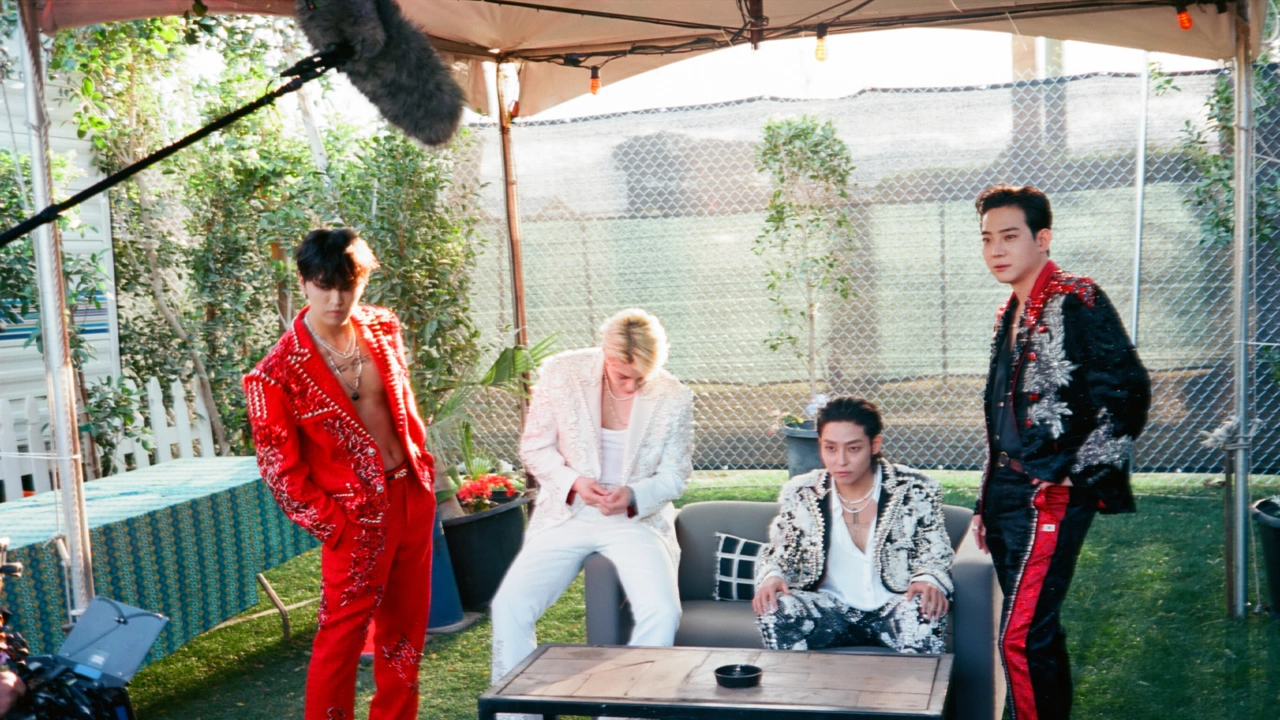

Success for a rock band now rarely follows a clean, straight climb. Eugene Yi captures that reality in his 85 minute documentary by opening on the stage of the 2024 Coachella festival. The crowd’s roar collides with the quiet that marked the group’s early years. Woosung, Dojoon, Hajoon, and Taegyeom stand before thousands, far removed from the small rooms where they first practiced.
The quartet comes across as self-formed, a band working at the edge of a South Korean music industry built around carefully curated idol groups. The band’s name carries meaning that the film studies with useful clarity. A rose suggests beauty, with thorns that protect it. That image fits their career with almost game-like precision: reward, resistance, risk, recovery.
They have lived through global fame and the sharp pain of industry litigation. The documentary becomes a key record for the international community that gathered around them. It presents a group that endured a system designed to manufacture stars while leaving independent artists exposed. Yi avoids the usual promotional polish. He studies the physical stamina, creative trust, and emotional maintenance required to keep a band together for seven years.
From the Pavement of Hongdae to Global Stages
The story moves back to the streets of Hongdae in Seoul, where the group’s foundation was built on pavement. Before stadium tours, the trio known as Windfall spent nights busking for tips. Dojoon, Hajoon, and Taegyeom learned from instant reactions, the kind of feedback loop any player of a performance-based game would recognize. A passerby either stops or keeps walking. That direct response shaped their work ethic. They eventually crossed paths with Woosung, a Korean American who had participated in the reality competition K-Pop Star. His arrival fixed the lineup into place.
Archival footage gives the early stretch its strongest texture. The film highlights their rejection of the traditional trainee system, because these musicians wanted to write their own songs and keep creative control. That choice carried risk. It led to the release of their debut single, Sorry, after their management at J&Star Company expressed doubt about the track. The company believed the song was too slow and sad to become a hit. The band held its position and insisted the music should reflect lived experience.
Those early meetings give the documentary a clear dramatic engine. The tension works like a design problem: who gets control of the input, the player or the system? The Rose functioned as a collective, pushing against a model that treated performers as figures executing choreography to pre-recorded tracks. Footage of the move from small clubs to sold-out shows in cities like Paris and New York reveals a group gradually finding its own sound. They move from covering pop hits to defining a specific rock aesthetic, and the film makes that progression feel earned.
The Attrition of Legal Battles and Personal Silence
The film then enters a period of deep professional and personal crisis. In 2020, the members sued J&Star Company, citing non-payment and a lack of transparency in their contracts. The label answered with a countersuit that threatened to end their careers.
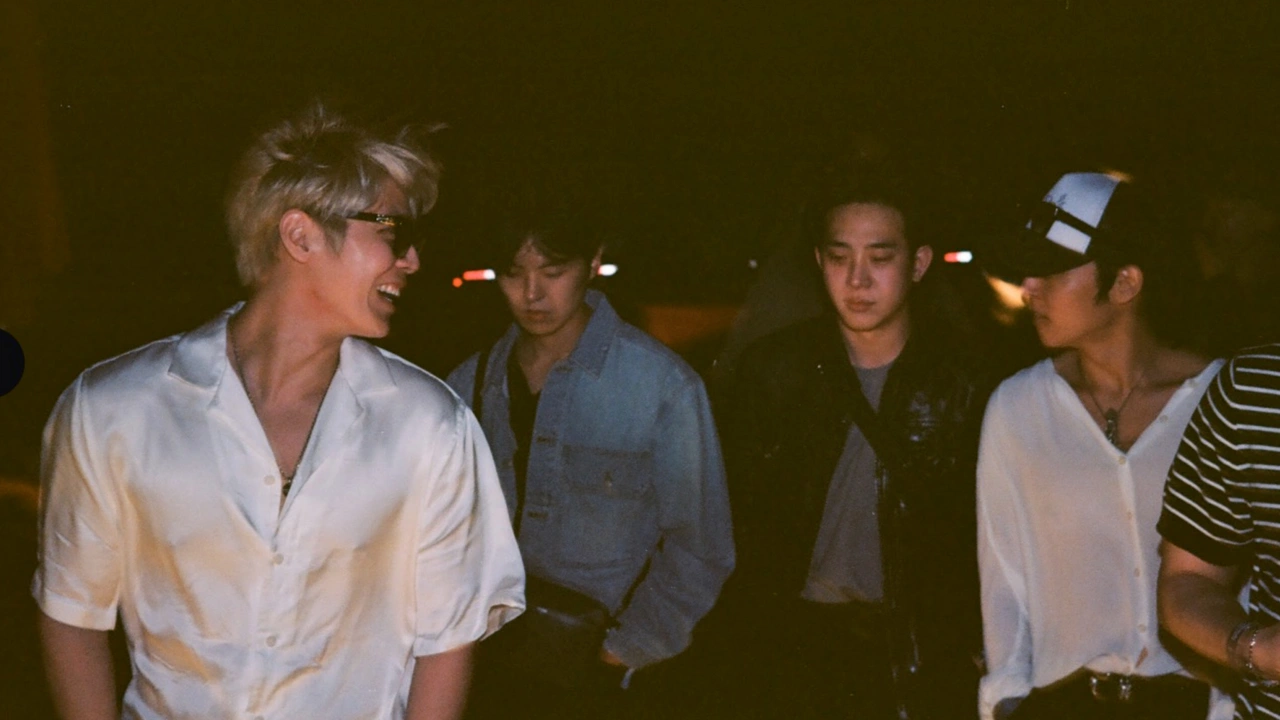
This legal limbo arrived alongside controversy around Woosung and a past marijuana charge. In South Korea’s cultural climate, the news brought serious backlash. He became a target for media scrutiny. The band’s momentum stalled as the world entered pandemic lockdown.
During this same stretch, the three South Korean members began their mandatory military service. The forced hiatus tested the group’s endurance in a way that fame rarely prepares anyone for. Taegyeom speaks openly about his mental health during enlistment and describes a period of heavy depression. The film treats these subjects with directness, avoiding emotional manipulation. It presents the events as part of their existence, painful and plain.
Woosung used the time for solo projects and the ongoing legal fight. He carried the weight of the band’s future while his friends were in uniform. The documentary portrays this stretch as silence, waiting, and pressure without easy release. It shows the emotional cost of being an independent artist in a market that can punish rule-breaking. Their eventual victory in the lawsuit restored legal standing and helped them reclaim their identity as a unit.
The Visual Metaphor of Resilience and Rebirth
The technical side of the film tracks the quartet’s emotional growth. Richard Hama’s cinematography draws a clean separation between different eras of their career. The early years look gritty and immediate. The camera stays close to the members as they move through small practice rooms. As the band approaches world tours, the frames grow wider and more cinematic. The visual scale mirrors their expanding reach, giving the documentary a sense of progression that matches the band’s own creative arc.
Yi also uses hand drawn animation to represent difficult internal states. Rising water becomes a metaphor for the depression Taegyeom felt. The choice is simple and effective, allowing the audience to grasp the experience without heavy exposition. That kind of visual design matters because it gives feeling a form. It turns private pain into an image the viewer can sit with, much like a strong game mechanic can translate emotion into action.
The group eventually signed with Transparent Arts, a move that signaled total independence. That freedom allowed them to return to the stage with renewed purpose. The final act comes back to Coachella, where the music gains scale through a marching band and a string section. Their arena rock takes on maturity without losing its direct emotional charge.
The film builds around the Heal Together philosophy shared by the band and its fans. Woosung states that music is a tool for survival and therapy. The bond with the Black Roses is framed as a partnership between band and audience. The closing feeling is triumphant because the film has shown the cost behind it. Authenticity carries measurable value here. The Rose return with control over their own narrative.
The Rose: Come Back to Me is an intimate documentary that tracks the journey of the South Korean rock band The Rose from their early busking days in the Hongdae district of Seoul to their massive 2024 performance at the Coachella Valley Music and Arts Festival. Following its award-winning world premiere at the Tribeca Festival in June 2025, the film was released in theaters worldwide on Valentine’s Day 2026. The documentary provides an unfiltered look at the band’s struggles with the K-pop industry, legal disputes with former management, and their eventual independent success under Transparent Arts.
Where to Watch The Rose: Come Back to Me (2026) Online
Full Credits
Title: The Rose: Come Back to Me
Distributor: CJ 4DPlex
Release date: February 14, 2026
Running time: 86 minutes
Director: Eugene Yi
Writers: David E. Simpson, Eugene Yi
Producers and Executive Producers: Diane Quon, Sanjay M. Sharma, Milan Chakraborty, James Shin, Joe Plummer, Janet Yang, Jenifer Westphal, Roland Kassis, Alyssa Schroeter, Regina K. Scully, Bina Shukla, Brenda Robinson, James Roh, Daniel Park
Cast: Woosung Sammy Kim, Dojoon Leo Park, Hajoon Dylan Lee, Taegyeom Jeff Lee
Director of Photography (Cinematographer): Richard Hama
Editors: David E. Simpson
Composer: Chad Cannon
The Review
The Rose: Come Back to Me
Eugene Yi delivers a clear look at the cost of creative freedom. This documentary avoids the shallow tropes of the genre by focusing on the grit of the legal and personal battles faced by the quartet. The visual choices, especially the animation, provide a deep look at their internal struggles. It serves as a sharp reminder that independent success requires immense sacrifice. The Rose: Come Back to Me is a required watch for those who value authenticity in a commercialized industry.
PROS
- Unfiltered and honest interview segments.
- Creative use of visual metaphors to represent mental health.
- Effective contrast between archival footage and modern stadium performances.
- Strong narrative arc that avoids emotional manipulation.
CONS
- Assumes a level of familiarity with the band’s discography.
- Certain business and legal details feel brief.







