


















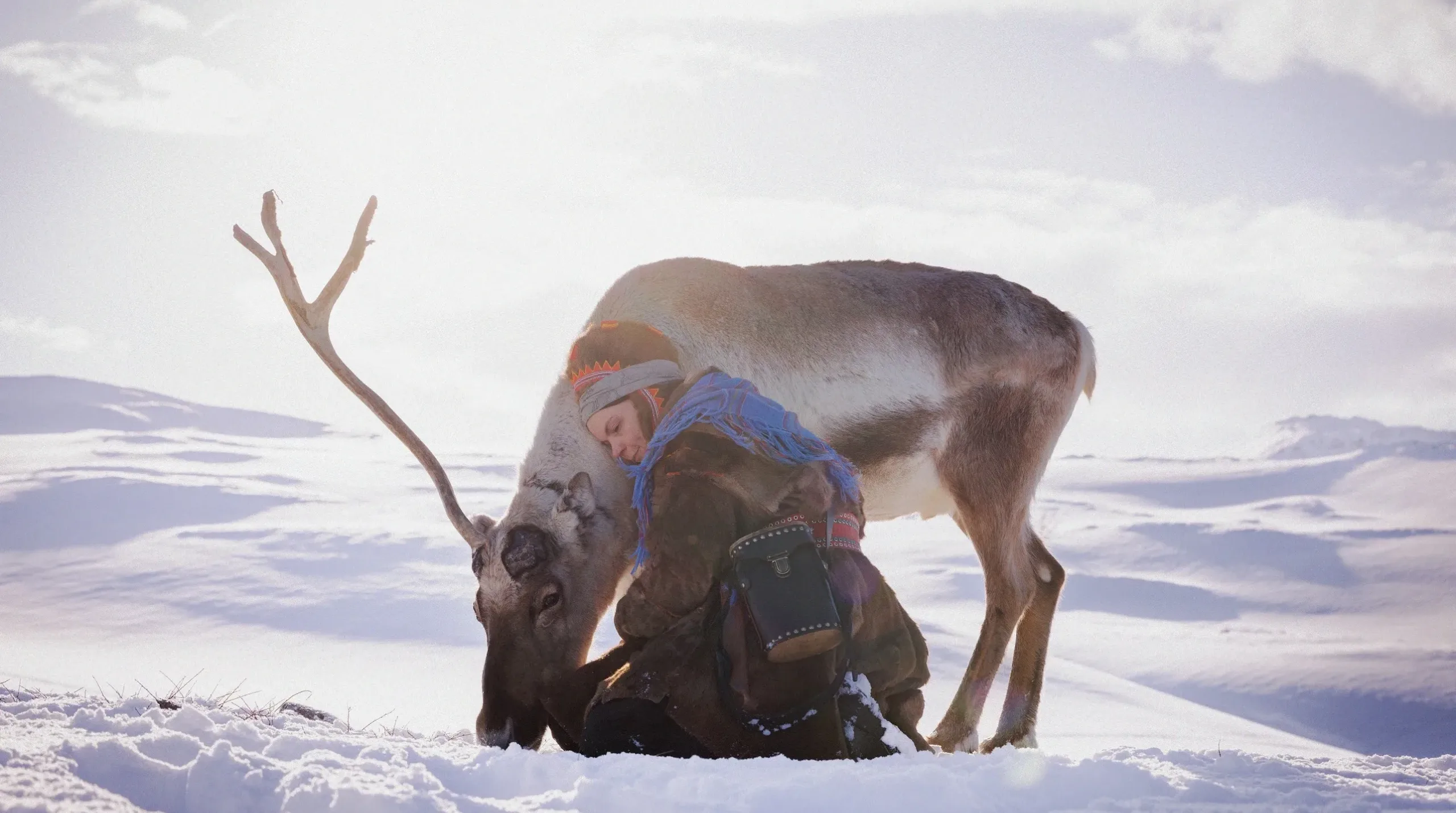

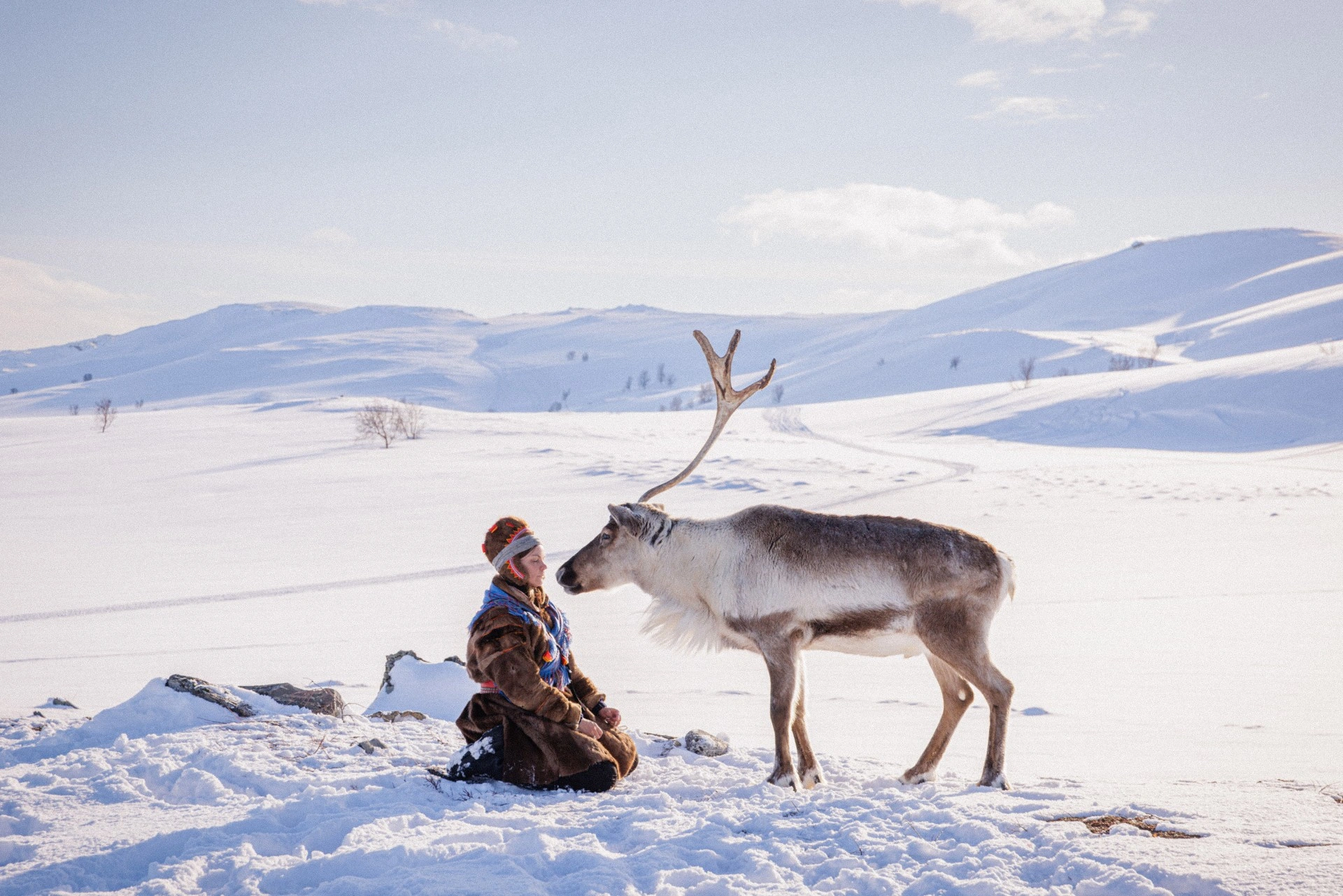
Elle Sofe Sara’s debut feature, Arru, opens inside a silence heavy enough to press against the body. Across Sápmi’s northern reach through Norway, Sweden, Finland, and Russia, the white land spreads with an awful calm, a place where life and death often seem to share the same breath. Maia lives within that whiteness, herding reindeer with her brother Danel and her daughter Ailin.
A snowmobile tears over the ice, its metallic cry crossing the ancient wind. The sound marks the wound where ancestral rhythm meets modern need. Cellphones and engines have entered a nomadic existence once governed by the herd’s pulse. In the first images, a distressed reindeer miscarries, and the film places biological sorrow before us with blunt, bodily force.
That interrupted life echoes the outside danger of a mining project ready to consume the grazing grounds. Lemme, Maia’s brother, comes back from Canada to fight this corporate specter. He arrives with law in his briefcase, while the family carries permafrost inside its bones. Cecilie Semec’s cinematography watches this world with a gaze that feels close enough to wound and wide enough to swallow a person.
The Architecture of Silence
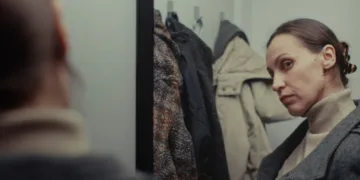
The film contracts from industrial menace into the rot inside a family. When Lemme steps into the home, the air seems to sour. Maia wants a defender and brings in another kind of ghost. Danel withdraws into a husk of injured quiet. Lemme fills the room with a loud, predatory force that darkens with the lengthening shadows. Their shared past has become a sealed chamber of trauma, locked for decades.
The community keeps a brutal omertà, a collective burial of the brothers’ sins that protects a fragile image of cultural strength. Maia’s decision becomes an existential wager. She believes the land must be saved at any cost, even through the presence of a man who once shattered Danel’s spirit. The house turns into a moral tribunal, with lineage, safety, memory, and fear pressing against one another.
Mikkel Gaup gives Lemme a chilling complexity. Once the heroic figure of Pathfinder, he now carries the darkness that the story demands to be cast out. The screenplay studies a terrible paradox: cultural preservation can shelter personal destruction. Silence circulates through this household like money, and the debt has reached the point of collapse.
Blood Rhythms and the Ancestral Ghost
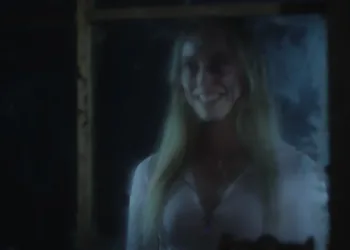
Elle Sofe Sara’s background as a choreographer turns the screen into a chamber for the subconscious. Yoik chants rise from the throat as primal vibrations. They become instruments of survival, speech for characters whose grief exceeds ordinary language. In one sequence, Maia runs across the frozen earth while spirits gather around her. The image gives shape to a lineage refusing oblivion.
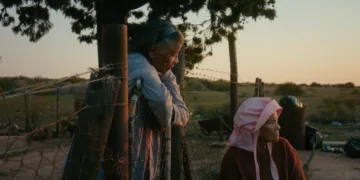
The film treats this way of life with an unsparing eye. A reindeer is butchered with clinical efficiency for a feast, and the scene insists that the land asks for sacrifice. Nature becomes an active presence, demanding blood and labor. Semec films the mountains and fjords like sentient witnesses.
The landscape observes human pain with cold indifference. John Erik Kaada’s score seems tuned to the tundra’s hidden frequency. The casting of genuine Sami activists gives the musical passages a grave authenticity. These performers manifest a history still being written into the snow. In the protest camp scene, the choreography releases a shock of energy, like a heartbeat returning to a frozen body.
The Rupture of Tomorrow
Survival demands a transformation beyond the preservation of physical territory. Ailin carries the perspective of a generation unwilling to inherit the elders’ secrets. She sees the environmental fight and the family’s internal decay with a clarity Maia cannot reach. Arru’s resolution suggests that a culture built on hidden truth has already begun to die. Maia must choose between the land and the safety of her child.
Speech becomes a violent rupture in a community that treats silence as protection. The price is severe. The fragile peace Maia has preserved across her life breaks apart. The final images offer resilience without comfort. True preservation requires the courage to burn old structures and leave space for honesty.
The film becomes a dark meditation on progress, accountability, and the monsters welcomed to the table. Its story is specific to the Sápmi people, and its wound extends toward anyone forced to decide what deserves protection. The land remains. The people walking upon it must pass through the fire of accountability and emerge changed.
Arru is a groundbreaking Sámi musical drama that officially premiered at the 76th Berlin International Film Festival in the Panorama section on February 16, 2026. As of today, May 5, 2026, the film is continuing its festival circuit and is expected to expand into specialized streaming platforms such as MUBI and select independent theaters later this year. The story follows Maia, a reindeer herder in the Sápmi region, as she navigates the existential threat posed by a mining project and the surfacing of long-suppressed family traumas. It stands as a significant cultural milestone, being the first feature-length film to center its narrative around the tradition of joik.
Full Credits
Title: Arru (also stylized as Árru)
Distributor: The Yellow Affair, Stær Film
Release date: February 16, 2026
Running time: 110 minutes
Director: Elle Sofe Sara
Writers: Johan Fasting, Elle Sofe Sara
Producers and Executive Producers: Elisa Fernanda Pirir, Ragna N. Midtgard, Pasi Hakkio, Simon Kloos
Cast: Sara Marielle Gaup Beaska, Ayla Nutti, Simon Issát Marainen, Mikkel Gaup, Niillas Holmberg, Nils Gaup
Director of Photography (Cinematographer): Cecilie Semec
Editors: Michal Leszczylowski
Composer: John Erik Kaada
The Review
Arru
Arru presents a stark meditation on the friction between a wounded past and a threatened future. It captures a landscape that feels like a witness to human fragility. The film is a cold, honest look at the price of silence in a community defined by its connection to a beautiful, indifferent earth. Its power lies in the raw vibration of its song and the refusal to offer easy comfort. The weight of its domestic tragedy provides a haunting anchor to its political urgency.
PROS
- Visceral cinematography that treats the Sápmi landscape as a living, breathing participant.
- Integration of yoik and choreography as a primary language for the subconscious.
- A dark, nuanced performance by Mikkel Gaup that subverts his historical cinematic legacy.
- An unsentimental approach to Indigenous life that avoids romanticism.
CONS
- Abrupt shifts in tone between the legal land-rights plot and the internal family trauma.
- Occasional stiffness in the dialogue during non-musical sequences.
- A narrative structure that feels fragmented during the second act.