























Bitter is a brutal desert planet scattered with the metallic remains of a forgotten interstellar war. Survival has become daily labor. Communities scrape together shelter inside the hollowed hulls of wrecked spaceships, all living beyond the perimeter of Delight, the single functioning city left. In this wasteland, the energetic scavenger Lukida carries the largest debt on the planet.
That debt sits under the control of Fennec, her demanding employer and the local governing authority. Lukida wants one thing: passage away from this barren world. She appears to get it when she secures a ticket off the planet for herself and her close companions.
That hope collapses after a mysterious giant robot attacks her and steals the ticket. Lukida wakes to enormous medical costs from Phoenix Services, then begins a desperate search for the thief. The chase expands into a wide adventure, drawing her crew into a dangerous conflict with a powerful organization and uncovering Bitter’s buried history.
Charismatic Scavengers and Structural Pacing
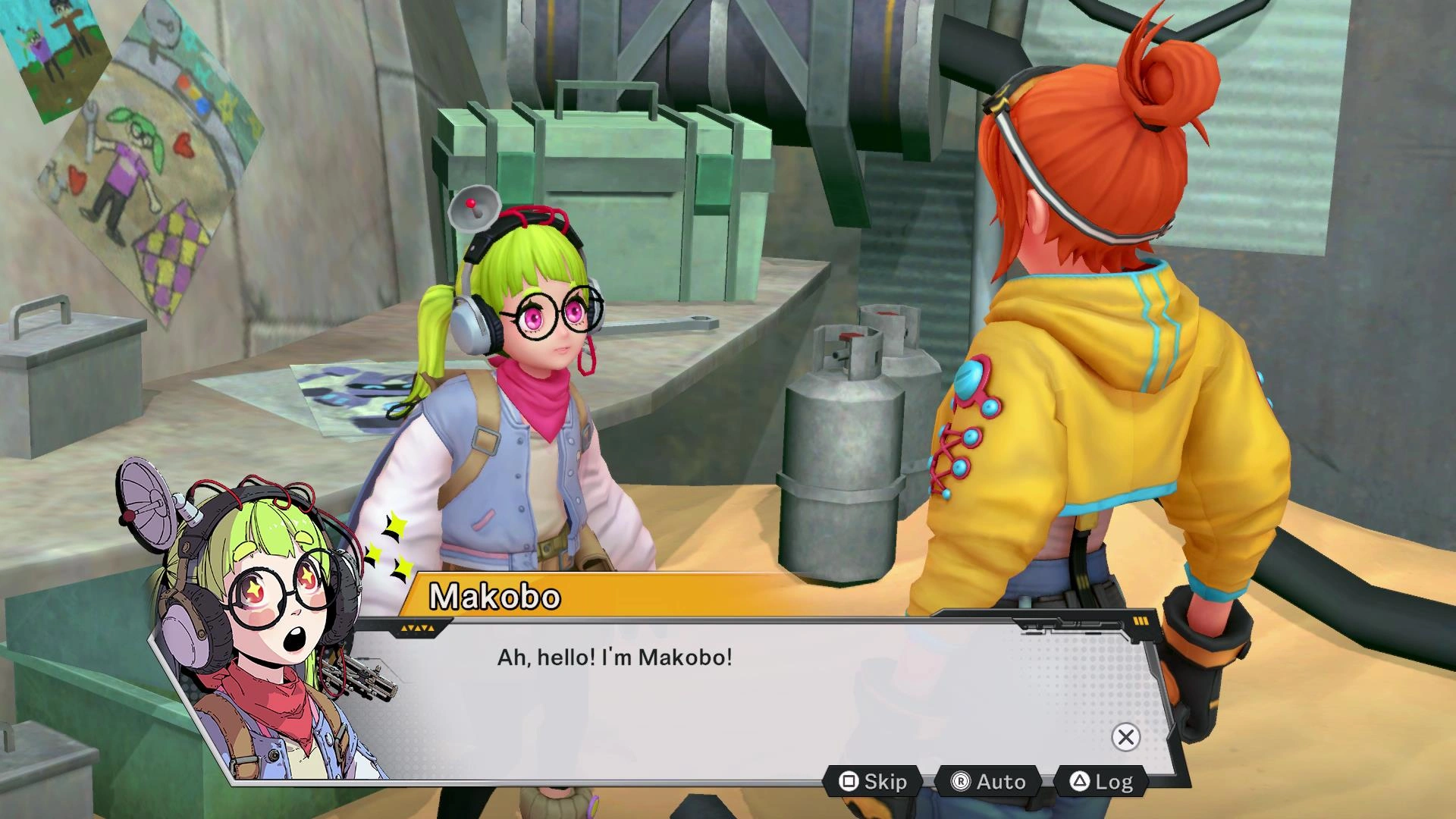
The story works because the core trio has an immediate sense of chemistry. Lukida, the steady engineer Badger, and the cynical bounty hunter Gwendol carry the early game with personalities that bounce against each other cleanly. Their backgrounds emerge through conversation and context clues, keeping the script free of the heavy lore drops that can stall traditional role playing games.
The writing stays clear and lively across the campaign, and the party later grows with three additional allies. The party members also feel unusually perceptive. They notice plot developments at the same time as the player, which gives the narrative a sharper rhythm than RPG stories where characters ignore obvious information to create artificial tension.
The optional side quests give Bitter a stronger social texture. Simple retrieval tasks function as small narrative windows into the daily pressure facing citizens who live outside Delight’s security and comfort. These missions matter because they make the world readable through routine labor, scarcity, and small acts of survival. That design links the game’s quest structure to its themes. The player moves through chores and favors, then sees how debt, damaged infrastructure, and local power shape ordinary life.
The second half loses momentum through severe pacing problems. A run of consecutive dungeons pads the back stretch and turns the final hours into a grind. The emotional stakes of the central conflict remain clear, yet the dungeon sequence stretches the player’s attention past the point where repetition serves the drama. Several of these areas could be cut while preserving the weight of the main confrontation.
Desert Navigation and Technical Tradeoffs
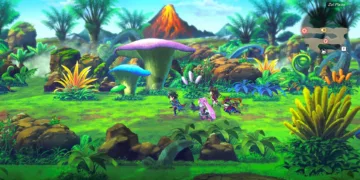
Exploration rests on mechanical traversal. Players pilot customizable mechs called Motorbots, hovering across wide sandy spaces through a classic top-down overworld camera that recalls nineties genre staples. The Motorbots make travel quick and readable, giving the desert a tactile game-system identity.
The local scanner creates one of the cleaner exploration loops. Activating it projects a visible path marker toward the main story objective. For completionists, that marker becomes a useful warning sign, since it tells them which route to leave for later while they search surrounding rooms for hidden chests.
That same loop suffers from map limitations. The interface refuses to show actual terrain topography, which forces players to keep triggering the scanner after its path markers fade. Repeated scanning becomes especially tedious during backtracking across desert zones that look highly similar, especially during minor tasks. The result is an exploration system with a strong central idea and a weak supporting map interface.
The atmosphere gains major force from Producer dk’s musical score. Exploration themes move with driving electronic energy, while boss encounters shift into heavy guitar work. The score gives each major activity a clear emotional temperature, making travel feel restless and battles feel sharper.
The sound effects land with far less impact. Attacks lack physical weight, to the point where a high-caliber sniper rifle shot can sound like a rubber bullet. The problem reaches its most visible form during the final boss battle, where several major attacks have no sound effects.
The Nintendo Switch version carries large visual compromises. The graphics look muddy, textures appear blurry, and characters cast no shadows. The tradeoff produces a flatter presentation, especially in the desert environments where strong visual clarity would help navigation. The frame rate stays impressively stable under these sacrifices, which keeps the game playable even as the image quality takes a clear hit.
Turn Mechanics and Progression Fractures
Combat uses a traditional turn-based structure built around an individual timeline that governs action order, a system reminiscent of the classic Grandia series. Enemies have explicit physical and elemental weaknesses, including piercing, burn, and slash damage.

Reading those vulnerabilities gives combat its main tactical language. Hitting weak points breaks down defenses, stuns the target, and pushes the enemy icon backward on the timeline, reducing incoming damage. This creates a satisfying rhythm where smart targeting affects both damage output and turn control.
The Driver’s High gauge adds another strong layer to battles. Characters build the gauge during combat, and a full meter lets a character cut into the timeline for an extra turn with a devastating empowered skill. The idea fits the game’s energetic scavenger tone: pressure builds, then a character seizes the tempo. The system’s impact suffers from the talent board behind it. Upgrading a base skill leaves the related Driver’s High version unchanged.
Players must spend separate talent points in a separate tree for those ultimate moves. That split makes progression feel inefficient and discourages experimentation. A minor localization issue on the same screen adds confusion by mixing up the abbreviations for skill unlock points and combat energy points.
Motorbot progression has richer mechanical depth. Players can swap engine parts, armor, and weapons, then slot adaptable Cores that grant vital passive perks such as auto-revival. The loot system is extremely generous, handing out wild stat upgrades that can double structural firepower in one discovery. That generosity breaks the end-game balance. Heavy investment in raw attack power, paired with repeated area-of-effect skills, can erase standard encounters in a single turn.
Boss fights demand real tactical thinking, which shows the combat engine working at its best. Those fights appear too rarely to counter the routine weakness of regular enemy battles. Late-joining party members create another progression fracture.
They arrive at such low levels that they stay locked into passive support slots, since the game lacks an efficient catch-up leveling system. The combat framework has smart ideas, especially its timeline manipulation and weakness pressure, yet the surrounding balance and progression systems leave too much of that potential unevenly applied.
The Review
STARBITES
Starbites delivers a mechanical playground wrapped in an exceptionally charismatic character study. The charm of Lukida and her crew provides a memorable anchor, and the strategic timeline disruption during boss fights shows brilliant tactical promise. Unfortunately, severe progression fractures, massive end-game balance issues, and repetitive desert areas prevent the experience from matching its narrative height. It remains a comfortable choice for enthusiasts seeking a brief escape, provided they play on a platform capable of rendering the world with proper visual clarity.
PROS
- Smart and highly charming main cast members who possess exceptional natural chemistry.
- Coherent and satisfying narrative that completely avoids intrusive, heavy-handed lore dumps.
- Excellent musical score handled by Producer dk that fits the wasteland atmosphere perfectly.
- Enjoyable timeline mechanics and satisfying defense-breaking systems during major boss battles.
CONS
- Disappointing late-game balance allows simple attack strategies to end normal encounters instantly.
- Serious progression split requires separate talent investments for basic and upgraded skill variants.
- Major audio drawbacks including lightweight attack sounds and missing final boss sound effects.
- Extreme graphical sacrifices on the Nintendo Switch resulting in muddy textures and zero shadows.