






















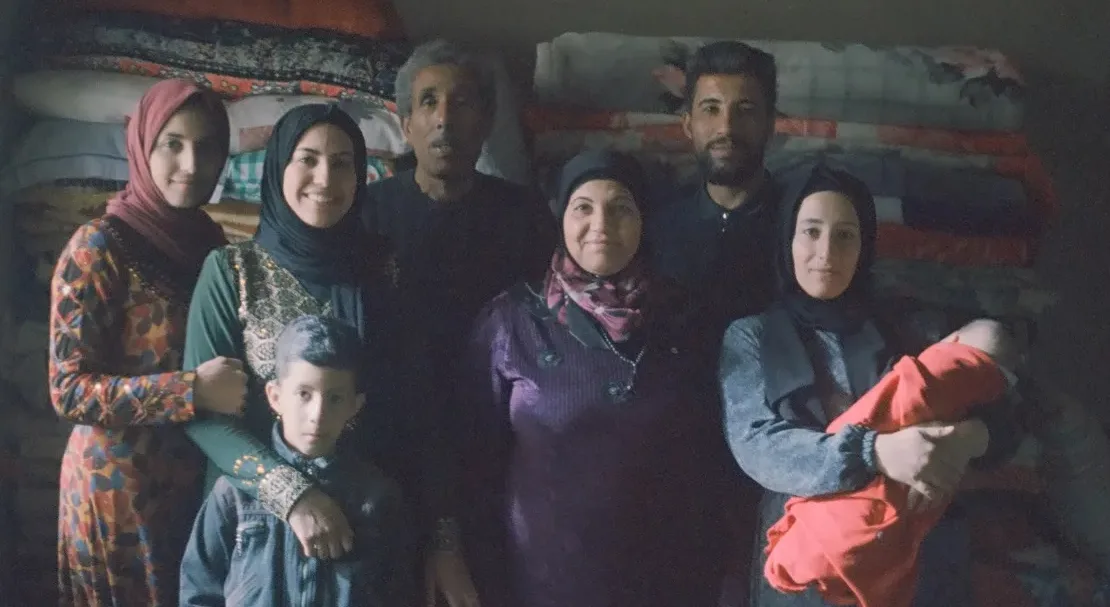

Palestinian filmmaker Rakan Mayasi’s feature directorial debut, Yesterday the Eye Didn’t Sleep, begins with a raw, unsettling image: a pickup truck swallowed by roaring flames in eastern Lebanon’s Bekaa Valley. The image works like a hard cut into the secluded world of the Al Mawla family, a Bedouin household whose daily life is governed by centuries-old kinship duties and ancestral codes.
After a young female cousin disappears into the night under suspicion of starting the fire, her family is thrown into an immediate honor crisis. During the frantic search, the son, Yasser, accidentally hits and kills a man from a rival clan with his vehicle. That death sparks a fierce intertribal blood feud and shifts the film’s narrative pressure toward Yasser’s sisters, Rim and Jawaher.
Under tribal laws of retaliation, the two young women become literal bargaining chips, with their freedom demanded by the aggrieved family as the price of a truce. Mayasi places us inside a negotiation where female autonomy carries the cost of peace, and the film’s power comes from how calmly it lets that horror take shape.
Reality Blurring Into Fiction
Mayasi rejects standard cinematic formulas by setting aside a traditional script and shaping a fluid narrative that feels like living anthropology. Over three years in the Bekaa Valley, he built the cinematic scenario with the local community, creating a level of mutual trust that shows in every glance and silence.
The casting gives the film a striking realism, since the actual Al Mawla family members play themselves and stage the dramatic events inside their own everyday household. That choice ties the project to the sharpest edges of independent, experimental cinema, stripping away artificial melodrama so the camera can observe human behavior under extreme duress.
The main plot tracks an immediate domestic crisis, and regional geopolitics seep into the frame with quiet force. Mayasi uses subtle, unsettling atmospheric soundscapes, including the low, persistent hum of military drones and references to nearby Syrian border conflicts, to create a shared anxiety that hangs over the valley. The landscape feels heavy with history, a place where private lives are shaped by historical forces far larger than any single family argument.
The stakes tighten around a mandatory three-day truce, a tense pause during which the rival men debate the terms of retribution. Rim and Jawaher are delivered to a neighboring Sheik as sacrificial bridal offerings meant to settle the debt of the accident, and the sisters process captivity in sharply different ways.
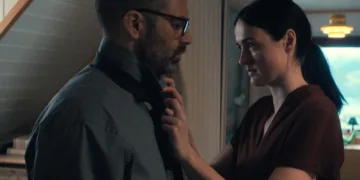
Jawaher chooses practical survival and compliance, volunteering with stoic resolve to marry an unknown bachelor from the rival tribe so she can protect her clan and shield her brother from death. Rim carries a quiet inner rebellion, her discreet manner concealing deep resistance to the sudden theft of her future. Through that double focus, the film records two psychological responses to a complete absence of systemic agency.
The Geometry of Isolation
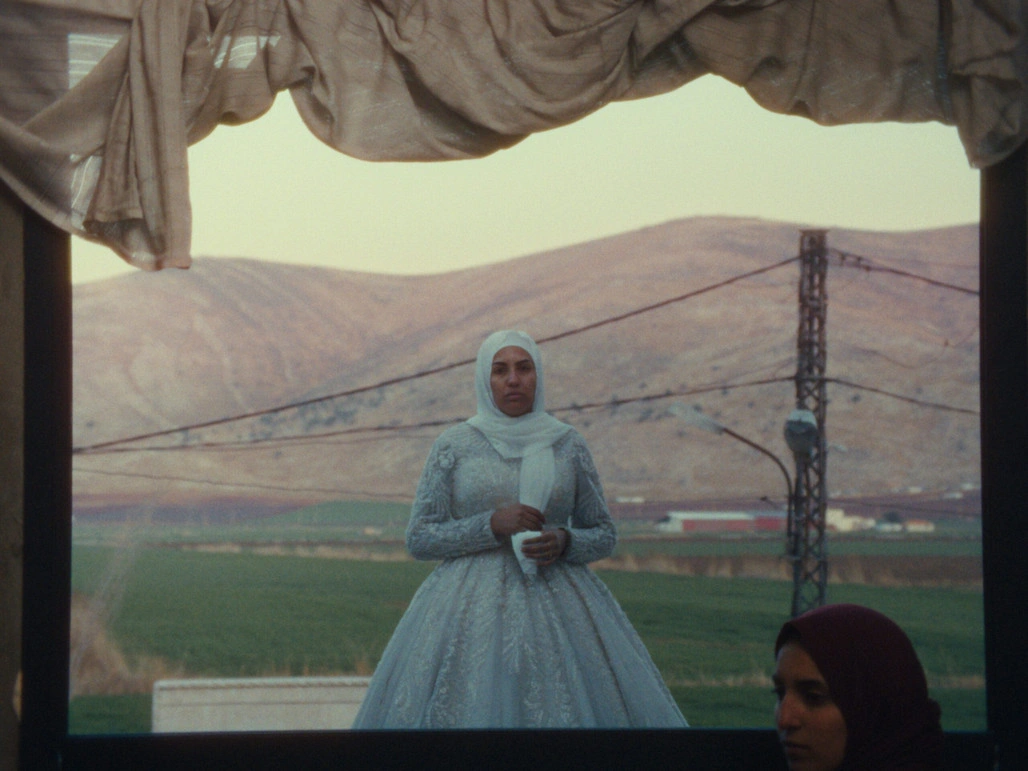
Cinematographer Pôl Seif captures cultural confinement through a carefully planned visual language that values formal rigor over commercial sheen. The boxy Academy aspect ratio gives the film a vital psychological tension, narrowing the frame until it seems to press against the sisters’ lives.
Seif favors patient, static compositions that stress the permanence of place above the desires of the people trapped inside it. Rim and Jawaher are often held near the far edges of the image, surrounded by broad fields of negative space that make their loneliness feel almost architectural.
During the rare moments of movement, the camera moves with frightening precision. Slow, glacial zooms enlarge the sense of dread, turning time itself into a pressure system. One powerful sequence uses a sudden rotational shot around the sisters as they hear the men decide their future, making their disorientation visible through motion.
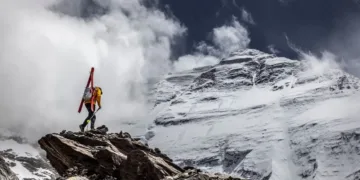
The film repeatedly sets the monumental, snow-capped Anti-Lebanon mountains against the brief human figures crossing the valley. That visual scale makes tradition feel immense, almost geological, and the characters appear painfully small beneath its weight.
Mayasi also understands the force of empty space and restraint. He frequently lets pivotal developments occur off-screen, keeping key conversations outside the frame and asking the viewer to read emotional violence through abandoned rooms, cracked walls, and silent landscapes. The environment becomes an active participant in the drama. I found those quiet images especially haunting, the way a room in certain austere independent films can seem to remember what people are too frightened to say.
Rhythms of Rebellion and Ritual
The sound design plays a daring role in mapping the characters’ psychological movement, serving as a counterweight to the stillness of the images. The soundtrack starts with grounded ambient sounds of daily pastoral life and constant radio prayers, setting the religious and social duties that define the valley. As Rim’s inner resistance grows, the score moves away from traditional melodies toward heavier, contemporary rhythmic textures. Music becomes her proxy voice, carrying defiance she cannot safely speak.
That sonic friction reaches its peak in the wedding dance sequence around a nighttime bonfire. Mayasi shoots the celebration in heavy slow motion, turning an energetic communal ritual into something sinister and claustrophobic. The pounding drums and spinning bodies reveal the collision between communal joy and individual coercion, exposing the panic of a bride trapped in a destiny chosen for her.
Sporadic, observation-based humor, including a stubborn cow resisting being milked, breaks the heavy mood with lifelike levity. The final act leaves a grounded, neorealist mode and embraces surrealist, open-ended imagery that favors poetic expression over tidy narrative resolution.
A final wide shot offers a flash of visual magic that stays in the mind after the credits, giving symbolic release to the film’s accumulated tension. The finale also speaks directly to Mayasi’s family history, honoring his grandmother’s lived experience of forced marriage at fourteen by portraying the cyclical, deeply wounding nature of these ancient customs.
The striking independent drama Yesterday the Eye Didn’t Sleep recently celebrated its world premiere on May 20, 2026, screening in the prestigious Un Certain Regard section at the 79th Cannes Film Festival. This highly anticipated debut feature from Palestinian filmmaker Rakan Mayasi is currently seeking wide international distribution, though companies such as Salaud Morisset have boarded international sales and L’Atelier handles French theatrical release. For cinephiles eager to catch this unique neorealist production, it is currently navigating the global film festival circuit, with wider streaming or theatrical release platforms expected to follow later in the year.
Where to Watch Yesterday the Eye Didn’t Sleep (2026) Online
Full Credits
Title: Yesterday the Eye Didn’t Sleep
Distributor: Salaud Morisset, L’Atelier
Release date: May 20, 2026
Running time: 100 minutes
Director: Rakan Mayasi
Writers: Rakan Mayasi, Wahid Ajmi
Producers and Executive Producers: Rakan Mayasi
Cast: Rim Al Mawla, Jawaher Alexander Al Mawla, Yasser Al Mawla
Director of Photography (Cinematographer): Pôl Seif
Editors: Louis De Schrijver
Composer: Abed Kobeissy
The Review
Yesterday the Eye Didn’t Sleep
Yesterday the Eye Didn’t Sleep is a striking piece of neorealist cinema that trades conventional plot mechanics for pure atmospheric depth. Rakan Mayasi’s choice to work without a script alongside a non-professional cast yields a raw, authentic glimpse into the crushing weight of ancestral tradition. While the slow pace and vignette-style structure might test the patience of mainstream audiences, the film's formal rigor, claustrophobic cinematography, and haunting auditory design deliver a powerful critical statement on the theft of female autonomy. It marks a confident, deeply poetic debut.
PROS
- The use of the real Al Mawla family playing themselves inside their own home brings a rare, unforced sincerity to the screen.
- Pôl Seif's use of the Academy ratio and deliberate composition visually anchors the themes of societal entrapment.
- The transition from ambient radio prayers to heavy, contemporary rhythms effectively externalizes the characters' internal resistance.
- The slow-motion wedding dance sequence creates a lingering, powerful contrast between communal celebration and individual coercion.
CONS
- The lack of a traditional script occasionally makes the film feel like a collection of loose vignettes rather than a fluid, cohesive whole.
- The slow, meditative tempo and reliance on long static takes may alienate viewers looking for stronger narrative momentum.
- Choosing to relegate critical dramatic developments to off-screen space leaves a few narrative sections feeling slightly withholding.