













![Kingdom Hearts Collection [I-III] Review](https://gazettely.com/wp-content/uploads/2026/10/Kingdom-Hearts-Collection-I-III-1-360x180.webp "Kingdom Hearts Collection [I-III] Review: KHII Holds Steady as Newer Entries Fluctuate 38")



Pieter-Jan De Pue’s Mariinka begins with a place before it becomes a ruin. The eastern Ukrainian town near Donetsk is presented through young lives already shaped by loss, poverty, family separation, and unstable loyalties before war redraws every line around them. Filmed across ten years, the documentary follows Natasha, Angela, Mark, Ruslan, Daniil, and the barely present Maksim as their hometown turns into a front line and then into something close to a ghost site.
The film’s scale is ambitious, and that ambition matters. This is a documentary about Ukraine, but its strongest passages are smaller than geopolitics. A girl in folk dress. A boxer in training. A young medic wiping blood from her hands. A bicycle pushed through gunfire as if danger has become part of the weather.
Natasha and Angela Carry the Film’s Pulse
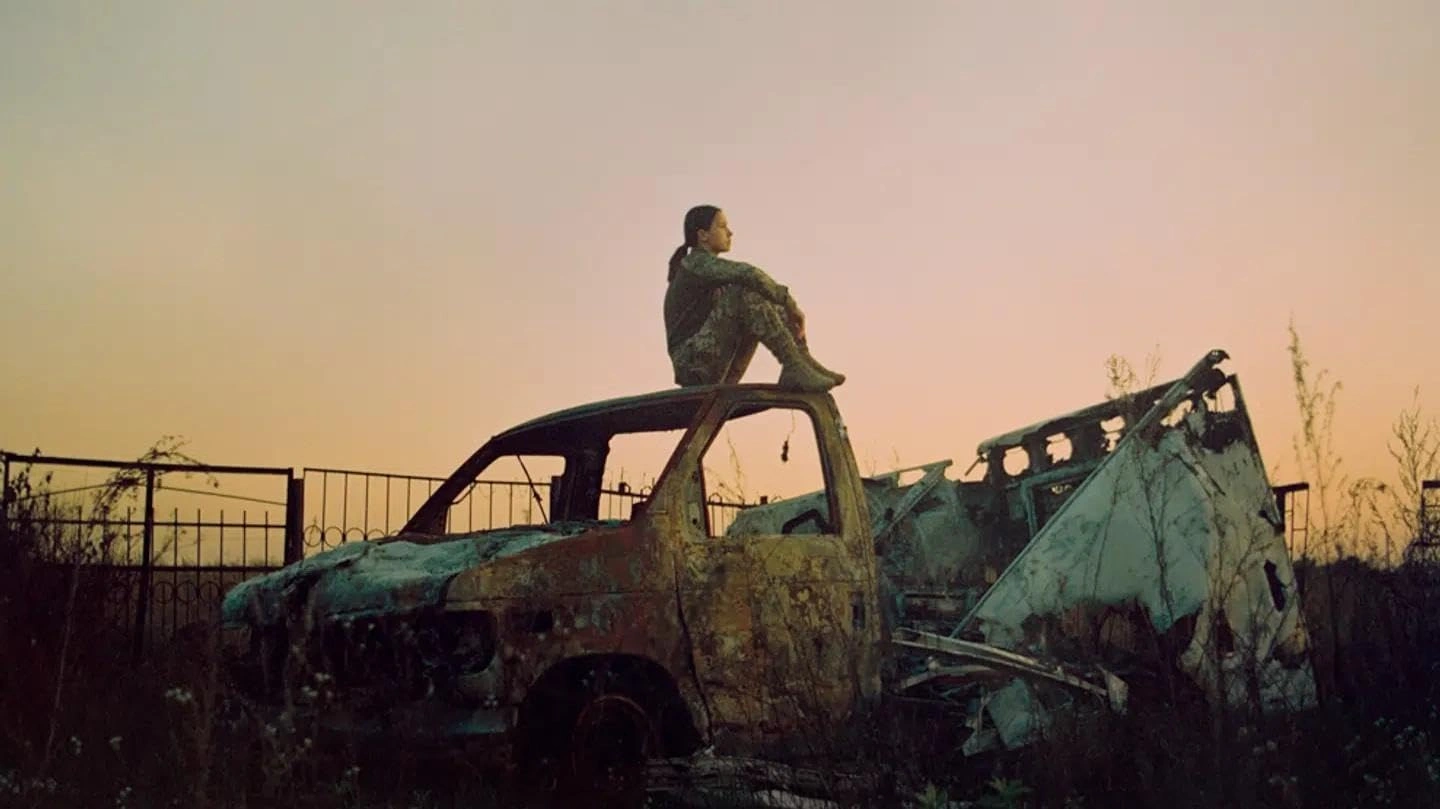
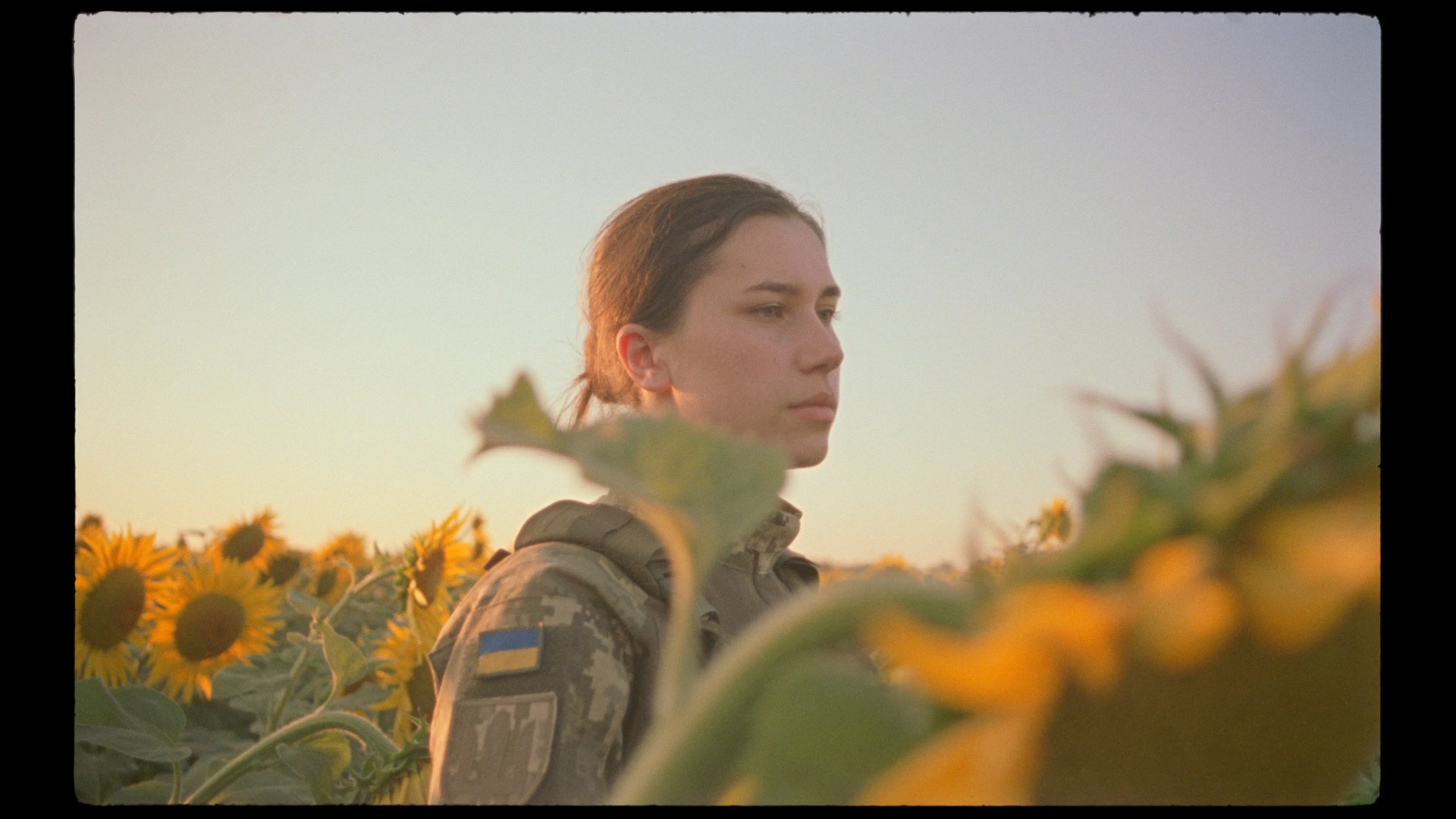
Natasha gives Mariinka its clearest emotional line. De Pue first frames her through images of youth: a school event, a graduation outfit, boxing practice, the kind of ceremonial footage that usually belongs to memory rather than history. Then the film cuts to her in military fatigues, working as a paramedic with a Ukrainian unit. The contrast is direct, yet it never feels simple. She has not transformed into a symbol. She has been interrupted.
Caleb-style craft note: archival footage works best when it changes how we read the present. Here, Natasha’s earlier scenes do exactly that. Watching her tend to wounded soldiers gains extra pressure because the film has already shown the life she might have continued living. Her silence in the medical scenes matters too. She is often surrounded by men, injury, urgency, and noise, but De Pue’s camera keeps finding the quiet in her face. The effect is less heroic than bruised.
Angela is the film’s most unforgettable presence. She smuggles goods across the front line, often by bicycle, carrying appliances, food, flowers, documents, and at one point even a baby passed toward safety. The image of her moving through rubble and active danger has the unreal confidence of folklore, except the bullets are real and the town around her is broken concrete. The film never fully explains how she keeps doing this, which makes her stranger and sadder.
Her grief is clearer in stillness. When Angela is alone at home, speaking about dead loved ones or sitting with the remains of an ordinary life, the film stops treating her as a survival marvel and lets her become a person again. That shift is important. A documentary like this can easily turn endurance into spectacle. Angela resists that by looking exhausted in ways bravery cannot decorate.
Brothers on Opposite Sides
The brothers give Mariinka its tragic structure. Mark fights for Ukraine. Ruslan fights for Russia. Their younger brother Daniil, renamed Samuel after adoption by an American family in Mississippi, grows up far from the battlefield but never fully outside its gravity. He speaks with his brothers through calls, receives gifts, plays war games, handles guns at ranges, and begins to imagine military life for himself.
Those American passages are useful, then uneven. On paper, they create one of the film’s sharpest comparisons: two older brothers living the reality of war, one younger brother absorbing war as culture, fantasy, faith, and masculine ritual. Seeing Samuel play Call of Duty or shoot with his adoptive family gives the film a disturbing echo. Violence is distant for him, but it is still part of his education.
At the same time, these scenes can drain force from the Ukrainian material. Whenever the film leaves Natasha’s medical unit, Angela’s bicycle routes, or Mark and Ruslan’s tense conversations, it loses some immediacy. Samuel’s story belongs in the film, but it sometimes feels like a related essay rather than part of the same emotional bloodstream.
The most powerful brother scenes are the calls between Mark and Ruslan. Their separation is not abstract; it has a screen, a voice, a face, and then a hardening tone after the 2022 escalation. The film does not clearly explain how they arrived at opposite allegiances, which is a weakness. The missing explanation leaves a gap where a family history should be.
16mm Beauty Meets Battlefield Shock
De Pue shot Mariinka himself on 16mm, and the choice gives the film a physical texture that digital war footage often lacks. Grain matters here. It makes faces feel close, landscapes feel old, and ruins feel touchable. The Carpathian wide shots, night skies, swimming scenes, and waterfall images bring an almost dreamlike softness to a story full of exposed wounds.
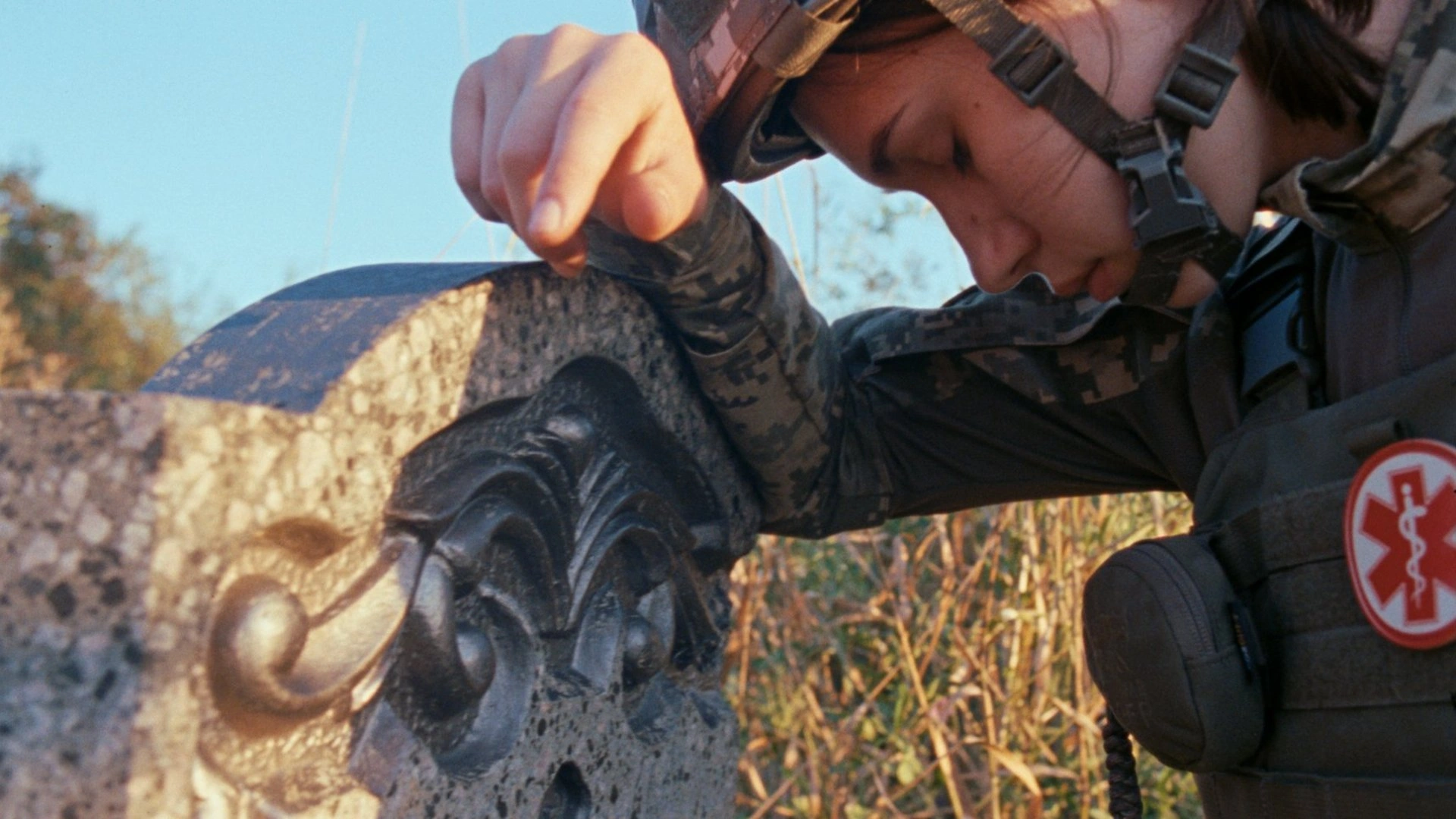
That softness can clash with the combat footage. Some transitions feel like two films colliding: one a lyrical portrait of lost youth, the other a frontline document of blood, bodies, and shredded buildings. The clash is sometimes awkward, but it also matches the lives being filmed. Natasha’s graduation footage and her paramedic work should not sit comfortably together. Samuel’s gun-range childhood and his brothers’ battlefield reality should feel wrong beside each other.
The sound design does heavy lifting. Folk songs pull the film toward memory and ritual, voiceover creates intimacy, and the frontline audio makes every checkpoint or medical scene feel unstable. When Angela moves through no-man’s-land, the sound carries danger before the image fully registers it. When Natasha works on the wounded, the room tone seems to tighten around her.
A Restless, Powerful Shape
Mariinka has too many pieces to fit cleanly. Maksim, the fourth brother left physically disabled by war, appears so briefly that his presence feels like an unfinished chapter. Some of Natasha’s return visits to damaged childhood spaces seem staged in a way that softens their impact. The film also moves quickly between subjects, rarely giving each portrait enough room to settle.
Still, its strongest images are hard to shake: Angela greeting soldiers as she wheels contraband through a combat zone; Natasha standing in a medical unit after another body has passed through her hands; Mark and Ruslan speaking across a family fracture that history keeps widening; Samuel growing tall in Mississippi, playing at the kind of war his brothers cannot escape.
The film’s deepest idea is that war steals the future before it kills the body. It takes Natasha’s boxing years, Angela’s ordinary adulthood, the brothers’ shared past, and Mariinka’s civic life. What remains is movement through damage, sometimes brave, sometimes numb, sometimes impossible to classify.
The feature-length documentary Mariinka premiered as the opening film at the CPH:DOX festival on March 10, 2026, and is scheduled for a wider theatrical release in European cinemas starting in the summer of 2026. Filmed over the course of a decade on 16mm film, the production chronicles the lives of several young citizens from a frontline town in Eastern Ukraine as their relationships and families are torn apart by a changing battlefield. Viewers looking to watch the documentary can currently catch it making the rounds across the international film festival circuit, with regional distribution handled by companies like Dalton Distributie and international sales overseen by Films Boutique.
Full Credits
Title: Mariinka
Distributor: Dalton Distributie, Films Boutique
Release date: March 10, 2026
Running time: 94 minutes
Director: Pieter-Jan De Pue
Writers: Pieter-Jan De Pue, David Dusa
Producers and Executive Producers: Bart Van Langendonck, Pieter-Jan De Pue, Christian Beetz, Femke Wolting, Bruno Felix, Vincent Metzinger, Emilie Blézat, Kerstin Meyer-Beetz, Katja Draaijer, Martin Pieper
Cast: Natasha, Angela, Ruslan, Mark, Daniil, Maksim
Director of Photography (Cinematographer): Pieter-Jan De Pue
Editors: Alain Dessauvage, Ciska Slowack, Mauro De Groeve, Julie Naas, Louis De Schrijver, David Dusa
Composer: Lieven Van Pée, Mattis Appelqvist Dalton
The Review
Mariinka
Mariinka is uneven, restless, and sometimes overloaded, yet its best images cut deep: Angela crossing the front line by bicycle, Natasha working through trauma in a medical unit, brothers divided by a war that has already taken their shared language. De Pue’s 16mm images give the documentary a bruised beauty, and the decade-long scope captures youth being bent out of shape by history. Some threads need sharper focus, but the strongest moments are unforgettable.
PROS
- Striking 16mm cinematography
- Angela’s frontline scenes
- Natasha’s emotional arc
- Strong archival contrasts
- Powerful sound design
CONS
- Too many story threads
- Maksim feels underused
- Samuel sections slow momentum
- Some staged moments feel arranged
- Key allegiances lack clarity